
India News
Legal Leadership Conclave on Arbitration & Mediation: need for proper training and support system


The need for trainers, training of mediators and some essential infrastructure and legal framework was emphasized by speakers at the second technical session of the Legal Leadership Conclave on Arbitration & Mediation organised by India Legal magazine and ENC group at Bengaluru today (Saturday, August 17).
The session was chaired by former Supreme Court judge, Justice RV Raveendran with Karnataka Lokayukta Justice PV Shetty as the co-chairperson.
Justice BV Nagarathna, speaking on Mediation: Achievements and Challenges, referred to Justice P V Shetty as “a progressive judge” to say “we have progressive judges on the bench, there will be progress in the bar also.”
She said the Father of the Nation Mahatma Gandhiwas an effective mediator who, before coming to India, spent most of his professional life in South Africa, more as a mediator than as an advocate speaking for one side only.
To make a point on the importance and relevance of mediation, she quoted from his autobiography, “after a successful mediation, but both were happy over the result, and both rose in the public estimation. I realized that the true function of a lawyer was to unite Parties riven asunder. The lesson was so indelibly burnt into me that a large part of my time during the twenty years of my practice as a lawyer was occupied in bringing about private compromises of hundreds of cases. I lost nothing thereby- not even money, certainly not my soul.”
“This should be an inspiration for us in Mediation,” said Justice Nagarathna, “restricted not only to the learned mediators, message is more to our advocates – give Mediation as a process of alternative dispute resolution.”
Giving a little background of mediation in India, she said Section 89 of the court procedure, under which Mediation is recognized as the alternative to settlement of disputes between the parties, was there in 1908, but was deleted in 1940 and re-inserted in 2002.
Now SC has exhorted the state government and central governments to take action for bringing into effect alternative disputes resolution.
She said, “Legalfraternity talks of two concepts – Docket explosion and Docket exclusion. Today’s conclave is about Docket Explosion, how to curtail the Docket explosion in courts. One of the remedies found by legislature is Alternative Dispute resolution – by Mediation.”
She spoke of recognition of Mediation as an effective tool of dispute resolution, noting that the core challenge is to encourage the litigant public to mediate the disputes.
The second aspect relates to infrastructure for the mediation of disputes, which has two fold aspects: (i) software – we should have trained mediators and (ii) hardware – facilities and amenities.
Among other points she made were:
Training of the mediators and providing corresponding facilities to the trainers, the mediators and the litigants is a challenge.
Emphasis should be not only training mediators but updation of legal knowledge too is important.
Parliamentary recognition of Mediation is an achievement.
Corresponding implementation is a challenge.
United Nations Convention on International settlements, agreements resulting from mediation know as Singapore Convention on Mediation are only for international commercial disputes. This is a Pre-Arbitration Mediation proceedings but implementation is a challenge as far as India is concern.
Emphasis is on the need for a Pre-Arbitration Mediation.
Challenges of Mediation
- Lack of trained mediators: content, schedule of training
- Lack of trainers
- Lack of referrals
- Lack of infrastructure particularly in district levels.
- Absence of suitable legislation – central/ parliamentary legislation on mediation
- Resistance amongst basic actors and stake holders namely judges, lawyers and litigants towards mediation.
- Lack of mediation managements.
- Lack of adequate funds
Ending on a secular note, she said, “We are all warriors seeking justice, resolution of disputes, we want there should be peace in society and peace is now guaranteed through mediation because relationship is restored. “
Senior advocate Shiv Kumar spoke on “Med-Arb : Need for Statutory Reforms and Trainings” and talked about the gaps in the system.
“We do not have a definition of ADR we do not even have a definition of Arbitration, we also do not have a definition for Med-Arb or Arb-Med,” he said.
He said we need a definition “because in this country a lot of us believe that ‘khaap panchayats’ and ‘honor killings’ is also Alternative Dispute Resolution methods. “
What we really need, he said, is to recognize and accept Med-Arb (mediation-arbitration) as a form of ADR.
“So, the first Statutory Reform that we need is the amendment of section 89-1 which will record in addition to what is already recorded the concept of Med-Arb, Arb-Med and neutral evaluation as a form of dispute resolution,” he said.
He said what is needed as a Legislative Reform is a comprehensive Code not on Mediation but on ADR.
He ended by stressing that “what ae need is creation of an independent autonomous body outside of government control on the lines of the ISO 2000-2001organizations that certify quality, and also the creation of a Dispute Resolution Ombudsmen who will have powers to supervise and receive and deal with complaints against this process.” 
Senior Advocate Sriram Panchu had as his topic “Arbitration and Mediation: strange bed fellows or harmonious partners “.
Panchu started with the observation that “In every litigation, relationship goes for a toss.”Mediation respects relationships, promotes them and tries to save and salvage every bit of harmony left.
Panchu quoted Chief Justice Menon of Singapore on the question of choice of mediation as dispute resolution mechanism – “What’s not to like about it?”
Pointing out a distinction between Arbitration and mediation, he said Arbitration is result oriented. “Combining mediation and arbitration has one hurdle – confidentiality of mediation proceedings is breached in arbitration. So, one way is a mediator should never become the arbitrator in the same case,” he said.
He suggested that the structure of contracts should be such as to place mediation clause before arbitration. Courts can then enforce the contract terms and contribute in effective dispute settlement. He said it was his experience that parties would want to mediate at any stage of arbitration.
He said an effective tool is the mediator sits with arbitrators while all arguments are put forth and gains complete knowledge of the case. And then, before the arbitral award is arrived at or declared, mediator speaks with parties to arrive at a mutually accepted decision.
He said mediation considers human factors like equity, fairness, family relations, emotions and sentiments that have no room in the adversarial process of litigation or arbitration where the binding verdict necessarily puts one party at a disadvantage. The basic philosophy underlying conflict resolution is “Consensus before adversarial”.
“Training is essential for mediators. Not every good arbitrator is a natural mediator. Mediation should be a professional career option. Else it will never flourish. It has always taken a backseat, which it shouldn’t. We must focus on supply of well-trained mediators as it will also bring down the case pendency scenario in India,” said Panchu.
“Then it is going to be Appropriate Dispute Resolution instead of Alternate Dispute Resolution,” concluded Panchu.
Prof. (Dr) Ashok R Patil, spoke on “Online Mediation: the Future Technique of Mediation”. He noted that as per the Supreme Court, access to Justice should satisfy four essential elements: (i) Effective adjuratory Mechanism (ii) Reasonable accessible in terms of distance (iii) Must be speedy (iv) Affordable
Online mediation is a better method to achieve justice with these elements.
Online Dispute Resolution (ODR) is of two types: i) Synchronized interaction – like teleconferencing, and ii) Asynchronized – text based chatting.
All three parties have to be present at the same time in the first interaction, which is not so in Asynchronized interaction
An advantage of ODR is that information can be shared online, so that all privacy is ensured.
Also Read: Legal Leadership Conclave on Arbitration & Mediation: the need and the problems
Prof Patil said there is huge scope for ODR in India. Citing a Government of India meeting last year, he said 3 crore pending cases can be solved by online mediation.
Deepak Sharma, Managing Director of North-Starcom MediaVest Group, talked about branding India as an International Mediation hub.
He started by noting that branding India in any way when our methodology and technology is still developing, could only result in failure. “Since the rise of consumerism, the aim of branding is to evoke response and engagement, mapping India on the global platform as an arbitration hub may not be best right now,” held Sharma.





India News
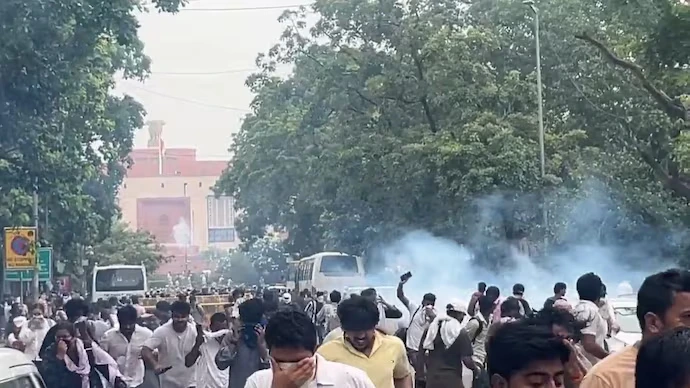
Delhi deploys 25,000 personnel, installs CCTV cameras ahead of CJP march
More than 25,000 police and paramilitary personnel have been deployed in Delhi ahead of the CJP’s planned protest march at Connaught Place. Authorities have also imposed restrictions and stepped up CCTV surveillance.

India News
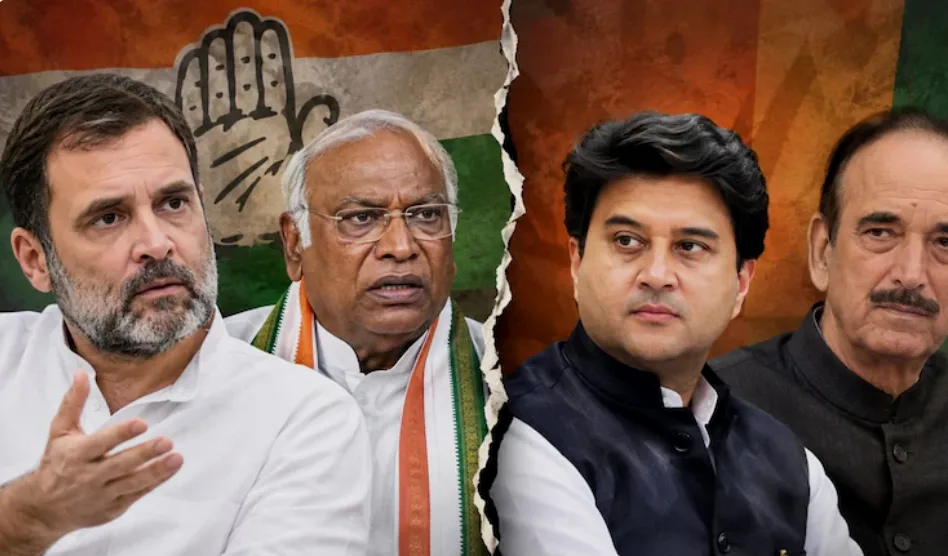
Mallikarjun Kharge’s ‘Your Friends’ jab at Rahul Gandhi over congress exits
Congress president Mallikarjun Kharge took a dig at Rahul Gandhi after the Leader of the Opposition reportedly described former party leaders Jyotiraditya Scindia and Ghulam Nabi Azad as among those who had left the Congress.
India News
Delhi Police offers 11-person limit for CJP’s Connaught Place protest
Delhi Police has offered to facilitate a group of 11 people at Central Park in Connaught Place for the Cockroach Janata Party’s October 16 protest, while warning that violations of prohibitory orders could invite legal action.


Election Commission orders voter roll revision in 17 states, UTs

Actor Imran Khan asked to leave India after CJP protest

Delhi Police offers 11-person limit for CJP’s Connaught Place protest

Mallikarjun Kharge’s ‘Your Friends’ jab at Rahul Gandhi over congress exits

Delhi deploys 25,000 personnel, installs CCTV cameras ahead of CJP march

Magnitude 7 earthquake strikes Russia’s Kamchatka Peninsula
Delhi deploys 25,000 personnel, installs CCTV cameras ahead of CJP march
Mallikarjun Kharge’s ‘Your Friends’ jab at Rahul Gandhi over congress exits
Delhi Police offers 11-person limit for CJP’s Connaught Place protest
Actor Imran Khan asked to leave India after CJP protest

Afghan Men Try To Hang With The Jet Engine Of The Aircraft in Kabul- Afghanistan News – Kabul News
Trending Top 10 News: 10000 Crore Fine on Flipkart, Apple to Launch Unique Feature, Hdfc Bank Job Ad

Trending Top 10 News: Nokia 6310, Apple sales, Bachpan ka Pyar Video Kid, Dainik Bhaskar IT Raid

Trending Top 10 News: Canada bans Indian flights, Rain in Delhi NCR, AIMIM Twitter hacked, Raj Kundra case

Trending Top 10 News: Shein India, Apple New Service, Pocket Oxygen, Oppo Launched New Phone
-
 India News22 hours ago
Election Commission orders voter roll revision in 17 states, UTs
-
 India News22 hours ago
Actor Imran Khan asked to leave India after CJP protest
-
 India News21 hours ago
Delhi Police offers 11-person limit for CJP’s Connaught Place protest
-
 India News9 hours ago
Mallikarjun Kharge’s ‘Your Friends’ jab at Rahul Gandhi over congress exits
-
 India News9 hours ago
Delhi deploys 25,000 personnel, installs CCTV cameras ahead of CJP march
-
 Latest world news9 hours ago
Magnitude 7 earthquake strikes Russia’s Kamchatka Peninsula
