English हिन्दी
Connect with us

Latest News

Supreme Court to decide on Sabarimala review petitions tomorrow

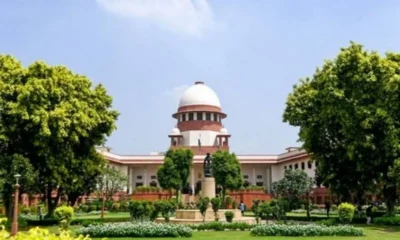
The Supreme Court will give its verdict tomorrow on a clutch of review petitions seeking to overturn the Sabarimala judgement of September 2018 that allowed women of all ages to enter and pray at the Lord Ayyappa temple nestled in the hills of the Western Ghats.

Published

on

sabarimala violence

The Supreme Court will give its verdict tomorrow  on a clutch of review petitions seeking to overturn the Sabarimala judgement of September 2018  that allowed women of all ages to enter and pray at the Lord Ayyappa temple nestled in the hills of the Western Ghats.

The five judge bench of Chief Justice of India Ranjan Gogoi and Justices Rohinton Nariman, AM Khanwilkar, DY Chandrachud and Indu Malhotra. On September 28 last year, in a majority ruling, a coinstitution bench consisting of  the then CJI Dipak Misra and Justices Rohinton Nariman, AM Khanwilkar, DY Chandrachud, and Indu Malhotra had, by a 4:1 majority lifted the  lifted the ban on the entry of women between the ages 10 to 50 into the Sabarimala temple in Kerala. Justice Indu Malhotra was the lone dissenting voice.

Violence broke out in many parts of Kerala following the judgement, particularily after the Marxist led government showed an unseemly hurry to implement the verdict though the same government had shown no such alacrity in relation to an apex court order regarding a fued between two factions in a prominent church in central Kerala.

Subsequently, 56 review petitions and some fresh writ petitions were filed challenging the verdict. The Court had heard the review petitions and writ petitions in open court before reserving its verdict on February 6 this year. A constitution bench headed by CJI Gogoi started  heard the clutch of review petitions and 4 writ petitions opposing the entry of women into the temple as allowed by the apex court. The CJI had asked the asking the senior advocates to confine their arguments to the grounds in the review petitions. In the course of two hours, around 10 advocates, appearing for various petitioners, presented their arguments before the Supreme Court.

Among those to prwsent the case  was senior advocate K Parasaran, who  appeared for the Nair Service Society who submitted that the Constitution bench had failed to deal with the interplay of the Constitution’s Preamble and Articles 15, 17 and 25 of Constitution. Parasaran highlighted that Article 15 (prohibition of discrimination), which threw open all public institutions of secular character to all classes of person, conspicuously omitted religious institutions and therefore it was an error to strike down a temple custom under Article 15.He also asserted that the Supreme Court’s September judgment did not consider the crucial aspect that Article 15 (2) does not cover religious places. The omission to consider this aspect constitutes an error apparent on record, the counsel submitted.

He argued that the practice was limited to a particular age group, and therefore cannot be equated with untouchability — which excluded an entire class of people. Parasaran concluded saying that the exclusionary practise in Sabarimala is based on the character of the deity, which is that of Naishtika Brahmachari or permanent celibate.

Appearing for the chief priest or Thantri of the Sabarimala temple, senior advocate V Giri reitrated that right to pray has been in consonance with the nature and form of the deity. He argued that the restriction in Sabarimala had been based on the character of the deity. Advocate V Giri argued that any person who asserts right under article 25(2)(b) to worship has to do it in consonance with the nature of deity.

Later, advocate Jaideep Gupta for the Kerala government made it clear that the government was opposing the review petitions as no grounds had been made out for review.  He asserted that essential practice of religion and essential practice of a temple cannot be confused and that exclusion of women from a temple was not essential to Hindu religion. “Every temple may be having its own practice. Court cannot go into the essential practices of every temple. That would mean each temple is a denominational temple. That will lead to the destruction of essential religious practise test,” he argued.

The Kerala government’s counsel also opposed arguments put forward by various petitioners that it was a private issue. “It is about public law issue unless they argue that women between age 10 to 50 are not a class of Hindus,” Jaideep Gupta said. He also told the bench that it should not consider the tension and violence that followed the judgment. “That social peace has been destroyed is not a ground for reviewing the judgment. Constitutional invalidity cannot be permitted to go on,” he argued.

The Kerala government’s pro women’s entry stand was in contrast to that of almost every other political party or formation in the state including the Congress and the BJP which were united in opposing the  stand. That the government stood isolated became evident in the Lok Sabha elections when the Left Democratic Front government, which has a near two third majority in the assembly got decimated in the parliamentary polls, winning just one of the 20 seats at stake in the state.

Entertainment

Kapil Sharma warned by MNS for referring to Mumbai as Bombay on Netflix show

Published

on

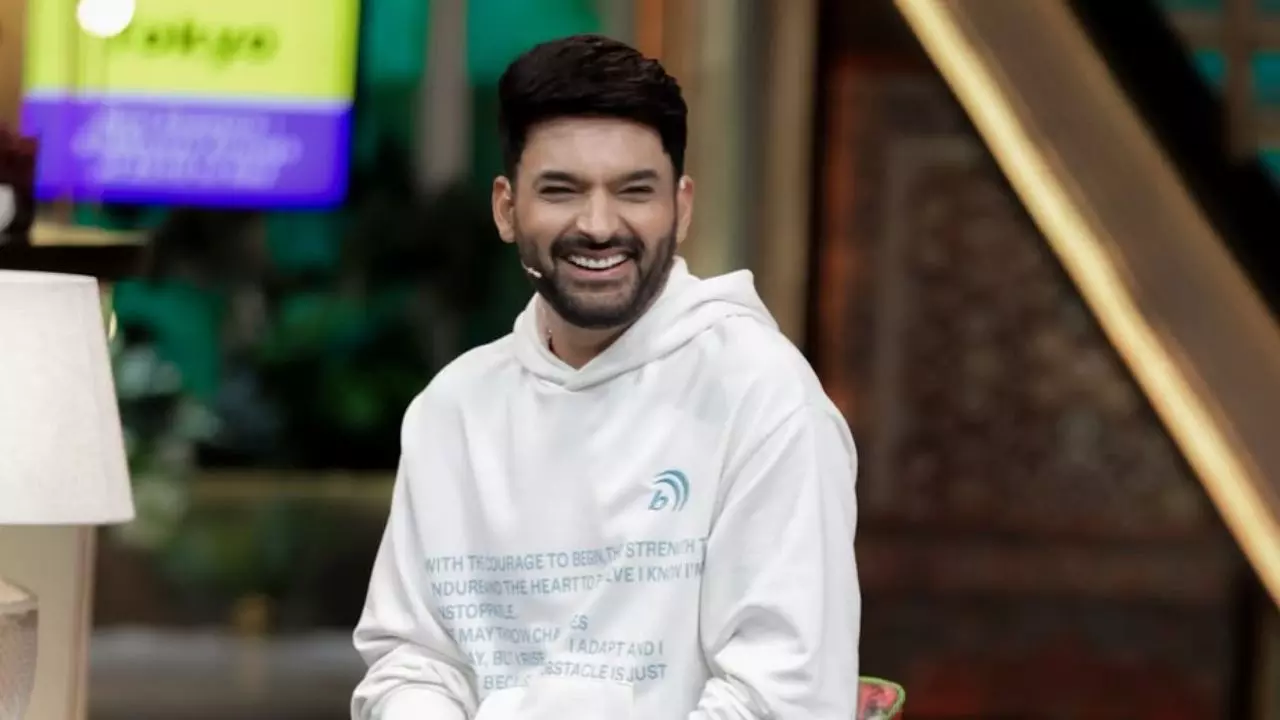
Bollywood comedian Kapil Sharma has come under the radar of the Maharashtra Navnirman Sena (MNS) after the use of the term Bombay instead of Mumbai on his Netflix show The Great Indian Kapil Show. MNS spokesperson Ameya Khopkar issued a warning, stating that the usage of the city’s former name could hurt the sentiments of its residents and demanded that the correct name, Mumbai, be used.

The controversy arose during an episode featuring actress Huma Qureshi, her brother Saqib Saleem, and the Shetty sisters. While talking about her bond with Saqib, Qureshi referred to the city as Bombay, explaining that she felt at home with him despite not being originally from the city. This comment drew criticism from the MNS, who have historically been vocal about protecting the identity and pride of Mumbai.

In a post on X, Khopkar stated in Marathi, that even though 30 years have passed since Bombay was officially renamed Mumbai, the term Bombay is still frequently used by celebrity guests on The Kapil Sharma Show, Delhi-based Rajya Sabha MPs, show anchors, and in many Hindi films. He noted that the name change was officially recognized by the Maharashtra government in 1995 and by the Central Government in 1996, preceding similar renamings in other major cities such as Chennai, Bengaluru, and Kolkata.

Khopkar further emphasized the seriousness of the matter during a media interaction in Mumbai. He stated that Sharma had been working in Mumbai for many years and described the city as his land of work. He added that the people of Mumbai admire him and watch his shows, and warned that the city and its residents should not be insulted, cautioning Sharma against repeating the mistake.

He added that if the reference had been made unintentionally, the mistake should be corrected immediately. Khopkar stated that all guests on the show, including celebrities and the host, should be informed in advance to refer to the city as Mumbai. He warned that if this is not followed, the MNS would launch a strong agitation.

The Great Indian Kapil Show has recently been renewed for a third season. Its first two seasons, comprising 13 episodes each, premiered in 2024, featuring a mix of Bollywood celebrities and entertainers. The controversy marks one of the few instances where the city’s political groups have publicly intervened over the naming of Mumbai on popular entertainment platforms.

Continue Reading

Latest News

Indian-origin motel manager beheaded in the US

Published

on

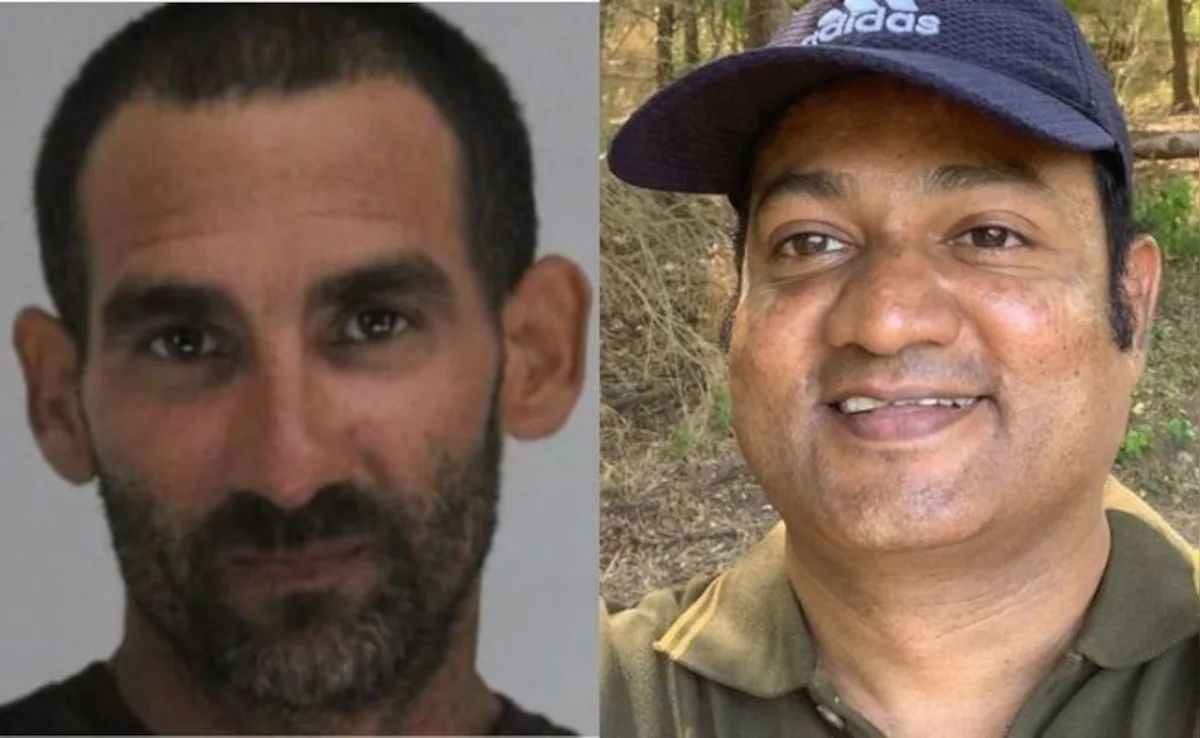
In a horrifying incident in Dallas, Texas, an Indian-origin motel manager, Chandra Nagamallaiah, was brutally beheaded by a guest following an argument over a malfunctioning washing machine. The gruesome attack was carried out by 37-year-old Yordanis Cobos-Martinez in front of Nagamallaiah’s wife and children, leaving the family traumatized.

According to court records and affidavits, the confrontation began when Nagamallaiah reportedly told Cobos-Martinez not to use a broken washing machine at the Downtown Suites motel. The suspect became enraged, partly because the manager relied on a woman present for translation instead of speaking directly to him. Surveillance footage later revealed Cobos-Martinez producing a machete and repeatedly stabbing and cutting Nagamallaiah, despite the efforts of his wife and child to intervene.

The affidavit details that the victim tried to flee to the motel’s front office while screaming for help, but the attacker followed him and continued the assault. Cobos-Martinez removed Nagamallaiah’s key card and cellphone before ultimately beheading him. Disturbing footage reportedly shows the suspect kicking the severed head across the ground before throwing it into a trash bin.

Cobos-Martinez, a Cuban national with a long criminal history, including convictions for grand theft, carjacking, false imprisonment, and sexual offenses, was arrested shortly after the attack. Authorities found him a block away wearing a blood-soaked T-shirt, along with the victim’s key card and cellphone. U.S. Immigration and Customs Enforcement (ICE) officials noted that Cobos-Martinez should not have been in the country at the time, as previous attempts to deport him to Cuba were unsuccessful due to his criminal record.

The Department of Homeland Security described the beheading as unthinkable and stated that the case highlights the critical need for strict immigration enforcement. A witness to the attack told NBC DFW that they could not explain what they saw, describing the suspect as appearing there and not there at the same time, emphasizing the surreal and terrifying nature of the crime.

This shocking incident has left the Dallas community and Nagamallaiah’s family in deep distress, as authorities continue their investigation into the motive and circumstances surrounding the brutal murder.

Continue Reading

India News

AAP MP Sanjay Singh accuses J&K authorities of house arrest, Farooq Abdullah condemns move

Published

on

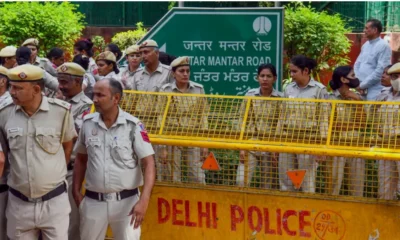
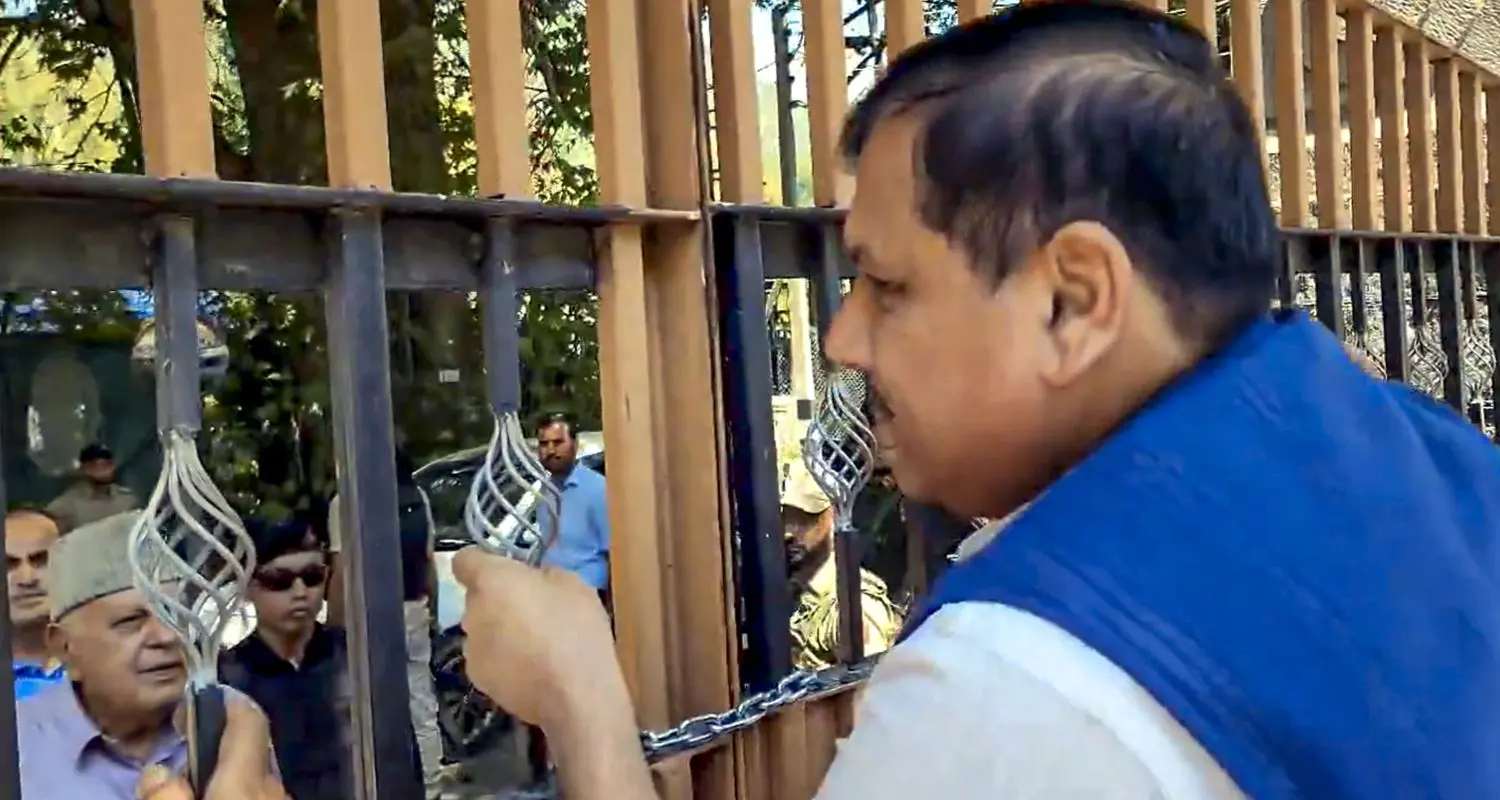
Aam Aadmi Party (AAP) MP Sanjay Singh on Thursday accused Jammu and Kashmir Lieutenant Governor Manoj Sinha of placing him under house arrest while he was in Srinagar to protest the detention of the party’s sole J&K MLA, Mehraj Malik.

Singh climbed the gate of a government guest house in Srinagar to meet National Conference (NC) chief Farooq Abdullah and later shared visuals of the interaction on social media. He said it was a very sad thing that Abdullah, who has served multiple terms as Chief Minister of Jammu and Kashmir, came to meet him at the guest house after learning about his alleged house arrest but was not allowed to do so. Singh further questioned the authorities’ actions, asking whether if this is not dictatorship, then what it is.

Malik, the MLA from Doda Assembly seat, has been detained under the Public Safety Act (PSA) on charges of disturbing public order. This marks the first instance of a sitting lawmaker being booked under the PSA, which allows authorities to detain individuals without charge or trial for up to two years. Singh alleged that Mr. Malik’s detention was retaliation for raising people’s issues in his constituency.

Abdullah also condemned the attempts to stop Singh from holding his protest. In a statement to news agency ANI, he said that preventing Singh from exercising his right to protest was absolutely wrong and accused the Lieutenant Governor Sinha of misusing his powers. He stressed that the right to protest is guaranteed by the Constitution of India, noting that Jammu and Kashmir being a union territory gives the LG significant authority, which, according to him, was being used for the wrong purposes. Abdullah questioned whether it was necessary to prevent Singh from speaking and asserted that this is not an autocracy, there is a constitution here.

Abdullah drew parallels with the recent unrest in Nepal, where protests led to the resignation of Prime Minister KP Sharma Oli, and cautioned that India must safeguard its Constitution to prevent similar circumstances. He urged the LG to uphold constitutional principles, warning that failure to do so could risk unrest, and emphasized the need to take care of the Constitution before such a fire breaks out in the country.

Other opposition leaders, including AAP chief Arvind Kejriwal and Shiv Sena (UBT) leader Sanjay Raut, also expressed concern over the move, condemning what they described as an infringement on democratic rights.

Continue Reading

Trending

© Copyright 2022 APNLIVE.com