
India News
AAP to sweep Punjab: Opinion poll

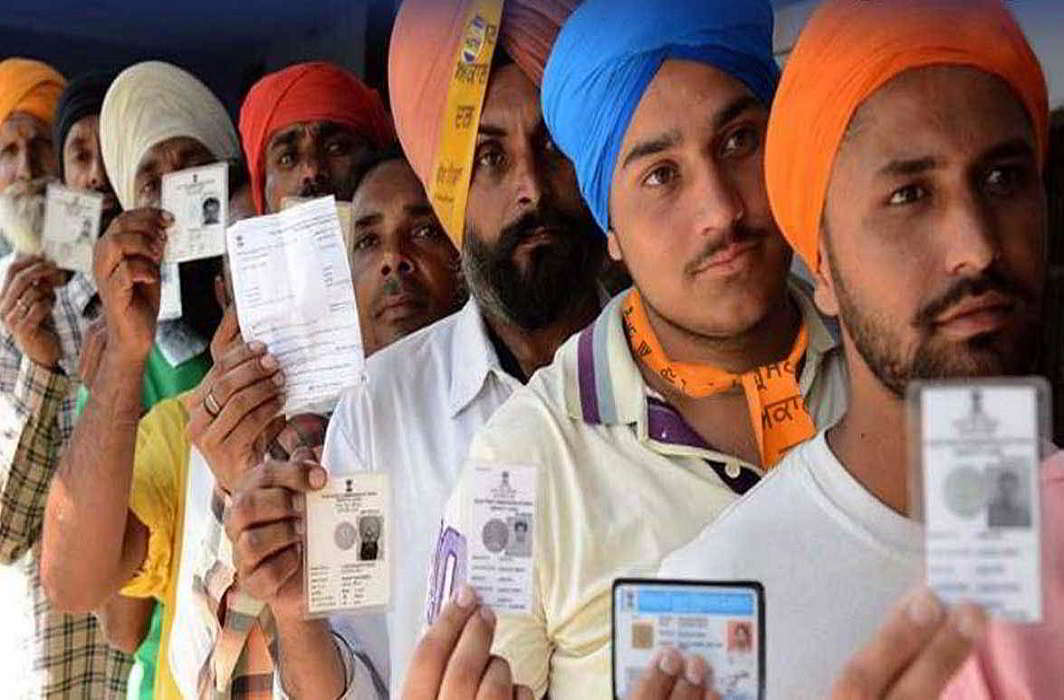
[vc_row][vc_column][vc_column_text]Its results indicate UP heading for a hung assembly, BJP winning Uttarakhand
By Nora Chopra
There are clear indications that no party is likely to get a clear majority in Uttar Pradesh. It looks like it is going to be a hung assembly in the country’s most populous state.
According to an opinion poll conducted by Amrish Tyagi, psephologist and son of Janata Dal (United) general secretary KC Tyagi, in Punjab, Uttar Pradesh and Uttarakhand, before the polling in Punjab and Goa on February 4, the BJP can hope to form government only in Uttarakhand. The projected success of the BJP is imputed to the errors of incumbent Chief Minister Harish Rawat.
Tyagi was a poll consultant with the Donald Trump campaign team and he was tasked to reach out to the Asian community as well as assess its political preferences.
In Punjab where the Aam Aadmi Party had slipped back a few months ago, is back in the race. Arvind Kejriwal’s ‘jharoo’ (the broom is the poll symbol) party is expected to sweep its stronghold, Malwa region, which is represented by its three Members of Parliament (MP)s. Malwa region has 69 seats, out of which, according to the survey, the AAP is expected to get 55 to 62 seats. He would need another 10 to 15 seats from outside Malwa to form the government. The Congress is expected to get 45 to 52, and the Akali-BJP alliance 15 to 18 seats. The others will get two-four seats.
In Sikh-dominated Punjab, the assembly election has been fought for the first time between the poor and the rich. It was a class war, says Tyagi. Kejriwal is supposed to have done what even the founder of Bahujan Samaj Party (BSP), Kanshiram, who belonged to Punjab, could not do. BSP had failed to have any impact in the state which has 34 per cent Dalit population, one of the highest in any state in the country. Kejriwal has successfully wooed Dalit voters along with the rural poor. Polling on Sunday saw the voter turnout in rural areas the highest at any time in the past.
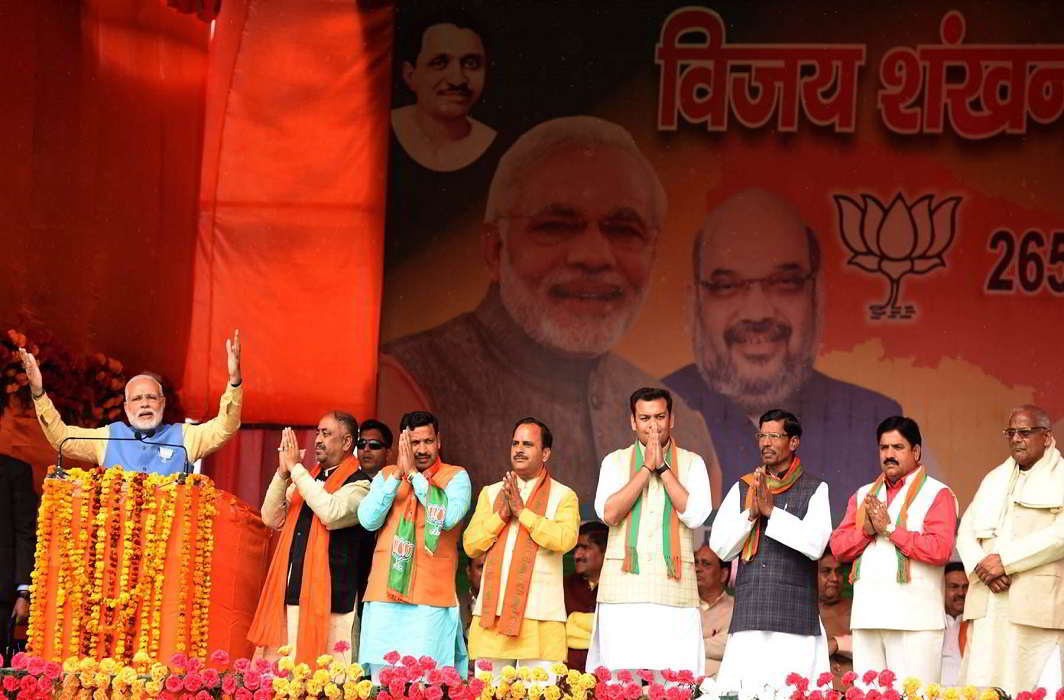
Prime Minister Narendra Modi addresses an election rally in Aligarh on February 5, ahead of the assembly polls in the state, UNI
The Congress was tipped to win in the state this time. Tyagi’s pre-poll survey had given 45 to 52 seats to the party. Captain Amarinder Singh, the Congress’ chief ministerial candidate, faced tough opposition from the Akali candidate and former chief of the army staff (COAS), General JJ Singh, and it is feared that he might even lose the election. Akali chief Prakash Singh Badal, who has been chief minister for 10 years now, has perhaps conceded defeat because he is learnt to have helped the Congress and head of the royal family of Patiala by asking the Akali followers to vote for the Congress candidate.
In this situation, it is the Hindu bloc that has no clear choice. In a normal election, the Hindu voter opted for the Congress and later preferred the BJP. But with the BJP out of reckoning, and the prospects of the Congress looking bleak, the Hindu bloc was left anchorless.
The poll battle in Uttar Pradesh is the most confusing. Tyagi says no party is likely to get a clear majority. According to the survey he had conducted around January 25, the fight in UP is a triangular. It appears that BJP will emerge as the single largest party with 152 to 162 seats, the BSP, the most under-rated party, could win 125 to 135 seats, while the SP-Congress alliance will end in the third spot with 110 to 118 seats. The Congress is likely to fare better than the SP. The others will get 10 to 15 seats.
With each passing day, Tyagi says the scenario appears more confusing than ever. Mayawati seems to be gaining ground by the day.
Much would depend on the first phase of polling in western UP, where the Muslim vote is around 25 per cent and the Dalit vote is about 19 per cent, making her Dalit-Muslim social alliance a formidable force. While the Yadavs are absent in the belt stretching from Saharanpur to Agra. The Congress may boost the staggering fortunes of the SP, but it will not be sufficient for the alliance to win the election in the state. Muslims are unlikely to waste their vote on SP. Their sole aim is to defeat the BJP. The SP and Congress blundered by not aligning with Ajit Singh’s Jat party, the Rashtriya Lok Dal (RLD) for fear of not getting the Muslim votes and apprehensions that the Jat vote would switch to the BJP. But they were wrong as RLD, which had nine seats in the last assembly, is likely to raise it to at least 12 to 14, with Muslims and Jats again coming together. Meanwhile, Mayawati has given 100 tickets to Muslims. She is likely to sweep western UP. In such a scenario, the Congress is unlikely to fare as well as it was expected to do.
In the Yadav belt of central UP, the SP-Congress alliance is likely to do better. But here too, Shivpal Yadav, the disgruntled uncle of the UP CM Akhilesh Yadav, has vowed to take his revenge. He can get the Yadav votes transferred to either the BJP or the BSP. He has already sent many of his followers to BSP, the last one being Mukhtar Ansari. Ansari is strong in east UP, but he can influence Muslim votes all over the state.
The BJP is banking on its traditional upper caste votes in east UP. Here, it will face competition from the Congress, which is working to get back its traditional upper caste votes. The BJP has worked overtime on the non-Yadav Other Backward Classes/Castes (OBC) vote. BJP president Amit Shah and Prime Minister Narendra Modi’s selective attacks on the SP are a strategy to split the Muslim votes, who they think will vote for the SP-Congress. The BJP’s top duo is not attacking the BSP for fear that the Muslims will favour Mayawati.
In Uttarakhand, the BJP has all reasons to be confident. According to Tyagi’s opinion poll the ruling Congress is likely to get 23 to 28 seats, and the BJP 36 to 41 seats. The rest will get three to six seats.
It is the infighting within the party that will cost the Congress dear. Here, it is mainly the Brahmin consolidation which was complete after Narain Dutt Tiwari quit the party to join the BJP, courtesy Chief Minister Harish Rawat. Rawat is alleged to have pushed the Brahmins into BJP, starting with Vijay Bahuguna.
Besides the Brahmin consolidation, the other issue boosting BJP’s fortunes in the hill state is that of the surgical strike. Surgical strike may not help the BJP anywhere but it is supposed to be a big issue in Uttarakhand because every family here has or had a member in the army.
(Views expressed in this article are those of the author, and they do not reflect the stand of this news website.) [/vc_column_text][/vc_column][/vc_row]






India News
Supreme Court judge calls police assault on CJP protesters very distressing
Supreme Court judge Justice Ujjal Bhuyan criticised alleged police assaults on CJP protesters and raised concerns over excessive force.


India News
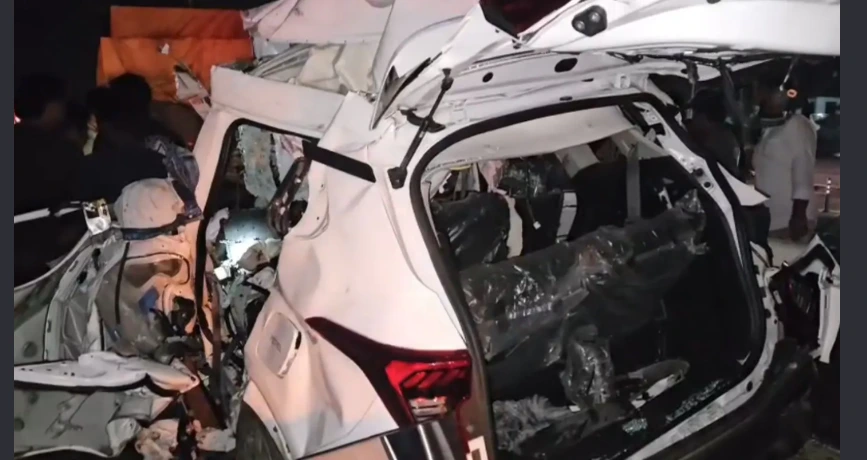
8 Tamil Nadu engineering students killed in Kerala car-lorry crash
Eight engineering students from Tamil Nadu were killed after their car collided with a parked lorry on NH-66 in Kerala’s Thrissur district.
India News
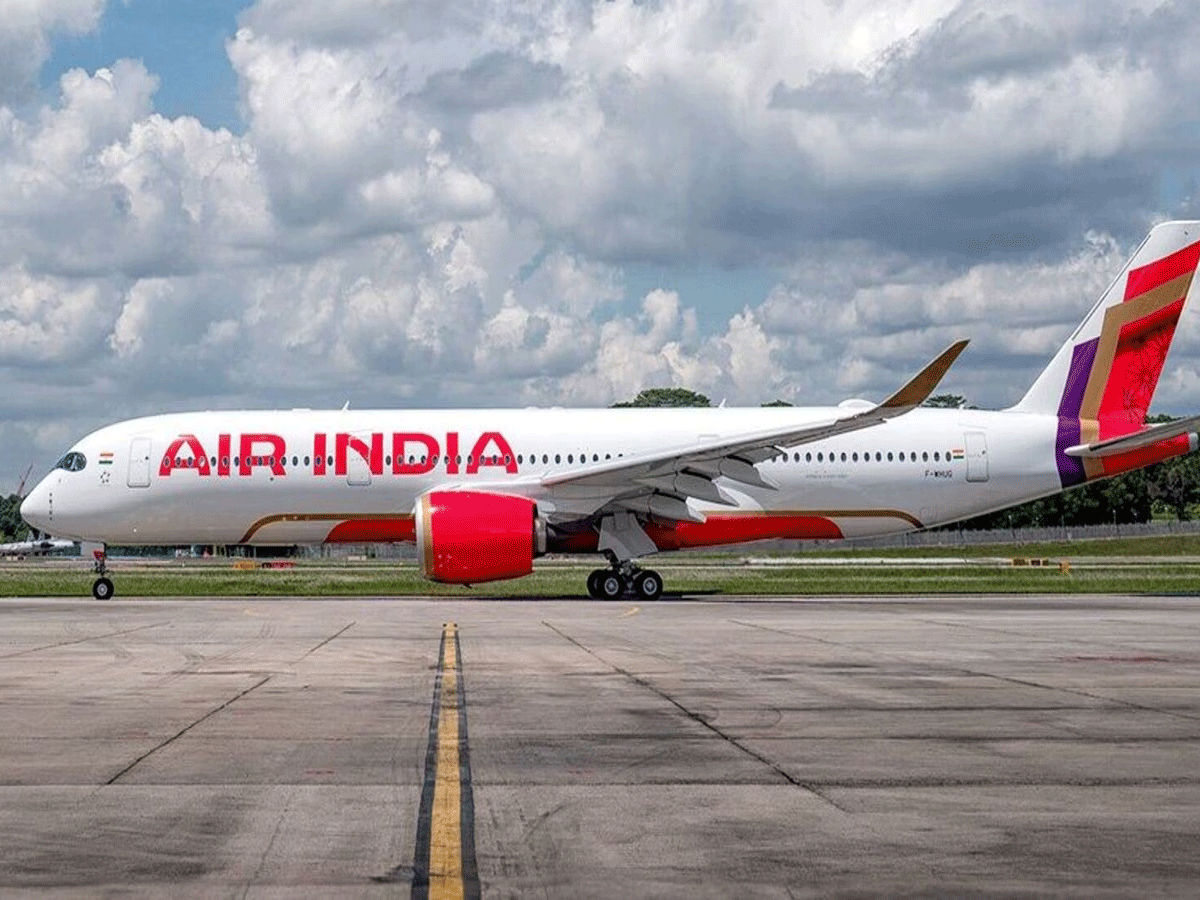
Air India sacks Phuket-Delhi flight pilot after failing drug test
Air India has terminated the Phuket-Delhi flight pilot after a confirmatory test found a psychoactive substance following the August 4 incident.

India offers forensic DNA support to identify Nepal flood victims

OpenAI launches GPT-6 Astra with major upgrades in AI reasoning, coding and computer use

Musician Bhagirath Bhatt breaks silence on Bigg Boss 20 entry, says not going

Air India sacks Phuket-Delhi flight pilot after failing drug test

8 Tamil Nadu engineering students killed in Kerala car-lorry crash

Supreme Court judge calls police assault on CJP protesters very distressing
8 Tamil Nadu engineering students killed in Kerala car-lorry crash
Air India sacks Phuket-Delhi flight pilot after failing drug test
OpenAI launches GPT-6 Astra with major upgrades in AI reasoning, coding and computer use
Musician Bhagirath Bhatt breaks silence on Bigg Boss 20 entry, says not going

Afghan Men Try To Hang With The Jet Engine Of The Aircraft in Kabul- Afghanistan News – Kabul News
Trending Top 10 News: 10000 Crore Fine on Flipkart, Apple to Launch Unique Feature, Hdfc Bank Job Ad

Trending Top 10 News: Nokia 6310, Apple sales, Bachpan ka Pyar Video Kid, Dainik Bhaskar IT Raid

Trending Top 10 News: Canada bans Indian flights, Rain in Delhi NCR, AIMIM Twitter hacked, Raj Kundra case

Trending Top 10 News: Shein India, Apple New Service, Pocket Oxygen, Oppo Launched New Phone
-
 India News21 hours ago
India offers forensic DNA support to identify Nepal flood victims
-
 Tech20 hours ago
OpenAI launches GPT-6 Astra with major upgrades in AI reasoning, coding and computer use
-
 Entertainment21 hours ago
Musician Bhagirath Bhatt breaks silence on Bigg Boss 20 entry, says not going
-
 India News16 hours ago
Air India sacks Phuket-Delhi flight pilot after failing drug test
-
 India News1 hour ago
8 Tamil Nadu engineering students killed in Kerala car-lorry crash
-
 India News32 mins ago
Supreme Court judge calls police assault on CJP protesters very distressing
