English हिन्दी
Connect with us

India News

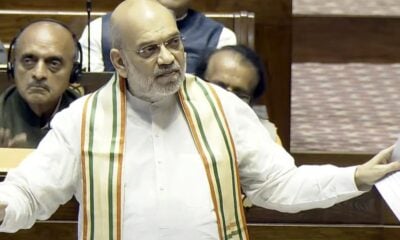
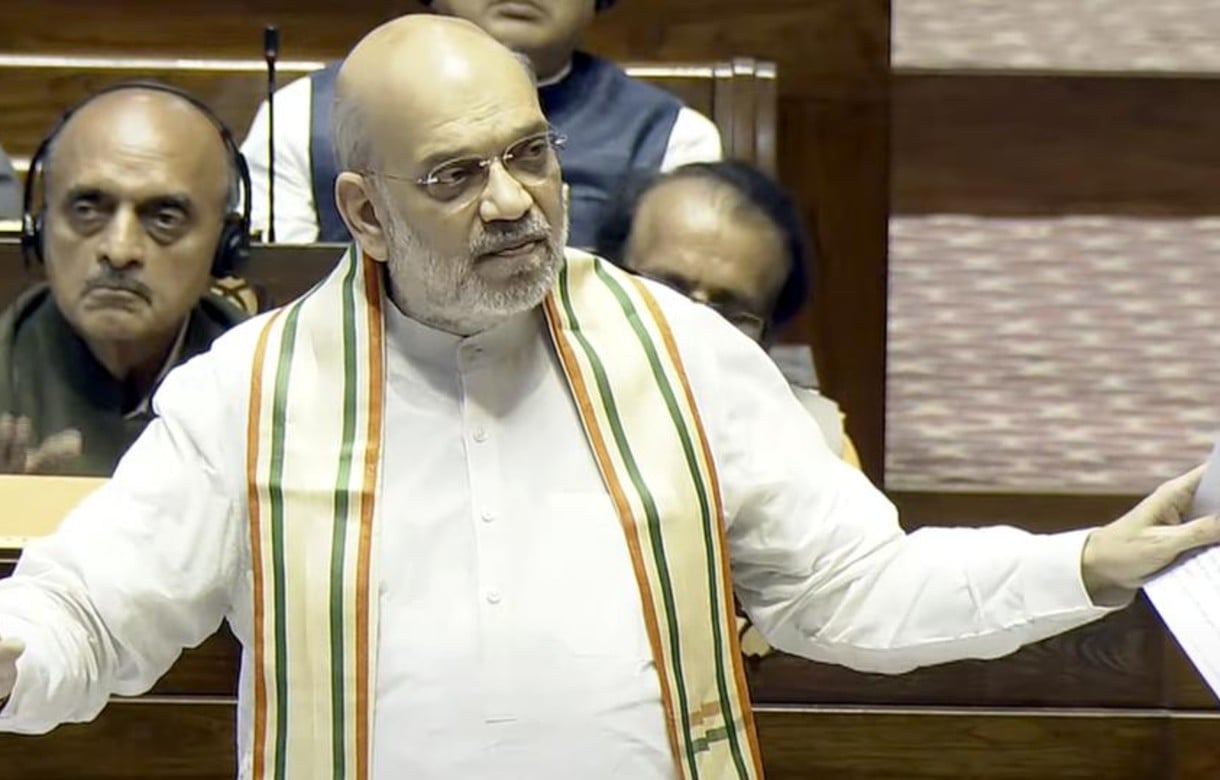
Amit Shah to visit India-Bangladesh border in Assam on February 21

Amit Shah is scheduled to visit the India-Bangladesh border in Assam’s Cachar district on February 21 and participate in the Vibrant Villages Programme event.

Published

on

Amit Shah

Union Home Minister Amit Shah is set to visit the India-Bangladesh international border in Assam’s Cachar district on February 21, in a move that carries political and administrative significance ahead of the upcoming Assembly elections.

According to party sources, Shah will arrive in Assam on February 20 and travel the following morning to Natanpur village in the Katigorah area, located close to the international border. During his visit on February 21, he is scheduled to participate in an event under the Vibrant Villages Programme (VVP).

The visit is notable as action against illegal immigrants from Bangladesh has remained a key electoral issue for the Bharatiya Janata Party (BJP) in the state.

Ahead of the Home Minister’s arrival, State minister Kaushik Rai, Cachar district commissioner Ayush Garg, and senior officials of the Border Security Force (BSF) and police reviewed security arrangements and preparedness in Natanpur village.

Natanpur, situated along the international boundary in Cachar district, has witnessed the apprehension of over 200 illegal migrants in recent years, including individuals from Bangladesh and Myanmar.

The Vibrant Villages Programme, organised by the Home Ministry, focuses on strengthening border areas through livelihood generation, tourism promotion, preservation of cultural heritage, skill development, and support for agriculture and allied sectors.

India News

Rahul Gandhi faces expulsion demand in Lok Sabha over trade deal remarks

BJP MP Nishikant Dubey has moved a notice seeking Rahul Gandhi’s expulsion from the Lok Sabha. Here is how the disqualification and expulsion process works.

Published

on

Rahul Gandhi

Nishikant Dubey, a Member of Parliament from the Bharatiya Janata Party, has sought the expulsion of Congress leader Rahul Gandhi from the Lok Sabha. Dubey has submitted a notice calling for a substantive motion against Gandhi over his remarks concerning the India–US trade deal.

The BJP MP has demanded cancellation of Gandhi’s Lok Sabha membership and has also called for a lifetime ban on him from contesting elections. The development has raised questions about the procedure for removing a sitting Member of Parliament from the House.

How can a Lok Sabha MP be expelled

The process for expelling a Member of Parliament involves several procedural steps within the House:

Submission of complaint
The process begins when a member or political party files a formal complaint against a sitting MP.

Reference to committee
The Lok Sabha Speaker may refer the matter to the Committee of Privileges for examination. The committee is tasked with conducting a detailed inquiry into the allegations.

Investigation and findings
The committee can examine evidence, call witnesses, and allow the concerned MP to present a defence. After completing its review, it submits a report outlining its findings and recommendations.

Consideration by the House
The committee’s report is tabled in the Lok Sabha. If it recommends expulsion, a motion is moved in the House to adopt the recommendation.

Voting on expulsion
For the motion to pass, it must secure a majority of members present and voting. If approved, the MP stands expelled from the House.

Rahul Gandhi’s disqualification in 2023

In 2023, a court in Surat sentenced Rahul Gandhi to two years in prison in a criminal defamation case related to a remark about the “Modi surname”. Under Section 8(3) of the Representation of the People Act, 1951, any MP convicted and sentenced to two years or more faces automatic disqualification from Parliament.

Following the conviction, Gandhi was disqualified as a Member of Parliament. However, he later challenged the verdict in the Supreme Court of India, which stayed his conviction. After the stay order, his Lok Sabha membership was restored and he resumed his role as an MP.

Continue Reading

India News

Vijay targets DMK over Rs 2,000 scheme, calls on voters to blow the whistle

Vijay accused the DMK of trying to influence voters through financial promises and urged people to back TVK in the upcoming Tamil Nadu elections.

Published

on

Actor vijay

With the Tamil Nadu elections approaching, Tamilaga Vettri Kazhagam (TVK) chief and actor Vijay launched a strong attack on Chief Minister M K Stalin and the ruling Dravida Munnetra Kazhagam (DMK), accusing them of attempting to influence voters through financial promises.

Addressing a massive gathering in Salem, Vijay questioned the timing of the state government’s transfer of Rs 3,000 to women beneficiaries under a welfare initiative, describing it as an “advance payment”. He also criticised the announcement of an additional Rs 2,000 per woman as part of a so-called “summer special”, suggesting the payout was linked to the election outcome.

“Will you vote for ‘good’ TVK or ‘evil’ DMK?” Vijay asked supporters, framing the contest as a moral battle.

‘Take the money, but blow the whistle’

Claiming the DMK was attempting to buy votes, Vijay urged people to accept the financial assistance but support his party at the ballot box. Referring to TVK’s election symbol, he said, “Take the money, but blow the whistle.”

He questioned the rationale behind calling it a “summer allowance”, asking whether summer occurred only this year. According to him, the announcement was prompted by the growing popularity of the TVK and its whistle symbol across the state.

Vijay alleged that Stalin feared increasing support for his party, particularly among women voters. Taking a swipe at the DMK’s experience in governance, he remarked that while the ruling party had experience in corruption, his party was “inexperienced in that”.

Rally restrictions and Karur stampede reference

The TVK leader also criticised restrictions imposed on attendance at the Salem rally, including a reported cap of 4,998 participants and identity verification measures.

Authorities cited a stampede at a rally in Karur last year, in which 41 people lost their lives, as the reason for stricter norms. The DMK accused Vijay of failing to follow standard operating procedures during that event. However, TVK leaders have alleged that the violence was orchestrated to damage the actor’s political prospects.

Vijay dismissed the revised guidelines as politically motivated, quipping that he was familiar only with “Stalin Operating Procedure”. He pledged to continue fighting for justice for those who died in Karur.

TVK’s positioning in a Dravidian-dominated landscape

Vijay and the TVK have emerged as potential challengers in a political landscape long dominated by the DMK and the All India Anna Dravida Munnetra Kazhagam (AIADMK), which have alternated in power since the late 1960s.

The actor has ruled out any alliance with the DMK, describing it as his political adversary. His criticism of the AIADMK, however, has been comparatively restrained, a move seen as an attempt to attract swing voters and draw on the legacy of its founder M G Ramachandran.

National parties remain aligned with the state’s principal Dravidian forces for now, though political observers note ongoing discussions and potential shifts in seat-sharing arrangements.

As campaigning gathers pace, Vijay’s rhetoric signals an aggressive push to convert his popularity into electoral gains, positioning the TVK as an alternative to established players in Tamil Nadu politics.

Continue Reading

India News

PM Modi congratulates Tarique Rahman after BNP’s decisive win in Bangladesh elections

PM Narendra Modi has congratulated BNP chief Tarique Rahman after the party claimed a decisive victory in Bangladesh’s parliamentary elections, pledging support for a democratic and inclusive Bangladesh.

Published

on

PM Modi

Prime Minister Narendra Modi has congratulated Tarique Rahman after the Bangladesh Nationalist Party (BNP) claimed a decisive victory in Bangladesh’s parliamentary elections.

Though final results are awaited, the BNP has asserted it has secured a clear mandate, paving the way for Rahman to take over as prime minister. In a message posted on X, PM Modi conveyed his “warm congratulations” to Rahman for leading his party to what he described as a decisive win.

“This victory shows the trust of the people of Bangladesh in your leadership,” the Prime Minister said.

He further assured that India would continue to stand in support of a “democratic, progressive and inclusive Bangladesh,” indicating New Delhi’s willingness to work with the incoming government.

“I look forward to working with you to strengthen our multifaceted relations and advance our common development goals,” PM Modi added.

India signals continuity in ties

The Prime Minister’s outreach comes at a time when bilateral ties have seen strains under interim chief Muhammad Yunus. Following the political changes that led to former prime minister Sheikh Hasina stepping down, Bangladesh experienced challenges related to border management and internal security.

Under Hasina’s leadership and her party, the Awami League, India and Bangladesh maintained stable relations, with cooperation spanning trade, transport connectivity, border security and water-sharing agreements. Hasina was barred from contesting this election and is facing legal proceedings, including a possible death penalty.

New Delhi also recalls the 2001–2006 BNP rule, a period marked by concerns over cross-border insurgency. The 2004 Chittagong arms haul case, in which large consignments of weapons were smuggled to anti-India militants, remains a significant reference point in bilateral history.

However, Rahman has spoken of a “reset” in relations with India. He has pledged continued counterterrorism cooperation, resolution of the Teesta water-sharing issue, and protection of Hindu minorities in Bangladesh. At the same time, his articulation of a “Bangladesh First” doctrine has raised questions about the level of strategic alignment seen during the Hasina era.

PM Modi’s message underscores India’s intent to maintain engagement with the new leadership in Dhaka while supporting democratic processes and inclusive governance in the neighbouring country.

Continue Reading

Trending

© Copyright 2022 APNLIVE.com

Left Menu Icon