English हिन्दी
Connect with us

India News

WHAT THE BAN OF CHINESE APP MEANS

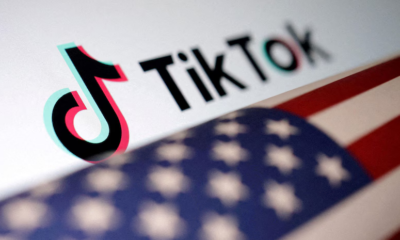
The ban on 59 apps originating from China, has been enforced under Section 69A of the Information Technology Act, 2000 which empowers the government to issue directions for blocking public access of any information through any computer resource in the interest of sovereignty and integrity of India, defence of India, security of the State, friendly relations with foreign States or public order or for preventing incitement to the commission of any cognizable offence relating to above.

Published

on

Boycott Chinese products

The ban on 59 apps originating from China, has been enforced under Section 69A of the Information Technology Act, 2000 which empowers the government to issue directions for blocking public access of any information through any computer resource in the interest of sovereignty and integrity of India, defence of India, security of the State, friendly relations with foreign States or public order or for preventing incitement to the commission of any cognizable offence relating to above. The government, by order, direct any agency of the Government or intermediary to block for access by the public or cause to be blocked for access by the public any information generated, transmitted, received, stored or hosted in any computer resource.

The Ministry of Information and Technology has said that it “has received many complaints from various sources including several reports about misuse of some mobile apps… for stealing and surreptitiously transmitting users’ data in an unauthorised manner to servers which have locations outside India”. Since this “ultimately impinges upon the sovereignty and integrity of India, is a matter of very deep and immediate concern which requires emergency measures”, it said.

The notification is expected to be followed by instructions to Internet service providers to block these apps. However, while this will impact apps like TikTok and UC News that need a live feed to serve any purpose, users might still be able to continue using apps that don’t need an active Internet connection to be used. But further downloads of these apps, like CamScanner, are likely to be blocked on Google’s Play Store and Apple’s App Store.

Some apps on the banned list are very popular in India, especially TikTok, which has over 100 million active users in the country, mainly in the heartland. New social media platforms like Helo and Likee, as well as video chat app Bigo Live are immensely popular among Indians who are not comfortable in English. These users will have to look for substitutes.

Also, most of these platforms have Indian creators, for many of whom this is the only source of income. Many of these apps have offices and employees in India, and a few thousand jobs could be at stake.

TikTok was banned in India on the order of the Madras High Court for a few days last year, but it came back soon after the court vacated the ban. This action, however, is more sweeping, impacts more apps, and has been taken in a specific strategic and national security context. It could be a warning to bigger Chinese businesses in India, and to China itself.

India News

Shashi Tharoor questions mandatory full rendition of Vande Mataram at official events

Shashi Tharoor has questioned the need to make the full rendition of Vande Mataram mandatory at official events, saying respect for the national song should not be equated with compulsion.

Published

on

Congress MP Shashi Tharoor has sparked a fresh debate over the singing of Vande Mataram at official functions, arguing that requiring the full rendition of the national song at every public event is unnecessary.

Speaking on the issue, Tharoor said respect for Vande Mataram should not be confused with making its complete version compulsory at all official gatherings. He described such a requirement as an unnecessary burden and suggested that patriotism should remain a matter of voluntary expression rather than enforcement.

The remarks come months after the Centre introduced detailed guidelines governing the performance of Vande Mataram at official functions. According to reports, the revised protocol standardised how and when the national song should be sung or played during government events.

Tharoor’s comments add to an ongoing national discussion about the balance between respect for national symbols and individual choice. He has previously argued that patriotism gains meaning when expressed willingly rather than through compulsion.

The issue has generated political and constitutional debate in several states in recent months, with differing views emerging over whether the full version of the song should be rendered at official ceremonies and public events.

While supporters of stricter guidelines say the move promotes uniform respect for a national symbol, critics contend that making the full rendition mandatory could be seen as an imposition. The debate is expected to continue as political leaders and constitutional experts weigh in on the matter.

Continue Reading

India News

TMC faces fresh turbulence as speculation grows over possible breakaway faction in Bengal

The Trinamool Congress is facing fresh internal challenges as reports of dissent and possible plans for a breakaway political formation gain attention following the party’s defeat in the West Bengal Assembly elections.

Published

on

The Trinamool Congress (TMC) is facing renewed signs of internal unrest, with political speculation mounting over the possibility of a breakaway group emerging in West Bengal after the party’s recent electoral setback. Reports of disgruntled legislators distancing themselves from the party leadership have fuelled discussions about a potential new political formation led by rebel leaders rather than by veteran leader Mamata Banerjee.

The buzz comes shortly after the expulsion of two TMC MLAs over alleged anti-party activities. According to reports, concerns within the party have intensified amid claims that several legislators are unhappy with the current leadership structure and the role of the party’s top decision-makers.

Adding to the speculation, a large number of TMC legislators reportedly skipped a scheduled meeting at Mamata Banerjee’s residence, a development that has been interpreted by political observers as a sign of growing discontent within the organisation.

Split rumours gain momentum after election defeat

The developments come in the aftermath of the 2026 West Bengal Assembly election, in which the BJP secured a decisive victory while the Trinamool Congress suffered a major setback after 15 years in power. The defeat triggered debates within the party over its future direction and leadership.

Reports suggest that discussions are taking place among some legislators regarding the possibility of forming a separate political platform. The situation has drawn comparisons with Maharashtra’s political realignments in recent years, though no formal announcement regarding a split has been made.

Meanwhile, Mamata Banerjee has publicly dismissed rebel voices, stating that the party is stronger without those working against its interests. She has also alleged that there are organised efforts to weaken the Trinamool Congress following its electoral defeat.

While speculation continues, there has been no official confirmation of a new party being launched. Political observers say the coming weeks could determine whether the current tensions remain internal disagreements or evolve into a larger organisational challenge for the Trinamool Congress.

Continue Reading

India News

TMC faces fresh turmoil as signature controversy exposes internal divisions in Bengal

A political controversy has erupted in West Bengal after two TMC MLAs alleged their signatures were used without consent on a letter endorsing Sobhandeb Chattopadhyay as Leader of Opposition, leading to their expulsion from the party.

Published

on

Mamata Banerjee

The Trinamool Congress (TMC) has found itself at the centre of a fresh political controversy after allegations emerged that signatures of some party legislators were used without their consent on a letter related to the appointment of the Leader of Opposition in the West Bengal Assembly.

The row intensified after two TMC MLAs, Ritabrata Banerjee and Sandipan Saha, reportedly objected to their signatures appearing on a letter endorsing senior party leader Sobhandeb Chattopadhyay for the post of Leader of Opposition. The legislators alleged that they had not signed the document.

Allegations trigger political confrontation

The controversy gained prominence after opposition leader Suvendu Adhikari raised the issue and questioned the authenticity of the signatures submitted to the Assembly Secretariat. The allegations have fuelled a political confrontation between the ruling party and the opposition.

Authorities are examining the matter, with the authenticity of the disputed signatures becoming a key focus of the ongoing inquiry. The investigation is expected to determine whether any procedural irregularities occurred during the submission of the endorsement letter.

TMC expels two MLAs

Amid the controversy, the Trinamool Congress expelled Ritabrata Banerjee and Sandipan Saha from the party. TMC leaders cited anti-party activities as the reason for the action, while the expulsions have further intensified debate around the signature dispute.

The development has brought internal disagreements within the party into public view and added to the political tensions surrounding the issue.

Inquiry continues

Officials are continuing to examine the allegations and related documents. The outcome of the inquiry is expected to clarify the circumstances under which the endorsement letter was submitted and whether any irregularities took place.

Continue Reading

Trending

© Copyright 2022 APNLIVE.com