English हिन्दी
Connect with us

India News

Bengal phase 2 voting records over 18% turnout in early hours amid glitches and tension

Bengal phase 2 voting recorded over 18% turnout in early hours despite EVM glitches and isolated incidents across constituencies.


Published

on

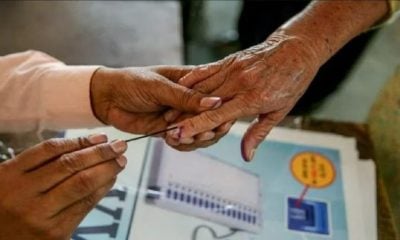
Voting for the second phase of the West Bengal Assembly elections began on Wednesday with steady voter participation, even as reports of electronic voting machine (EVM) glitches and sporadic incidents of violence emerged from several areas.

According to early data, voter turnout reached around 18.39% by 9 am, indicating a moderate but steady response from voters in the initial hours of polling. Long queues were seen at multiple polling booths as people arrived early to cast their votes across key constituencies.

Technical issues and isolated incidents reported

Some polling stations reported EVM-related issues, which briefly slowed down the voting process before being addressed by officials. Alongside technical glitches, isolated incidents of clashes and tension were also reported, adding to the challenges during the early phase of polling.

Authorities have deployed extensive security arrangements, particularly in sensitive locations, to ensure that voting continues without major disruptions.

Political reactions surface as polling begins

Political leaders reacted sharply as polling got underway. Allegations of interference and attempts to influence voters were raised, while appeals were also made to ensure maximum voter participation.

The phase remains crucial in determining the electoral outcome across several important regions, with major parties closely contesting for dominance.

India News

YSRCP questions TDP’s commitment to women reservation over Rajya Sabha nominations

YSRCP has criticised TDP’s Rajya Sabha nominations, claiming the ruling party failed to demonstrate its commitment to women’s representation despite advocating 33 per cent reservation for women in politics.

Published

on

The opposition YSR Congress Party (YSRCP) has criticised the ruling Telugu Desam Party (TDP) over its latest Rajya Sabha nominations, alleging that the party’s commitment to women’s political representation is not reflected in its candidate selections. The remarks have triggered a fresh political confrontation in Andhra Pradesh over the issue of women’s reservation.

TDP president and Andhra Pradesh Chief Minister N. Chandrababu Naidu recently finalised the party’s nominees for the upcoming Rajya Sabha vacancies. The selected candidates include sitting MP Sana Satish Babu, education entrepreneur Bhashyam Ramakrishna and party leader Chintakayala Vijay.

YSRCP raises questions on women’s representation

Reacting to the nominations, the YSRCP argued that the selections did not align with repeated promises made by the TDP leadership regarding women’s participation in politics. The opposition party pointed to the absence of women among the announced Rajya Sabha candidates and questioned the sincerity of the ruling party’s commitment to reserving 33 per cent of seats for women.

The criticism comes shortly after TDP national general secretary Nara Lokesh announced that the party would reserve 33 per cent of Assembly and Parliament seats for women in the 2029 elections. The proposal had also received public backing from Chandrababu Naidu.

Opposition calls Rajya Sabha nominations a missed opportunity

According to the YSRCP, the Rajya Sabha nominations provided an immediate opportunity for the TDP to demonstrate its commitment to women’s empowerment through candidate selection. The party maintained that political commitments should be reflected through representation and decision-making roles rather than only through public declarations.

The issue has now emerged as another point of contention between the ruling NDA alliance in Andhra Pradesh and the opposition YSRCP, with both sides likely to continue debating women’s representation in elected bodies in the run-up to future elections.

Continue Reading

India News

Sukhendu Sekhar Roy quits Trinamool Congress amid deepening crisis for Mamata Banerjee

Veteran Rajya Sabha MP Sukhendu Sekhar Roy has resigned from the Trinamool Congress, marking a significant setback for Mamata Banerjee as the party confronts growing internal unrest and defections.

Published

on

Mamata Banerjee

In a major setback for Trinamool Congress chief Mamata Banerjee, veteran Rajya Sabha MP Sukhendu Sekhar Roy has resigned from the party, further highlighting the turbulence within the organisation.

Roy’s departure comes at a time when the Trinamool Congress is facing one of the most challenging phases in its recent political history. The party has been dealing with growing internal dissent and criticism from several leaders following its electoral setbacks and organisational turmoil.

The Rajya Sabha member had recently voiced strong concerns about the party’s future and leadership. In public remarks made in recent weeks, he questioned the direction of the organisation and expressed doubts about its long-term prospects.

Roy, a senior parliamentarian who has represented West Bengal in the Rajya Sabha since 2011, had long been considered one of the prominent voices of the Trinamool Congress in Parliament. His resignation is likely to add pressure on the party leadership as it seeks to contain growing unrest among sections of its leaders and legislators.

Resignation adds to concerns over party unity

The development comes amid continuing speculation over divisions within the Trinamool Congress’s parliamentary ranks. Party leaders have been engaged in efforts to maintain unity and prevent further exits as concerns over defections continue to dominate political discussions.

In recent days, several leaders associated with the party have publicly expressed dissatisfaction or stepped away from organisational responsibilities, fuelling debate about the party’s internal situation.

Political implications

Roy’s resignation is significant because of his long association with the Trinamool Congress and his role in Parliament. Political observers believe the move could encourage further debate within the party and intensify scrutiny of the leadership’s strategy in the aftermath of recent political developments in West Bengal.

The Trinamool Congress leadership is expected to focus on limiting the impact of the resignation while attempting to reassure party workers and supporters about the organisation’s future direction.

Continue Reading

India News

Rabri Devi removes new security detail after Z-plus cover withdrawal, Tejashwi Yadav follows suit

Former Bihar Chief Minister Rabri Devi and RJD leader Tejashwi Yadav reportedly removed newly assigned security personnel after the state government revised security cover for several political leaders, including Lalu Prasad Yadav.

Published

on

Rabri Devi

Former Bihar Chief Minister Rabri Devi has reportedly removed a newly deployed security team from her residence after the Bihar government revised the security cover provided to several political leaders in the state.

The move came days after a security review resulted in changes to the protection arrangements of several politicians, including RJD president Lalu Prasad Yadav. According to reports, Rabri Devi expressed displeasure over the withdrawal of the Z-plus security cover that had previously been provided to her and her husband.

Security cover revised after government review

The Bihar government recently conducted a review of security arrangements for a number of political leaders. Following the assessment, the security category of some leaders was altered based on the recommendations of security agencies.

As part of the exercise, the Z-plus cover earlier available to Lalu Prasad Yadav and Rabri Devi was reportedly withdrawn. Revised security arrangements were subsequently put in place by the administration.

However, reports suggest that Rabri Devi was unhappy with the changes and directed the newly assigned personnel to leave her residence.

Tejashwi Yadav also takes similar step

RJD leader Tejashwi Yadav is also reported to have objected to the revised security deployment. According to sources, he too asked the newly assigned security personnel to leave.

The development has triggered political discussion in Bihar, with the RJD questioning the rationale behind the changes in security arrangements for members of the Yadav family.

Political reactions expected

The security review comes at a time when Bihar’s political environment remains active ahead of upcoming electoral battles. While the state government has maintained that security decisions are based on assessments by agencies and established protocols, opposition leaders are expected to raise questions over the timing and nature of the changes.

No official indication has emerged suggesting a reversal of the revised security arrangements so far.

Continue Reading

Trending

© Copyright 2022 APNLIVE.com

Left Menu Icon