English हिन्दी
Connect with us

India News

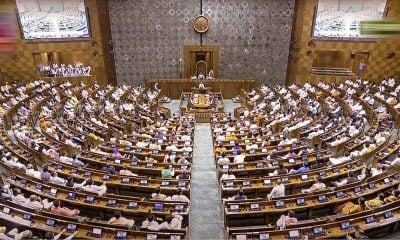
BJP MP alleges Trinamool lawmaker smoked e-cigarette inside Lok Sabha

Anurag Thakur accused a Trinamool MP of vaping inside Lok Sabha, sparking protests and prompting the Speaker to remind members of the complete ban on e-cigarettes in India.

Published

on

Anurag Thakur

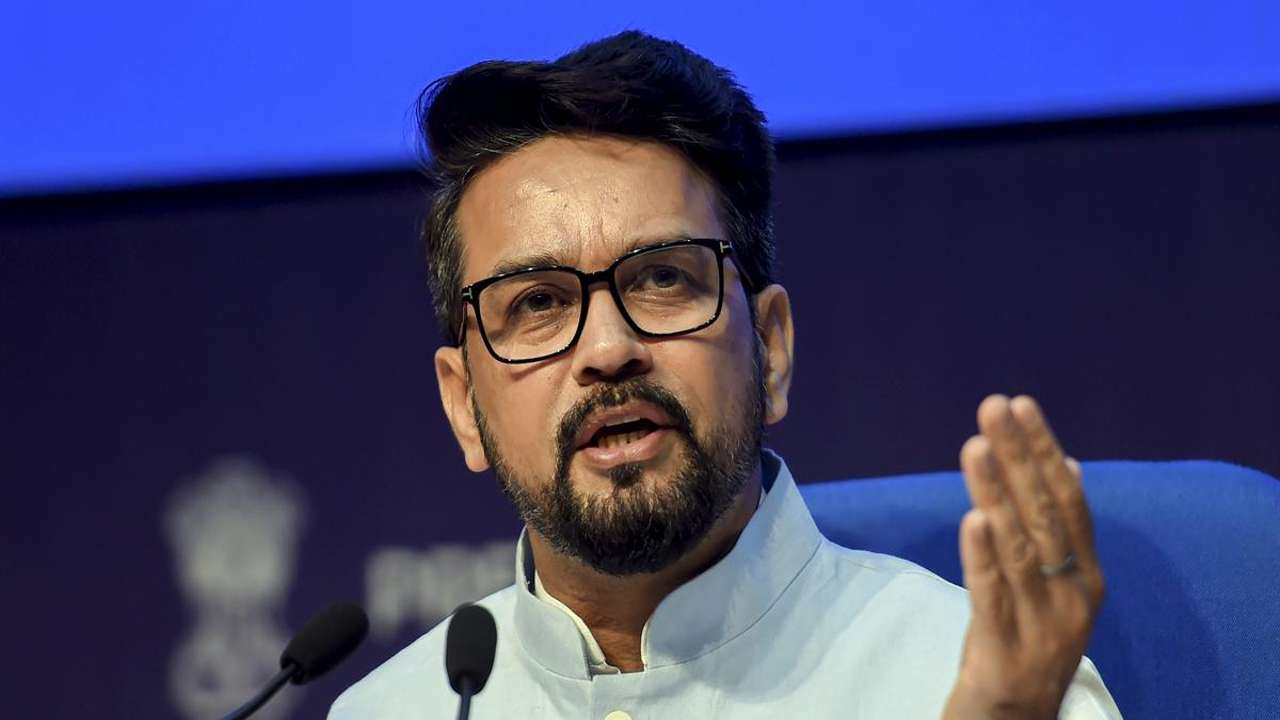
BJP MP Anurag Thakur on Thursday accused a Trinamool Congress member of using an e-cigarette inside the Lok Sabha during Question Hour, prompting the Speaker to warn MPs about maintaining decorum. E-cigarettes are fully banned in India under the Prohibition of Electronic Cigarettes Act, 2019.

What triggered the row in Lok Sabha

Raising the matter before Speaker Om Birla, Thakur questioned whether e-cigarettes were permitted inside the House. After Birla said they were not allowed, Thakur alleged that a Trinamool MP had been “smoking e-cigarettes in the House for the past several days” and urged an immediate inquiry. His remarks led several BJP MPs to join the protest, briefly disrupting proceedings.

Birla responded by reminding members to uphold parliamentary traditions and stressed that any such violation would invite action.

Centre reminds of complete ban on e-cigarettes

E-cigarettes are electronic or battery-operated devices that heat liquid—often containing nicotine and flavouring—into an inhalable aerosol. Their manufacture, sale, distribution, import and even possession are illegal in India.

Textiles Minister Giriraj Singh also termed the alleged incident “unfortunate”, noting that the law applies to everyone, including MPs.

Despite the nationwide ban, illegal sales continue in many parts of the country, including near educational institutions, prompting the Centre to issue fresh advisories to states in 2023.

Smoking is also prohibited anywhere within the Parliament complex, as the Parliament Rule Book explicitly states that smoking is “strictly forbidden”.

India News

BJP nominates Laxmi Verma to Rajya Sabha from Chhattisgarh

The BJP has announced Laxmi Verma as its Rajya Sabha nominee from Chhattisgarh, with her election considered certain given the party’s Assembly strength.
Published

on

Laxmi verma of BJP

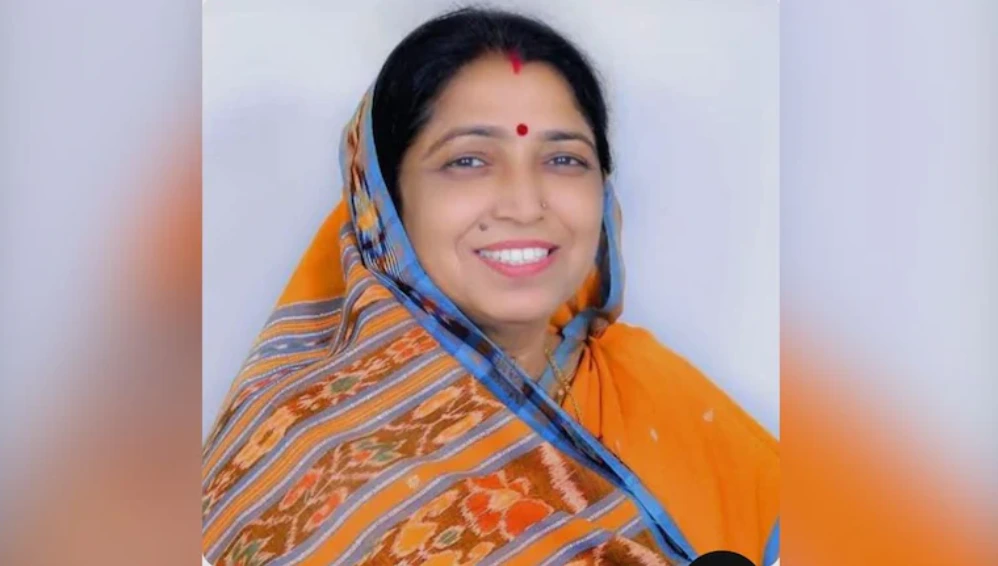
The Bharatiya Janata Party (BJP) has announced Laxmi Verma as its candidate for the Rajya Sabha from Chhattisgarh, naming her as part of a broader list of nominees released for six states. The decision comes after weeks of internal consultations and is being viewed as backing the preference of Chief Minister Vishnu Dev Sai.

Party deliberations and final selection

According to party sources, seven names were initially considered before the list was narrowed to three — Laxmi Verma, Narayan Chandel and Krishnamurthy Bandhi. After discussions at the central level, the BJP leadership finalised Verma’s candidature.

Verma, 55, hails from Mudpar village in Simga block of Balodabazar district. She has been associated with the BJP since 1990, beginning as a primary member and gradually rising through the organisational ranks.

Long association with BJP and public roles

Her political journey includes serving as the representative of Raipur MP Ramesh Bais in 2000. In 2001, she was elected to the BJP Mahila Morcha Working Committee, a role she held for four years.

Between 2010 and 2014, Verma was part of the National Working Committee of the BJP Panchayati Raj Cell. She also remained a member of the BJP Mahila Morcha Working Committee from 2010 to 2022. From 2021 to 2025, she served as State Vice President of the BJP in Chhattisgarh. During this period, she was entrusted with responsibilities as Gariaband organisation in-charge and BJP media spokesperson between 2021 and 2024.

Verma’s public life began in 1994 when she was elected councillor from Ward No. 7 of the Raipur Municipal Corporation. In 2010, she became president of the Raipur District Panchayat. Since October 7, 2024, she has been serving as a member of the Chhattisgarh State Women’s Commission.

Social and community engagement

Apart from party responsibilities, Verma has been active in several social organisations. She became president of Shakti Mahila Manch, Raipur, in 1998 and received the District Youth Award from Nehru Yuva Kendra, Raipur, in 1999.

She has also been associated with the Labor Rehabilitation Committee in Raipur and has served as Chief Patron of the Chhattisgarh Ekta Mazdoor Kalyan Sangh since 2009. Since 2011, she has been an advisory member of the Family Court, Raipur. Additionally, she has held positions in the All India Panchayat Parishad and the Chhattisgarh Scout Guides.

Verma is regarded as an influential figure within the Manwa Kurmi community and currently serves as National General Secretary of the All India Kurmi Kshatriya Mahasabha Women’s Wing.

Rajya Sabha arithmetic

Chhattisgarh presently has five members in the Rajya Sabha. Two seats, currently held by Congress leaders Phoolodevi Netam and KTS Tulsi, are set to fall vacant on April 9, 2026. Two other Congress MPs — Rajiv Shukla and Ranjeet Ranjan — have terms lasting until June 29, 2028. BJP leader Devendra Pratap Singh will continue in office until April 2, 2030.

With 90 MLAs in the Chhattisgarh Assembly and two Rajya Sabha seats going to polls, the winning quota is calculated at 31 first-preference votes. Given the BJP’s current strength in the Assembly, Verma’s election is widely seen as certain once voting is held.

Continue Reading

India News

Total lunar eclipse on March 3: When and how to watch blood moon safely

A total lunar eclipse on March 3 will create a stunning blood moon. Here are the timings, visibility details and safe viewing tips for India and other regions.

Published

on

Lunar Ecliple234

Sky-watchers across several parts of the world are set to witness a spectacular total lunar eclipse on March 3, when the Moon will take on a striking coppery-red hue, popularly known as a “blood moon”.

A total lunar eclipse occurs when the Earth moves directly between the Sun and the Moon, casting its shadow completely over the lunar surface. During this phase, instead of turning dark, the Moon glows in shades of deep red or orange. This phenomenon happens because the Earth’s atmosphere bends and filters sunlight, allowing only red wavelengths to reach the Moon.

Where will the lunar eclipse be visible

The total lunar eclipse will be visible across eastern Asia, Australia, New Zealand, the Pacific region, and parts of North and South America.

In India, only the final phase of the eclipse will be visible around moonrise at sunset. Northeastern states including Assam, Arunachal Pradesh, Meghalaya and West Bengal are expected to have a view of the celestial event, subject to clear weather conditions.

According to official timings shared by the India Meteorological Department, the eclipse schedule in India is as follows:

  • Eclipse begins: 3:20 pm
  • Total phase begins: 4:34 pm
  • Total phase ends: 5:33 pm
  • Eclipse ends: 6:48 pm

Globally, totality will last for approximately 58 minutes, from 6:04 am EST (1104 GMT / 4:34 pm IST) to 7:02 am EST (1202 GMT / 5:32 pm IST).

Is it safe to watch the blood moon

Unlike a solar eclipse, a lunar eclipse is completely safe to observe with the naked eye. There is no need for protective eyewear.

Experts advise choosing a location with a clear and unobstructed view of the eastern horizon for the best experience. While the eclipse can be seen without equipment, binoculars or a small telescope can enhance the view and bring out the Moon’s reddish tones more clearly.

Tips for photographing the blood moon

Those planning to capture the rare event can consider the following tips:

  1. Use a DSLR or mirrorless camera paired with a telephoto lens between 200 mm and 600 mm for closer shots.
  2. Increase the ISO between 400 and 1600 and slow the shutter speed to around 1–2 seconds during totality to capture the dimmer red glow.
  3. Use a tripod to ensure stability and avoid blurred images.

The March 3 total lunar eclipse offers astronomy enthusiasts a unique opportunity to witness one of the most captivating natural spectacles in the night sky.

Continue Reading

India News

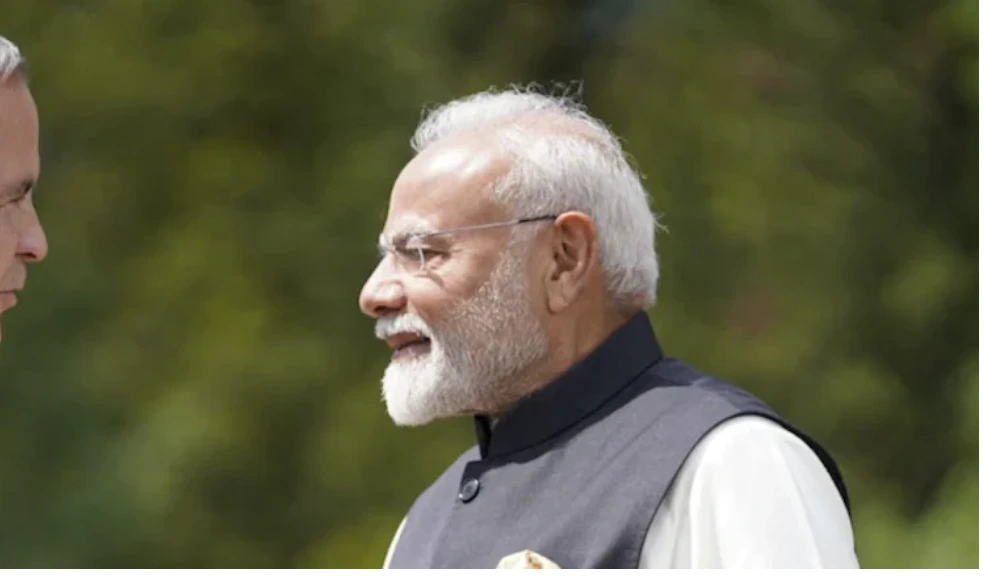
PM Modi to review ministry reforms in next cabinet meeting, ministers asked to submit impact report

PM Narendra Modi will review major reforms undertaken by ministries since the formation of the government in June 2024, with ministers directed to submit a two-page impact report.
Published

on

Prime Minister Narendra Modi is set to review the key reforms undertaken by various ministries since the formation of the government for a third term in June 2024. Ministers have been directed to submit a concise report highlighting the most significant changes introduced by their departments and their measurable impact.

According to sources, the Prime Minister wants to assess reforms that have directly improved the lives of citizens and enhanced the ease of doing business in the country.

Ministers asked to list three major reforms

During his first cabinet meeting on February 24 at Seva Tirtha, the Prime Minister instructed all ministers to prepare a list of major reforms carried out by their respective ministries. The Cabinet Secretary subsequently circulated a standard format for submissions.

Each ministry has been asked to identify three key reforms along with their impact, summarised within a two-page document. The reports are expected to be presented at the next cabinet meeting, which is likely to take place this week.

Sources said ministries are currently working at a rapid pace to compile the required details.

Focus on sector-specific achievements

Officials indicated that several ministries are preparing to highlight notable policy interventions and administrative measures undertaken since June 2024.

A senior official from the Ministry of Consumer Affairs said the department has implemented reforms aimed at simplifying processes for consumers and businesses. These include changes in legal metrology and quality control frameworks.

The Home Ministry is expected to outline progress in its campaign against Naxalism and steps taken towards modernising the police force.

The Defence Ministry may present updates related to production policy and incentive schemes designed to strengthen self-reliance in the sector. Measures focusing on artificial intelligence and quantum technology are also likely to be part of the discussion.

Sources added that the Ministry of Jal Shakti has moved to decriminalise minor violations under the Water Pollution Act, a step aimed at promoting ease of doing business.

Meanwhile, the Ministry of Road Transport is expected to highlight the implementation of a satellite-based toll system and revised FASTag rules to simplify travel and improve compliance.

Push for accountability under Modi 3.0

Sources said the government views this review exercise as a way to increase accountability and directly evaluate the tangible outcomes of reform initiatives. The move is being seen as part of efforts to accelerate the reform agenda under the third term of the Modi government.

Continue Reading

Trending

© Copyright 2022 APNLIVE.com

Left Menu Icon