English हिन्दी
Connect with us

India News

After China extends support to Pakistan, old video of Rahul Gandhi warning Modi govt about it surfaces

Gandhi pointed to the growing alignment between the two nations as a critical security challenge for India.

Published

on

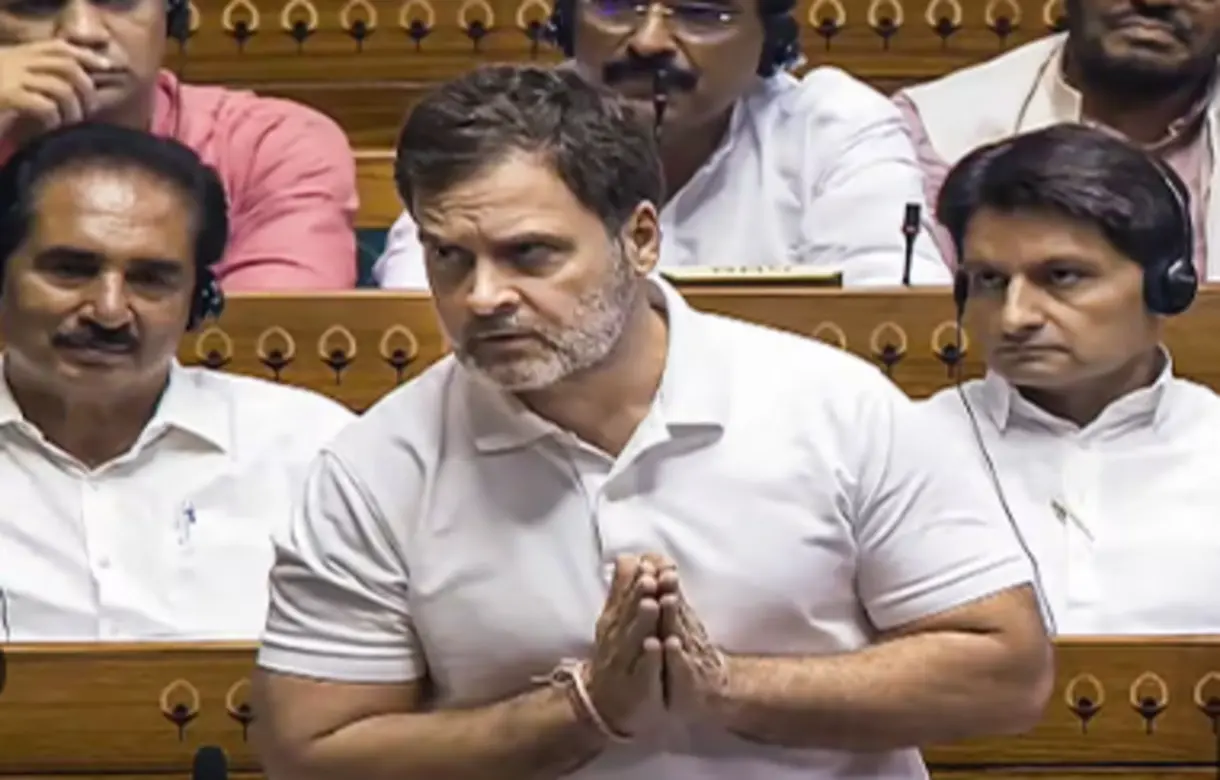
Rahul Gandhi meets Lok Sabha speaker Om Birla amid Parliament standoff, asks to expunge derogatory remark against him

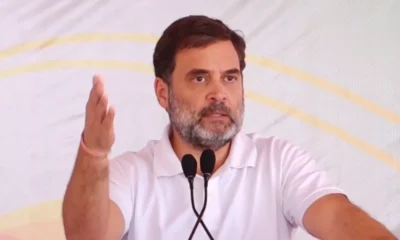
Congress MP Rahul Gandhi’s 2022 Lok Sabha speech resurfaced, in which he sharply criticised Prime Minister Narendra Modi’s foreign policy, accusing it of inadvertently uniting China and Pakistan against India. This comes after China extended support to Pakistan amid tensions with India.

In a surprise announcement, US President Donald Trump said on Saturday that India and Pakistan have agreed to a ceasefire. This development shocked many in India, with concerns raised about India’s sovereignty and third-party involvement in India-Pakistan matters.

However, a few minutes later, the Ministry of External Affairs of India, without naming US or Trump, said that both nations have reached an understanding to halt firing and military actions.

Later in the day, following the ceasefire announcement, China expressed its support for Pakistan, stating it stands by Pakistan in safeguarding its “sovereignty, territorial integrity, and national independence.”

Shortly after, an old video of Gandhi gained traction, where he could be heard saying, “India’s strategic aim should have been to keep China and Pakistan apart, but this government has brought them closer together. This poses a grave threat that we must not underestimate.”

He had expressed alarm at India’s regional isolation, stating, “Our nation is surrounded by adversaries and faces risks both externally and internally, which deeply concerns me.”

It’s worth noting that India and Pakistan have accused each other of violating the ceasefire agreement just hours after it was implemented, with tensions escalating along the Line of Control. However, there were no cross firing reported on May 11 morning.

Gandhi’s remarks gained renewed attention as China’s Foreign Minister Wang Yi, in a phone call with Pakistan’s Deputy Prime Minister and Foreign Minister Ishaq Dar, reaffirmed China’s unwavering support for Pakistan.

According to a Pakistani Foreign Office statement, Wang pledged to stand by Pakistan in safeguarding its “sovereignty, territorial integrity, and national independence.”

During the call, Dar updated Wang on the evolving regional dynamics, with Wang commending Pakistan’s “restraint and responsible approach” amid challenging circumstances. The Foreign Office underscored China’s role as Pakistan’s “All-Weather Strategic Cooperative Partner and steadfast ally.”

In his 2022 speech, Gandhi had highlighted coordinated actions between China and Pakistan, noting, “Their planning is evident—look at their weapon acquisitions and rhetoric. We’ve made a significant strategic error, though I’m confident we can counter China’s advances.”

Gandhi pointed to the growing alignment between the two nations as a critical security challenge for India.

On the same day, Dar also held discussions with UAE Deputy Prime Minister and Foreign Minister Sheikh Abdullah bin Zayed, who welcomed the recent ceasefire agreement between India and Pakistan. Additionally, Dar briefed Türkiye’s Foreign Minister Hakan Fidan on the regional situation.

The ceasefire, announced by Trump on Saturday, was described as a “full and immediate” halt to hostilities, achieved through U.S.-mediated talks. U.S. Secretary of State Marco Rubio hailed it as a “U.S.-brokered ceasefire,” praising Prime Ministers Narendra Modi and Shehbaz Sharif for their “wisdom, prudence, and statesmanship in opting for peace.”

The agreement followed a dangerous escalation earlier that day, when India and Pakistan targeted each other’s military installations, intensifying a conflict sparked by the 22 April 2025 Pahalgam terror attack, which India attributes to Pakistan.

India News

MK Stalin predicts frequent PM Modi visits to Tamil Nadu before assembly election

MK Stalin has said Prime Minister Narendra Modi will visit Tamil Nadu more often ahead of the Assembly election, calling the tours politically motivated and questioning the Centre’s support to the state.

Published

on

MK Stalin

Tamil Nadu Chief Minister M. K. Stalin has predicted that Prime Minister Narendra Modi will increase his visits to the state as the Assembly election, expected in April or May, draws closer.

Speaking ahead of the polls, the DMK president said the Prime Minister has already begun touring Tamil Nadu and is likely to visit frequently in the coming months. He claimed that such visits could create discomfort within the BJP-led National Democratic Alliance (NDA), as alliance partners may fear the political impact of repeated appearances.

Stalin calls visit politically motivated

The Chief Minister described the Prime Minister’s scheduled programmes in the state as “politically motivated”. PM Modi is set to attend various events in Madurai in southern Tamil Nadu, including the inauguration of the first phase of the AIIMS hospital project. He is also expected to visit the Thiruparankundram Temple amid the Karthigai Deepam-related controversy and participate in a public meeting organised by the NDA.

Stalin said he has been working for all sections of the population, including those who did not vote for his party. In contrast, he remarked that some leaders are visible in the state only during election time and increase their visits as polls approach.

Criticism over Union Budget allocations

The DMK leader also criticised the BJP-led central government, accusing it of neglecting Tamil Nadu. He pointed out that while approval was recently granted for the Gujarat Metro project, there were no major announcements or allocations for Tamil Nadu in the Union Budget.

Stalin asserted that voters would remember the lack of significant measures for the state. He framed the upcoming election as a contest between Tamil Nadu and the NDA, stating that the state should be governed from Fort St George in Chennai rather than from Delhi.

The ruling DMK is currently allied with several smaller parties and, at present, the Congress, as it seeks a third consecutive term in office. Its principal rival, the AIADMK, is aligned with the BJP as part of the NDA.

Continue Reading

India News

Shashi Tharoor questions Centre over Kerala name change to Keralam

Shashi Tharoor has criticised the Centre’s decision to approve renaming Kerala as Keralam, questioning its impact and pointing to the lack of major projects for the state.

Published

on

shashi tharoor

Congress MP Shashi Tharoor has criticised the central government over its decision to approve the renaming of Kerala as ‘Keralam’, arguing that the move prioritises symbolism over development.

Reacting to the Union Cabinet’s approval, Tharoor said that the state’s name has always been ‘Keralam’ in Malayalam and questioned the practical impact of introducing the Malayalam term into English usage.

“It has already been ‘Keralam’ in Malayalam. So now, a Malayalam word is coming into English. I don’t know what difference it makes,” he said, adding that the state has not received major projects such as an AIIMS or new institutions from the Centre. He also pointed out that no significant allocations were made for Kerala in the Union Budget.

In a separate post on X, Tharoor raised what he described as a “small linguistic question” about what residents of the state would be called if the name change is implemented. Referring to existing terms such as “Keralite” and “Keralan”, he remarked that alternatives like “Keralamite” sounded like a microbe and “Keralamian” like a rare earth mineral.

The Union Cabinet, chaired by Prime Minister Narendra Modi, cleared the proposal on Tuesday. The move comes ahead of the upcoming state Assembly elections, in which 140 members of the legislative assembly are to be elected. The poll schedule is yet to be announced by the Election Commission of India.

The state assembly had earlier passed a resolution seeking the change in official records. Chief Minister Pinarayi Vijayan had moved the resolution in 2024, urging the Union government to adopt the name ‘Keralam’ in all languages listed in the Eighth Schedule of the Constitution.

He had stated that the demand for a united Kerala for Malayalam-speaking people dates back to the national freedom movement.

Continue Reading

India News

Tamil Nadu potboiler: Now, Sasikala to launch new party ahead of election

Sasikala has announced the launch of a new political party ahead of the Tamil Nadu Assembly elections, positioning herself against AIADMK chief Edappadi K Palaniswami.

Published

on

In a significant political development ahead of the Tamil Nadu Assembly elections, expelled AIADMK leader V. K. Sasikala has announced that she will float a new political party and contest the polls by fielding her own candidates.

Speaking in Madurai before heading to Pasumpon for a public event, Sasikala said she would unveil her party’s flag later in the evening. She indicated that more details regarding the party’s structure and plans would be shared at the gathering.

The event venue carries political symbolism. Pasumpon is the birthplace of Thevar leader Muthuramalinga Thevar, and Sasikala herself belongs to the influential Thevar community in southern Tamil Nadu. The programme was held as part of birth anniversary events of former Chief Minister J. Jayalalithaa.

Direct challenge to EPS

Sasikala’s move is being viewed as a direct political challenge to AIADMK general secretary Edappadi K. Palaniswami (EPS). After Jayalalithaa’s death in 2016, Sasikala briefly took control of the party and had appointed Palaniswami as Chief Minister. However, following her conviction in the disproportionate assets case, she served a four-year prison term, and during that period, she was expelled from the party.

Palaniswami later aligned with O. Panneerselvam, whom Sasikala had earlier removed from the Chief Minister’s post. The two leaders subsequently adopted a dual leadership arrangement within the party and government.

Sasikala remains disqualified from contesting elections until 2027 due to her conviction. Nevertheless, she has stated that she intends to field candidates under her new party banner.

Fragmented Thevar vote base

Over the years, expulsions within the AIADMK — including Sasikala, her nephew TTV Dhinakaran and O Panneerselvam — have led to divisions within the Thevar support base. Political observers have linked this fragmentation to the party’s weakened electoral performance in the elections following Jayalalithaa’s passing.

While Dhinakaran has returned to the NDA fold, reports suggest Palaniswami is opposed to any arrangement that includes Sasikala or Panneerselvam. OPS, meanwhile, has exited the NDA.

Sasikala has repeatedly criticised Palaniswami, describing him as a betrayer, while he maintains that his leadership stems from the support of AIADMK legislators rather than her backing.

The AIADMK has not issued an official statement on Sasikala’s announcement. However, a senior party leader questioned her political standing, pointing out her disqualification from contesting elections and referring to legal issues linked to Jayalalithaa’s death.

With the Assembly polls approaching, Sasikala’s re-entry into active politics could further complicate the opposition space in Tamil Nadu and influence electoral calculations, particularly in the southern districts.

Continue Reading

Trending

© Copyright 2022 APNLIVE.com