English हिन्दी
Connect with us

India News

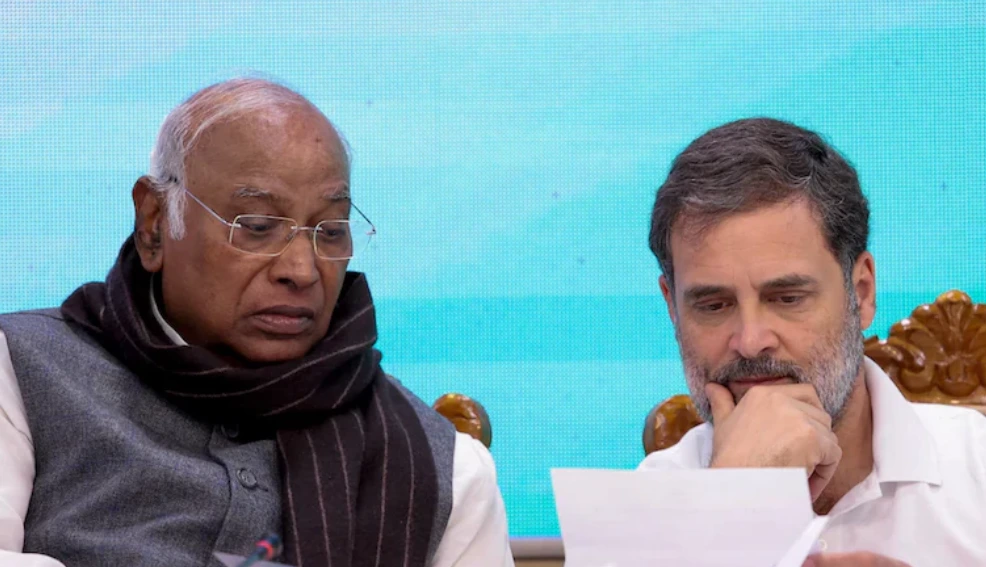
4 states, 4 elections, 4 potential crises for Congress hoping for poll wins

With Assembly elections due in Kerala, Tamil Nadu, West Bengal and Assam in 2026, the Congress is balancing optimism with internal challenges and alliance negotiations.

Published

on

Four states — Assam, West Bengal, Kerala and Tamil Nadu — are scheduled to vote in April/May 2026, presenting the Congress with four key opportunities to reset its political narrative after setbacks in recent elections.

After defeats in Delhi and Bihar last year, the party is keen to secure at least one significant win to reinforce its position ahead of the 2029 Lok Sabha polls. However, the road to revival is layered with internal challenges and alliance uncertainties across the four states.

Congress’ 2026 election hopes

The Congress is particularly optimistic about its prospects in Kerala. Riding on what it considers a strong performance in the December 2025 local body elections, the Congress-led United Democratic Front (UDF) secured over 38 per cent of the combined vote share across corporation, municipality and panchayat polls.

In neighbouring Tamil Nadu, the mood is similarly positive. The Congress remains an ally of the ruling Dravida Munnetra Kazhagam (DMK) and expects the alliance to return to power for a second consecutive term. The party also believes the partnership can once again block the expansion efforts of the Bharatiya Janata Party in the state.

That said, seat-sharing negotiations are yet to begin and could prove contentious. Sections within the Tamil Nadu Congress unit are reportedly seeking a more active role in government if the alliance wins, a demand that has caused friction. There are also murmurs of possible realignments, including speculation about outreach to actor Vijay’s Tamilaga Vettri Kazhagam, which has positioned the DMK as its “political enemy”. The state Congress unit, however, has denied any formal link to such discussions and urged the DMK to begin seat talks.

In the 2021 Assembly elections, the Congress won 18 seats in Tamil Nadu while the BJP secured four. In 2016, the Congress had won eight seats, whereas the BJP failed to open its account.

Kerala leadership balancing act

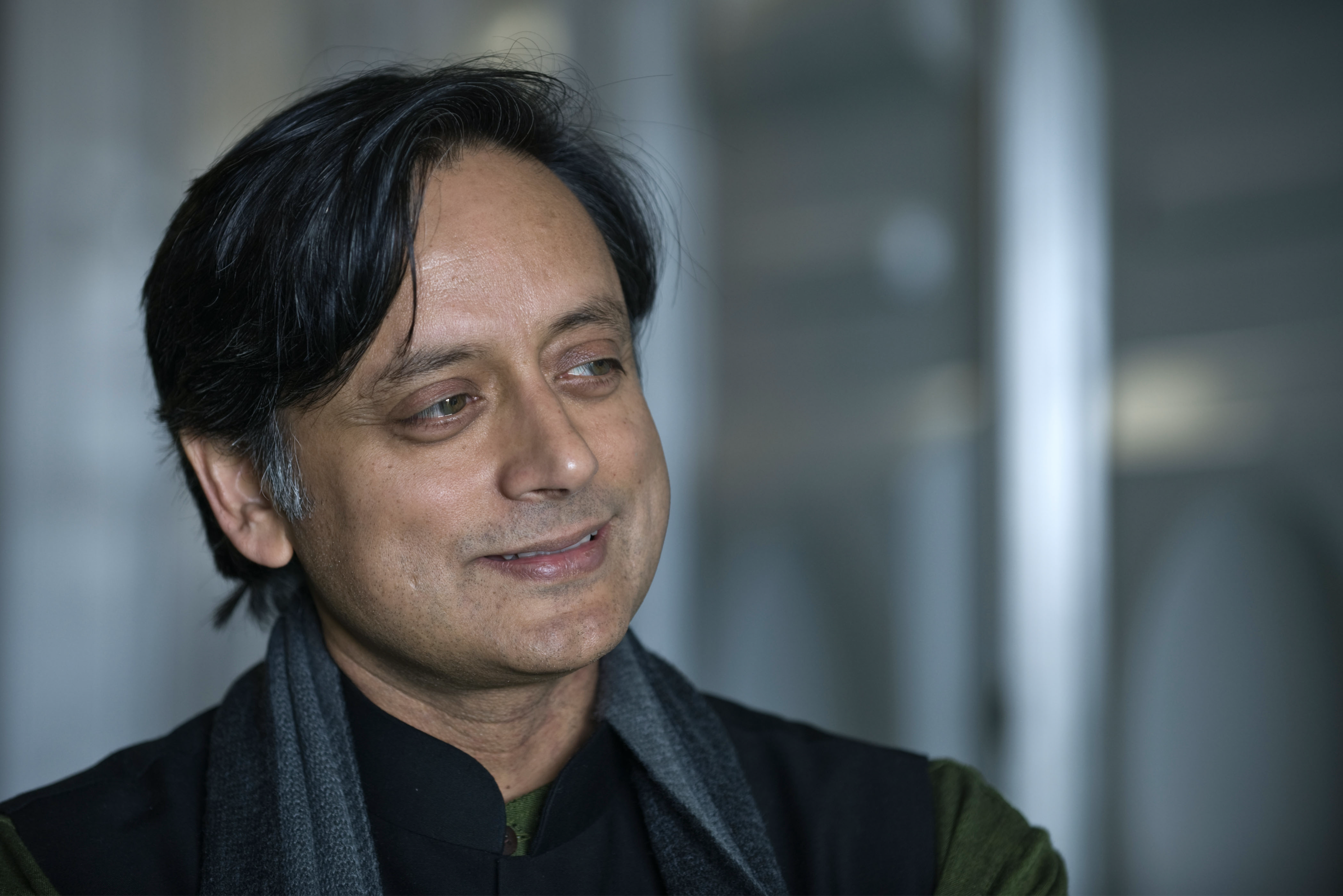
In Kerala, questions over leadership have hovered in the background. Senior leaders Shashi Tharoor and Ramesh Chennithala have both been seen as possible chief ministerial faces should the party come to power.

For now, the party has attempted to strike a balance. Chennithala has been named the leader of the election campaign, with Tharoor as his deputy. The Congress is expected to project a collective leadership approach rather than foreground a single face.

Tharoor had earlier drawn attention after comments that were interpreted by some within the party as being favourable to Prime Minister Narendra Modi and the BJP, particularly following remarks linked to the Pahalgam attack last year. His recent public support of Rahul Gandhi during a parliamentary confrontation over former Army chief MM Naravane’s unpublished memoir has been viewed by some as a sign of improving ties within the party.

Tough terrain in Bengal

The situation is more challenging in West Bengal. The Congress has decided to contest independently against both the ruling Trinamool Congress and the BJP, each a formidable opponent.

In the 2021 Assembly election, the Congress failed to win any of the 91 seats it contested and saw its vote share decline by 9.32 per cent. With limited organisational strength, the party’s decision to go solo is being viewed as a bold but low-risk strategy given its current position.

In June 2024, senior leader Adhir Ranjan Chowdhury stepped down as state unit chief following poor electoral performances. Subhankar Sarkar was appointed in his place. Chowdhury had consistently opposed an alliance with Chief Minister Mamata Banerjee’s party, even during attempts at broader opposition unity.

The state unit has since ruled out tie-ups with the Trinamool Congress as well as with the Left Front.

Assam’s internal churn

Assam presents a different set of difficulties. The Congress currently holds 29 seats in the state Assembly and faces an uphill battle against the ruling BJP.

Controversy surrounding former state unit chief Bhupen Borah has cast a shadow over preparations. Borah recently submitted a resignation letter containing critical remarks about his successor, Gaurav Gogoi. Reports suggest he has also been courted by the BJP, with Chief Minister Himanta Biswa Sarma expected to meet him.

Efforts by the party leadership, including outreach by Rahul Gandhi, appear to have paused any immediate exit, though uncertainty remains. The developments come just days before a scheduled visit by Priyanka Gandhi Vadra to the state.

For the Congress, retaining its existing seats while strengthening its grassroots base may be a more realistic goal in Assam, with an eye on longer-term prospects.

Lessons from the past

Recent history underscores the risks posed by internal divisions. In Haryana, factional tensions between Kumari Selja and Bhupendra Singh Hooda were widely cited as factors in the party’s underperformance. Similar rivalries in Chhattisgarh between Bhupesh Baghel and TS Singh Deo, and in Rajasthan between Ashok Gehlot and Sachin Pilot, also weighed on the party’s electoral fortunes.

As the 2026 Assembly season approaches, the Congress finds itself with opportunities in multiple states — but also confronting internal strains and alliance complexities. Whether it can convert these contests into electoral gains may depend as much on managing its internal equations as on countering its rivals.

India News

Galgotias University asked to vacate India AI Summit over Chinese robot dog row

Galgotias University has reportedly been asked to vacate its stall at the India AI Impact Summit after a Chinese-made robotic dog was allegedly presented as a university innovation.

Published

on

Galgotias University has reportedly been asked to vacate its exhibition space at the India AI Impact Summit in New Delhi after a controversy erupted over the display of a robotic dog at the event.

The Greater Noida-based institution came under scrutiny after a video from the summit went viral on social media. In the clip, representatives of the university were seen presenting a robotic dog as a product developed by its Centre of Excellence.

Robot identified as Unitree Go2

The robotic dog displayed at the summit was identified as the Unitree Go2, a commercially available quadruped robot manufactured by Chinese robotics company Unitree. The model is available for purchase in India at a price ranging between Rs 2 lakh and Rs 3 lakh.

At the summit, the machine was introduced under the name “Orion”. In one of the widely circulated videos, a university representative claimed during a media interaction that the robot had been developed at Galgotias University’s Centre of Excellence.

Another clip showed a professor making a similar assertion, stating that the robot was built by the university team. Social media users later pointed out that the device matched the Unitree Go2 model and alleged that imported technology was being presented as an indigenous innovation.

University issues clarification

Following the backlash, Galgotias University released a statement on X, formerly Twitter, clarifying that the robotic dog had been procured from Unitree and was being used as a learning tool for students.

In its statement, the university said the robodog was acquired to help students experiment and expand their technical understanding. It further stated that it had not built the robot nor claimed to have done so.

However, the clarification drew further criticism online. A Community Note was added to the university’s post, stating that the claim of never presenting the robodog as its own was misleading. The note highlighted that the robot had been renamed “Orion” and that university representatives had explicitly claimed it was developed by their team during the event.

Faculty response amid reports of removal

Responding to the controversy, Neha, a communications faculty member at the School of Management who had earlier described the robot as a Galgotias innovation, said the issue may have stemmed from a misunderstanding during interaction with the media. She stated that she is not part of the AI department and that the robot was brought for projection purposes.

Meanwhile, amid reports that the university had been asked to vacate its stall at the summit, Professor Aishwarya Shrivastava said that they had no such information at that point.

Social media backlash intensifies

The controversy gained momentum after several users on X shared side-by-side comparisons of the robot displayed at the summit and promotional images of the Unitree Go2 available online.

One widely circulated post stated:

“This is Unitree Go2, a Chinese robot that can be ordered online. How is this being presented as developed by the university?”

Another user wrote:

“Renaming a commercial product ‘Orion’ doesn’t make it indigenous. This is a standard Unitree model.”

Multiple posts questioned how a commercially available imported product was described as a Centre of Excellence innovation during a national AI-focused summit.

The university later described the criticism as part of a “propaganda campaign” against it. Its post itself carried a Community Note stating that video evidence showed representatives claiming the robot was developed in-house.

The episode has sparked wider debate online over transparency, attribution and accurate representation of technology at innovation events.

Continue Reading

India News

Sarpanch from AAP shot dead at wedding in Punjab’s Tarn Taran

A sarpanch affiliated with AAP was shot dead during a wedding in Punjab’s Tarn Taran district. His cousin was injured in the attack. The incident comes weeks after a similar killing in Amritsar. Police investigation is underway.

Published

on

A village sarpanch affiliated with the Aam Aadmi Party (AAP) was shot dead during a wedding function in Punjab’s Tarn Taran district, police said.

Harpinder Singh was attending a wedding ceremony at a farmhouse located along the Tarn Taran-Bathinda National Highway when two unidentified assailants opened fire. He died in the attack. His cousin, Jarmanjit Singh, sustained injuries and was rushed for medical treatment.

The incident has triggered concern in the region, with authorities probing the circumstances surrounding the shooting.

Similar killing reported in Amritsar last month

The killing comes weeks after another sarpanch linked to AAP was shot dead in a separate incident in Amritsar.

Jarmal Singh had gone to a wedding hall to attend a relative’s marriage when unidentified men shot him in the head. He later succumbed to injuries during treatment at a hospital.

In that case, Jarnail Singh was targeted when gunmen entered the venue and opened fire. Video footage retrieved from the wedding hall showed two attackers approaching from behind and shooting him in the back of the head. The sudden firing led to panic among guests, who scrambled for safety.

Police later arrested two shooters along with five other accused in connection with the Amritsar incident.

Investigations are ongoing in the Tarn Taran case to identify and apprehend the assailants.

Continue Reading

India News

Ajit Pawar plane crash black boxes damaged in fire, AAIB begins probe

The AAIB said both black boxes of the Learjet 45 that crashed in Baramati were damaged in fire. DFDR data has been retrieved while the CVR is under examination.

Published

on

Ajit Pawar plane crash

The Aircraft Accident Investigation Bureau (AAIB) has confirmed that the flight recorders from the Learjet 45 aircraft involved in the fatal crash in Baramati were damaged due to prolonged exposure to intense heat.

The accident occurred on January 28, 2026, when the chartered Learjet 45, registered as VT-SSK, crash-landed at the runway threshold in Baramati, Maharashtra. The investigation is being conducted strictly under the Aircraft (Investigation of Accidents and Incidents) Rules, 2017, and in accordance with international standards laid down in ICAO Annex 13, as stated by the Ministry of Civil Aviation.

Both flight recorders exposed to fire

Officials said the aircraft was fitted with two independent flight recorders. Both devices were subjected to intense heat for a prolonged period during the crash and sustained fire damage.

Despite the damage, the Digital Flight Data Recorder (DFDR), manufactured by L3-Communications, has been successfully downloaded at the AAIB Flight Recorder Laboratory. Meanwhile, the Cockpit Voice Recorder (CVR), manufactured by Honeywell, is currently undergoing detailed technical examination.

Authorities have sought assistance from the Accredited Representative of the State of Manufacture to provide specialised support in retrieving data from the damaged CVR.

Investigation to remain evidence-based

The AAIB stated that it is following all prescribed technical and procedural protocols to ensure a thorough, objective and evidence-based investigation. The bureau reiterated its commitment to transparency and said further details will be shared at an appropriate stage.

The investigation body also urged stakeholders to refrain from speculation while the probe is underway. Earlier, authorities had emphasised that no premature conclusions should be drawn until the analysis is fully completed. The black box data is expected to provide crucial insights into the sequence of events leading to the crash.

Five people died in the crash

According to the Directorate General of Civil Aviation (DGCA), five people, including the crew members, were on board the chartered aircraft flying from Mumbai to Baramati when it crash-landed at the runway threshold.

Among those killed was Ajit Pawar, who was travelling to Baramati to campaign for the Zilla Panchayat elections.

Continue Reading

Trending

© Copyright 2022 APNLIVE.com