
India News
Day after triple terror attacks in J&K, Army chief Rawat in Jammu for security review

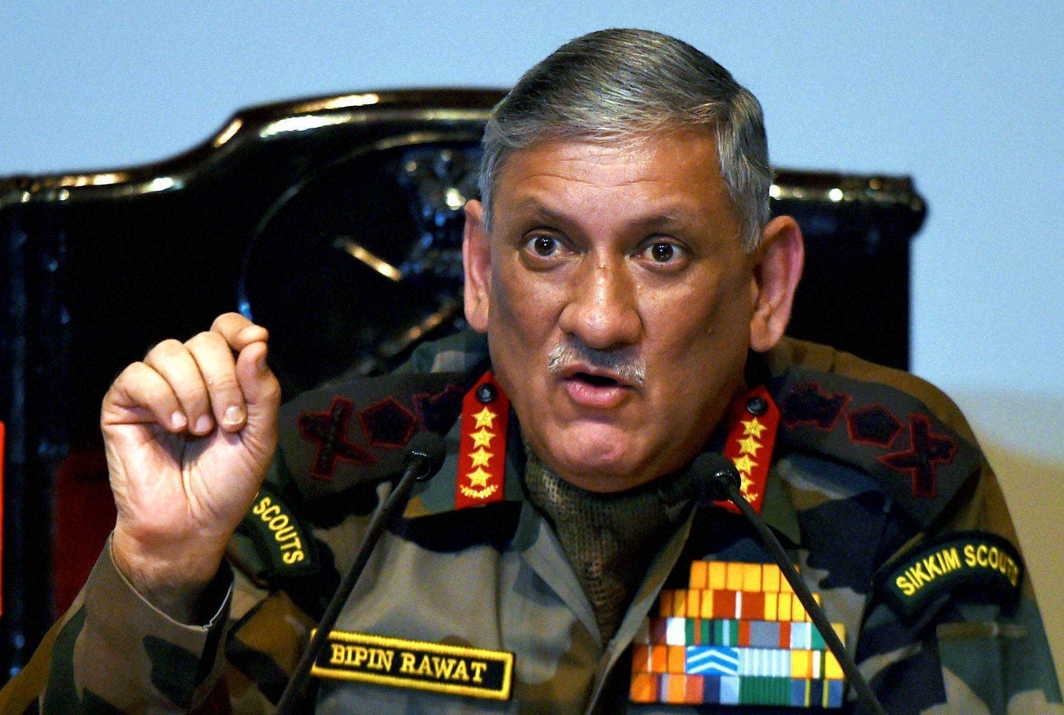
[vc_row][vc_column][vc_column_text]Visit comes a day after triple terror attacks in Kashmir’s Gurez and Shopian areas and amid rising infiltration bid by Pak along the LoC
Army chief General Bipin Rawat arrived in Jammu, on Friday, for a two-day visit of forward areas along the Line of Control (LoC).
Rawat’s visit comes a day after three terror attacks across different parts of Kashmir ended with the gunning down of three militants in Gurez sector in north Kashmir’s Bandipora and two Army jawans – one of whom succumbed to his injuries later – being shot at by militants in Shopian situated 50 kilometres south of Srinagar.
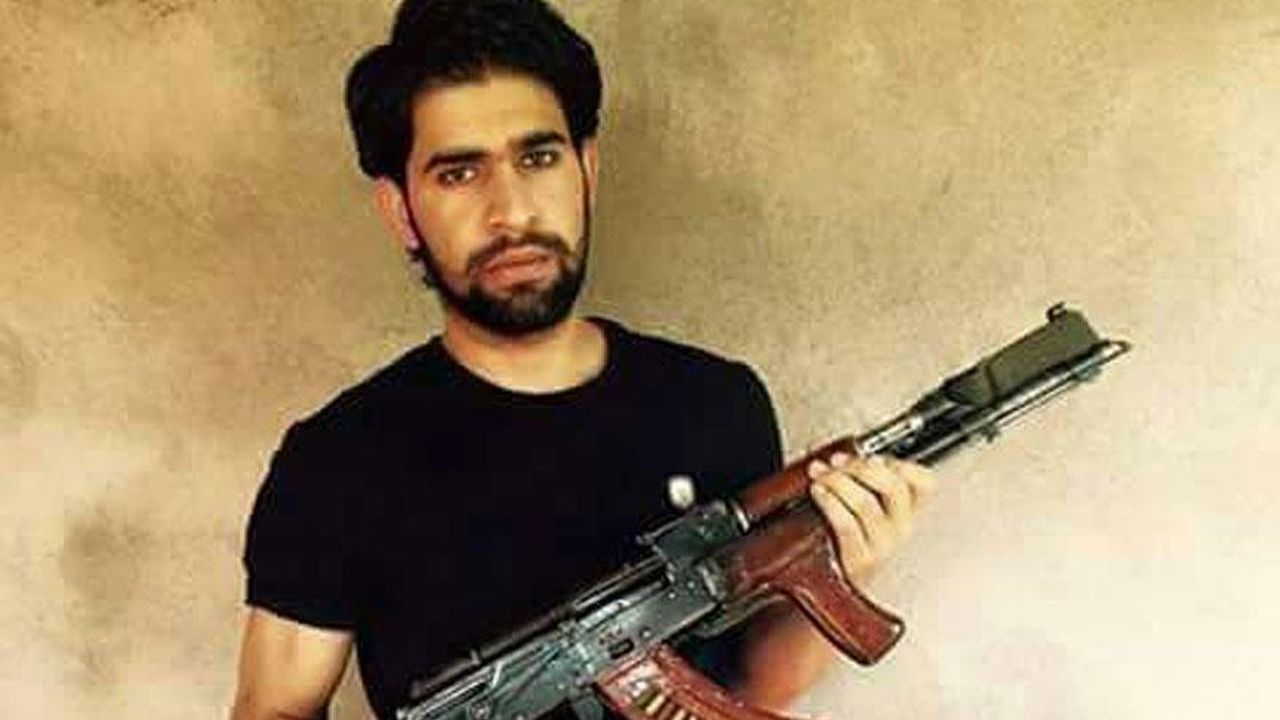
On Thursday, a day before the Army chief’s scheduled visit, the Al Qaeda too had sent alarm bells ringing in the Indian security establishment as it announced a new India front – the Ansar Ghazwat-ul-Hind – with Kashmiri militant Zakir Musa as its head.
In a move clearly aimed at raising the shackles of the Army and the Indian government while disturbing the social fabric of the restive Valley, Global Islamic Front, the online propaganda distribution arm of Al-Qaeda, made the announcement of Musa’s appointment. It said, “After the martyrdom of heroic Mujahid Burhan Wani, the Jihad in Kashmir has entered a stage of awakening, as the Muslim Nation of Kashmir has committed to carry the flag of Jihad to repel the aggression of tyrant Indian invaders, and through Jihad, and with the aid of Allah, we will liberate our homeland, Kashmir. For this goal, a new movement of Jihad has been founded by the companions of martyr Burhan Wani under the leadership of Mujahid Zakir Musa (sic).”
It is learnt that the Army chief landed at the technical airport around 10 am, on Friday, where he was received by Northern army commander Lt Gen Devraj Anbu, 16 Corps GOC Lt Gen AK Sharma and Tiger Division GOC Maj Gen SK Sharma. Soon after, the top officers headed to forward areas in Nowshera, Bhimber Gali (BG) and Krishna Ghati (KG) sectors of Rajouri and Poonch districts in a helicopter.
According to local media reports from Jammu, Rawat is also scheduled to meet formation commanders to get a detailed feedback from on the recent skirmishes in the troubled northern state and of the prevailing security scenario along the Line of Control (LoC).
Since May 1 this year, both the countries have been trading heavy fire on the de-facto border leaving several soldiers and civilians dead on either side of the divide. Nine soldiers were among 11 killed while 16 others injured in border skirmishes this month in Rajouri and Poonch districts, south of the Pir Panjal range. More than 4,000 villagers in Nowshera sector were shifted to five relief camps and over 110 livestock fell prey to shelling and firing by the Pakistani army along the LoC in Rajouri district where nearly 35 structures, including over two dozen houses, were damaged.[/vc_column_text][/vc_column][/vc_row][vc_row css=”.vc_custom_1501252298327{margin-bottom: 20px !important;border-bottom-width: 20px !important;padding-top: 20px !important;background-color: #a2b1bf !important;}”][vc_column][vc_column_text]Hizbul, Lashkar term Al-Qaeda announcement as ‘conspiracy by Índian government’
 In a predictable move, terrorist outfits, Hizbul Mujahideen (HM) and Lashkar-e-Taiba (LeT), termed the announcement of Al Qaeda’s Kashmir chapter and the appointment of Zakir Musa as its head as a “conspiracy by the Indian establishment to create divisions in the “(Kashmir) freedom struggle.
Hizbul’s supreme commander, Syed Salahuddin said the new outfit was part of a “conspiracy by the Indian establishment to set the stage for bloodshed in Kashmir on the lines of what had happened in Al-Qaeda and Islamic State-influenced theatres like Afghanistan, Iraq, Turkey etc”.
In a similar tenor, a statement issued by the LeT said: “Indian conspiracies are being foiled ever since the locals and Hurriyat leaders forged unity among themselves… groups like Al-Qaida and IS are being brought up to label the legitimate freedom struggle (in Kashmir) as terrorism.”
Indian authorities are monitoring the Al Qaeda’s move with caution and though they believe that though Musa has no cadre to carry out an immediate attacks; he is targeting youths in Kashmir for recruiting them into the new outfit.
Jammu and Kashmir police chief SP Vaid, while addressing a press conference in Srinagar, responded to the Al Qaeda announcement saying: ä militant is a militant… whichever tanzeem (outfit) he may belong to. Somebody who has picked up a gun is a militant for us. We will investigate the arrival of Al-Qaeda in Kashmir. [/vc_column_text][/vc_column][/vc_row]








India News
BJP releases first list of 47 candidates for Kerala assembly polls
The BJP has released its first list of 47 candidates for the Kerala Assembly elections scheduled for April 9, including three former Union ministers.


India News
Fire in ICU at SCB medical college hospital in Cuttack kills 10 patients
Ten patients died after a fire broke out in the trauma ICU at SCB medical college hospital in Cuttack early Monday morning. Odisha Chief Minister Mohan Charan Majhi announced compensation and ordered a judicial probe.

India News
Arvind Kejriwal moves Supreme Court against Delhi High Court order in excise policy case
Arvind Kejriwal has approached the Supreme Court challenging a Delhi High Court order related to proceedings in the excise policy case and alleging violation of his fundamental rights.


Fire near Dubai International Airport after drone incident, flights temporarily suspended

Fire in ICU at SCB medical college hospital in Cuttack kills 10 patients

Rajya Sabha elections Voting begins for 37 seats across 10 states

Arvind Kejriwal moves Supreme Court against Delhi High Court order in excise policy case

BJP releases first list of 47 candidates for Kerala assembly polls
BJP releases first list of 47 candidates for Kerala assembly polls
Fire in ICU at SCB medical college hospital in Cuttack kills 10 patients
Arvind Kejriwal moves Supreme Court against Delhi High Court order in excise policy case
Rajya Sabha elections Voting begins for 37 seats across 10 states
Fire near Dubai International Airport after drone incident, flights temporarily suspended

Afghan Men Try To Hang With The Jet Engine Of The Aircraft in Kabul- Afghanistan News – Kabul News
Trending Top 10 News: 10000 Crore Fine on Flipkart, Apple to Launch Unique Feature, Hdfc Bank Job Ad

Trending Top 10 News: Nokia 6310, Apple sales, Bachpan ka Pyar Video Kid, Dainik Bhaskar IT Raid

Trending Top 10 News: Canada bans Indian flights, Rain in Delhi NCR, AIMIM Twitter hacked, Raj Kundra case

Trending Top 10 News: Shein India, Apple New Service, Pocket Oxygen, Oppo Launched New Phone
-
 Latest world news14 hours ago
Fire near Dubai International Airport after drone incident, flights temporarily suspended
-
 India News13 hours ago
Fire in ICU at SCB medical college hospital in Cuttack kills 10 patients
-
 India News13 hours ago
Rajya Sabha elections Voting begins for 37 seats across 10 states
-
 India News13 hours ago
Arvind Kejriwal moves Supreme Court against Delhi High Court order in excise policy case
-
 India News3 hours ago
BJP releases first list of 47 candidates for Kerala assembly polls
