English हिन्दी
Connect with us

India News

Delhi court pulls up “lazy” CBI for delay in disposal of 37-year-old case, fines agency Rs 10K

Published

on

Delhi court pulls up “lazy” CBI for delay in disposal of 37-year-old case, fines agency Rs 10K
[vc_row][vc_column][vc_column_text]The case, filed in 1981, pertains to theft and attempted smuggling of an antique idol from the Takashakeshwar Mahadev temple in Allahabad

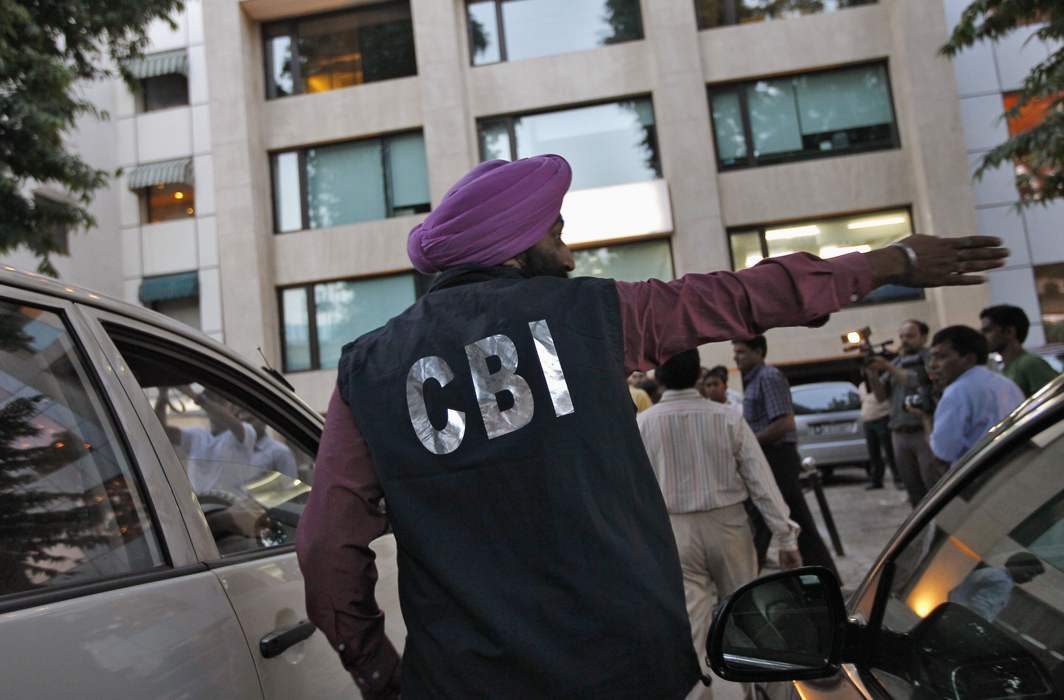
In a stinging indictment of the Central Bureau of Investigation’s (CBI) lethargic pace of prosecuting cases, a special court in New Delhi has fined the premier agency’s director of prosecution Rs 10000 for delaying the disposal of a case of theft for nearly four decades. Quoting an Urdu proverb – Muddai Sust, Gawah Chust (the complainant is lazy and the witness is active) – the court reprimanded the CBI for not being “vigilant enough” while disposing off pending cases.

“As is apparent on the face of the record, this is the best case where an old saying ‘Muddai Sust, Gawah Chust’ has come true in all its spirit. The case was filed by the CBI and hence it should have been vigilant enough to see that the old cases are disposed off as early as possible,” special judge Sanjay Kumar Aggarwal said.

The comments came while the special court was adjudicating over a case filed by the CBI sometime in 1981 regarding the theft of an antique idol from the Takashakeshwar Mahadev temple situated on the banks of the river Yamuna in Allahabad’s Dariabad locality. The idol was stolen with the alleged purpose of smuggling it out to New York. The case filed by the CBI in the matter has been raging on for nearly 37 years and is currently in the stage of final arguments.

The premier investigation agency came in for the court’s reprimand for transferring the public prosecutor in the case without informing the court or naming another lawyer for representing the case. The court took a dim view of the agency’s failure and imposed a cost of Rs. 10,000 on the office of the CBI’s director of prosecution.

According to a report by NDTV, the special court noted that it was aware that it “cannot put its neck” into the administrative affairs of a department as that was the sole prerogative of the agency. However, special judge Aggarwal also pointed out that he wasn’t imposing the cost purely because the CBI chose to transfer its senior public prosecutor but as the agency didn’t bother to inform the court of its decision.

The court sought to know “why steps in anticipation were not taken by the director of prosecution so that no inconvenience is caused to this court for effective disposal of this oldest case and the other old cases in which the hearing was in progress.”

The judge also pointed out to the investigation agency that under directives given by the Supreme Court for effective disposal of cases that had been pending for a period of over 10 years, it had specifically asked the CBI’s previous prosecutor BK Singh to prepare himself for the case. However, Singh was transferred within six months even though he had advanced himself with all the facts and law of the cases pending in the special court while the CBI gave no prior information to the court in this regard, the NDTV report said.[/vc_column_text][/vc_column][/vc_row]

India News

Unnao rape survivor meets Rahul Gandhi amid protest over court relief to Kuldeep Sengar

The Unnao rape survivor met Rahul Gandhi in Delhi amid protests against court relief to convicted former MLA Kuldeep Singh Sengar, alleging mistreatment during the demonstration.

Published

on

Rahul-Gandhi

The Unnao rape case survivor and her mother met Congress leader Rahul Gandhi on Tuesday evening as they continue their protest against the Delhi High Court’s recent relief to former BJP MLA Kuldeep Singh Sengar, who has been convicted in the case. The meeting took place at the 10 Janpath residence of Sonia Gandhi, where she was also present.

The survivor and her mother have been demonstrating in Delhi after the court granted interim relief to Sengar, allowing him to remain out of jail while his appeal against conviction and sentence is pending. The development has triggered strong political reactions, with opposition parties questioning the message it sends to survivors of sexual violence.

Allegations of mistreatment during protest

Earlier in the day, the survivor’s mother was allegedly manhandled by Central paramilitary personnel during the protest. According to the account shared by the family, security personnel stopped the mother and daughter from speaking to the media and forced the elderly woman to jump off a moving bus.

The duo had been protesting at India Gate along with their lawyer-activist Yogita Bhayana following the court order. They were later detained. On Tuesday morning, they planned to address the media at Mandi House, but the vehicle arranged to transport them did not stop at the intended location. The CRPF later stated that permission to hold a protest had not been granted.

Rahul Gandhi questions treatment of survivor

Reacting to the incident, Rahul Gandhi posted on X questioning whether the survivor was being mistreated for raising her voice against injustice. In his post, he asked if such treatment of a gang rape survivor was justified and criticised what he described as a justice system that grants bail to convicts while treating survivors like criminals.

The survivor, who was sexually assaulted by Sengar in 2017, has said she also wants to meet the Prime Minister to place her concerns directly before him. The case and the latest court decision continue to draw national attention, reigniting debate over survivor safety and access to justice.

Continue Reading

India News

Jammu and Kashmir High Court rejects Mehbooba Mufti’s plea on undertrial prisoners, calls it politically motivated

The Jammu and Kashmir High Court has rejected Mehbooba Mufti’s PIL on undertrial prisoners, stating it was politically motivated and lacked factual basis.

Published

on

Mehbooba mufti

The Jammu and Kashmir High Court has dismissed a Public Interest Litigation (PIL) filed by People’s Democratic Party (PDP) president Mehbooba Mufti seeking the transfer of undertrial prisoners lodged in jails outside the Union Territory back to prisons within Jammu and Kashmir. The court termed the petition politically motivated, vague and unsupported by facts, observing that it was an attempt to derive political mileage rather than address a genuine public cause.

A bench headed by Chief Justice Arun Palli and Justice Rajnesh Oswal made it clear that public interest litigation cannot be used as a tool to advance political agendas or convert courts into platforms for electoral positioning.

Court says PIL cannot become a political platform

In its observations, the High Court said the plea appeared aimed at projecting the petitioner as a champion of justice for a specific section, rather than raising substantiated legal concerns. The bench underlined that while political parties are free to engage with voters through democratic means, the judiciary must remain insulated from political campaigns.

The court reiterated that PIL jurisdiction is meant to safeguard public interest and not to be misused for electoral gain or political leverage. It cautioned against attempts to draw the judiciary into political narratives.

Undertrials have legal remedies, says court

In the 15-page order passed on Tuesday, the High Court noted that the undertrial prisoners mentioned in the petition are already facing trial before competent courts. According to the bench, adequate judicial remedies are available to such undertrials to raise grievances related to their detention or place of incarceration.

The court further observed that the failure of the concerned undertrials to approach courts on their own indicated that they may not be genuinely aggrieved by their confinement in prisons outside the Union Territory.

No locus standi, petition dismissed

Dismissing the plea, the High Court held that Mehbooba Mufti was a third-party stranger to the cause and therefore lacked the locus standi to invoke the court’s jurisdiction in this matter. The petition was described as misconceived and was rejected accordingly.

Continue Reading

India News

Thackeray cousins reunite for Mumbai civic polls, announce Shiv Sena UBT–MNS alliance

Uddhav and Raj Thackeray have reunited after two decades, announcing a Shiv Sena–MNS alliance for the upcoming BMC elections with a focus on Marathi identity.

Published

on

Shiv sena ubt mns alliance

The long political estrangement between Uddhav Thackeray and Raj Thackeray has ended, with the cousins formally announcing an alliance for the upcoming Brihanmumbai Municipal Corporation (BMC) elections. The joint decision marks a significant shift in Mumbai’s civic politics, placing Marathi identity at the centre of the campaign.

At a joint press conference, Raj Thackeray declared that the Shiv Sena and Maharashtra Navnirman Sena (MNS) would contest the local body elections together. He asserted that Mumbai would get a Marathi mayor, adding that the mayor would come from the Shiv Sena–MNS alliance. Uddhav Thackeray, seated alongside him, echoed the confidence, stating that Mumbai would remain with them “come what may”.

Focus on unity and Marathi identity

Uddhav Thackeray underlined the importance of unity, invoking the slogan “batenge toh katenge” to warn against division. Raj Thackeray said the alliance would work to ensure that Marathi people get what they want, reinforcing the emphasis on regional identity that once defined the politics shaped by Shiv Sena founder Bal Thackeray.

The cousins, who have come together after nearly two decades, also appealed to leaders and workers unhappy with the Shiv Sena faction aligned with the BJP to join their front. The message was aimed at consolidating forces opposed to the ruling coalition in the state.

Seat-sharing and poll preparations

Elections to the BMC are due within a month, with voting scheduled for January 15. Political parties have already begun preparations for a high-intensity campaign to gain control of the country’s richest municipal body.

Uddhav Thackeray said that seat-sharing arrangements for Mumbai, Nashik and other municipal bodies have been finalised, though details were not disclosed. Sources indicated that the Shiv Sena faction led by Uddhav Thackeray could contest around 145–150 seats, while the MNS may field candidates in 65–70 seats. The remaining seats are expected to be contested by allies, including a faction of the NCP.

Strategic reunion against rivals

The alliance shifts the political narrative from disputes over the “real Sena” to a united front led by the Thackeray family, signalling continuity with Bal Thackeray’s legacy. Party leaders described the reunion as a moment of significance for Marathi voters and Maharashtra.

The combination brings together Uddhav Thackeray’s support among traditional Sena loyalists and Raj Thackeray’s appeal among younger voters, positioning the alliance as a key challenger in the civic polls. Raj Thackeray’s return to the fold is also expected to consolidate the Marathi vote bank that had earlier moved towards the MNS, impacting rival formations in Mumbai.

Continue Reading

Trending

© Copyright 2022 APNLIVE.com