English हिन्दी
Connect with us

India News

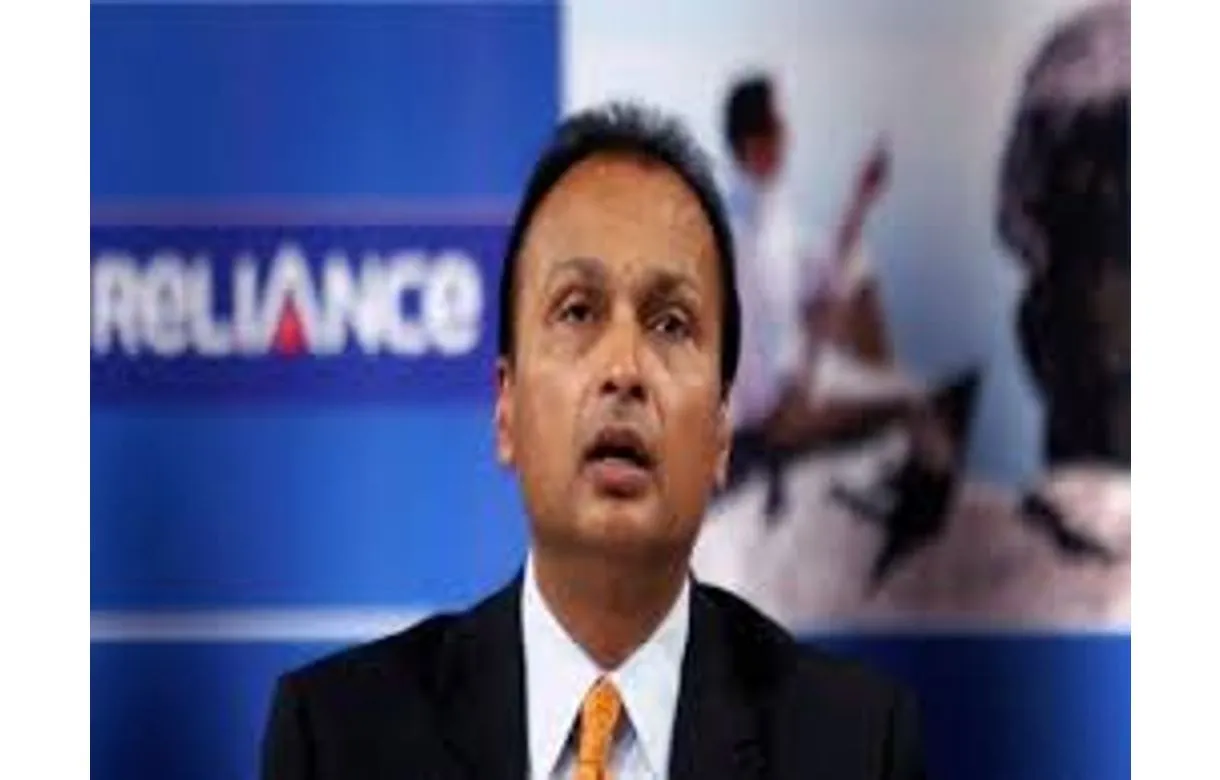
ED attaches assets worth over Rs 3,000 crore in money laundering case against Anil Ambani

Published

on

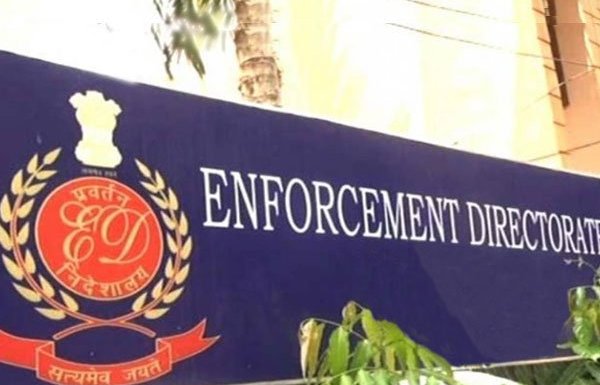
Assets worth more than Rs 3,000 crore linked to Reliance Group Chairman Anil Ambani, his group companies and linked entities have been attached as part of a money laundering investigation, the Enforcement Directorate (ED) said on Monday.

The federal probe agency issued four provisional orders under the Prevention of Money Laundering Act (PMLA) on October 31 for attaching 42 properties, including the 66-year-old Ambani’s family home in Pali Hill, Mumbai, apart from other residential and commercial properties of his group companies, it said.

A plot of land belonging to the Reliance Centre on Maharaja Ranjit Singh Marg in Delhi and multiple other assets of Reliance Infrastructure Ltd., certain linked entities like Adhar Property Consultancy Private Limited, Mohanbir Hi-tech Build Private Limited, Gamesa Investment Management Private Limited, Vihaan43 Realty Private Limited (earlier known as Kunjbihari Developers Private Limited) and that of Campion Properties Limited have been attached.

These properties are located in the national capital, Noida, Ghaziabad, Mumbai, Pune, Thane, Hyderabad, Chennai and East Godavari district in Andhra Pradesh.

Offices in the ‘Nagin Mahal’ building at Churchgate in Mumbai, flats in BHA Millenium apartments in Noida and Camus Capri Apartments in Hyderabad are among those provisionally attached by the ED.

The total value of the attached assets is more than Rs 3,083 crore, the agency said in a statement.

There was no immediate response from Ambani or his group on the ED action.

The agency said, so far, ED has detected “fraudulent” diversion of public money by various Reliance Anil Ambani group companies, including Reliance Communications Ltd (RCOM), Reliance Home Finance Ltd (RHFL), Reliance Commercial Finance Ltd (RCFL), Reliance Infrastructure Ltd (R-Infra) and Reliance Power Ltd.

The statement said a separate search action was carried out by the agency under the Foreign Exchange Management Act (FEMA) against R-Infra and it was found that Rs 40 crore was “siphoned” from the Jaipur-Reengus highway project.

“Funds moved through Surat-based shell companies to Dubai. The trail has unearthed a wider international hawala network exceeding Rs 600 crore,” it said.

The agency alleged that around 2010-12 onwards, RCOM and its group companies raised thousands of crores from Indian banks, of which Rs 19,694 crore remains outstanding. These assets turned into non-performing assets (NPA), with five banks declaring RCOM’s loan accounts as fraud, it said.

“Loans taken by one entity from one bank were utilised for repayment of loans taken by other entities from other banks, transfer to related parties, and investments in mutual funds, which was in contravention of the terms and conditions of the sanction letter of the loans.”

“In particular, RCOM and its group companies diverted over Rs 13,600 crore used in evergreening loans, over Rs 12,600 crore was diverted to connected parties and over Rs 1,800 crore was invested in fixed deposits and mutual funds, etc.,” it said.

The agency claimed certain loans were “siphoned off” outside India through foreign outward remittances.

It said that during 2017-2019, Yes Bank invested Rs 2,965 crore in RHFL instruments and Rs 2,045 crore in RCFL instruments. By December 2019, these became “non-performing” investments, it claimed.

The “outstanding” was Rs 1,353.50 crore for RHFL and Rs 1,984 crore for RCFL.

The agency added that RHFL and RCFL received public funds of more than Rs 10,000 crore and a large amount of this fund came from Yes Bank.

“Before Yes Bank invested this money in Reliance Anil Ambani group companies, it received huge funds from the erstwhile Reliance Nippon Mutual Fund.

“As per SEBI regulations, Reliance Nippon Mutual Fund could not invest/divert funds directly in Anil Ambani group finance companies due to conflict-of-interest rules,” the agency said.

The ED said it has “detected a pattern of mala fide in this case like pre-decided beneficiaries, manufactured paperwork, waived controls, and disbursals ahead of approvals, followed by swift routing to related entities”.

“This conduct enabled siphoning of public funds,” it said.

The ED, it said, continues to trace the proceeds of crime.

“The recoveries by ED, after following due process of law, are aimed at restoring losses to lenders and, ultimately, benefitting the general public,” it said, hinting at restoring or restituting the assets with “victim” banks, a provision available under the PMLA.

Ambani was questioned in the case by the ED in August.

This came after the agency searched 35 premises of 50 companies and 25 people, including executives of his business group, in Mumbai on July 24.

The ED’s money laundering case stems from a Central Bureau of Investigation FIR.

—PTI

India News

Centre caps airfares to curb surge amid IndiGo crisis

To protect passengers from soaring fares amid IndiGo’s operational crisis, the Centre has introduced temporary airfare caps and ordered expedited refunds for cancelled flights.

Published

on

As operational disruptions at IndiGo entered their fifth day, the Civil Aviation Ministry moved to prevent steep ticket price hikes by imposing fare caps across affected routes. The decision comes as hundreds of flights were cancelled, leaving passengers stranded at airports nationwide.

Ministry steps in to prevent “opportunistic pricing”

The ministry said it had taken note of unusually high fares being charged by some airlines during the ongoing travel disruption. Invoking regulatory powers, it ordered all carriers to follow newly prescribed fare caps until flight schedules stabilise.

According to the statement, the move aims to prevent any exploitation of travellers—especially senior citizens, students and those undertaking urgent medical travel—during the crisis. Airlines and online travel platforms will continue to be monitored through real-time fare data.

IndiGo told to clear refunds by Sunday evening

In a separate direction, the ministry asked IndiGo to ensure all refunds for cancelled or disrupted flights are processed by 8 pm on December 7. It also instructed airlines not to impose rescheduling fees for passengers whose plans were affected.

Hundreds of cancellations as pilot shortage triggers meltdown

IndiGo, which operates around 2,300 daily flights with a fleet of over 400 aircraft, has seen widespread cancellations due to a planning-related pilot shortage. Operational delays are expected to continue for several more days.

Scenes of severe inconvenience have unfolded at airports, with passengers reporting long waits, disrupted travel plans, and a lack of clarity from the airline.

IndiGo issues apology, promises gradual restoration

The airline apologised publicly, saying it understood the difficulties faced by passengers. IndiGo assured that refunds for cancelled flights would be processed automatically and added that full normalisation of domestic operations is likely between December 10 and 15, though recovery may take time due to the scale of disruption.

Minister claims crisis nearing resolution

Civil Aviation Minister Ram Mohan Naidu said the situation is “on the verge of getting resolved”. He noted that major metro airports such as Delhi, Mumbai and Chennai had cleared most backlogs, and that IndiGo would resume operations with limited capacity before gradually increasing flights.

Continue Reading

India News

Centre plans major crackdown on IndiGo amid mass cancellations

Published

on

The Centre is preparing strong action against IndiGo after widespread disruption triggered by the airline’s handling of new pilot rest rules, according to sources. With thousands of passengers stranded and over 500 flights cancelled on consecutive days, the government is now likely to seek the removal of CEO Pieter Elbers, alongside other stringent measures.

Government weighs removal of IndiGo CEO

Sources indicate that the airline may be asked to remove its chief executive following what officials view as poor management of revised duty and rest regulations for pilots. The developments led to severe operational breakdown across airports and sparked public outrage.

Heavy penalties and flight curbs under consideration

According to officials, an unprecedented crackdown is being prepared. This includes the possibility of a hefty financial penalty on the carrier, which commands nearly two-thirds of India’s domestic aviation market.

Authorities are also evaluating whether the number of flights permitted to IndiGo should be temporarily reduced, marking what could become the toughest action taken against any airline in recent years.

IndiGo representatives were summoned by the aviation ministry on Friday evening as the government sought explanations for the crisis and measures to restore order.

Continue Reading

India News

Lok Sabha clears bill to levy cess on pan masala and similar goods for health, security funding

The Lok Sabha has passed a bill to impose a cess on pan masala manufacturing units, aiming to create a dedicated revenue source for public health and national security initiatives.

Published

on

Nirmala Sitharaman

The Lok Sabha has approved the Health Security se National Security Cess Bill, 2025, paving the way for a new cess on pan masala manufacturing units. The legislation aims to generate dedicated funds for strengthening national security and improving public health, both areas identified as critical national priorities.

Bill aims to create predictable funding stream

Finance Minister Nirmala Sitharaman, responding to the debate before the bill was passed by voice vote, said that the cess will be shared with states because public health falls under the state list.

The new cess will be applied over and above the GST, based on production capacity and machinery used in units manufacturing pan masala and similar goods. The minister clarified that this cess will not affect GST revenue, and that pan masala already attracts the maximum GST slab of 40 per cent.

According to the bill text, the objective is to build a “dedicated and predictable resource stream” to support expenditure related to health and national security.

Sitharaman also mentioned that cess collection as a percentage of gross total revenue currently stands at 6.1 per cent, lower than the 7 per cent average between 2010 and 2014.

Continue Reading

Trending

© Copyright 2022 APNLIVE.com