English हिन्दी
Connect with us

India News

FDI rules relaxed, debt-ridden Air India opened for foreign investment

Published

on

Modi govt relaxes FDI rules, will allow foreign airlines to invest in Air India

[vc_row][vc_column][vc_column_text]

Narendra Modi Cabinet approves slew of changes in FDI rules, 100 per cent FDI through automatic route in single brand retail allowed

Over three years after it took a strong position against the then Dr Manmohan Singh-led UPA government’s decision for allowing foreign direct investment in various sectors, including single and multi-brand retail, the BJP under Prime Minister Narendra Modi appears to be going all out to promote foreign investment in various sectors of India’s stagnating economy.

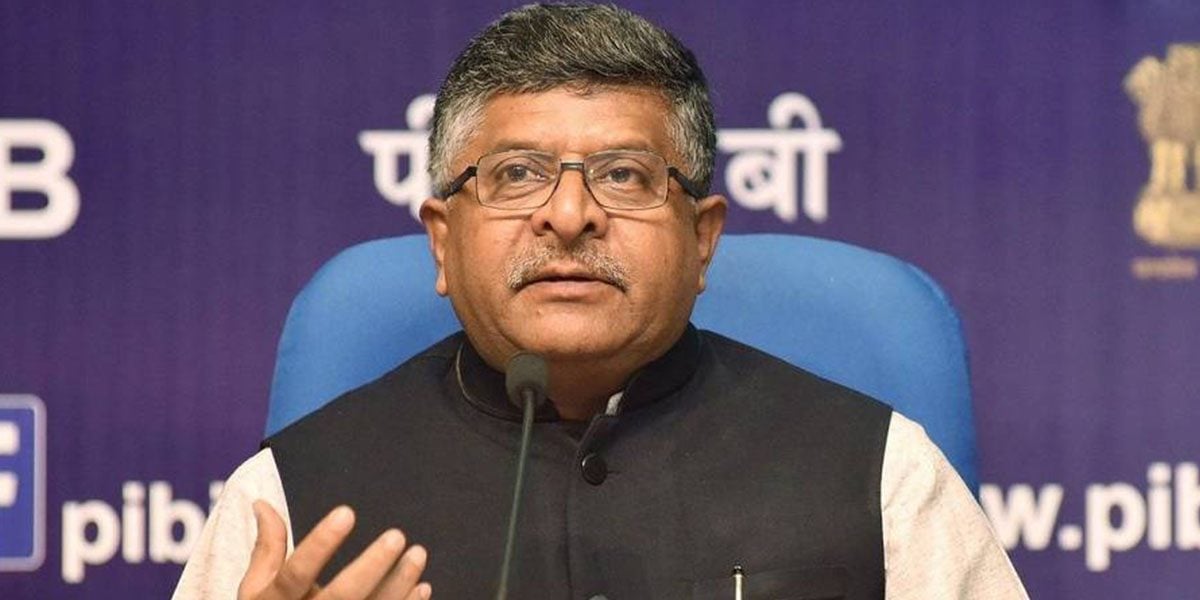
On Tuesday, a meeting of the Union Cabinet chaired by the Prime Minister decided to substantially relax rules for FDI in a host of sectors, including single brand retail trading (SBRT), construction and civil aviation. The Cabinet has approved amendments to the Centre’s FDI policy in the civil aviation sector, paving the way for a liquidity infusion in the cash-strapped national carrier – Air India – which was hitherto excluded from the list of India’s airline operators in which FDI was allowed.

“As per the extant policy, foreign airlines are allowed to invest under Government approval route in the capital of Indian companies operating scheduled and non-scheduled air transport services, up to the limit of 49 per cent of their paid-up capital. However, this provision was presently not applicable to Air India, thereby implying that foreign airlines could not invest in Air India. It has now been decided to do away with this restriction and allow foreign airlines to invest up to 49 per cent under approval route in Air India,” an official statement from the government said after the Cabinet meeting.

The Cabinet has decided that FDI in the debt-ridden Air India will be permitted on the condition that it does not exceed 49 per cent either directly or indirectly and that “substantial ownership and effective control of Air India shall continue to be vested in Indian National.”

The Centre has sought to justify its move claiming that the relaxation of FDI norms would help provide ease of doing business and lead to larger foreign investment inflows.

The Prime Minister and his cabinet seem to have realised that FDI is a major driver of economic growth and a source of non-debt finance for the economic development of the country. It is pertinent to recall that while the BJP was in Opposition and Modi was chief minister of Gujarat, he along with Arun Jaitley and Sushma Swaraj – then Leaders of Opposition in the Rajya Sabha and Lok Sabha respectively – had led the saffron party’s charge against the UPA government’s FDI policy.

Now, at a time when the country’s GDP seems to be on a steady decline amid projections of continuing stagnation in the domestic economy owing to disruptions caused by the Goods and Services Tax (GST) rollout, the Modi government is going all out to embrace a tool on boosting investment inflows that it had once vociferously decried for being against the interests of India.

Besides opening up Air India for FDI, the other key decision taken at Tuesday’s Cabinet meet was the red-carpet rollout for foreign investment in single brand retail trading.

“Extant FDI policy on SBRT allows 49 per cent FDI under automatic route, and FDI beyond 49 per cent and up to 100 per cent through Government approval route. It has now been decided to permit 100 per cent FDI under automatic route for SBRT,” the official statement said.

“It has been decided to permit single brand retail trading entity to set off its incremental sourcing of goods from India for global operations during initial 5 years, beginning 1st April of the year of the opening of first store against the mandatory sourcing requirement of 30 per cent of purchases from India. For this purpose, incremental sourcing will mean the increase in terms of value of such global sourcing from India for that single brand in a particular financial year over the preceding financial year, by the non-resident entities undertaking single brand retail trading entity, either directly or through their group companies. After completion of this 5 year period, the SBRT entity shall be required to meet the 30 per cent sourcing norms directly towards its India’s operation, on an annual basis,” the government said.

On FDI in the construction sector, the government said: “It has been decided to clarify that real-estate broking service does not amount to real estate business and is therefore, eligible for 100 per cent FDI under automatic route.”

The cabinet also decided to allow FIIs/FPIs to invest in power exchanges through primary market as well. So far 49 per cent FDI was permitted under automatic route in power exchanges registered under the Central Electricity Regulatory Commission (Power Market) Regulations, 2010 but FII/FPI purchases were restricted to secondary market only.

The Centre has also decided to relax the rules followed for approval of FDI proposals that are moved in the automatic route sectors.

As per the existing procedures, FDI applications involving investments from Countries of Concern, requiring security clearance as per the extant FEMA 20, FDI Policy and security guidelines are to be processed by the Union home ministry for investments falling under automatic route sectors. Cases pertaining to government approval route sectors requiring security clearance are processed by the respective administrative ministries.

“It has now been decided that for investments in automatic route sectors, requiring approval only on the matter of investment being from country of concern, FDI applications would be processed by Department of Industrial Policy & Promotion (DIPP) for Government approval,” the Cabinet press note said.

[/vc_column_text][/vc_column][/vc_row]

India News

Karnataka to convene joint legislature session over MGNREGA repeal

The Karnataka government will convene a joint session of the legislature from January 22 to discuss the Centre’s repeal of MGNREGA, triggering sharp criticism from the opposition.

Published

on

karnataka assembly

The Karnataka cabinet on Wednesday decided to convene a joint session of the state legislature from January 22 to January 31, with the Centre’s decision to repeal the Mahatma Gandhi National Rural Employment Guarantee Act (MGNREGA) set to be the key focus.

The Congress-led government had earlier planned a two-day special session to discuss the repeal of MGNREGA, which has been replaced by the Viksit Bharat Guarantee for Rozgar and Ajeevika Mission (Gramin) (VB-G RAM G). However, State Law and Parliamentary Affairs Minister H K Patil said the plan was altered due to constitutional provisions.

Briefing reporters, Patil said the government was compelled to convene a joint session instead of a special session because of a technical requirement. Citing Article 176 of the Constitution, he explained that the Governor must address the first session of the state legislature every year.

“As a result of this technical reason, we are advancing the session. Instead of a special session, it will be a joint session,” Patil said, adding that holidays during the session would be announced by the Speaker.

He stressed that the state government would not remain silent if people’s rights were “snatched away” and said the objective of the session was to create public awareness and exert pressure on the Centre to restore MGNREGA.

Opposition questions intent of the session

Leader of Opposition in the Karnataka Assembly R Ashoka strongly criticised the decision, alleging that the joint session was convened with a “malafide intention” and amounted to a “sheer waste of money”.

Addressing a press conference, Ashoka said legislative sessions were meant for law-making and discussions on governance issues, questioning the purpose of holding a session on a matter decided by the Centre.

“What is this session convened for? Is it to utter gibberish in the House? There is no use of this session,” he said, adding that any resolution passed by the Assembly would have no practical value and would be ignored.

Continue Reading

India News

Centre urges Indians to leave Iran amid worsening security situation

India has advised its citizens to leave Iran and avoid travelling to the country as nationwide protests intensify and the security situation continues to deteriorate.

Published

on

unrest in iran

India on Wednesday asked all its nationals currently in Iran to leave the country using available commercial means, citing a sharp deterioration in the security situation amid widespread anti-government protests and a heavy crackdown by authorities.

The government has also issued a strong advisory urging Indians to avoid travelling to Iran until further notice.

Advisory issued for Indian nationals in Iran

In a fresh advisory, the Indian Embassy in Iran said Indian citizens, including students, pilgrims, businesspersons and tourists, should leave Iran by available modes of transport, including commercial flights.

The embassy further advised Indian nationals and persons of Indian origin to exercise extreme caution, avoid areas witnessing protests or demonstrations, stay in regular contact with the embassy, and closely monitor local developments through official channels and local media.

Separately, the Ministry of External Affairs reiterated its warning, strongly advising Indians against travelling to Iran in view of the evolving situation. Earlier this month, the ministry had already asked citizens to avoid non-essential travel and urged those residing in Iran to remain cautious.

Protests spread nationwide

The unrest in Iran began late last month in Tehran after the Iranian currency, the rial, fell to record lows. What started as protests over economic hardship has since expanded into a broader movement demanding political change.

The demonstrations have now spread across all 31 provinces of the country, with the overall situation deteriorating significantly in recent days.

According to reports cited by media, the death toll from the nationwide protests has crossed 2,500, reflecting the scale and intensity of the ongoing crackdown.

Rising regional tensions

The developments in Iran have also contributed to heightened tensions in West Asia. The situation escalated further after the US president warned Tehran against the use of force on demonstrators and hinted at possible military action.

In a message addressed to protesters, the US president said that “help is on the way,” adding to the growing international pressure surrounding the crisis.

Continue Reading

India News

Abhishek Banerjee presents alleged dead voters at poll rally, attacks EC over SIR

Abhishek Banerjee displayed 10 people allegedly marked as dead in Bengal’s draft electoral rolls, accusing the Election Commission and BJP of undermining voting rights through the SIR exercise.

Published

on

Abhishek Banerjee

Trinamool Congress MP Abhishek Banerjee on Tuesday intensified his attack on the Election Commission and the BJP-led Centre, presenting 10 people at a public rally who were allegedly marked as dead in the draft electoral rolls during the ongoing Special Intensive Revision (SIR) exercise in West Bengal.

Addressing the gathering in Cooch Behar, the Trinamool national general secretary called the individuals on stage and claimed they had been wrongly declared deceased despite being residents of the district since birth. He alleged that their names were struck off the electoral rolls during the SIR process.

Banerjee accused the Election Commission of acting under political influence and said the ongoing exercise was effectively depriving citizens of their fundamental right to vote.

Allegations over voter list revision

The Diamond Harbour MP claimed that around 3.5 lakh residents of Cooch Behar district alone have received notices citing logical discrepancies during the SIR process. He urged Trinamool workers to ensure that all affected individuals are re-included in the voter list.

Banerjee also alleged that the EC was focusing on removing names from electoral rolls instead of safeguarding democratic participation. He claimed that anxiety related to the SIR exercise had led to the deaths of around 78 people in the state.

Earlier this month, Banerjee had presented three individuals at another rally in South 24 Parganas district, alleging that they too had been marked as dead voters in the draft rolls.

Attack on BJP over unfulfilled promises

Targeting the BJP-led Centre, Banerjee accused the ruling party of failing to fulfil electoral promises made to the people of Cooch Behar since 2014. He cited commitments related to the formation of the Narayani battalion, a training centre named after warrior Chilarai, international status for the Madan Mohan temple, and the upgradation of Cooch Behar airport.

He also claimed that the 9-seater aircraft service between Cooch Behar and Kolkata, introduced in February 2023, is likely to be discontinued by the end of the month, alleging neglect by the Centre.

Assembly polls and political messaging

Calling on voters to back Trinamool candidates in all nine assembly seats in Cooch Behar district, Banerjee said the upcoming assembly elections would be a contest between the people of Bengal and the BJP. In the 2021 assembly elections, the BJP had won six seats in the district, while Trinamool secured three.

He thanked voters for defeating former Union minister Nisith Pramanik in the 2024 Lok Sabha elections and asserted that the Trinamool Congress would return to power in West Bengal for a fourth consecutive term under Chief Minister Mamata Banerjee.

Banerjee also criticised recent central agency actions in the state and accused the BJP leadership of insulting Bengal’s cultural and political legacy. He further alleged excesses by border forces against farmers working near the India-Bangladesh border and objected to NRC notices allegedly being sent to some residents of Cooch Behar.

Continue Reading

Trending

© Copyright 2022 APNLIVE.com