English हिन्दी
Connect with us

India News

Four high court chief justices elevated as Supreme Court judges

Published

on

Supreme Court

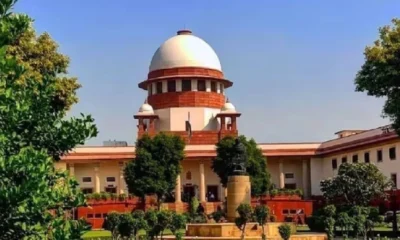
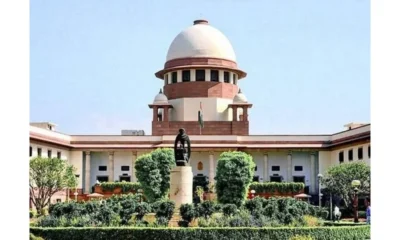
Four high court chief justices were today (Friday, November 2) sworn in as judges of the Supreme Court.

Remarkably, the Centre notified the appointment of these judges just 48 hours after the top court’s collegium recommended their names for elevation to the Supreme Court. The collegiums had approved their names on Tuesday and the Union law ministry notified the appointments of Justices Hemant Gupta, Ajay Rastogi, MR Shah and R Subhash Reddy late on Thursday night.

The appointment of the judges raises the strength of the Supreme Court to 28 against a sanctioned strength of 31.

However, before the year is out, in two months two senior-most judges after Chief Justice Ranjan Gogoi – Justices Madan B Lokur and Justice Kurian Joseph are set to retire:  Justice Joseph’s stint will end on November 29, while Justice Lokur will demit office on December 30.

It may be recalled that Justices Lokur and Joseph, along with now retired Justice J Chelameswar were part of the unprecedented ‘judges press conference’ earlier this year – incumbent Chief Justice Gogoi was the fourth judge at this meet – where they red flagged a slew of issues that they believed were wrong at the apex court. Among the issues raised by the four judges at the press conference was also the delay in the Centre’s approval of the Memorandum of Procedure (MoP) for deciding the process of appointments to the judiciary.

Of the newly appointed judges, Justice Gupta was the Chief Justice of the Madhya Pradesh High Court, while Justice Rastogi was the Chief Justice of the Tripura High Court. Justice Shah and Justice Reddy were chief justices of the Patna and Gujarat high courts respectively.

Justice Gupta was appointed as a judge of the Punjab and Haryana High Court on July 2, 2002, and on February 8, 2016, he was transferred to the Patna High Court where he was appointed as the Acting Chief Justice on October 29, 2016. He was appointed as the Chief Justice of the Madhya Pradesh High Court on March 18, 2017.

Justice Rastogi was appointed as a judge of the Rajasthan High Court in September, 2004 and was also made the Acting Chief Justice there. He had taken oath as the Chief Justice of the Tripura High Court on March 1, 2018.

Justice Shah was appointed as a judge of the Gujarat High Court on March 7, 2004 and later in August this year, he was sworn in as the Chief Justice of the Patna High Court.

Justice Reddy was elevated as an additional judge of the Andhra Pradesh High Court on December 2, 2002. He was elevated as the Chief Justice of the Gujarat High Court on February 13, 2016.

India News

President Murmu questions tribal development in Bengal, Mamata Banerjee calls remarks political

President Droupadi Murmu raised concerns about tribal development in West Bengal and questioned the absence of state representatives during her north Bengal visit. Mamata Banerjee called the remarks political and said they were based on misinformation.

Published

on

mamta banerjee

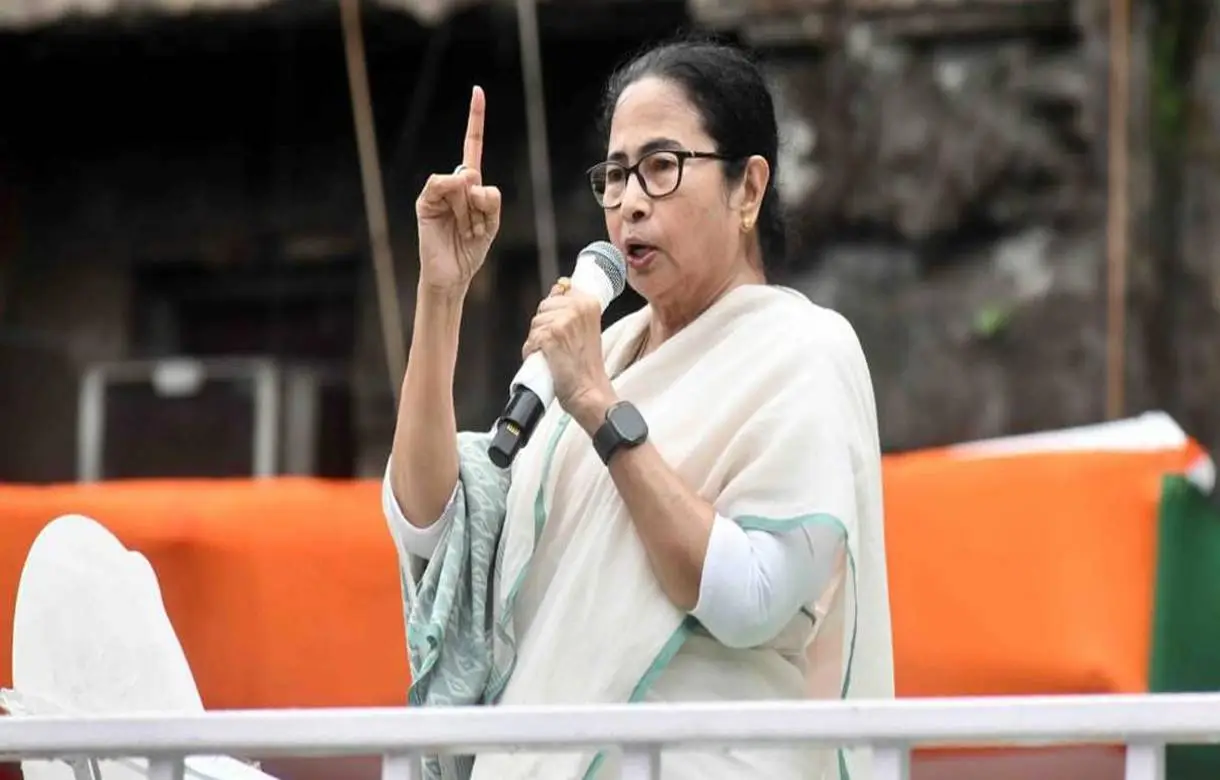
President Droupadi Murmu on Saturday raised questions about the development of tribal communities in West Bengal and also expressed surprise over the absence of state government representatives during her visit to north Bengal.

Speaking at the International Santhal Conference, an event organised for the tribal community, the President wondered whether Chief Minister Mamata Banerjee was upset with her, as neither the chief minister nor any minister from the state cabinet was present to receive her.

Murmu also referred to the decision to shift the venue of the conference from Bidhannagar to Goshaipur. She questioned why the programme was not allowed at the earlier venue despite adequate space being available.

Addressing the gathering, the President said she did not know whether Banerjee was upset with her and remarked that she also considers herself a daughter of Bengal. She added that Banerjee was like a younger sister to her but the reason behind shifting the programme location remained unclear.

During her speech, Murmu also raised broader concerns about the condition of tribal communities in the region. She questioned whether development and facilities intended for Santhals and other tribal groups were actually reaching them.

According to the President, the Centre has worked over the past decade to strengthen tribal identity and accelerate development for tribal communities. However, she said it did not appear that the benefits were reaching people in the region.

Murmu also suggested that some individuals might have been prevented from attending the event and said it appeared that certain groups did not want the Santhal community to unite, progress, or gain access to education and strength.

The remarks triggered a political response, with Prime Minister Narendra Modi criticising the situation. Sharing a video of the President’s speech, he said the incident was shameful and expressed concern over what he described as an insult to the President and to Santhal culture.

The BJP also criticised the West Bengal government, alleging that the lack of preparation and protocol during the President’s visit reflected administrative failure and disrespect for constitutional offices.

Responding to the President’s remarks, Mamata Banerjee said the statements were political in nature. Speaking during a protest in Kolkata against the Special Intensive Revision of voter rolls, the chief minister urged the President to avoid making remarks that could affect the dignity of the office.

Banerjee said the President had spoken about only one community and not about others in the state. She also asked her party’s MPs to seek an appointment with Rashtrapati Bhavan to present details of the state government’s work for Scheduled Tribe and Scheduled Caste communities.

The Trinamool Congress also rejected the suggestion that there had been no development for tribal communities in the state. In a statement, the party said the President appeared to have been misinformed.

The party highlighted several welfare initiatives, including financial assistance under the Lakshmir Bhandar scheme. It said women from Scheduled Tribe communities now receive Rs 1,700 per month, amounting to Rs 20,400 annually.

The Trinamool Congress also referred to scholarships for tribal students, the establishment of schools and other development programmes aimed at improving conditions in tribal areas.

According to the party, these measures represent concrete initiatives designed to improve opportunities, dignity and development for Adivasi communities across West Bengal.

Continue Reading

India News

Gurmeet Ram Rahim acquitted in 2002 journalist Ram Chander Chhatrapati murder case

The Punjab and Haryana High Court has acquitted Dera Sacha Sauda chief Gurmeet Ram Rahim Singh in the 2002 murder case of journalist Ram Chander Chhatrapati.
Published

on

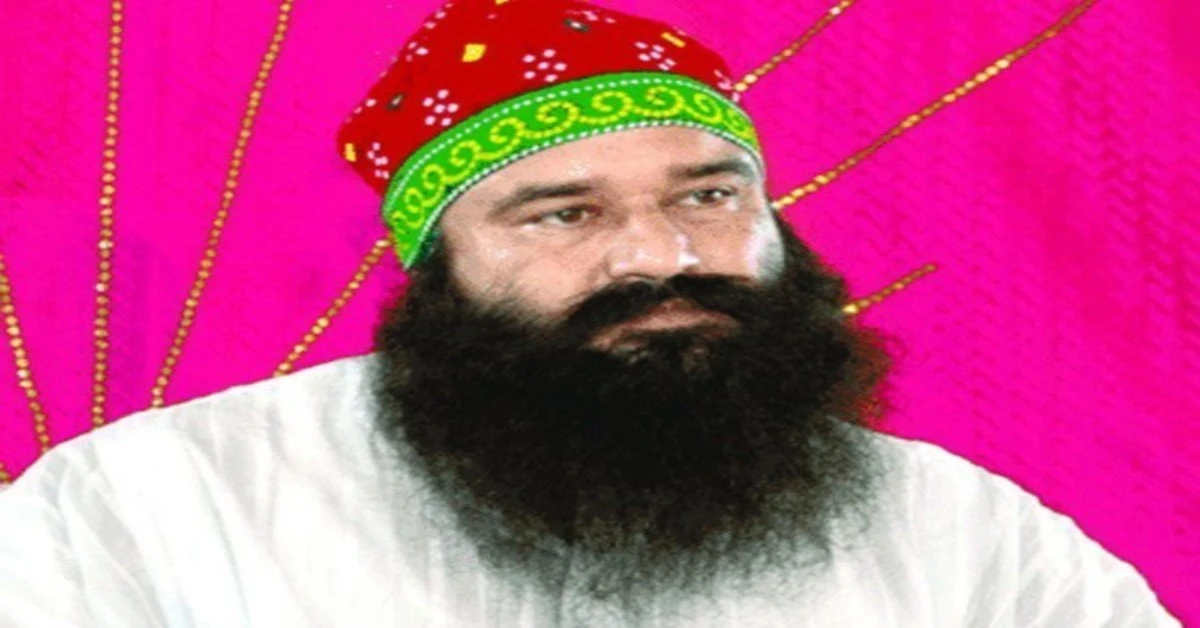
Dera Sacha Sauda chief Gurmeet Ram Rahim Singh has been acquitted by the Punjab and Haryana High Court in the 2002 murder case of journalist Ram Chander Chhatrapati.

The decision comes more than seven years after the sect leader was convicted and sentenced to life imprisonment in the case.

According to Singh’s lawyer Jitender Khurana, the high court set aside the earlier conviction and acquitted the Dera chief in the killing of the journalist.

Ram Rahim and three others had been convicted in 2019 for the murder of Chhatrapati, who was shot outside his residence in Haryana’s Sirsa in October 2002.

The journalist had published an anonymous letter in his newspaper Poora Sach, which alleged sexual exploitation of women followers at the Dera Sacha Sauda headquarters in Sirsa. The attack on Chhatrapati occurred after the publication of the letter.

Despite the acquittal in the murder case, Ram Rahim continues to serve a 20-year prison sentence handed down in 2017 for the rape of two of his disciples.

Following that conviction, he was lodged in Sunaria jail in Rohtak, Haryana.

Continue Reading

India News

Trump’s handling of India ties a major mistake, says former Australia PM Tony Abbott

Former Australian prime minister Tony Abbott says Donald Trump’s tariffs and engagement with Pakistan leadership unnecessarily strained relations with India.
Published

on

donald-trump

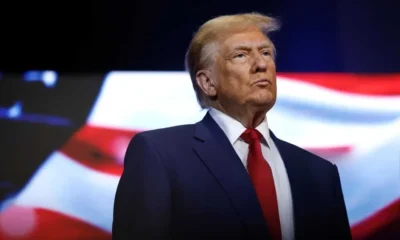
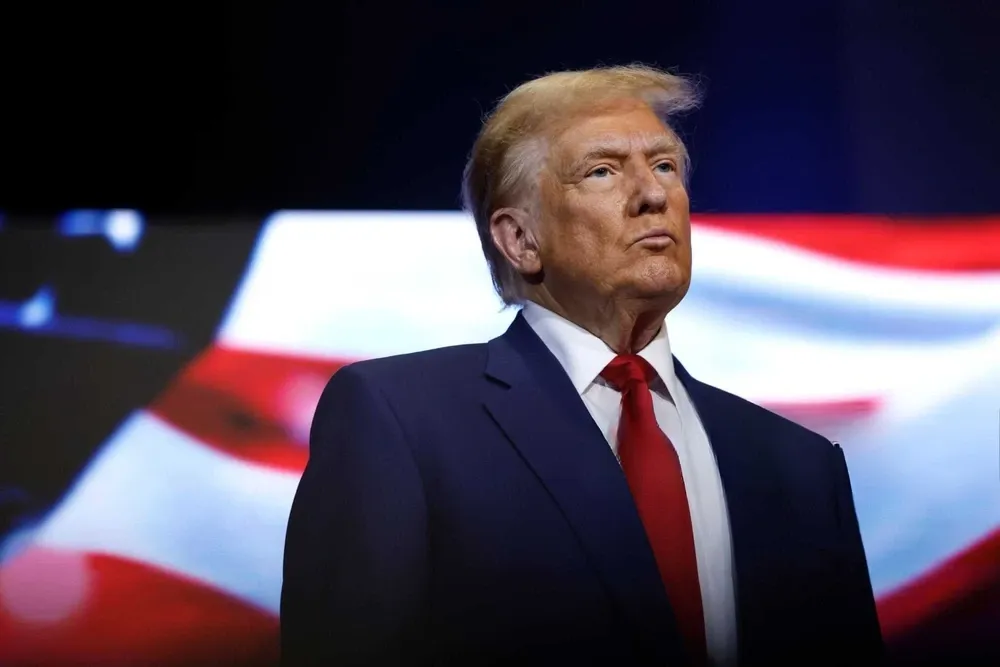
Former Australian prime minister Tony Abbott has said that one of the biggest mistakes made by US President Donald Trump so far has been the way he handled relations with India.

Speaking in an interview with media, Abbott said he does not fully support Trump’s foreign policy approach and highlighted several steps that, in his view, unnecessarily strained ties with New Delhi.

Abbott said these included the imposition of punitive tariffs on Indian goods, claims by Trump that he had mediated tensions between India and Pakistan, and the hosting of Pakistan’s army chief Asim Munir at the White House.

According to Abbott, these actions “gratuitously alienated” India, particularly given New Delhi’s longstanding concerns about terrorism originating from Pakistan.

Tariff dispute and trade deal

Tensions between the United States and India had earlier escalated after Washington imposed 25 per cent reciprocal tariffs on several Indian products. An additional 25 per cent levy was also linked to India’s continued purchases of Russian oil.

However, a trade agreement announced by Trump in February signalled a partial easing of those tensions. Under the arrangement, the US reduced tariffs on several Indian goods.

Trump said the decision followed a commitment from Prime Minister Narendra Modi to halt purchases of oil from Russia while the war in Ukraine continued.

The agreement helped ease months of friction between the two countries over energy purchases, which Washington had argued were helping fund the ongoing conflict.

Trump has also repeatedly referred to his close personal ties with Modi, describing the Indian leader as one of his greatest friends.

Abbott comments on Middle East conflict

Abbott also spoke about the uncertainty surrounding the ongoing conflict involving Iran, Israel and the United States.

He said it was impossible to predict whether the situation would lead to a regime change in Tehran, noting that the current leadership still enjoys support among sections of the Iranian population.

At the same time, Abbott suggested that the weakening of Iran’s nuclear capabilities could significantly limit the country’s ability to project aggression in the future.

He also said the intensity of the conflict could gradually decline.

According to Abbott, Iranian attacks had already reduced compared to earlier phases of the conflict, while Israeli and American strikes had intensified and largely focused on regime facilities rather than civilian infrastructure.

Fresh attacks reported

In the hours following his remarks, Iran launched new missiles and drones targeting Israel and several Gulf countries hosting US military bases.

Explosions were reported inside Israel as air defence systems intercepted incoming projectiles.

Countries including the United Arab Emirates, Kuwait, Qatar, Bahrain and Saudi Arabia also reported attacks.

Continue Reading

Trending

© Copyright 2022 APNLIVE.com