English हिन्दी
Connect with us

India News

G RAM G bill replacing MGNREGA passes Parliament amid opposition walkout and protests

The G RAM G Bill replacing MGNREGA has been passed by Parliament after overnight debate in the Rajya Sabha, triggering protests and walkouts by opposition parties.

Published

on

Parliament

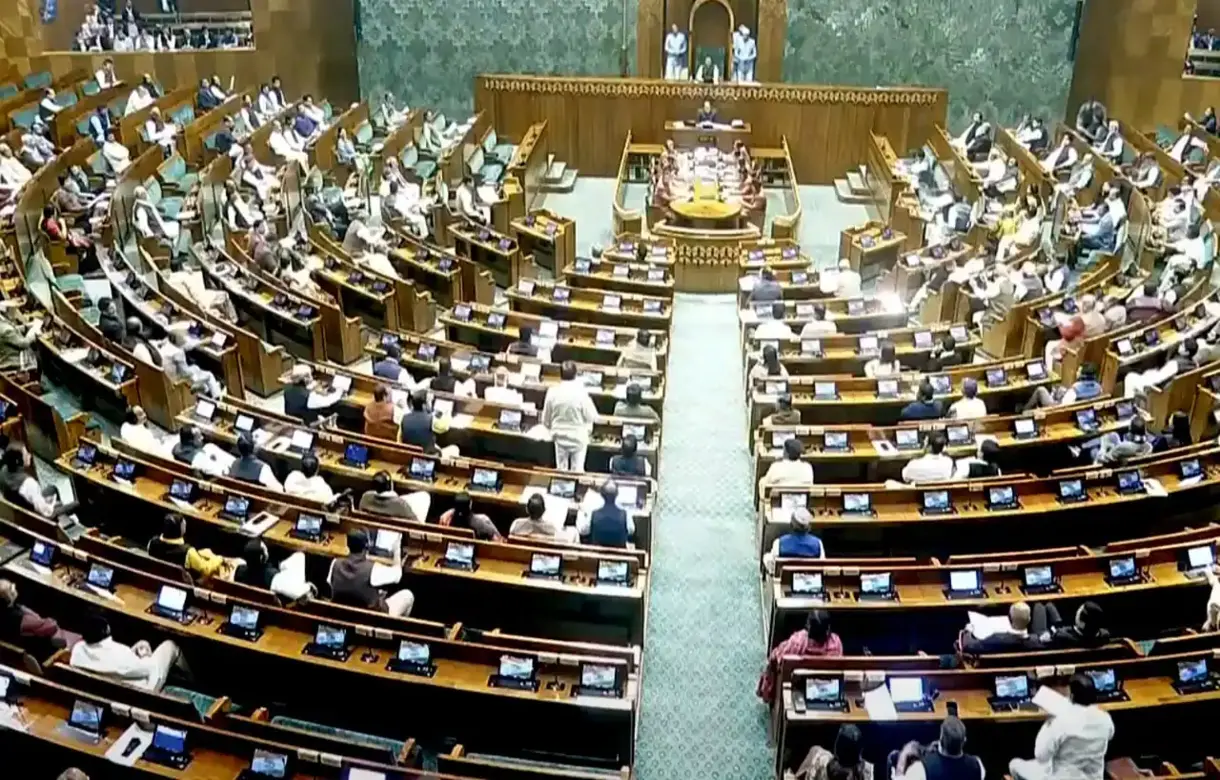
Parliament has cleared the Viksit Bharat Guarantee for Employment and Livelihood Mission (Rural) Bill, commonly referred to as the G RAM G Bill, paving the way for the replacement of the Mahatma Gandhi National Rural Employment Guarantee Act (MGNREGA). The legislation was passed within two days amid sharp political confrontation, walkouts and overnight protests by opposition parties.

The bill was approved by the Lok Sabha despite repeated disruptions and protests. In the Rajya Sabha, the debate stretched beyond midnight, with voting held around 12.15 am. The bill was eventually passed by a voice vote after opposition members staged a walkout, leaving the ruling alliance members present in the House.

Opposition objects to name change and provisions

The Congress and other opposition parties mounted a strong challenge to the bill, objecting both to the change in the scheme’s name and its revised framework. A key point of contention was the removal of Mahatma Gandhi’s name from the legislation, which opposition leaders said reflected an ideological shift rather than a policy necessity.

Congress president Mallikarjun Kharge launched a sharp attack during the Rajya Sabha debate, urging the government to withdraw the bill and warning that it would harm the rural poor. He accused the government of speaking in the name of welfare while undermining the interests of vulnerable communities, making an emotional appeal to reconsider the legislation.

Several opposition members initially demanded that the bill be referred to a standing committee for detailed scrutiny. When that demand was not accepted, they called for the bill’s withdrawal and later staged a walkout. Members of the Trinamool Congress and other parties subsequently sat on a dharna within Parliament premises.

Heated exchanges in the Upper House

The debate witnessed intense exchanges between the treasury benches and the opposition. Trinamool Congress MP Derek O’Brien linked the passage of the bill with developments in West Bengal, alleging that the Centre’s actions had consequences for the implementation of rural employment schemes in the state. He also referred to the state government’s decision to rename its employment initiative following the Lok Sabha vote.

As Rural Development Minister Shivraj Singh Chouhan rose to reply, opposition members raised slogans demanding the withdrawal of what they termed a “black bill”. When the protests continued, opposition MPs walked out, allowing the bill to be passed without their presence.

Responding sharply, Chouhan criticised the walkout and accused the opposition of refusing to engage in debate. He defended the government’s move, arguing that the earlier scheme had suffered from corruption and inefficiencies, and said the new law was drafted after consultations with stakeholders.

Government defends overhaul of rural employment scheme

The government has maintained that updating the two-decade-old MGNREGA framework was necessary to address structural shortcomings and align it with current rural needs. According to the provisions outlined, the new law increases the guaranteed days of work from 100 to 125 while retaining key elements of the earlier scheme.

However, critics have pointed out that employment under the new framework will be based on pre-approved plans rather than demand-driven applications at the gram panchayat level. The work categories have also been streamlined into four segments—water security, core rural infrastructure, livelihood-related assets, and climate resilience—raising concerns that local flexibility may be reduced.

Opposition leaders have argued that these changes dilute the original spirit of MGNREGA, which was designed as a rights-based, demand-driven employment guarantee programme.

Protests continue after passage

Following the bill’s passage, opposition parties reiterated their charge that the legislation weakens the guarantee, livelihood assurance and social security that formed the core of the original programme introduced in 2005. Despite these objections, the government’s numerical strength ensured the bill’s smooth passage through both Houses.

With parliamentary approval now secured, the G RAM G Bill is set to replace MGNREGA, marking a significant shift in India’s rural employment policy framework amid continuing political debate.

India News

Stealing TMC’s data: Mamata Banerjee visits I-PAC chief’s home during ED searches

Mamata Banerjee visited the residence of I-PAC chief Pratik Jain during ED searches, alleging attempts to seize TMC’s internal documents, while the agency denied political targeting.

Published

on

mamta banerjee

West Bengal Chief Minister Mamata Banerjee on Thursday visited the residence of Indian Political Action Committee (I-PAC) chief Pratik Jain amid ongoing searches by the Enforcement Directorate (ED), triggering a major political confrontation in Kolkata.

Banerjee reached Jain’s house around noon, shortly after Kolkata Police Commissioner Manoj Verma arrived at the location. She remained there for nearly 20 to 25 minutes before stepping out with a green folder, alleging that the central agency was attempting to seize sensitive digital data and internal documents belonging to the Trinamool Congress (TMC).

Addressing reporters outside the residence, the chief minister claimed that the ED raid targeted the party’s IT cell and involved the confiscation of hard disks, mobile phones, laptops and documents related to candidate selection and internal election strategy.

“ED raided my IT sector office and searched the residence of the in-charge of my IT sector. They were confiscating my party’s documents and hard disks which have details about our assembly election candidates. I have brought those back,” Banerjee said.

She described the searches as politically motivated and unconstitutional, alleging that central agencies were being used to intimidate opposition parties ahead of elections.

Banerjee accuses Amit Shah of political vendetta

Escalating her attack, Banerjee targeted Union Home Minister Amit Shah, accusing him of misusing constitutional institutions for political purposes.

“This is not law enforcement, this is political vendetta. The home minister is behaving like the nastiest home minister, not someone who protects the country,” she alleged.

The chief minister also claimed that ED officials attempted to take away a laptop from the premises and were selectively collecting political data. She further alleged that names of more than 15 lakh voters from West Bengal had been deleted from electoral rolls without proper explanation.

Meanwhile, searches were also conducted at the office of I-PAC, the political consultancy firm headed by Jain, as part of the same operation.

What the ED said

In an official statement, the ED rejected the allegations and clarified that the searches were evidence-based and not directed at any political party or office.

“Search is ongoing at 10 places — six in West Bengal and four in Delhi. The case relates to illegal coal smuggling. The search covers various premises linked to generation of cash and hawala transfers,” the agency said.

The ED maintained that the action was part of a routine investigation into money laundering and had no connection with elections. It also alleged that certain individuals, including constitutional functionaries, had illegally intruded into two of the searched premises and forcibly taken away documents.

Continue Reading

India News

Vedanta chairman Anil Agarwal calls son’s death the darkest day of his life

Vedanta chairman Anil Agarwal expressed deep grief after his son Agnivesh Agarwal died of a sudden cardiac arrest in New York while recovering from a skiing accident.

Published

on

Vedanta chairman Anil Agarwal calls son’s death the darkest day of his life

Vedanta Group chairman Anil Agarwal announced the sudden death of his son, Agnivesh Agarwal, describing it as the darkest day of his life. Agnivesh, 49, died following a cardiac arrest in New York, where he was undergoing treatment after a skiing accident.

In an emotional message shared on social media, Agarwal said his son had been recovering well at Mount Sinai Hospital and that the family believed the worst phase was over. “But fate had other plans, and a sudden cardiac arrest snatched our son away from us,” he wrote.

A journey from Patna to corporate leadership

Recalling his son’s life, Agarwal said Agnivesh was born in Patna on June 3, 1976, and grew up in a middle-class family. He studied at Mayo College in Ajmer and later went on to establish Fujeirah Gold.

Over the years, Agnivesh rose to become a prominent business leader, serving as chairman of Hindustan Zinc and leading key responsibilities within the Vedanta group. He was also the chairperson of Vedanta subsidiary Talwandi Sabo Power Ltd.

Despite his professional achievements, Agarwal said his son remained grounded and compassionate. “He was simple, warm, and deeply human,” he noted, adding that to him, Agnivesh was not just a son but also a close friend.

Renewing a promise to society

Agarwal said his son strongly believed in building a self-reliant India and often spoke about the country’s potential. Remembering those conversations, he reaffirmed a shared commitment to give back to society.

“I had promised Agni that more than 75% of what we earn would be given back to society. Today, I renew that promise and resolve to live an even simpler life,” he said.

In his concluding message, Agarwal said he would try to carry forward his son’s values and ideals, adding that Agnivesh would continue to live on through the lives he touched.

Condolences from Prime Minister Modi

Prime Minister Narendra Modi also expressed condolences on the untimely passing of Agnivesh Agarwal. In a message posted on X, he said the loss was deeply shocking and saddening, and offered prayers for strength and courage to the Agarwal family.

Anil Agarwal has two children — his late son Agnivesh and his daughter Priya Agarwal, who serves on the board of Vedanta Ltd. and is the chairperson of Hindustan Zinc Ltd.

Continue Reading

India News

Somnath Temple attacks reinforced India’s cultural unity, says PM Modi ahead of visit

PM Modi says centuries-old attacks on Somnath Temple strengthened India’s cultural unity, highlighting the shrine’s enduring spiritual resilience.

Published

on

PM Modi

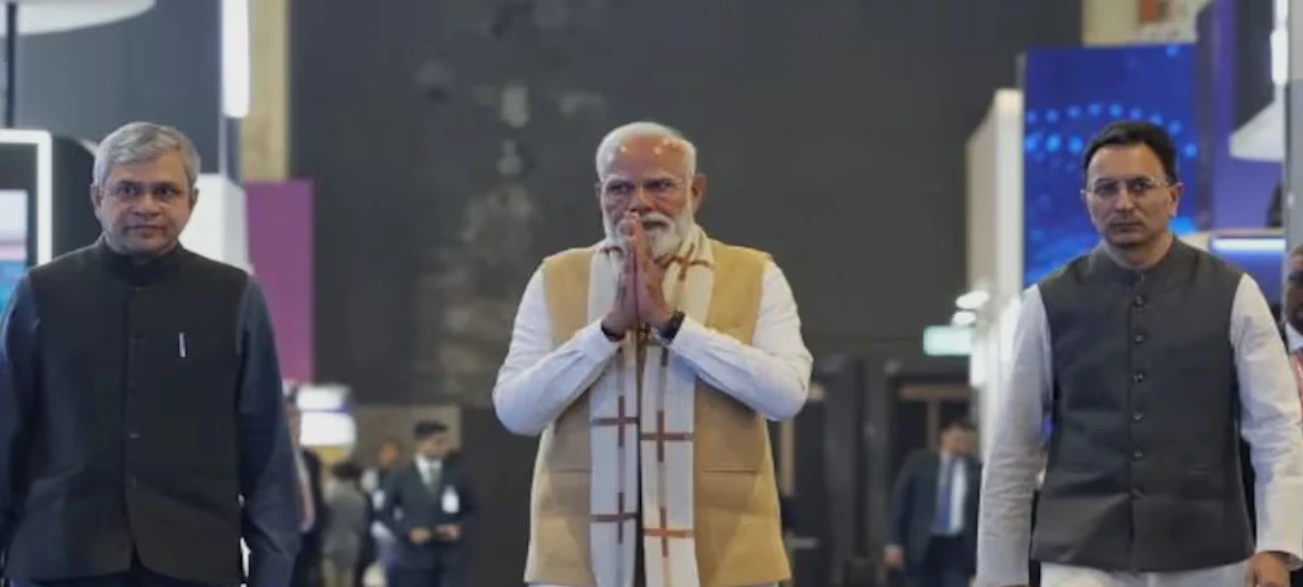
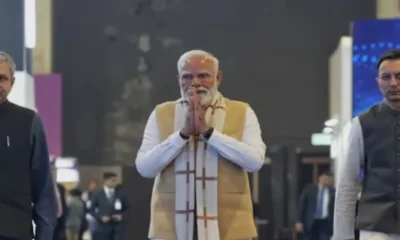
Ahead of his scheduled visit to the Somnath Temple on January 11, Prime Minister Narendra Modi on Thursday said that repeated historical attacks on the shrine failed to weaken India’s spiritual foundations and instead strengthened the country’s cultural unity.

In a message shared on social media platform X, the prime minister reflected on the first recorded attack on the Somnath Temple in January 1026 and the several assaults that followed over the centuries. He said these events could not break the faith of the people, leading instead to the temple being rebuilt time and again as a symbol of civilisational continuity.

“The attack of the year 1026 and the numerous assaults that followed thereafter could not shake our eternal faith. On the contrary, these strengthened the sentiment of India’s cultural unity,” the prime minister wrote, while sharing images from his earlier visits to the temple.

PM Modi said the Somnath Swabhiman Parv, which begins on January 8, is being observed as a festival of remembrance, honouring generations of Indians who upheld their values and cultural consciousness even during the most difficult periods.

He noted that their steadfast commitment to civilisation and national unity continues to inspire the country today. According to the prime minister, the thousand-year legacy of faith associated with Somnath serves as a reminder of India’s enduring spiritual resolve.

Recalling Somnath’s reconstruction and national leaders’ role

The prime minister also shared visuals from a programme held at Somnath on October 31, 2001, marking 50 years since the temple’s reconstruction and inauguration in 1951.

He recalled that the historic ceremony in 1951 was attended by then President Dr Rajendra Prasad and highlighted the key role played by leaders such as Sardar Vallabhbhai Patel and K M Munshi in rebuilding the shrine after Independence.

PM Modi further noted that the 2001 event saw the participation of senior national leaders, and added that the year 2026 will mark the 75th anniversary of the 1951 inauguration ceremony.

The prime minister is scheduled to visit the Somnath Temple on January 11 to take part in the concluding events of the Somnath Swabhiman Parv.

The four-day observance, running from January 8 to January 11, will feature programmes focused on India’s spiritual heritage, cultural pride and social values.

Continue Reading

Trending

© Copyright 2022 APNLIVE.com