
India News
Get Amit Shah to testify for you by Tuesday: Court to Gujarat riots accused Maya Kodnani

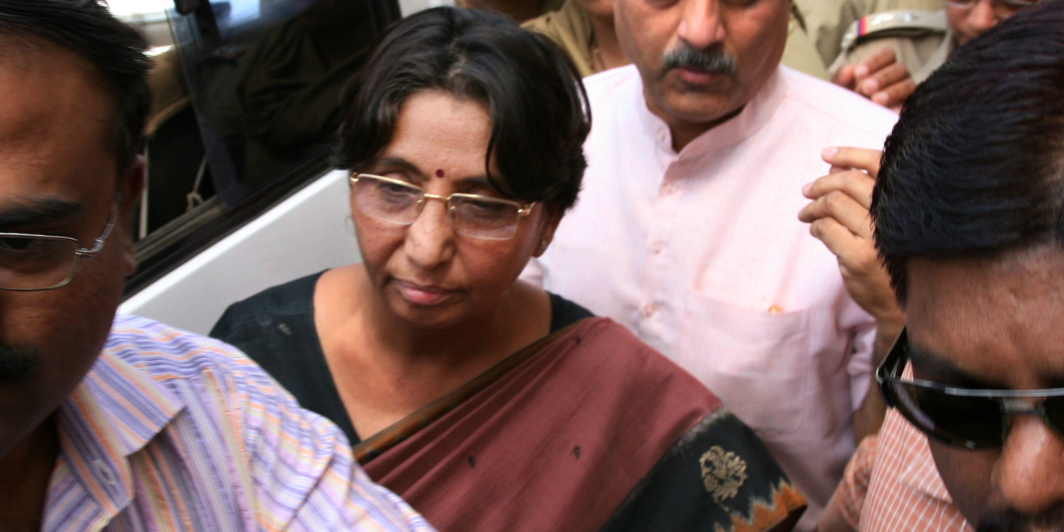
[vc_row][vc_column][vc_column_text]Former minister in the Narendra Modi-led Gujarat government in 2002, Kodnani claims she doesn’t know the address on which to send summons for Shah
In a development that might trigger some inadvertent laughs, a special court in Gujarat’s Gandhinagar has given BJP leader and 2002 post-Godhra riots convict Maya Kodnani till Tuesday to ensure that BJP national president Amit Shah testifies in her defence.
Kodnani, along with Shah, was a BJP legislator in Gujarat when the post-Godhra pogrom of 2002 claimed hundreds of lives – mostly of Muslims. Soon after the riots, Narendra Modi – who was then the chief minister of Gujarat – had inducted Kodnani into his cabinet as the minister for women and child development. Shah, who has been acquitted on charges of his involvement in the riots, had also been inducted into the Gujarat cabinet as minister of state for home.
The current case, being heard by the special trial court of judge PB Desai, pertains to her role in the Naroda Gram massacre that occurred on February 28, 2002 in which 11 Muslims were hacked to death by rioters, allegedly in the presence of Kodnani, who according to prosecution witnesses was instigating the mobs to kill and even distributing swords to them. There are 82 other accused in this case. Last month, the Supreme Court issued an order to the special trial court to wrap up the hearing in the Naroda Gam case within four months.
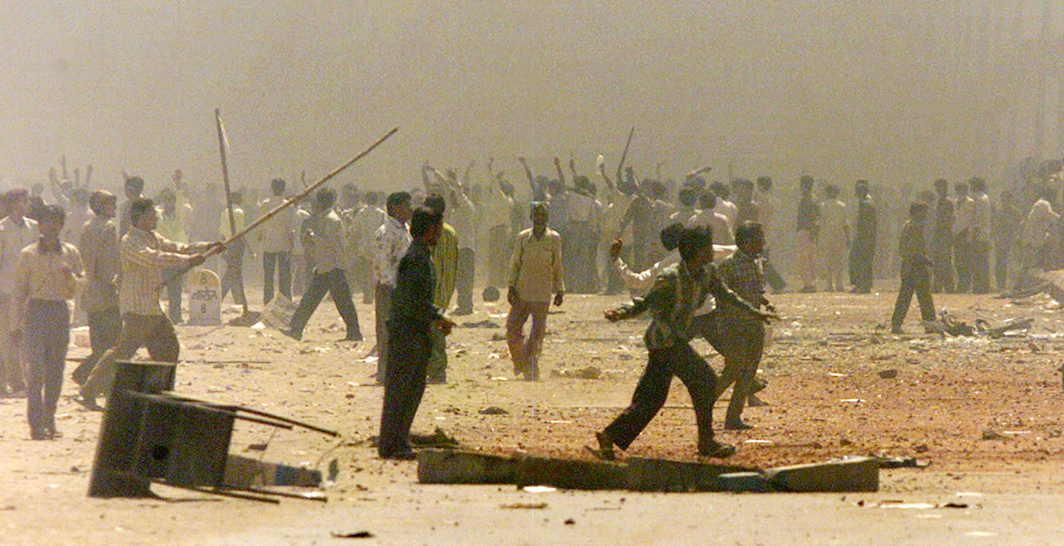
File photo of the 2002 Naroda Patiya riots
Kodnani has already been convicted (in 2012) and sentenced to 28 years in prison for her active role in instigating the Naroda Patiya riots. She was held as the “kingpin” of the riots. Kodnani and 31 other convicts in the Naroda Patiya riots case have challenged the verdict in the Gujarat High Court which concluded its hearing on August 30 and has reserved the verdict.
Earlier this week, Kodnani had sought time from the special trial court till September 12 to “contact” Shah and serve him the summons to appear as her defence witness in the Naroda Gram case. However, the court had granted her time till today (September 8).
On Friday, having failed to get the BJP national president to testify in her defence, Kodnani asked the court for 10 more days, claiming in her application to the court that since Shah is not “reachable” due to his busy schedule, “it is difficult to decide as to which address the summons be served to him”. The court told Kodnani that she has till Tuesday to get Shah to court and testify in her favour.
 The court said that the summons must be served to Shah by Monday (September 11) and ordered that she should get him to depose before the court the very next day. Amit Shah’s testimony in her defence is the last hope that Kodnani has in her effort to secure her acquittal in the Naroda Gram case.
Kodnani had sought examination of 14 people as defence witnesses to prove her alibi in the Naroda Gram case. While 13 of these witnesses have made their deposition, Shah has not come to Kodnani’s defence as yet. Twelve people, including her husband Surendra Kodnani, former deputy mayor and BJP corporator Dinesh Makwana and former BJP MLA Amrish Govindbhai Patel, have testified in her favour.
The most high-profile BJP leader to have been convicted in a post-Godhra riots case, Kodnani had claimed that on February 28, 2002, the day riots broke out in Naroda Gam, she was not at the scene of the crime but with Amit Shah – first at the Gujarat assembly and then at her own hospital at the time that the prosecution witnesses say they saw her. This claim by Kodnani is her biggest alibi but only if Shah testifies to her claims before the court.[/vc_column_text][/vc_column][/vc_row]




India News
BJP MLA Vungzagin Valte dies after prolonged battle with injuries from Manipur violence
Manipur BJP MLA Vungzagin Valte has died in Gurugram nearly two years after suffering severe injuries in the 2023 ethnic violence in Imphal.


India News
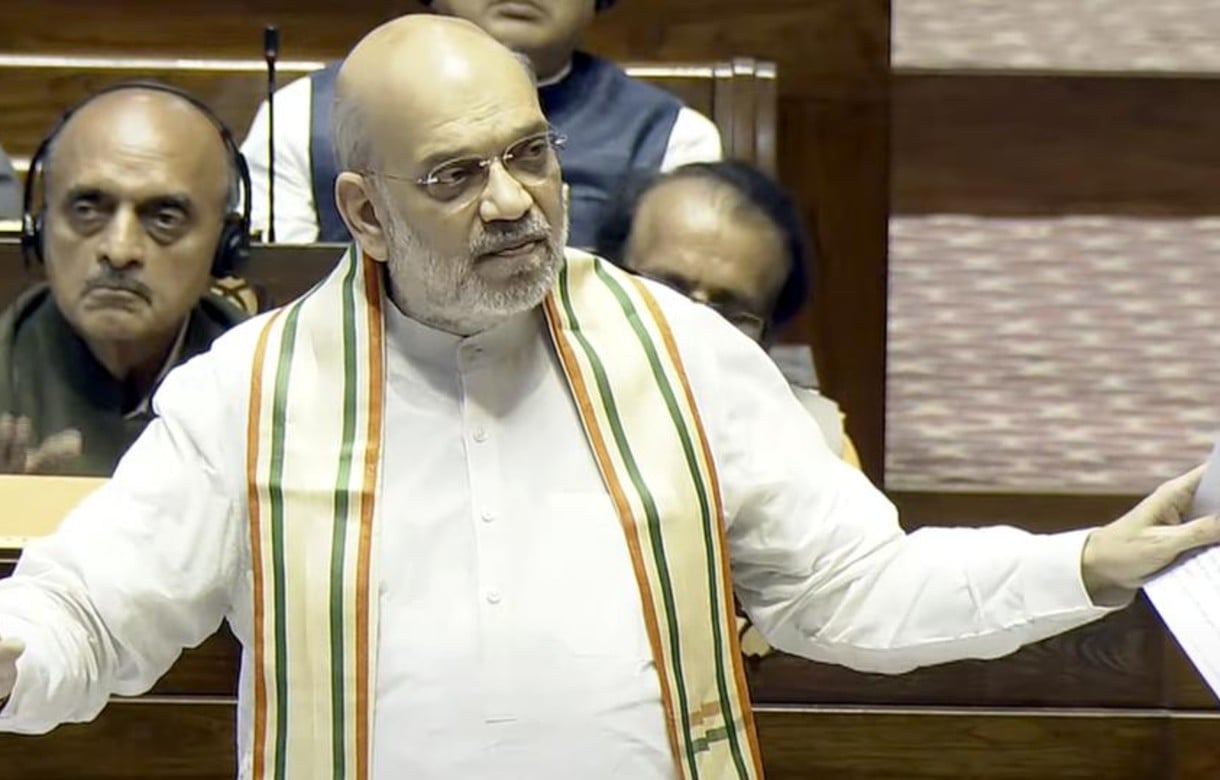
Amit Shah launches Rs 6,900 crore Vibrant Village Programme-II in Assam
Amit Shah has launched the Rs 6,900 crore Vibrant Village Programme-II in Assam to develop 140 villages along the Bangladesh border with improved infrastructure and employment opportunities.
India News
No option left: Supreme Court issues extraordinary order in Bengal SIR case
The Supreme Court issued an extraordinary order in the Bengal SIR case, asking the Calcutta High Court to appoint judicial officers to resolve disputes between the state and the Election Commission.


Haryana budget session begins amid BJP-Congress face-off

Trump reiterates India-Pak ceasefire claim, says 11 jets were shot down

Shadab Khan lands in trouble after ‘we’ve beaten India’ remark, PCB issues warning: Report

India and Switzerland strengthen AI governance, trade ties at Impact Summit

No option left: Supreme Court issues extraordinary order in Bengal SIR case

BJP MLA Vungzagin Valte dies after prolonged battle with injuries from Manipur violence

Amit Shah launches Rs 6,900 crore Vibrant Village Programme-II in Assam
No option left: Supreme Court issues extraordinary order in Bengal SIR case
Haryana budget session begins amid BJP-Congress face-off
India and Switzerland strengthen AI governance, trade ties at Impact Summit

Afghan Men Try To Hang With The Jet Engine Of The Aircraft in Kabul- Afghanistan News – Kabul News
Trending Top 10 News: 10000 Crore Fine on Flipkart, Apple to Launch Unique Feature, Hdfc Bank Job Ad

Trending Top 10 News: Nokia 6310, Apple sales, Bachpan ka Pyar Video Kid, Dainik Bhaskar IT Raid

Trending Top 10 News: Canada bans Indian flights, Rain in Delhi NCR, AIMIM Twitter hacked, Raj Kundra case

Trending Top 10 News: Shein India, Apple New Service, Pocket Oxygen, Oppo Launched New Phone
-
 India News18 hours ago
Haryana budget session begins amid BJP-Congress face-off
-
 Latest world news19 hours ago
Trump reiterates India-Pak ceasefire claim, says 11 jets were shot down
-
 Cricket news19 hours ago
Shadab Khan lands in trouble after ‘we’ve beaten India’ remark, PCB issues warning: Report
-
 Latest world news19 hours ago
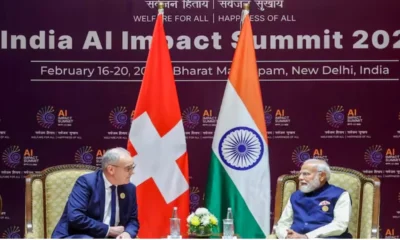
India and Switzerland strengthen AI governance, trade ties at Impact Summit
-
 India News8 hours ago
No option left: Supreme Court issues extraordinary order in Bengal SIR case
-
 India News8 hours ago
Amit Shah launches Rs 6,900 crore Vibrant Village Programme-II in Assam
-
 India News8 hours ago
BJP MLA Vungzagin Valte dies after prolonged battle with injuries from Manipur violence
