English हिन्दी
Connect with us

India News

Gorkhaland Total Bandh Enters Fourth Month As Leaders Duck

Published

on

Gorkhaland Total Bandh Enters Fourth Month As Leaders Duck

[vc_row][vc_column][vc_column_text]By:  Saeed Naqvi

Darjeeling, Thimpu, Gangtok, Siliguri are a tight cluster on any map even in a large Atlas. Because of the recent standoff with China over Doklam, the strategic importance of the area, the saliency of the Siliguri corridor, cannot be overlooked. Is New Delhi taking an interest in the demand for a Gorkha homeland from this perspective?

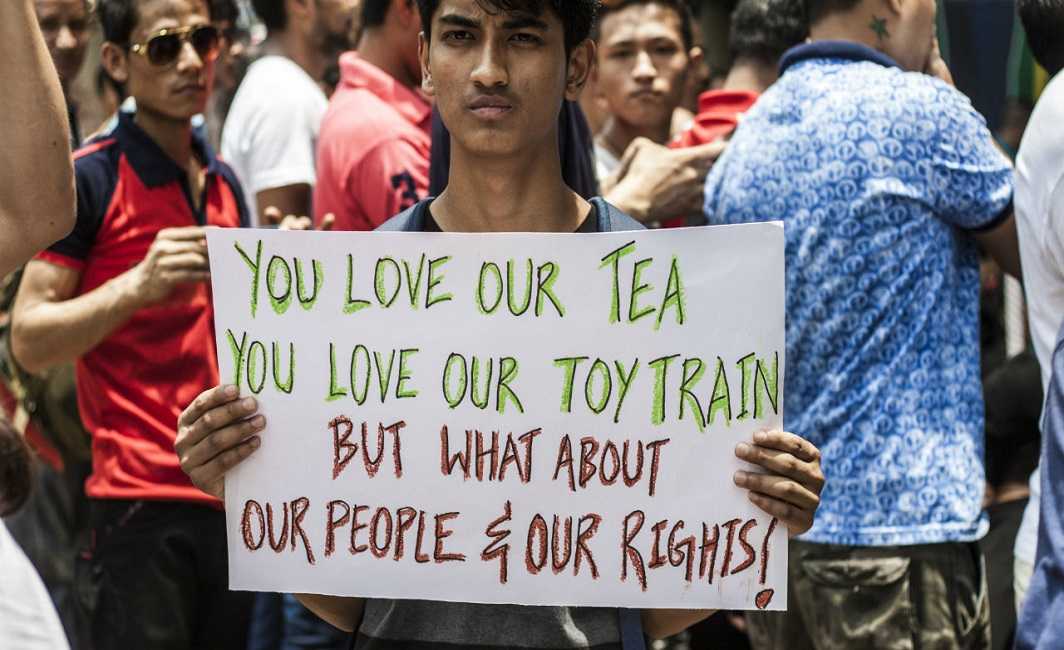
My taxi has to wait outside Kurseong Toy Train station, on the way from Siliguri to Darjeeling, because a march by agitating Gorkha women will not let us pass. Violence in this sensitive area could be very unsettling. Angry women bang on the bonnet of my car and jeer at the Gorkha driver: “Have you joined the Bengalis?” It is a threatening query.

Similar bandhs and marches have brought life to a grinding halt for the past three months – and continuing. There are, of course, cunning leakages – a few chicken being sold here, some vegetables there. But this private enterprise disappears at the sight of approaching marchers.

Contrary to what one might imagine, this sporadic enterprise does not demonstrate a weakening of the popular will. In fact it helps people a bit and enables them to bear the suffering a little longer. It supplements the agitation.

Clearly Gorkhaland is not likely to be conceded in a hurry. What then have the leaders of the Gorkha Janmukti Morcha promised the people? What spell have they cast on them because of which the people have diligently pursued these marches, street-corner meetings, picketing outside offices in an atmosphere of total bandh (bar the contrived leakages). Schools, hotels, restaurants, shops, are shut and labourers on all the 88 tea plantations have struck work and are, therefore, beginning to depend on packets of food some well meaning people are arranging.

No one quite knows the preferred game plans of the plantation owners. The gossip is that they would now like the strike to continue till December so they are not obliged to pay the workers three months wages (for the period when the plantations have been closed) plus bonus for puja holidays.

The inordinate extension of the bandh is causing all the leaders of the Gorkha Movement Coordination Committee to miss heart beats with alarming frequency.

West Bengal Chief Minister, Mamata Banerjee who is always inclined to see agitations, however legitimate, as an affront to her, has slapped countless cases against leaders, including Bimal Gurung, President of GJM, the main political party.

This has given him a respectable reason to run away from Darjeeling and hide in Sikkim. The cases, in other words, are a godsend. Had there been no cases, how would the leaders escape the wrath of the people who are on this occasion truly mobilized? They must be shown some movement towards Gorkhaland. This “movement” is proving elusive even by inches, leave alone feet and yards.

Since all leaders in the coordination committee were pushed from the precipice into a total bandh by the GJM leader Bimal Gurung, they are privately cursing him, but are unable to publicly say anything that would make their resolve for Gorkhaland look weaker. But some of them are keeping a sly eye on any escape route which they can sell to the agitating populace as an advance towards their cause. The situation is custom made for Mamata Banerjee who is desperate to fill whatever political spaces she can with her TMC before the BJP does. If she can divide the leadership with promises of development plus a dialogue with the centre on “the people’s demand”, perhaps a “dissident” faction can then be mobilized as a vehicle for the TMC.

There is a very big “perhaps”. Why would West Bengal politicians and bureaucrats ever loosen their grip on the hill station, the toy train which their children enjoy so much during the summer vacation? There is nothing more popular internationally and which Bengal claims as its own –Tagore and Darjeeling tea.

New Delhi habitually goes into a freeze when confronted with something new, particularly where strategic concerns are involved. Gorkha/Nepali speaking people from Nepal, Sikkim and Bhutan are already keeping New Delhi busy. Gorkhaland would be a new distraction.

A strong card the Gorkhas can play concerns the military. There are thousands of Gorkhas in the army. It is not uncommon to run into a soldier with heroic stories of the Kargil war. These soldiers would be perfectly justified in seeking home leave to see the families who have suffered a bandh for three months. Thousands seeking leave at once? It is a sensitive pressure point.

The straightforward political game the BJP can play to endear themselves to the Gorkhas is by opening up debate on something less than Gorkhaland – say, a Union Territory. Gorkhas would accept it. Darjeeling would come directly under New Delhi. Mamata would of course throw a ginger fit.

After a meeting of Gorkha leaders with Mamata on August 29 Vinay Tamang, joint Secretary of the Morcha and Anit Thapa, member of the Executive Committee, took the leaders and the agitators by surprise by asking them to end the bandh because positive but unidentifiable developments were expected by September 12. By that time the next round of meetings with Rajnath Singh and Mamata would have been held, they said. Well September 12 too has come and gone and there is no sight of the bandh coming to an end.

Little wonder most of the Gorkha leaders, Bimal Gurung, Vinay Tamang, Anit Thapa are on a rapidly declining popularity graph.

Bimal Gurung’s political career was launched by his opening numerous fan clubs for a Gorkha singing sensation, Prashant Tamang, who won the 2007 Indian Idol, a reality show. Prashant won in the third week of September. On October 7, Bimal Gurung had launched the GJM.

Impulsively, he leapt into the bandh when Mamata wanted Bengali to be inserted in the three language formula. Later she withdrew her word. But by that time the GJM and the coordination committee of other Hill parties were fairly advanced on a high-wire act. An endless bandh was on.

The leader whose graph is up is R.B. Rai, twice Member of Parliament, President Communist Party of Revolutionary Marxist, Central Committee. He is universally accepted as politically savvy and an incorruptible and respected leader. He believes “tripartite talks” are a promising enough outcome to end the bandh. Apparently, Rajnath Singh has dropped hints that New Delhi, Kolkata, Darjeeling tripartite talks on Gorkhaland are possible. But will Mamata agree?

Rai is cross with the amateurishness of Bimal Gurung for playing “the ultimate card of a total bandh without having a backup plan. We should have started with Mohalla marches, struck work for a few hours, tested the political reaction in Kolkata and New Delhi, planned jail bharo andolans, gauged the plantation workers capacity to survive long strikes without wages. And so on.” There was no plan, he laments. It is a fruitless bandh but it can only be called off when people see some real promise, he says.

So, until God comes riding a thunderbolt by way of a solution, Gorkha leaders are condemned to remain suspended on the last rung of a very high staircase leading to nowhere.[/vc_column_text][/vc_column][/vc_row]

India News

Harivansh set to be elected Rajya Sabha Deputy Chairperson unopposed

Harivansh is set to be elected unopposed as Rajya Sabha Deputy Chairman after no opposition nominations were filed before the deadline.

Published

on

Former Rajya Sabha Deputy Chairman Harivansh is set to be re-elected to the same post unopposed in the election due to be held later today.
The date has been fixed by the Chairman under the relevant rules governing the conduct of business in the Upper House.
According to sources, the deadline for submitting motions for the election was 12 noon on April 16. A total of five notices were received within the stipulated time, all proposing Harivansh for the post.

Multiple nominations, single candidate
The motions were submitted by members across parties, including Jagat Prakash Nadda, Nitin Nabin, Nirmala Sitharaman, Sanjay Kumar Jha, and Jayant Chaudhary, each backed by seconding members.
All five motions explicitly state that Harivansh be chosen as the Deputy Chairman of the Rajya Sabha.

No opposition nomination filed

Notably, no motion was submitted by the Opposition before the deadline. This effectively clears the path for a unanimous election, as there is no contest for the position.
As per parliamentary procedure, motions will be taken up one by one. Once any one motion is adopted by the House, the remaining motions will not be put to vote.

Likely to be elected by voice vote
In line with established practice, the first motion — expected to be moved by Nadda — may be adopted through a voice vote. Following this, the Chairman will formally declare Harivansh as elected Deputy Chairman.
After the declaration, Harivansh will be escorted to the Chair by members from both the Treasury and Opposition benches, adhering to parliamentary convention.

Continue Reading

India News

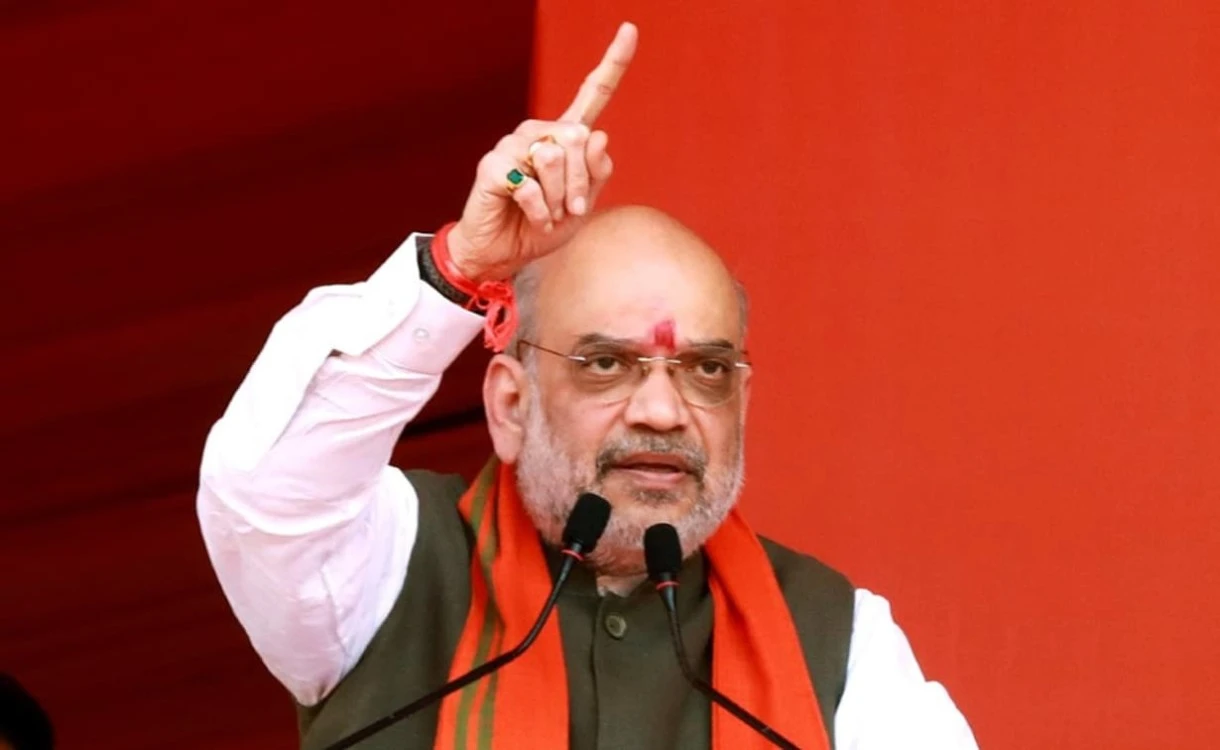
Amit Shah counters delimitation concerns, says southern states to gain Lok Sabha seats

Amit Shah assures Parliament that southern states will gain Lok Sabha seats after delimitation, countering opposition criticism during the women’s reservation debate.

Published

on

Amit Shah

Union Home Minister Amit Shah on Thursday addressed concerns over the proposed delimitation exercise, asserting in the Lok Sabha that southern states will not lose representation but instead see an increase in their number of seats.

His remarks came during a heated debate linked to the implementation of women’s reservation, where opposition parties have raised fears that population-based delimitation could reduce the political weight of southern states.

Shah rejected these claims, calling them misleading, and said the proposed framework ensures fairness while expanding the overall strength of the Lok Sabha.

Seat count to rise with expansion of Lok Sabha

The government has indicated that the total number of Lok Sabha seats could increase significantly as part of the delimitation process. In this expanded House, the combined representation of southern states is expected to rise from 129 seats at present to around 195 seats.

Shah emphasised that no state will lose seats in absolute terms, and the exercise is designed to reflect population changes while maintaining balance across regions.

State-wise projections shared in Parliament

During his address, Shah also provided indicative figures for individual southern states, suggesting notable increases in representation. According to the projections:

  • Tamil Nadu could see its seats rise substantially
  • Kerala, Telangana, and Andhra Pradesh are also expected to gain additional seats
  • Karnataka’s representation may increase as well

These figures were presented to counter the argument that delimitation would disproportionately favour northern states.

Political debate intensifies over linkage with women’s quota

The delimitation exercise has been closely linked to the rollout of women’s reservation, which proposes one-third seats for women in Parliament and state assemblies.

Opposition leaders have questioned this linkage, arguing that tying reservation to delimitation could delay its implementation and raise federal concerns. Some leaders have also warned that the move could impact national unity if apprehensions among states are not addressed.

The government, however, maintains that the reforms are necessary to ensure equitable representation and to align the electoral system with demographic realities.

Centre dismisses ‘false narrative’ on southern states

Shah reiterated that concerns about southern states losing influence are unfounded. He said the delimitation process will increase representation across regions and described the criticism as a “false narrative” aimed at creating confusion.

The issue is expected to remain a key flashpoint as Parliament continues discussions on the women’s reservation framework and related legislative changes.

Continue Reading

India News

PM Modi assures no discrimination in women’s quota, delimitation debate intensifies in Parliament

PM Narendra Modi has assured that women’s reservation will be implemented without discrimination, amid a heated debate over delimitation in Parliament.

Published

on

PM modi

Prime Minister Narendra Modi has assured that there will be no discrimination in the implementation of women’s reservation, as Parliament witnessed a sharp debate over the proposed linkage between the quota and delimitation exercise.

During the ongoing special session, the government reiterated its commitment to ensuring fair representation while addressing concerns raised by opposition parties regarding the timing and structure of the legislation.

The proposed framework aims to reserve 33 percent of seats for women in the Lok Sabha and state assemblies. However, its implementation is tied to a fresh delimitation exercise, which is expected after the next census.

Opposition questions timing and intent

Opposition leaders have raised concerns that linking the women’s quota to delimitation could delay its implementation. They argue that the process of redrawing constituencies may push the actual rollout further into the future.

The issue has triggered a broader political confrontation, with multiple parties questioning whether the move could alter representation across states.

Some critics have also alleged that the delimitation exercise could disproportionately benefit certain regions based on population, a charge the government has rejected.

Government reiterates commitment to fair implementation

Responding to these concerns, the Centre has maintained that the reforms are necessary to ensure accurate and updated representation based on population data.

Leaders from the ruling side have repeatedly emphasized that the process will be carried out transparently and without bias. The assurance that there will be “no discrimination” is aimed at addressing fears among states and opposition parties.

The debate marks a key moment in Parliament, with both sides engaging in intense exchanges over one of the most significant electoral reforms in recent years.

Continue Reading

Trending

© Copyright 2022 APNLIVE.com