English हिन्दी
Connect with us

India News

GST Overhaul: Only 5% and 18% slabs from September 22, 40% for luxury items

The Union government has overhauled GST, leaving only two slabs — 5% and 18% — from September 22, while super luxury items will attract 40%.

Published

on

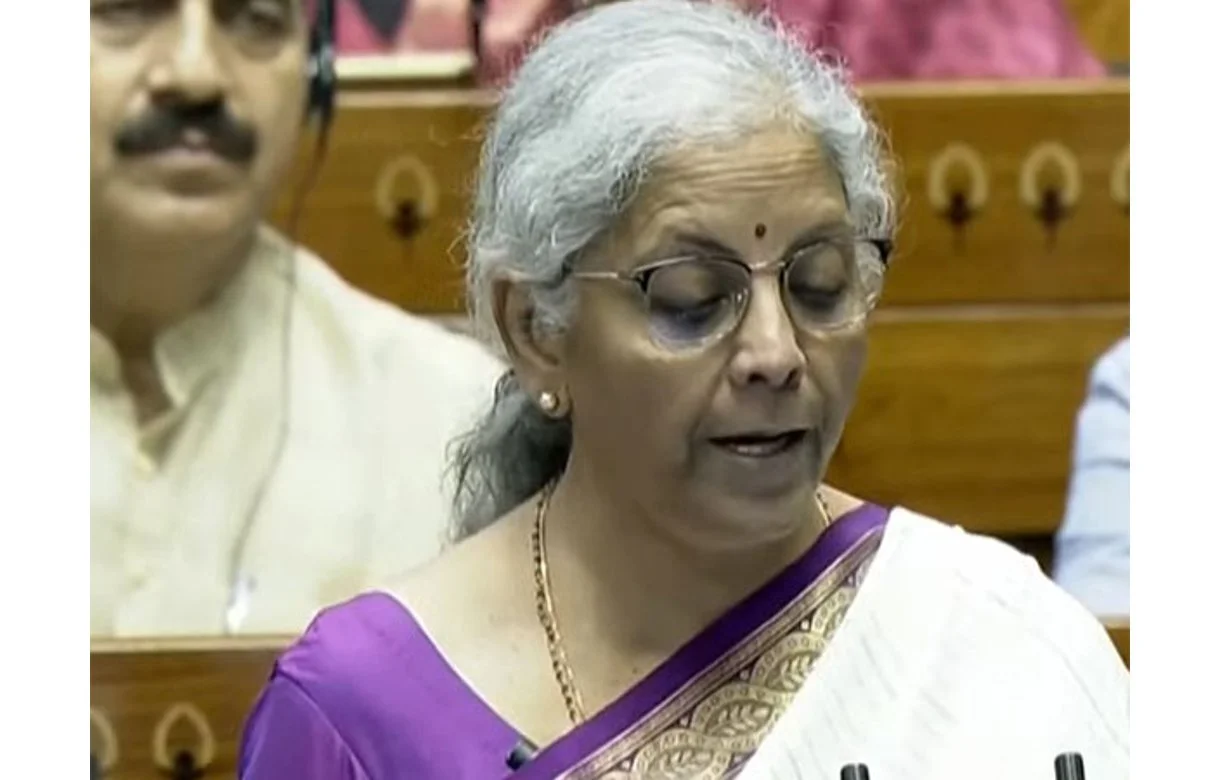
Nirmala Sitharaman

The Union government has simplified the Goods and Services Tax (GST) structure by reducing the existing four slabs to just two — 5% and 18% — effective from September 22. Additionally, a 40% sin tax will apply to luxury and super luxury items.

Relief for common citizens and farmers

Essential goods such as food items, medicines, toiletries, dairy products, and farm equipment will either be tax-free or fall under the 5% bracket. Life and health insurance policies, along with 33 life-saving medicines, will now be completely exempt from GST. Educational materials like notebooks, pencils, and crayons will also see reduced rates, making them more affordable.

Changes for aspirational and luxury products

Products like televisions, air conditioners, motorbikes under 350cc, and small cars will now attract 18% GST instead of the earlier 28%, making them comparatively cheaper. Meanwhile, luxury cars, high-end bikes, tobacco products, and carbonated beverages will face the highest 40% GST rate.

Government’s justification for reform

Union Finance Minister Nirmala Sitharaman described the changes as “multi-sectoral and multi-thematic reforms” that will make life easier for citizens and simplify business operations. The GST Council noted that the 12% slab had minimal revenue impact, while the 28% slab discouraged consumption, leading to the decision to drop both.

PM Modi hails GST rationalisation

Prime Minister Narendra Modi welcomed the decision, calling it a “next-generation reform” that will benefit the common man, farmers, and small traders. He said the simplification reflects the government’s commitment to ensuring ease of doing business and boosting economic growth.

Background

GST was first rolled out on July 1, 2017, as a unified tax system to replace multiple indirect taxes. Initially launched with five slabs, it was later reduced to four. However, critics argued that India’s structure remained among the most complicated globally. The new two-slab system aims to end that criticism by making GST more transparent and predictable.

India News

DU VC Prof Yogesh Singh entrusted with additional charge of AICTE Chairman

Published

on

By

Prof. Yogesh Singh, Vice Chancellor of the University of Delhi, has been entrusted with the additional charge of the post of Chairman, AICTE till the appointment of a Chairman of AICTE or until further orders, whichever is earlier.

It is noteworthy that AICTE Chairman Prof. TG Sitharam was relieved of his duties after his term ended on December 20, 2025. According to a letter issued by the Ministry of Education, Government of India, on Monday, Prof. Yogesh Singh’s appointment is until the appointment of a regular AICTE Chairman or until further orders whichever is earlier.

Prof. Yogesh Singh is a renowned academician with excellent administrative capabilities, who has been the Vice-Chancellor of University of Delhi since October 2021. He has also served as the Chairperson of the National Council for Teacher Education. In August 2023, he was also given the additional charge of Director of the School of Planning and Architecture (SPA).

Prof. Yogesh Singh served as the Vice-Chancellor of Delhi Technological University from 2015 to 2021; Director of Netaji Subhas Institute of Technology, Delhi from 2014 to 2017, and before that, he was the Vice-Chancellor of Maharaja Sayajirao University, Baroda (Gujarat) from 2011 to 2014. He holds a Ph.D. in Computer Engineering from the National Institute of Technology, Kurukshetra. He has a distinguished track record in quality teaching, innovation, and research in the field of software engineering.

Continue Reading

India News

Goa nightclub fire case: Court extends police custody of Luthra brothers by five days

A Goa court has extended the police custody of Saurabh and Gaurav Luthra, owners of the nightclub where a deadly fire killed 25 people, by five more days.

Published

on

Luthra brothers

A court in Goa on Monday extended the police custody of Saurabh Luthra and Gaurav Luthra, the owners of the Birch by Romeo Lane nightclub, by five more days in connection with the deadly fire incident that claimed 25 lives on December 6.

The order was passed as investigators sought additional time to question the two accused in the case linked to the blaze at the Anjuna-based nightclub.

Owners were deported after fleeing abroad

According to details placed before the court, the Luthra brothers had left the country following the incident and travelled to Thailand. They were subsequently deported and brought back to India on December 17, after which they were taken into police custody.

Advocate Vishnu Joshi, representing the families of the victims, confirmed that the court granted a five-day extension of police custody for both Saurabh and Gaurav Luthra.

Another co-owner sent to judicial custody

The court also remanded Ajay Gupta, another owner of the nightclub, to judicial custody. Police did not seek an extension of his custody, following which the court passed the order, the victims’ counsel said.

The Anjuna police have registered a case against the Luthra brothers for culpable homicide not amounting to murder along with other relevant offences related to the fire incident.

Continue Reading

India News

Delhi High Court issues notice to Sonia Gandhi, Rahul Gandhi in National Herald case

Delhi High Court has sought responses from Sonia Gandhi and Rahul Gandhi on the ED’s plea challenging a trial court order in the National Herald case.

Published

on

The Delhi High Court has sought responses from Congress leaders Sonia Gandhi and Rahul Gandhi on a petition filed by the Enforcement Directorate (ED) in connection with the National Herald case. The petition challenges a trial court order that refused to take cognisance of the agency’s prosecution complaint.

Justice Ravinder Dudeja issued notices to the Gandhis and other accused on the main petition, as well as on the ED’s application seeking a stay on the trial court’s December 16 order. The high court has listed the matter for further hearing on March 12, 2026.

The trial court had ruled that taking cognisance of the ED’s complaint was “impermissible in law” because the investigation was not based on a registered First Information Report (FIR). It observed that the prosecution complaint under the Prevention of Money Laundering Act (PMLA) was not maintainable in the absence of an FIR for a scheduled offence.

According to the order, the ED’s probe originated from a private complaint rather than an FIR. The court further noted that since cognisance was declined on a legal question, it was not necessary to examine the merits of the allegations at that stage.

The trial court also referred to the complaint filed by BJP leader Subramanian Swamy and the summoning order issued in 2014, stating that despite these developments, the Central Bureau of Investigation (CBI) did not register an FIR in relation to the alleged scheduled offence.

The ED has accused Sonia Gandhi, Rahul Gandhi, late Congress leaders Motilal Vora and Oscar Fernandes, Suman Dubey, Sam Pitroda, and a private company, Young Indian, of conspiracy and money laundering. The agency has alleged that properties worth around Rs 2,000 crore belonging to Associated Journals Limited (AJL), which publishes the National Herald newspaper, were acquired through Young Indian.

The agency further claimed that Sonia and Rahul Gandhi held a majority 76 per cent shareholding in Young Indian, which allegedly took over AJL’s assets in exchange for a Rs 90 crore loan.

Continue Reading

Trending

© Copyright 2022 APNLIVE.com