English हिन्दी
Connect with us

India News

Indore water contamination triggers 20 new diarrhoea cases as health teams screen over 9,000 people

Indore has reported 20 new diarrhoea cases after health teams screened more than 9,000 residents in Bhagirathpura, where contaminated water has led to multiple deaths.

Published

on

Indore water contamination

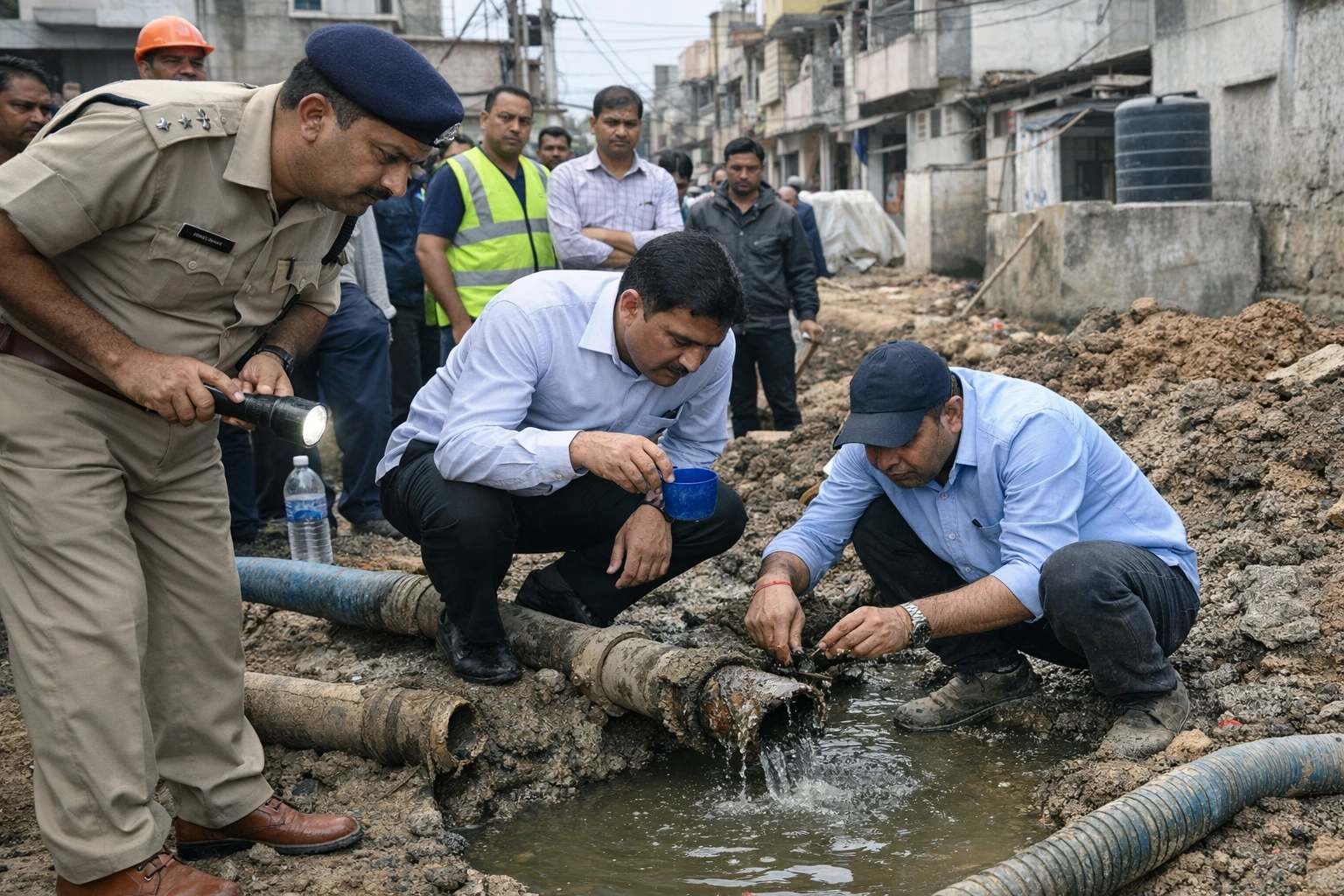
Twenty new diarrhoea cases have been reported in Indore after health authorities screened more than 9,000 residents in the city’s Bhagirathpura area, which is facing a serious health crisis due to contaminated drinking water.

Officials said medical teams examined 9,416 people from 2,354 households as part of an ongoing door-to-door survey in the affected locality. The screening led to the detection of 20 new patients on Sunday.

The outbreak has already placed a significant burden on the city’s healthcare system. According to official data, 398 patients have been hospitalised since the crisis began. Of these, 256 patients have recovered and been discharged, while 142 remain under treatment, including 11 patients admitted to intensive care units.

The contamination-linked outbreak has also resulted in fatalities. The district administration has confirmed six deaths caused by the consumption of polluted water in Bhagirathpura. Earlier, the city’s mayor had indicated that information about 10 deaths had been received.

However, local residents have disputed the official figures, claiming that 16 people, including a six-month-old infant, have died due to the diarrhoea outbreak.

Meanwhile, a team from a Kolkata-based national research institute specialising in bacterial infections has arrived in Indore to investigate the situation. Chief Medical and Health Officer Dr Madhav Prasad Haasani said the experts are providing technical assistance to the local health department to help contain the outbreak and identify its source.

Authorities continue to monitor the situation closely as health surveys and treatment efforts remain underway in the affected area.

India News

West Bengal election battle begins as phase 1 voting covers 152 seats

Phase 1 of the Bengal assembly elections begins with voting across 152 constituencies, setting the stage for a high-stakes TMC vs BJP contest.

Published

on

West bengal elections

Voting for the first phase of the West Bengal assembly elections 2026 began on April 23, marking the start of a crucial political contest in the state.

In this phase, polling is being held across 152 constituencies, making it one of the most significant stages of the election process. The voting spans multiple districts across both North and South Bengal, setting the tone for the rest of the electoral battle.

The election is largely being seen as a direct contest between the ruling Trinamool Congress (TMC) and the Bharatiya Janata Party (BJP). While the TMC is seeking to retain power after over a decade in office, the BJP is aiming to expand its presence and challenge the incumbent government.

A large number of candidates are in the fray for this phase, reflecting the scale and intensity of the contest. Several prominent leaders are contesting from key constituencies, adding to the political significance of the opening phase.

The elections are being conducted in two phases, with the second round of polling scheduled for April 29. The counting of votes is expected in early May, after which the composition of the 294-member assembly will be decided.

Key issues shaping voter sentiment include employment concerns, welfare schemes, governance, and identity politics. The outcome of this phase is expected to provide early indications of the broader electoral trend in the state.

With high voter turnout expected and tight security arrangements in place, the first phase is being closely watched as it could influence momentum for the remaining constituencies.

Continue Reading

India News

EC issues notice to Mallikarjun Kharge over terrorist remark against PM Modi

The Election Commission has issued a notice to Mallikarjun Kharge over his remark on PM Modi, asking for a response within 24 hours amid a growing political controversy.

Published

on

mallikarjun-kharge

The Election Commission has issued a notice to Congress president Mallikarjun Kharge over his controversial remark referring to Prime Minister Narendra Modi as a “terrorist” during an election campaign.

Taking serious note of the statement, the poll body has asked Kharge to submit his response within 24 hours, highlighting concerns over the language used in public campaigning.

BJP complaint triggered action

The development comes after the Bharatiya Janata Party approached the Election Commission, alleging that the remark violated the Model Code of Conduct. The party described the comment as derogatory and sought strict action against the Congress leader.

A delegation of BJP leaders also met the poll panel, stressing that such statements undermine the standards of political discourse during elections.

Kharge’s clarification

Following the controversy, Kharge clarified that his remarks were being misinterpreted. He said he did not intend to call the Prime Minister a terrorist but was referring to what he described as “terrorising” political opponents through the use of central agencies.

Rising political tensions

The episode has further escalated tensions between the ruling party and the opposition amid an ongoing election season. Leaders across the political spectrum have reacted strongly, with criticism and counter-criticism intensifying the debate around campaign rhetoric.

The Election Commission’s intervention underscores its attempt to maintain decorum and enforce campaign norms as political activity intensifies across states.

Continue Reading

India News

Noida workers protest under probe as X Storm social media group comes under scanner

Probe into Noida workers protest highlights suspected role of ‘X Storm’ social media group and digital coordination behind the unrest.

Published

on

Authorities have intensified their investigation into the recent workers’ protest in Noida, with a social media network known as “X Storm” now emerging as a key focus in the probe.

The unrest, which began as a demonstration over wage-related concerns, escalated into violence in parts of the industrial hub, prompting a wider inquiry into the factors behind the mobilisation of large groups of workers.

According to officials, investigators are examining how digital platforms may have been used to coordinate the protests. Preliminary findings suggest that multiple online groups and accounts played a role in rapidly mobilising participants and spreading messages related to the agitation.

The role of social media has come under particular scrutiny, with authorities looking into whether organised efforts were made to amplify tensions. Officials are also probing the origin of messages circulated online and the possible involvement of coordinated networks.

Recent findings indicate that such protests may not have been entirely spontaneous. Investigations in similar cases have revealed the use of newly created social media accounts, messaging platforms, and closed groups to mobilise crowds quickly and maintain anonymity.

Additionally, concerns have been raised about external elements potentially influencing the protests. Earlier reports have pointed to the involvement of non-worker participants and coordinated digital campaigns that may have contributed to the escalation of violence.

The Noida protest is part of a broader wave of labour unrest driven by demands for higher wages and improved working conditions. The demonstrations turned violent in some areas, with incidents of stone pelting, arson, and clashes with police reported during the peak of the agitation.

Authorities are now focusing on tracing digital footprints, identifying administrators of online groups, and determining whether there was any larger network orchestrating the unrest.

The investigation remains ongoing, with officials stating that appropriate action will be taken based on the findings.

Continue Reading

Trending

© Copyright 2022 APNLIVE.com