English हिन्दी
Connect with us

India News

Missing man found chopped into pieces in MP’s Jabalpur; 1 accused dies of suicide, another held

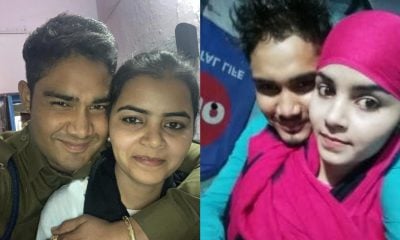
In a horrifying incident, the body of man, who was reported missing for almost past two months, was found chopped into pieces in a sack from a drain in Madhya Pradesh’s Jabalpur, police said on Wednesday.


Published

on

Jabalpur-man-killed

In a horrifying incident, the body of man, who was reported missing for almost past two months, was found chopped into pieces in a sack from a drain in Madhya Pradesh’s Jabalpur, police said on Wednesday.

According to the police, the deceased victim, identified as Anupam Sharma—a resident of Gadarwara in Madhya Pradesh’s Narsinghpur district— had been reported missing for the past 52 days and his family had filed a missing complaint at Sanjeevani Nagar Police Station in Jabalpur on February 16 after Anupam hadn’t returned home.

On Tuesday, Anupam’s body was found chopped into pieces in a sack which was dumped by the accused in a drain in Sanjeevani Nagar area, the police said.

Giving details, a senior official said the accused, identified as Tony Verma, was a friend of the victim as both of them worked together in the stock market.

Read Also: 4 Army men killed in firing at Bathinda military station; case of fratricide, not terrorism, says police

He said that Verma, the prime accused who reportedly died by suicide after the murder, allegedly killed his friend Anupam over some dispute over monetary transaction and later sawed the victim’s body into several pieces, filled the chopped parts into a sack and dumped it down the sewer in an attempt to destroy evidence.

The official said that Verma and his accomplice, Ram Prakash Poonia—who has now been arrested—strangled Sharma and then chopped his body into pieces with a machine saw.

According to the police, Tony Verma allegedly committed suicide, days after the murder.

An official said the police has registered a case of murder in this regard under relevant sections of the Indian Penal Code (IPC) and further investigation is underway.

He said that Poonia is currently being interrogated to ascertain the exact motive behind the murder and the mysterious suicide of his accomplice Tony Verma, days after the murder, adding that Verma’s suicide is also being probed.

Meghalaya church elders assaulted in Bihar’s Patna

Eknath Shinde’s Shiv Sena to contest polls, launch outreach campaign in BJP-ruled Goa

India News

Delhi air quality improves slightly but stays in poor category

Delhi’s air quality improved slightly on Friday with the AQI falling to the poor category, though many areas continue to record very poor pollution levels.

Published

on

Delhi's air quality

Delhi witnessed a marginal improvement in air quality on Friday, with the overall Air Quality Index (AQI) slipping into the ‘poor’ category. Official data showed the city’s average AQI at 292, offering limited relief after pollution levels had touched the ‘severe’ mark earlier this week.

The improvement comes days after Delhi recorded an AQI of 412 on December 23, placing air quality firmly in the ‘severe’ category. Over the last two days, pollution levels have shown a gradual decline across multiple monitoring stations in the national capital.

Some stations record moderate air quality

According to data from the Central Pollution Control Board’s Sameer mobile application, three locations reported ‘moderate’ air quality as of early morning. Lodhi Road-IITM recorded an AQI of 160, Lodhi Road-IMD stood at 194, while Najafgarh reported 188.

Several other parts of the city remained in the ‘poor’ category. Areas including Aya Nagar, CRRI Mathura Road, Dr Karni Singh Shooting Range, Dwarka Sector 8, IGI Airport Terminal 3, IIT Delhi, Jawaharlal Nehru Stadium and Mandir Marg recorded AQI values ranging between the low 200s and high 200s.

Very poor air persists in pollution hotspots

Despite the overall improvement, many parts of Delhi continued to struggle with ‘very poor’ air quality. Anand Vihar, Bawana, Jahangirpuri, Narela, Nehru Nagar, Sonia Vihar and Vivek Vihar reported some of the highest AQI readings, with values crossing 350 at several locations.

In view of the easing pollution levels, the Commission for Air Quality Management lifted Graded Response Action Plan (GRAP) Stage-IV restrictions across the Delhi-National Capital Region on December 24. Officials indicated that further relaxations could be considered if the downward trend in pollution continues.

Mixed air quality across NCR

Air quality in neighbouring NCR regions showed mixed trends. In Haryana, Bahadurgarh recorded a ‘very poor’ AQI of 301, while Gurugram’s overall AQI stood at 270, falling in the ‘poor’ category. One monitoring station in Gurugram’s Sector 51 reported ‘very poor’ air quality with an AQI of 375. Dharuhera also remained in the ‘poor’ range.

In Uttar Pradesh, pollution levels stayed elevated. Ghaziabad recorded an overall AQI of 344, with all monitoring stations reporting ‘very poor’ air quality. Greater Noida’s AQI stood at 362, while Knowledge Park-V and Knowledge Park-III recorded AQI levels of 386 and 337 respectively. Noida also remained in the ‘very poor’ category with an AQI of 334.

Authorities have restricted the entry of non-BS 6 vehicles into Delhi, a move that has blocked around 1.2 million older vehicles registered outside the city. Vehicular emissions remain a key contributor to winter pollution, with experts estimating that vehicles account for up to 40 per cent of particulate matter pollution in the NCR.

Continue Reading

India News

Train fares increased from December 26: check revised ticket prices across classes

Indian Railways has increased long-distance train fares from December 26, with higher ticket prices for mail, express, sleeper and select ordinary classes.

Published

on

Train fair

Long-distance train travel has become costlier from Friday as the Ministry of Railways implemented a revision in passenger fares. This is the second fare hike in the last six months, with the ministry stating that the decision aims to balance passenger affordability with the sustainability of railway operations.

What has changed in train ticket prices

According to the revised structure, the fare hike applies only to tickets booked on or after December 26. Passengers who booked tickets before this date will not have to pay any additional amount, even if their journey takes place later.

There is no increase in fares for suburban train services and season tickets, covering both suburban and non-suburban routes.

Revised fares for second class ordinary travel

For passengers travelling in Second Class Ordinary coaches, the fare increase depends on the distance:

  • Journeys up to 215 km: no change
  • 216 km to 750 km: increase of Rs 5
  • 751 km to 1,250 km: increase of Rs 10
  • 1,251 km to 1,750 km: increase of Rs 15
  • 1,751 km to 2,250 km: increase of Rs 20

Sleeper and first class ordinary fares

For Sleeper Class Ordinary and First Class Ordinary, fares have been increased by 1 paisa per kilometre.

Mail and express train fare hike

Mail and Express trains have seen a uniform increase of 2 paise per kilometre across all non-AC and AC classes. This includes Sleeper Class, First Class, AC Chair Car, AC 3-Tier, AC 2-Tier and AC First Class. As a result, a passenger travelling around 500 km in a non-AC Mail or Express coach will pay approximately Rs 10 extra.

The revised fares are also applicable to premium and special services such as Rajdhani, Shatabdi, Duronto, Vande Bharat, Tejas, Garib Rath, Jan Shatabdi, Humsafar, Amrit Bharat, Antyodaya, Gatimaan, Mahamana, Yuva Express and Namo Bharat Rapid Rail.

No change in reservation and other charges

The ministry has clarified that there is no change in reservation fees, superfast surcharges or other ancillary charges. GST rules remain unchanged, and fares will continue to be rounded off as per existing norms.

The Railways said the updated fare structure follows a balanced approach to ensure passenger convenience while supporting operational requirements.

Continue Reading

India News

PM Modi pays tribute to Atal Bihari Vajpayee at Sadaiv Atal, says leadership is defined by conduct

PM Modi paid tribute to Atal Bihari Vajpayee at Sadaiv Atal, saying true leadership is defined by conduct and values, not by position.

Published

on

PM Modi pays tribute to Atal Bihari Vajpayee at Sadaiv Atal, says leadership is defined by conduct

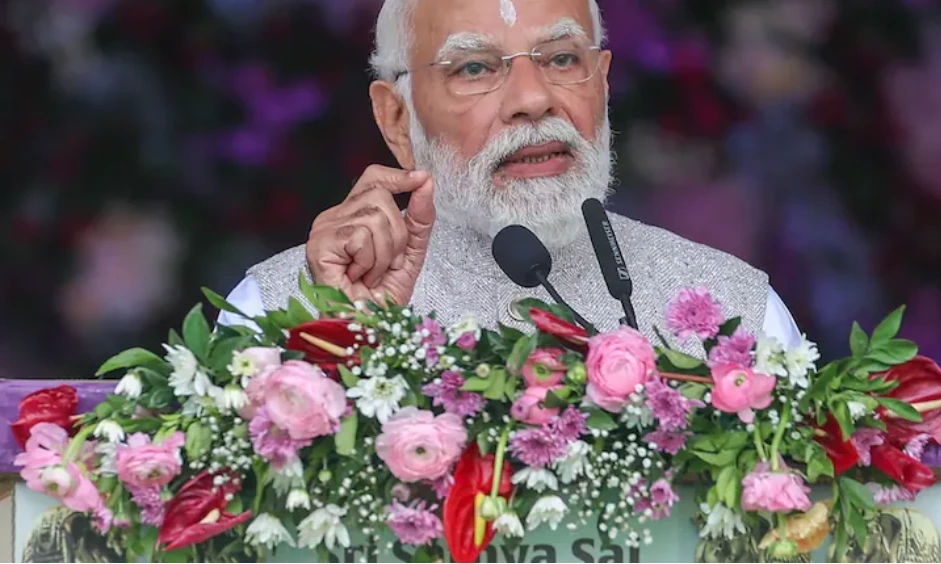
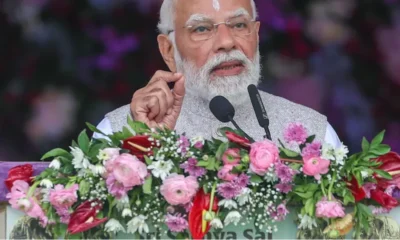
Prime Minister Narendra Modi on Thursday paid floral tributes to former Prime Minister Atal Bihari Vajpayee at the ‘Sadaiv Atal’ memorial in New Delhi on the occasion of his 101st birth anniversary. Remembering Vajpayee’s legacy, the Prime Minister said that true leadership is not established by position, but by conduct.

Several dignitaries were present at the memorial to pay homage to the former Prime Minister, who remains one of the most respected figures in Indian politics.

PM Modi remembers Vajpayee’s conduct and values

In a message shared on social media platform X, Prime Minister Modi described Atal Bihari Vajpayee as a statesman whose behaviour, dignity and unwavering commitment to national interest set a benchmark for Indian politics. He said Vajpayee’s life continues to inspire the nation and highlights that leadership is determined by character rather than authority.

The Prime Minister also shared a Sanskrit verse, noting that the actions of great leaders guide society, and said this principle was clearly reflected throughout Vajpayee’s public life.

‘Nation always came first for Atal ji’

Prime Minister Modi further said that Vajpayee’s birth anniversary is an opportunity for everyone to draw inspiration from his life. He highlighted Vajpayee’s conduct, grace, ideological firmness and resolve to place the nation’s interest above all else as an ideal standard for public life.

Through his life and work, Vajpayee demonstrated that excellence and greatness are shaped by values and conduct, not merely by holding office, the Prime Minister said. The remarks were shared with inputs from media.

Continue Reading

Trending

© Copyright 2022 APNLIVE.com

Left Menu Icon