English हिन्दी
Connect with us

India News

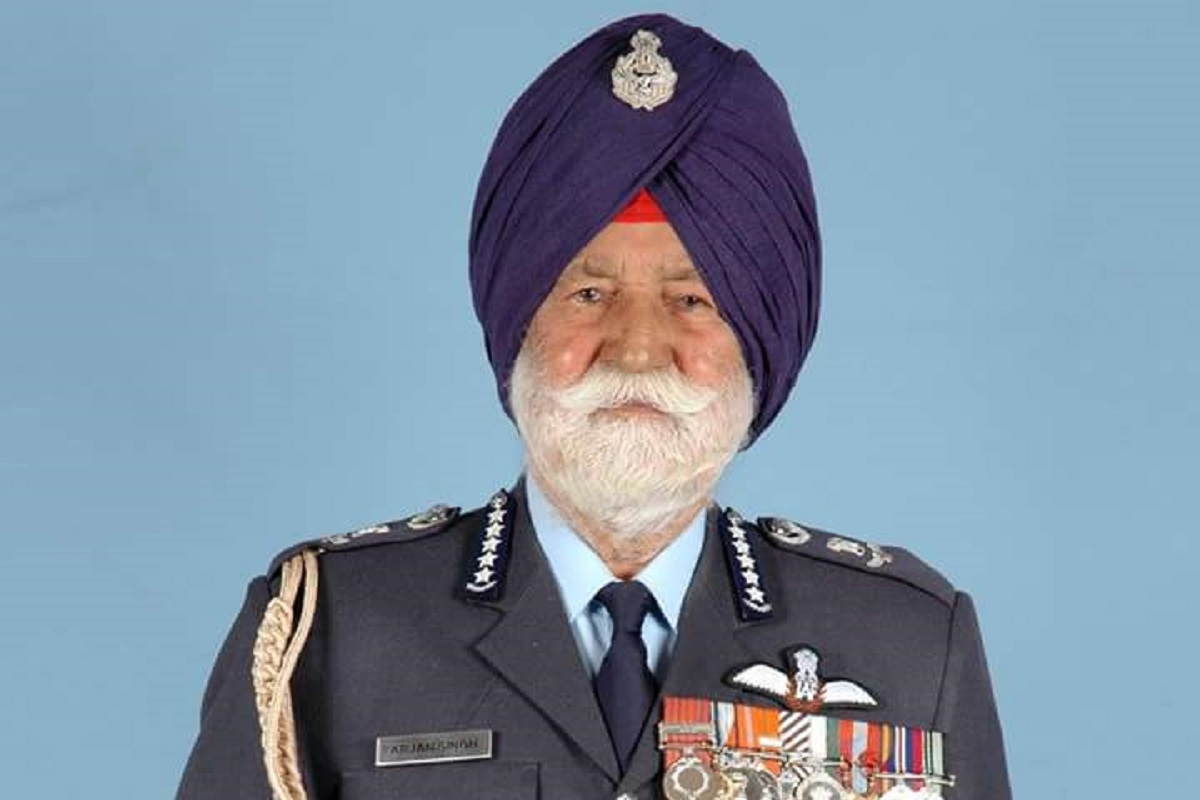
Marshal Arjan Singh cremated with full state honours at Delhi’s Brar Square

Published

on

[vc_row][vc_column][vc_column_text]The 98-year-old war veteran, who passed away after a cardiac arrest on Saturday, was given a 17-gun salute and fly-past

Hundreds of mourners bid a tearful adieu to Marshal of the Indian Air Force (IAF) Arjan Singh whose last rites were performed amid a 17-gun salute and a fly-past at Delhi’s Cantonment area, on Monday.

Defence Minister Nirmala Sitharaman, the three service chiefs, and several former chiefs and senior officers were among those who paid tribute to the soldier, mostly remembered for his military leadership during the 1965 war with Pakistan.

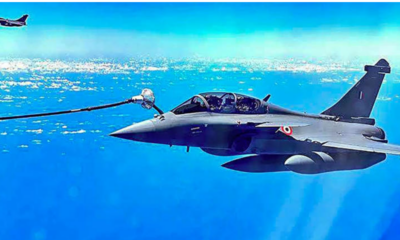
A flypast by India’s most potent fighter jet Su-30 and Mi-17 V5 helicopters was carried out and a 17-gun salute by the ceremonial battery honoured the Marshal who died on Saturday after a massive cardiac arrest. He was 98.

The mortal remains – kept at his Kautilya Marg residence on Sunday for visitors to pay their tributes – were brought to Brar Square in a decorated gun carriage.

The tricolour-wrapped coffin was then placed atop a pedestal where top political leadership and serving and retired military officers paid tribute to the first and the only five-star officer of the IAF.

Sitharaman, Air Chief Marshal B.S. Dhanoa, Navy chief Admiral Sunil Lanba, Army chief General Bipin Rawat, Union urban development minister Hardeep Puri, former Prime Minister Manmohan Singh and senior BJP leader L.K. Advani, besides several former service chiefs, relatives and friends, were among those present.

After wreaths were laid and tributes paid, a prayer was said by a Sikh priest, following which the tricolour was removed from the coffin and handed over to his family.

The body was then placed on the funeral pyre.

Last honours were accorded to the hero, who inspired generations of Indians in his years of service to the nation, with the ceremonial battery of Indian Army giving a 17-gun salute with their 25-pounder guns.

Soon after, three Mi-17 V5 helicopters flew over with the IAF insignia in a ‘vic’ formation, followed by three Su-30 fighter jets in a “missing man” formation.

The formation is an aerial salute performed as part of a flypast of aircraft at a funeral or memorial event, typically in memory of a fallen pilot, a well-known military service member or veteran, or a well-known political figure.

A military band played farewell tunes, as Arjan Singh’s son Arvind, who had flown in from the US, lit the funeral pyre after religious rituals.

A tri-services guard lowered arms as a mark of respect.

Born in Lyallpur (now Pakistan’s Faislabad) on April 15, 1919, Arjan Singh was a fourth-generation soldier.[/vc_column_text][vc_raw_html]JTNDYmxvY2txdW90ZSUyMGNsYXNzJTNEJTIydHdpdHRlci10d2VldCUyMiUyMGRhdGEtbGFuZyUzRCUyMmVuJTIyJTNFJTNDcCUyMGxhbmclM0QlMjJlbiUyMiUyMGRpciUzRCUyMmx0ciUyMiUzRUljb25pYyUyMGhlcm8lMjBvZiUyMDE5NjUlMjB3YXIlMkMlMjAlM0NhJTIwaHJlZiUzRCUyMmh0dHBzJTNBJTJGJTJGdHdpdHRlci5jb20lMkZoYXNodGFnJTJGTWFyc2hhbCUzRnNyYyUzRGhhc2glMjIlM0UlMjNNYXJzaGFsJTNDJTJGYSUzRSUyMG9mJTIwdGhlJTIwSW5kaWFuJTIwQWlyJTIwRm9yY2UlMjAlM0NhJTIwaHJlZiUzRCUyMmh0dHBzJTNBJTJGJTJGdHdpdHRlci5jb20lMkZoYXNodGFnJTJGQXJqYW5TaW5naCUzRnNyYyUzRGhhc2glMjIlM0UlMjNBcmphblNpbmdoJTNDJTJGYSUzRSUyMG5vJTIwbW9yZSUzQiUyMExhc3QlMjByaXRlcyUyMHRvJTIwdGFrZSUyMHBsYWNlJTIwd2l0aCUyMGZ1bGwlMjBtaWxpdGFyeSUyMGhvbm91cnMlMjAlM0NhJTIwaHJlZiUzRCUyMmh0dHBzJTNBJTJGJTJGdC5jbyUyRnBoWVJRSldsNG8lMjIlM0VwaWMudHdpdHRlci5jb20lMkZwaFlSUUpXbDRvJTNDJTJGYSUzRSUzQyUyRnAlM0UlMjZtZGFzaCUzQiUyMERvb3JkYXJzaGFuJTIwTmV3cyUyMCUyOCU0MERETmV3c0xpdmUlMjklMjAlM0NhJTIwaHJlZiUzRCUyMmh0dHBzJTNBJTJGJTJGdHdpdHRlci5jb20lMkZERE5ld3NMaXZlJTJGc3RhdHVzJTJGOTA5MjMzOTA4MDUwMzEzMjE2JTIyJTNFU2VwdGVtYmVyJTIwMTclMkMlMjAyMDE3JTNDJTJGYSUzRSUzQyUyRmJsb2NrcXVvdGUlM0UlMEElM0NzY3JpcHQlMjBhc3luYyUyMHNyYyUzRCUyMiUyRiUyRnBsYXRmb3JtLnR3aXR0ZXIuY29tJTJGd2lkZ2V0cy5qcyUyMiUyMGNoYXJzZXQlM0QlMjJ1dGYtOCUyMiUzRSUzQyUyRnNjcmlwdCUzRQ==[/vc_raw_html][vc_column_text]Taking over as the chief of IAF in 1964 when he was hardly 44, Arjan Singh led the force in the 1965 war, and has been lauded for his vision for modernisation of the Indian Air Force.

A fighter pilot, Arjan Singh had flown over 60 types of aircraft during his career, led the formation at the fly-past over Red Fort on the first independence day in 1947, and was still flying as the chief of the IAF in the 1960s.

He served in different capacities after retiring and in 2002, he became the first and only officer of the IAF to be promoted to five-star rank as Marshal of the Indian Air Force.[/vc_column_text][/vc_column][/vc_row]

India News

PM Modi assures no discrimination in women’s quota, delimitation debate intensifies in Parliament

PM Narendra Modi has assured that women’s reservation will be implemented without discrimination, amid a heated debate over delimitation in Parliament.

Published

on

PM modi

Prime Minister Narendra Modi has assured that there will be no discrimination in the implementation of women’s reservation, as Parliament witnessed a sharp debate over the proposed linkage between the quota and delimitation exercise.

During the ongoing special session, the government reiterated its commitment to ensuring fair representation while addressing concerns raised by opposition parties regarding the timing and structure of the legislation.

The proposed framework aims to reserve 33 percent of seats for women in the Lok Sabha and state assemblies. However, its implementation is tied to a fresh delimitation exercise, which is expected after the next census.

Opposition questions timing and intent

Opposition leaders have raised concerns that linking the women’s quota to delimitation could delay its implementation. They argue that the process of redrawing constituencies may push the actual rollout further into the future.

The issue has triggered a broader political confrontation, with multiple parties questioning whether the move could alter representation across states.

Some critics have also alleged that the delimitation exercise could disproportionately benefit certain regions based on population, a charge the government has rejected.

Government reiterates commitment to fair implementation

Responding to these concerns, the Centre has maintained that the reforms are necessary to ensure accurate and updated representation based on population data.

Leaders from the ruling side have repeatedly emphasized that the process will be carried out transparently and without bias. The assurance that there will be “no discrimination” is aimed at addressing fears among states and opposition parties.

The debate marks a key moment in Parliament, with both sides engaging in intense exchanges over one of the most significant electoral reforms in recent years.

Continue Reading

India News

Give all tickets to Muslim women, Amit Shah says, attacking Akhilesh Yadav on sub-quota demand

A sharp exchange between Amit Shah and Akhilesh Yadav in Parliament over sub-quota for Muslim women highlights key divisions on women’s reservation implementation.

Published

on

A heated exchange broke out in Parliament during discussions on the women’s reservation framework, with Union Home Minister Amit Shah and Samajwadi Party chief Akhilesh Yadav locking horns over the demand for a sub-quota for Muslim women.

The debate unfolded as the government pushed forward key legislative measures to implement 33% reservation for women in the Lok Sabha and state assemblies.

Akhilesh Yadav argued that the proposed reservation must ensure representation for women from marginalised communities, including Other Backward Classes (OBCs) and Muslim women. He said that without such provisions, large sections could remain excluded from political participation.

He also questioned the timing of the bill, alleging that the Centre was avoiding a caste census. According to him, a census would lead to renewed demands for caste-based reservations, which the government is reluctant to address.

Government rejects religion-based quota

Responding to the demand, Amit Shah made it clear that reservation based on religion is not permitted under the Constitution.

He stated that any proposal to provide quota to Muslims on religious grounds would be unconstitutional, firmly rejecting the idea of a separate sub-quota for Muslim women within the broader reservation framework.

The government has maintained that the existing framework already includes provisions for Scheduled Castes (SC) and Scheduled Tribes (ST) women within the overall reservation structure.

Wider political divide over implementation

The issue of sub-categorisation within the women’s quota has emerged as a major flashpoint, even as most opposition parties broadly support the idea of women’s reservation.

Samajwadi Party leaders reiterated that their support for the bill depends on inclusion of OBC and minority women, while the government continues to defend its constitutional position.

The debate is part of a broader discussion during the special Parliament session, where multiple bills linked to delimitation and implementation of the women’s quota are being taken up.

Continue Reading

India News

No state will lose a seat, Centre assures as delimitation debate takes centre stage in Parliament

Parliament’s special session begins with key focus on implementing women’s reservation and delimitation, setting the stage for major electoral changes.

Published

on

Parliament

A special session of Parliament commenced on Thursday, with the Centre set to take up crucial legislation related to women’s reservation and delimitation of constituencies. The session, scheduled over three days, is expected to witness intense debate as the government pushes forward its legislative agenda.

At the centre of discussions is the proposal to operationalise the women’s reservation law, which seeks to allocate 33 percent of seats in the Lok Sabha and state assemblies to women. The law, passed earlier, requires enabling provisions before it can be implemented.

The rollout of the reservation is closely tied to the delimitation exercise — a process that redraws parliamentary constituencies based on updated population data. The implementation is expected only after the next census and delimitation process are completed.

The government is aiming to put in place the framework so that the reservation can be enforced in future elections, likely around 2029.

Delimitation and numbers at play

Delimitation is a key aspect of the proposed changes, as it will determine how seats are redistributed and which constituencies are reserved. The exercise is expected to reflect population shifts and may also involve an increase in the total number of Lok Sabha seats.

This linkage has made the issue politically sensitive, with several opposition parties backing women’s reservation in principle but raising concerns over how and when delimitation will be carried out.

Political reactions and expected debate

The session is likely to see sharp exchanges between the government and opposition. While there is broad agreement on increasing women’s representation, disagreements remain over the timing, process, and potential political implications of the delimitation exercise.

Some leaders have argued that delimitation could significantly alter the balance of representation among states, making it a contentious issue beyond the women’s quota itself.

The government, however, has framed the move as a step toward strengthening women’s participation in governance and ensuring more inclusive policymaking.

Continue Reading

Trending

© Copyright 2022 APNLIVE.com