
India News
Only those who keep India clean have right to say Vande Mataram: Modi

[vc_row][vc_column][vc_column_text]Prime Minister commemorates 125th anniversary of Swami Vivekananda’s iconic speech at the World Parliament of Religions in Chicago in 1893
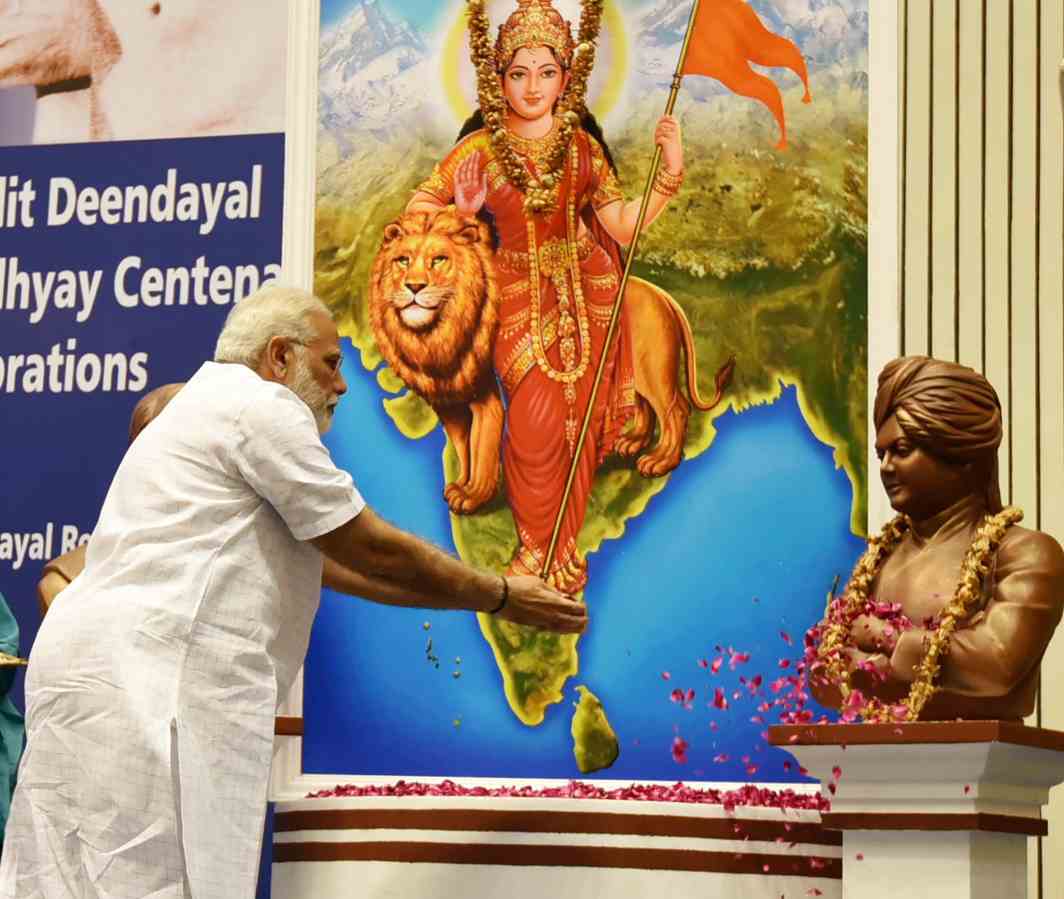
Commemorating the 125th anniversary of spiritual leader Swami Vivekananda’s iconic speech that he delivered at the World Parliament of Religions in Chicago, US in 1893, Prime Minister Narendra Modi, on Saturday, sought to project a tolerant and moderate image of his government and himself while addressing students at the Vigyan Bhawan in New Delhi.
The speech was also relayed to students in schools, colleges and universities across the country – with only Mamata Banerjee’s Bengal officially refusing to follow the Centre’s purported orders to do so.
In his address, a part of the BJP’s year-long event calendar for BJP icon Deen Dayal Upadhyay’s centenary celebrations, while Modi expectedly steered clear of the raging controversy over a section of his party and trolls he follows on Twitter condoning the recent murder of senior journalist Gauri Lankesh, he used his flagship Swachh Bharat mission to reach out to marginalised sections of the country’s population.
A person has no right to chant Vande Mataram if he does not care about cleanliness and disrespects women, the Prime Minister said while underlining the need for social change with his new slogan – “follow the rule and India will rule”.
“As I entered, I heard people chanting ‘Vande Mataram, Vande Mataram!’… But do we have the right to say Vande Mataram?” Modi asked, and then asserted: “If anyone has the right to say Vande Mataram in the country, it is the people who clean the country…People often say Vande Mataram. But we should ask ourselves, do we respect women? I know it will hurt many people but do we have the right to say it (Vande Mataram)? Think 50 times if we have the right (sic).”
“We chew paan and then spit on Mother India… can we say Vande Mataram? Throw all waste on Mother India and then we say Vande Mataram,” Modi said while adding people have no right to make the country dirty whether or not they are cleaning it and that sanitation workers have the first right to hail Mother India.
The Prime Minister dwelled little on the substance of Vivekananda’s speech that he was trying to commemorate. However, he did pay his homage to the renowned spiritual leader by calling attention to the enormous irony between the common date that marks the 2001 al-Qaeda attacks on America’s World Trade Centre and Pentagon (which came to be known as the 9/11 attacks) and Vivekananda’s September 11, 1893 address.
“Before the 2001 terror attacks, there was another 9/11, when a young man from the country, wearing saffron clothes (a reference to Vivekananda but with a subtle reference to the BJP’s colour of choice), won over the world with just few words. The 9/11 of 1893 was about love, harmony and brotherhood while the other 9/11 was about the message of destruction,” Modi said.
Emphasising on the need for harmony in our cultural and regional diversity, the Prime Minister said: “Universities these days celebrate many ‘days’, like Rose Day etc. I have no problems with that. But how about a college in Haryana celebrating ‘Tamil Day’, when students eat Tamil Nadu’s food, dress like Tamils and sing their songs? That is true unity in diversity.”
The 9/11/1893 Chicago speech of Vivekananda had impressed upon tolerance among religions – a fact that Modi failed to highlight despite the growing criticism of his party and government over their alleged tacit support and protection to Hindutva mobs and cow vigilantes and their role in fomenting communal tensions.
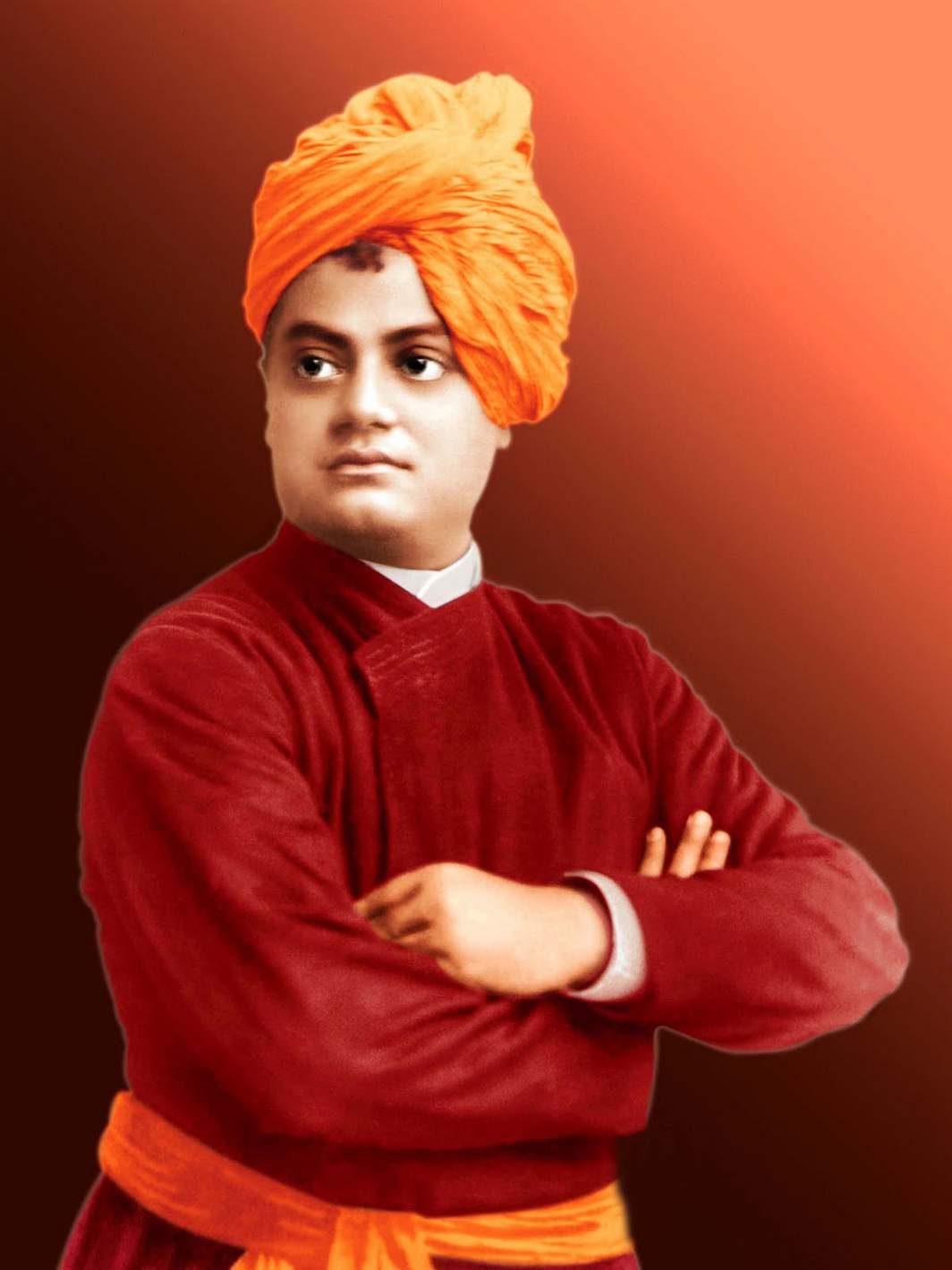
Mentioned below is the full text of Swami Vivekananda’s speech at the World Parliament of Religions held in Chicago, USA on September 11, 1983:[/vc_column_text][vc_column_text css=”.vc_custom_1505133715390{padding-top: 5px !important;padding-right: 5px !important;padding-bottom: 5px !important;padding-left: 5px !important;background-color: #a2b1bf !important;border-radius: 5px !important;}”]Sisters and Brothers of America,
It fills my heart with joy unspeakable to rise in response to the warm and cordial welcome which you have given us. I thank you in the name of the most ancient order of monks in the world; I thank you in the name of the mother of religions, and I thank you in the name of millions and millions of Hindu people of all classes and sects.
My thanks, also, to some of the speakers on this platform who, referring to the delegates from the Orient, have told you that these men from far-off nations may well claim the honor of bearing to different lands the idea of toleration. I am proud to belong to a religion which has taught the world both tolerance and universal acceptance. We believe not only in universal toleration, but we accept all religions as true.
I am proud to belong to a nation which has sheltered the persecuted and the refugees of all religions and all nations of the earth. I am proud to tell you that we have gathered in our bosom the purest remnant of the Israelites, who came to Southern India and took refuge with us in the very year in which their holy temple was shattered to pieces by Roman tyranny. I am proud to belong to the religion which has sheltered and is still fostering the remnant of the grand Zoroastrian nation.
I will quote to you, brethren, a few lines from a hymn which I remember to have repeated from my earliest boyhood, which is every day repeated by millions of human beings: “As the different streams having their sources in different paths which men take through different tendencies, various though they appear, crooked or straight, all lead to Thee.”
The present convention, which is one of the most august assemblies ever held, is in itself a vindication, a declaration to the world of the wonderful doctrine preached in the Gita: “Whosoever comes to Me, through whatsoever form, I reach him; all men are struggling through paths which in the end lead to me.”
Sectarianism, bigotry, and its horrible descendant, fanaticism, have long possessed this beautiful earth. They have filled the earth with violence, drenched it often and often with human blood, destroyed civilization and sent whole nations to despair. Had it not been for these horrible demons, human society would be far more advanced than it is now. But their time is come; and I fervently hope that the bell that tolled this morning in honor of this convention may be the death-knell of all fanaticism, of all persecutions with the sword or with the pen, and of all uncharitable feelings between persons wending their way to the same goal.[/vc_column_text][/vc_column][/vc_row]




India News
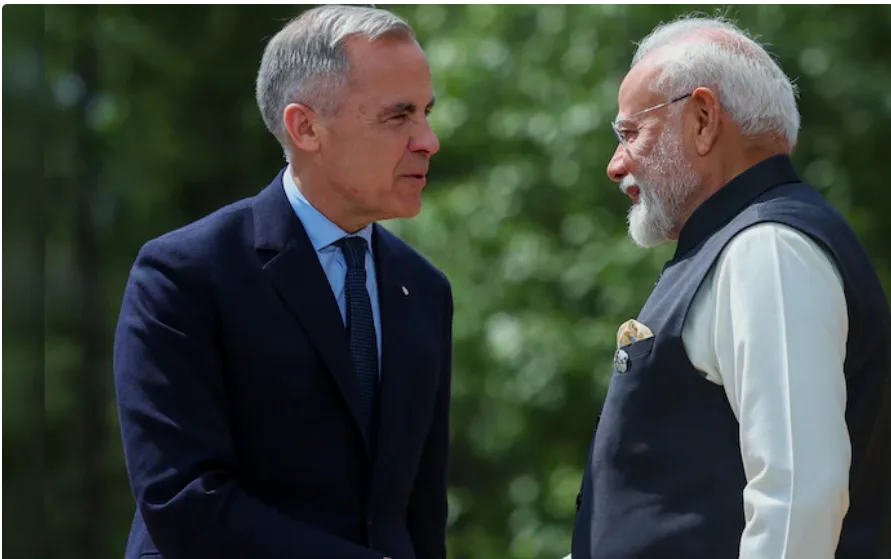
PM Modi speaks to Mark Carney as India and Canada push to strengthen ties
Prime Minister Narendra Modi held a telephone conversation with Canadian Prime Minister Mark Carney on October 13, with both leaders agreeing to strengthen India-Canada ties and pursue concrete outcomes across key areas of their strategic partnership.

India News
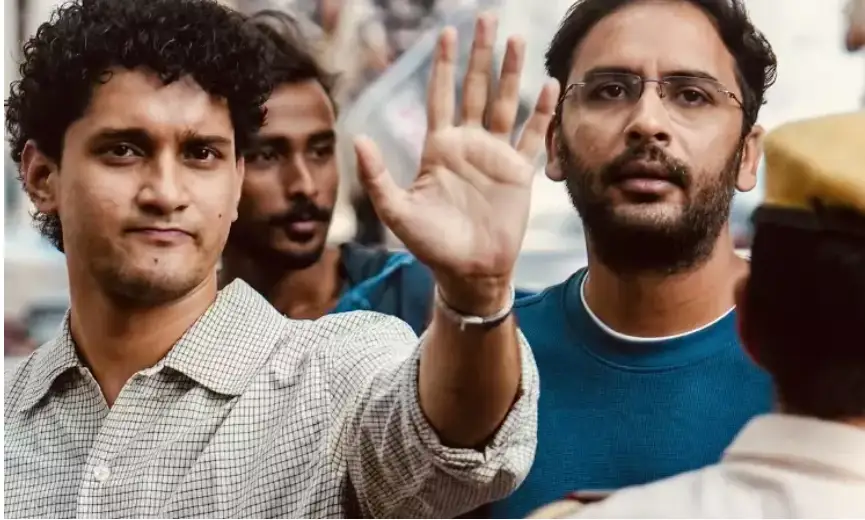
CJP leaders Saurav Das, Ashutosh Ranka, Ajinkya Shinde sent to 5-day judicial custody
Three CJP leaders, Saurav Das, Ashutosh Ranka and Ajinkya Shinde, were placed under preventive arrest following a protest at Delhi’s Jantar Mantar over Chief Election Commissioner Gyanesh Kumar.
India News
BJP focuses on religion as opposition pushes BDM strategy in UP
The BJP is emphasising religious issues ahead of the Uttar Pradesh Assembly elections, while opposition parties are seeking to consolidate Backward, Dalit and Minority voters. Recent exchanges involving Yogi Adityanath, Akhilesh Yadav and Asaduddin Owaisi have added to the political contest over the state’s electoral narrative.


Supreme Court stays defamation case against Rahul Gandhi over PM Modi remarks

Rahul Gandhi hosts high tea for INDIA bloc after Gyanesh Kumar protests

L Murugan quits Union ministry to strengthen BJP in Tamil Nadu

Amit Shah attacks Rahul Gandhi over Congress poll losses, questions SIR row

BJP focuses on religion as opposition pushes BDM strategy in UP

PM Modi speaks to Mark Carney as India and Canada push to strengthen ties

S Jaishankar says India is a natural option for Russia amid Europe tensions

CJP leaders Saurav Das, Ashutosh Ranka, Ajinkya Shinde sent to 5-day judicial custody
BJP focuses on religion as opposition pushes BDM strategy in UP
L Murugan quits Union ministry to strengthen BJP in Tamil Nadu

Afghan Men Try To Hang With The Jet Engine Of The Aircraft in Kabul- Afghanistan News – Kabul News
Trending Top 10 News: 10000 Crore Fine on Flipkart, Apple to Launch Unique Feature, Hdfc Bank Job Ad

Trending Top 10 News: Nokia 6310, Apple sales, Bachpan ka Pyar Video Kid, Dainik Bhaskar IT Raid

Trending Top 10 News: Canada bans Indian flights, Rain in Delhi NCR, AIMIM Twitter hacked, Raj Kundra case

Trending Top 10 News: Shein India, Apple New Service, Pocket Oxygen, Oppo Launched New Phone
-
 India News23 hours ago
Supreme Court stays defamation case against Rahul Gandhi over PM Modi remarks
-
 India News15 hours ago
Rahul Gandhi hosts high tea for INDIA bloc after Gyanesh Kumar protests
-
 India News14 hours ago
L Murugan quits Union ministry to strengthen BJP in Tamil Nadu
-
 India News14 hours ago
Amit Shah attacks Rahul Gandhi over Congress poll losses, questions SIR row
-
 India News13 hours ago
BJP focuses on religion as opposition pushes BDM strategy in UP
-
 India News2 hours ago
CJP leaders Saurav Das, Ashutosh Ranka, Ajinkya Shinde sent to 5-day judicial custody
-
 Latest world news2 hours ago
S Jaishankar says India is a natural option for Russia amid Europe tensions
-
 India News2 hours ago
PM Modi speaks to Mark Carney as India and Canada push to strengthen ties
