English हिन्दी
Connect with us

India News

Nara Lokesh calls Jagan Reddy Andhra’s Saddam Hussein in sharp attack

Nara Lokesh has accused former Andhra CM Jagan Reddy of extravagance, calling his Rs 700 crore residence a ‘sheesh mahal’ built with public funds. The TDP government will review its future.

Published

on

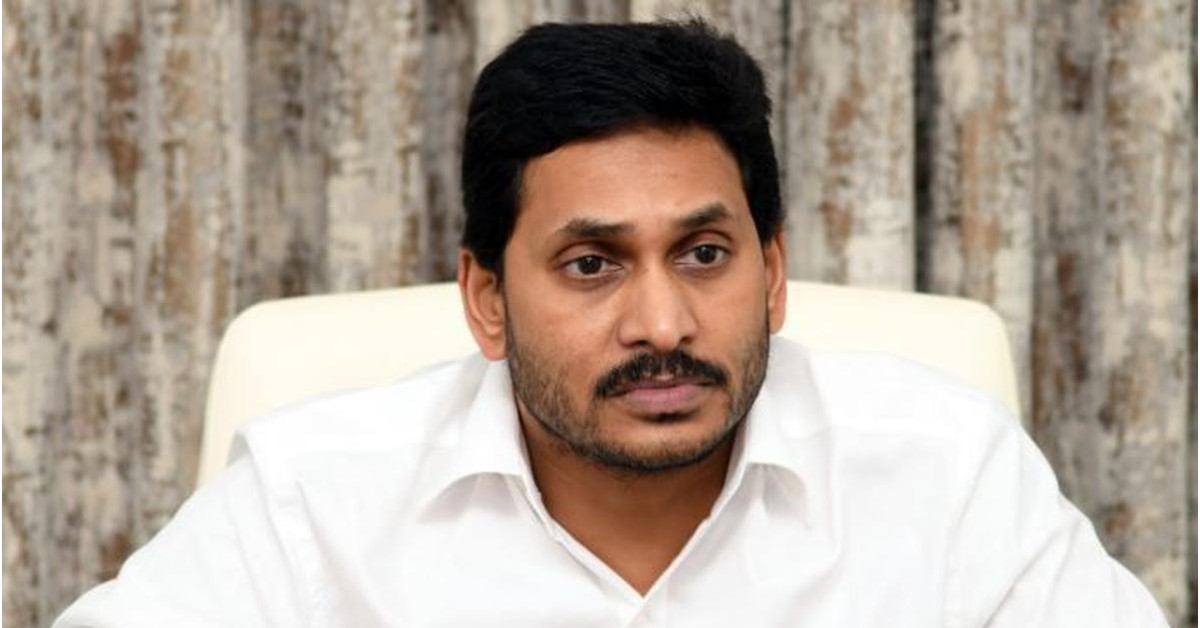
CM Y S Jagan Mohan Reddy

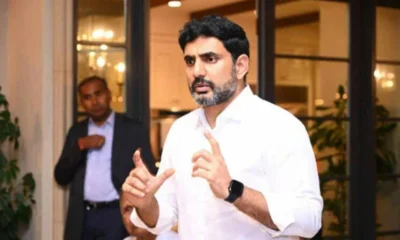
Telugu Desam Party (TDP) leader and minister Nara Lokesh has launched a scathing attack on YSR Congress Party (YSRCP) chief and former Chief Minister Jagan Mohan Reddy, accusing him of turning a tourism project into a “sheesh mahal” at the state’s expense. Speaking on the controversy surrounding Reddy’s luxurious mansion at Rushikonda Hills, Lokesh claimed that the former CM thought he would rule like Iraq’s dictator Saddam Hussein for decades.

Lokesh, the son of Andhra Pradesh Chief Minister N Chandrababu Naidu, criticized the opulence of the estate, stating, “My grandfather was the Chief Minister, my father is Chief Minister, but I have never seen such big rooms.” He also mentioned that the Ministry of Environment, Forest and Climate Change had imposed penalties of Rs 200 crores related to the construction.

Rs 700 Crore Mansion Under Scrutiny

The TDP government has accused the previous administration of misusing public funds to build an extravagant residence. The mansion, reportedly costing Rs 700 crore, is spread over 10 acres in Rushikonda Hills, a prime tourist location. The estate consists of four blocks featuring high-end Italian flooring and plush interiors.

Lokesh also took a dig at Reddy’s family, stating that despite his sister YS Sharmila and mother YS Vijayalakshmi distancing themselves from him, “For four people to live in a house, Rs 700 crore was spent. Even the Prime Minister doesn’t have such a big house.”

Political Fallout and Allegations

Jagan Mohan Reddy, the son of late YS Rajasekhara Reddy, lost political ties with his sister after she joined the Congress, with their mother supporting her decision. Following the TDP’s return to power, the Naidu-led government has intensified scrutiny on alleged financial mismanagement by the previous regime.

The controversy over the Rushikonda mansion has sparked heated debates, with the TDP leadership signaling that a decision on the estate’s future will be taken soon.

India News

Arvind Kejriwal moves Supreme Court against Delhi High Court order in excise policy case

Arvind Kejriwal has approached the Supreme Court challenging a Delhi High Court order related to proceedings in the excise policy case and alleging violation of his fundamental rights.

Published

on

Arvind Kejriwal

Aam Aadmi Party chief and former Delhi Chief Minister Arvind Kejriwal has approached the Supreme Court of India challenging certain proceedings in the Delhi excise policy case and alleging a violation of his fundamental rights.

In a petition filed under Article 32 of the Constitution, Kejriwal has questioned a decision of the Delhi High Court that put a freeze on remarks related to the investigation conducted by the Central Bureau of Investigation.

The petition also challenges an order of the High Court Chief Justice rejecting Kejriwal’s request to transfer the case to another bench.

Plea seeks change of bench

Earlier, on March 11, Kejriwal and several others submitted a representation to Delhi High Court Chief Justice Devendra Kumar Upadhyaya seeking reassignment of the case to what they described as an “impartial” judge.

In the representation, Kejriwal stated that he had a “grave, bona fide and reasonable apprehension” that the matter may not receive an impartial hearing before the current bench.

However, the Chief Justice declined the request and said the petition had been assigned as per the existing roster.

According to the communication sent by the High Court’s Registrar General on March 13 to eight individuals including Kejriwal, the Chief Justice noted that any decision on recusal must be taken by the judge hearing the matter and that there was no reason to transfer the petition administratively.

Order on trial court proceedings also challenged

Kejriwal has also challenged a March 9 order passed by Justice Swarana Kanta Sharma of the Delhi High Court.

In that order, Justice Sharma had stayed a trial court direction that called for an investigation into a CBI officer who handled the excise policy case. The High Court had also asked the trial court to defer proceedings connected to the anti-money laundering aspect of the case.

Justice Sharma had further rejected certain observations made by the trial court while discharging Kejriwal and 22 others, stating that some of those remarks were erroneous.

Hearing expected on CBI plea

Meanwhile, Justice Sharma is scheduled to hear a petition filed by the CBI challenging the discharge of Kejriwal, former Delhi Deputy Chief Minister Manish Sisodia and others in the excise policy case.

The matter remains under judicial consideration as the legal challenge now moves to the Supreme Court.

Continue Reading

India News

Rajya Sabha elections Voting begins for 37 seats across 10 states

Voting for the biennial Rajya Sabha elections is underway for 37 seats across 10 states, with polling from 9 am to 4 pm and counting scheduled at 5 pm.
Published

on

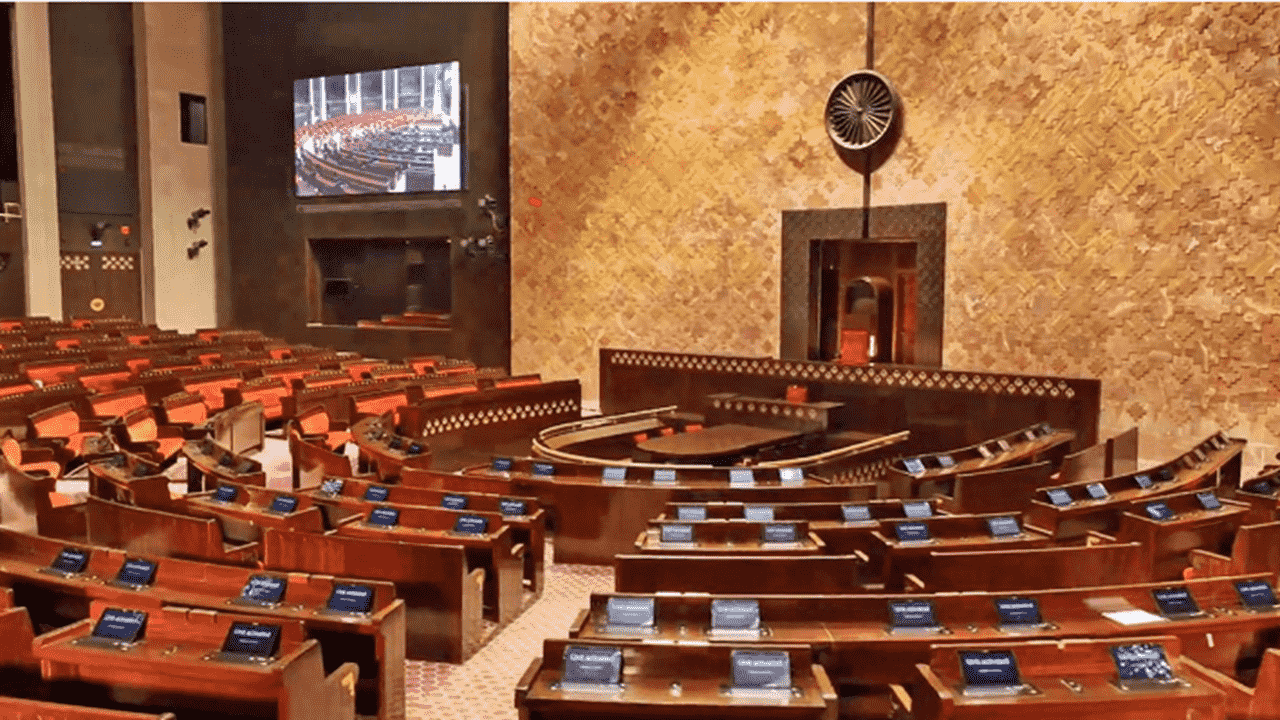
Polling for the biennial Rajya Sabha elections is being held on Monday for 37 seats across 10 states, with voting taking place between 9:00 am and 4:00 pm, according to the Election Commission of India.

The counting of votes is scheduled to begin at 5:00 pm, after polling concludes. Authorities have issued detailed guidelines and deployed observers to ensure that the voting process takes place smoothly and in a transparent manner.

Seats across 10 states going to polls

The elections are being conducted to fill vacancies in the Upper House from several states. The 37 seats up for election are distributed across the following states:

  • Maharashtra – 7 seats
  • Tamil Nadu – 6 seats
  • Bihar – 5 seats
  • West Bengal – 5 seats
  • Odisha – 4 seats
  • Assam – 3 seats
  • Telangana – 2 seats
  • Chhattisgarh – 2 seats
  • Haryana – 2 seats
  • Himachal Pradesh – 1 seat

These biennial elections are held as sitting members of the Rajya Sabha complete their six-year terms.

Key leaders completing their terms

Several prominent members of the Upper House are set to complete their terms in April, leading to the current round of elections.

Among them are Union Ministers Ramnath Thakur and Ramdas Athawale, along with Rajya Sabha Deputy Chairman Harivansh Narayan Singh.

Other leaders whose terms are ending include Sharad Pawar, Upendra Kushwaha, Abhishek Manu Singhvi, M Thambidurai, and Tiruchi Siva.

Election Commission guidelines for voting

The Election Commission has issued specific instructions for voting during the Rajya Sabha elections.

MLAs participating in the election must use only the integrated violet sketch pen supplied by the Returning Officer to mark their preferences on ballot papers. The use of any other pen is not permitted.

Observers appointed by the Commission will monitor the polling process closely to ensure that the elections are conducted freely and fairly across all participating states.

With polling underway and counting scheduled later in the evening, results are expected to clarify the new composition of the Upper House.

Continue Reading

India News

Election Commission announces assembly poll schedule for West Bengal, Tamil Nadu, Kerala, Assam and Puducherry

The Election Commission has announced assembly elections in West Bengal, Tamil Nadu, Kerala, Assam and Puducherry, triggering the model code of conduct and setting the stage for key political contests.
Published

on

Election commission 12345

The Election Commission of India has announced the schedule for assembly elections in four states and the Union Territory of Puducherry, triggering the immediate enforcement of the model code of conduct across the poll-bound regions.

The elections will take place in West Bengal, Tamil Nadu, Kerala, Assam and Puducherry. With the announcement, political parties are now barred from making new policy announcements aimed at influencing voters, while the election watchdog assumes control over key aspects of the state administrative machinery.

Likely multi-phase voting in Bengal

According to sources within the Commission, voting in most states is expected to be conducted in a single phase. However, West Bengal may see polling spread across three to four phases because of its history of election-related violence.

During the 2021 assembly elections, the state went to the polls in eight phases. In contrast, Assam held voting in three phases, while Tamil Nadu, Kerala and Puducherry voted in a single phase.

From a security standpoint, West Bengal is considered particularly sensitive. Around 480 battalions of central security forces have reportedly been deployed there. The Commission has also indicated that decisions regarding the deployment of central forces will now be taken by police observers appointed by the poll body in consultation with district officials. Earlier, such decisions were handled by district police chiefs.

Key political battles in major states

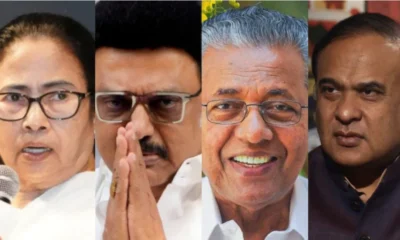
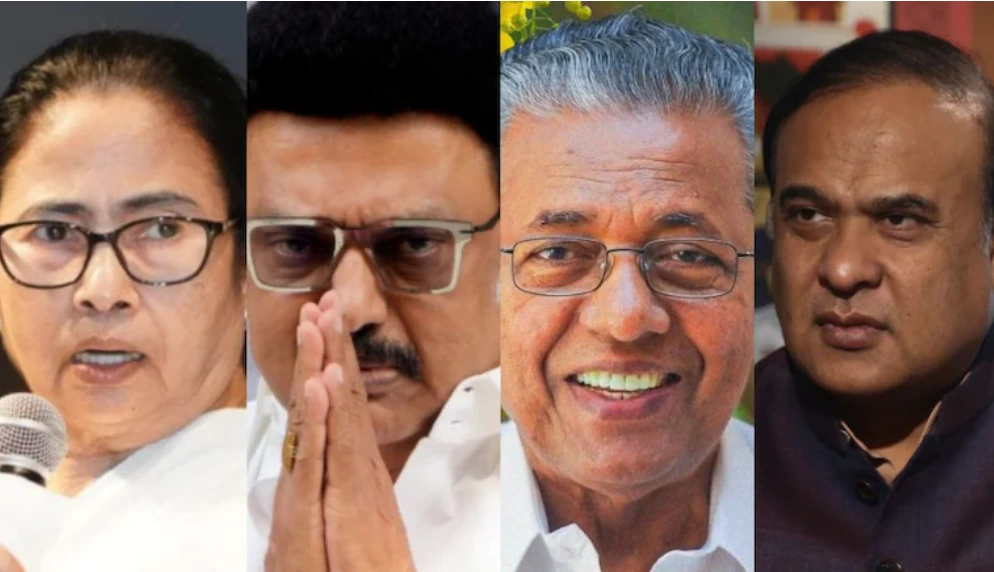
In West Bengal, Chief Minister Mamata Banerjee and her party are seeking a fourth consecutive term, while the opposition led by the Bharatiya Janata Party hopes to improve its electoral performance and challenge the ruling party.

The elections in the state are also taking place after the controversial Special Intensive Revision exercise, which became a major political issue and even reached the Supreme Court of India.

In Tamil Nadu, Chief Minister M. K. Stalin is aiming for a second term in power. The opposition alliance includes the All India Anna Dravida Munnetra Kazhagam and the BJP. Another factor drawing attention in the state’s political landscape is actor-politician Vijay, who has entered the political arena with his party TVK.

Political contests in Kerala and Assam

In Kerala, the contest is expected to centre on the traditional battle between the Left and the Congress-led alliance. Chief Minister Pinarayi Vijayan is seeking a third term after securing two consecutive mandates, a rare occurrence in a state known for alternating governments.

Meanwhile, in Assam, Chief Minister Himanta Biswa Sarma is looking to retain power for a second term. The Congress-led opposition, under state leader Gaurav Gogoi, is hoping to mount a stronger challenge despite recent exits of several party leaders.

Contest in Puducherry

In Puducherry, Chief Minister N. Rangasamy and his party, the All India NR Congress, are aiming for a third term. The opposition, led by the Dravida Munnetra Kazhagam, is campaigning on promises of change.

With the model code of conduct now in force, all eyes will be on the upcoming campaign season as parties prepare for crucial contests across the five regions.

Continue Reading

Trending

© Copyright 2022 APNLIVE.com