English हिन्दी
Connect with us

India News

Pakistan calls India’s move on Indus Waters Treaty as an act of war

The committee concluded by asserting that Pakistan’s armed forces are fully prepared to defend the nation’s territorial integrity against any misadventure, urging the international community to take note of India’s provocative actions.

Published

on

In a sharp escalation of tensions following India’s decision to suspend the Indus Waters Treaty, Pakistan’s Prime Minister’s Office issued a stern warning on Thursday, April 24, 2025, declaring that any attempt to disrupt water flows to Pakistan would be considered an “act of war.”

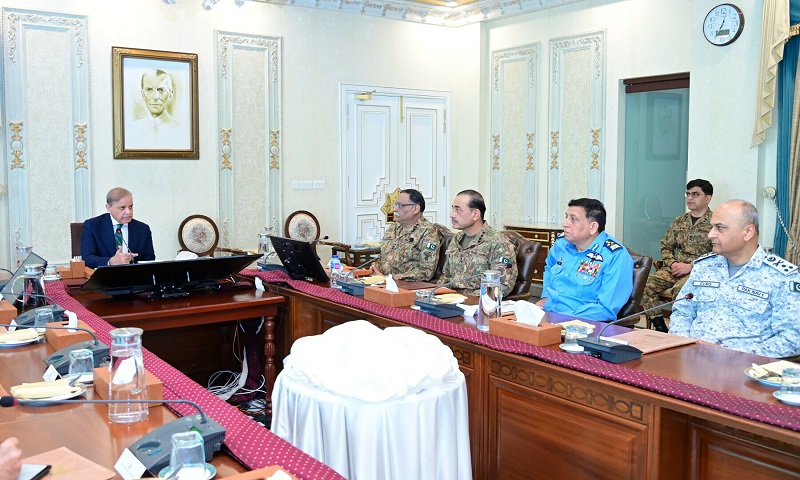
The statement came after a high-level meeting of Pakistan’s National Security Committee (NSC), chaired by Prime Minister Shehbaz Sharif, which outlined a series of retaliatory measures, including the closure of its airspace to Indian airlines and a complete halt to all trade activities with India.

The NSC, attended by senior civilian and military leaders, addressed the recent terror attack in Pahalgam, Jammu and Kashmir, which claimed 26 lives. While unequivocally condemning the violence, Pakistan rejected India’s attempts to attribute the attack to it, dismissing such claims as “frivolous” and lacking credible evidence.

The committee reiterated Pakistan’s longstanding position that Kashmir remains an unresolved dispute, emphasizing the Kashmiri people’s right to self-determination as recognized by UN resolutions.

It accused India of perpetuating violence through state oppression, demographic changes, and the marginalization of minorities, particularly Muslims, citing recent legislative moves like the Waqf Bill as evidence of systemic persecution.

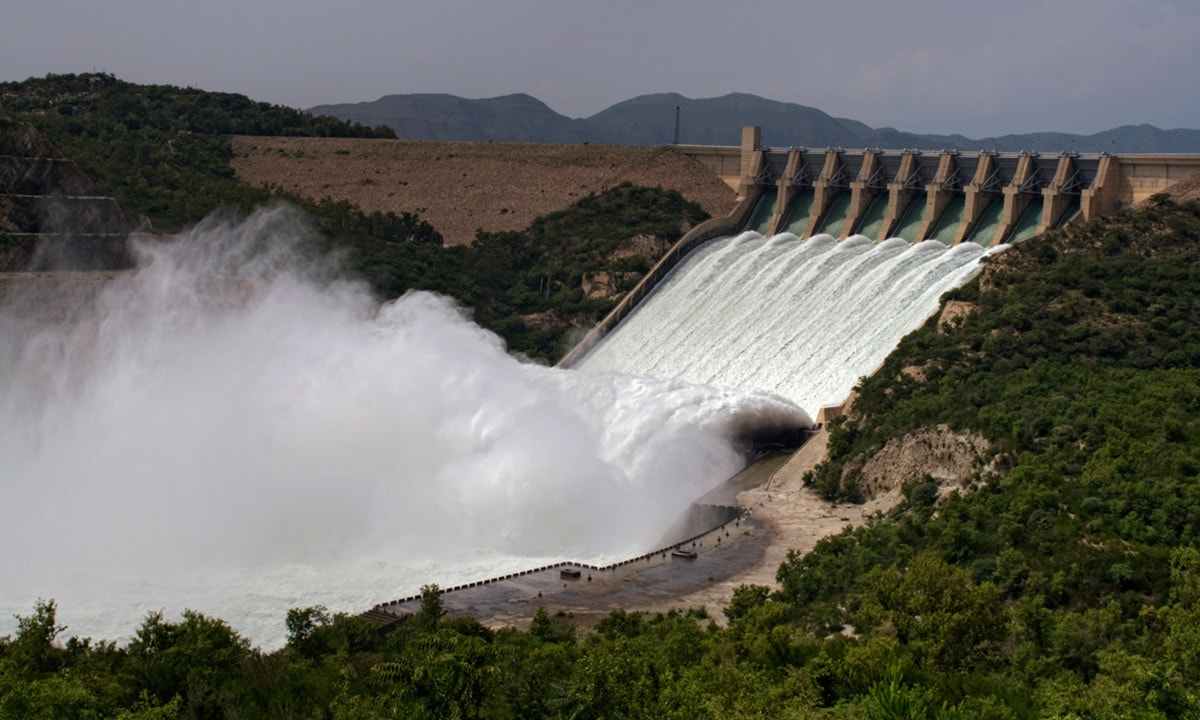
Pakistan’s strongest rebuke was reserved for India’s announcement to hold the Indus Waters Treaty in abeyance. The 1960 treaty, brokered by the World Bank, has been a cornerstone of water-sharing between the two nations, surviving three wars. The NSC underscored that the agreement contains no provision for unilateral suspension and described water as a “vital national interest” for Pakistan’s 240 million people.

“Any attempt to stop or divert Pakistan’s rightful share of water under the treaty, or to usurp the rights of a lower riparian state, will be treated as an act of war and met with a comprehensive response across all domains of national power,” the statement read.

In response to India’s measures, Pakistan announced a sweeping suspension of all bilateral agreements, including the Simla Pact, accusing India of violating international norms and fostering terrorism. The Wagah border post was ordered closed immediately, with cross-border transit halted, though those with valid endorsements may return by April 30, 2025.

Pakistan also revoked all SAARC Visa Exemption Scheme (SVES) visas for Indian nationals, except for Sikh pilgrims, and instructed Indians in Pakistan to leave within 48 hours. Indian defence, naval, and air advisors in Islamabad were declared persona non grata and given until April 30 to depart, with their posts deemed annulled. The Indian High Commission in Islamabad will see its staff reduced from 55 to 30 by the same date.

Further, Pakistan closed its airspace to all Indian-owned or -operated airlines and suspended all trade with India, including third-country trade routed through Pakistan. The NSC accused India of exploiting the Pahalgam attack to advance a narrow political agenda, pointing to the case of Kulbhushan Jadhav, a serving Indian Navy officer in Pakistan’s custody, as evidence of India’s alleged state-sponsored terrorism. It also criticized India’s “irresponsible warmongering” through state-controlled media, warning that such rhetoric fuels regional instability.

The committee expressed deep sorrow for the loss of lives in Pahalgam but labeled India’s retaliatory measures—announced on April 23—as unilateral, unjust, and politically driven. It argued that India’s narrative of victimhood obscures its own role in regional violence, including alleged extraterritorial assassinations exposed by Pakistan and other nations. Pakistan vowed to pursue justice for those responsible for terrorism and to respond firmly to any threats to its sovereignty.

Reaffirming its commitment to counter-terrorism, the NSC highlighted Pakistan’s sacrifices as a frontline state against terrorism, having endured significant human and economic losses. It called on India to abandon its “reflexive blame game” and take responsibility for its security failures in Jammu and Kashmir. The committee concluded by asserting that Pakistan’s armed forces are fully prepared to defend the nation’s territorial integrity against any misadventure, urging the international community to take note of India’s provocative actions.
As the region braces for heightened tensions, Pakistan’s measures signal a deepening rift with India, with both nations adopting hardline stances in the aftermath of the Pahalgam tragedy.

India News

Omar Abdullah distances INDIA bloc from Congress’s vote chori campaign

Omar Abdullah has clarified that the INDIA opposition bloc is not linked to the Congress’s ‘vote chori’ campaign, saying each party is free to set its own agenda.

Published

on

Jammu and Kashmir Chief Minister and National Conference leader Omar Abdullah has drawn a clear line between the INDIA opposition bloc and the Congress’s ongoing ‘vote chori’ campaign, stating that the alliance has no role in the issue being raised by the grand old party.

Speaking to the media, Abdullah said every political party within the alliance is free to decide its own priorities. He underlined that the Congress has chosen to focus on alleged irregularities linked to voter lists and electoral processes, while other parties may pursue different agendas.

According to Abdullah, the INDIA bloc as a collective is not associated with the ‘vote chori’ narrative. He added that no party within the alliance should dictate what issues another constituent should raise in public discourse.

The remarks came days after the Congress organised a large rally in the national capital to intensify its campaign. The party has alleged that the Election Commission is working in favour of the BJP to influence electoral outcomes. Both the poll body and the ruling party have rejected these claims.

INDIA bloc cohesion under scrutiny

Abdullah’s comments have gained significance as they follow his recent observation that the INDIA bloc is currently on “life support”. That remark, made during an interaction at a leadership summit in Delhi, triggered mixed reactions from alliance partners.

At the event, Abdullah had said the opposition grouping revives intermittently but struggles to maintain momentum, especially after electoral setbacks. He also pointed to the Bihar political developments, suggesting that decisions taken by the alliance may have contributed to Nitish Kumar returning to the NDA fold. He further cited the inability to accommodate the Hemant Soren-led Jharkhand Mukti Morcha in Bihar seat-sharing talks as a missed opportunity.

Allies respond to Omar Abdullah’s remarks

Reactions from within the INDIA bloc reflected differing views on Abdullah’s assessment. RJD leader Manoj Jha termed the remarks “rushed” and said responsibility for strengthening the alliance lies with all constituents, including Abdullah himself.

CPI general secretary D Raja called for introspection among alliance partners, questioning the lack of coordination despite the stated objective of defeating the BJP and safeguarding democratic values.

Samajwadi Party MP Rajeev Rai disagreed with the “life support” analogy, saying electoral defeats are part of politics and should not demoralise opposition forces. He cautioned that internal pessimism only serves the BJP’s interests.

BJP targets opposition unity

The BJP seized on the comments to attack the opposition bloc’s unity. Senior leader Shahnawaz Hussain dismissed the INDIA alliance as defunct, claiming it lost relevance after the Lok Sabha elections and lacks leadership and a clear policy direction.

Abdullah’s latest clarification on the ‘vote chori’ campaign reinforces the visible differences within the opposition alliance, even as its constituents continue to debate strategy and coordination ahead of future political battles.

Continue Reading

India News

Nitin Nabin terms BJP working president role a party blessing, thanks leadership

BJP national working president Nitin Nabin has termed his appointment a blessing of the party, thanking its leadership and pledging to work on the ideals of his late father.

Published

on

Nitin Nabin

Newly appointed BJP national working president Nitin Nabin on Monday described his elevation as a blessing bestowed by the party and expressed gratitude to its top leadership for placing faith in him.

Speaking to reporters in Patna after paying floral tributes to a statue of his late father, former BJP MLA Nabin Kishor Prasad Sinha, the Bihar minister said he would continue to work on the principles he inherited from his family and the organisation.

“I have always worked on the ideas of my father, who treated the party like his mother and put the nation above everything else. I believe that is why the party has given me this responsibility,” Nabin said. He later visited Mahavir Mandir in the city to offer prayers.

Gratitude to Prime Minister, focus on Antyodaya

Thanking Prime Minister Narendra Modi for his guidance, Nabin said development under the current leadership has reached towns and villages across the country. He added that the party has expanded its presence and emerged as a platform representing the poor.

According to Nabin, no section of society has remained untouched by the welfare initiatives of the NDA government. He said the idea of Antyodaya has now reached every corner of India, recalling the contributions of Deendayal Upadhyaya, Syama Prasad Mookerjee and Atal Bihari Vajpayee in shaping the philosophy.

On elections and party organisation

Responding to questions on upcoming elections, including in West Bengal, Nabin said BJP workers remain active at all times. He remarked that unlike other parties, BJP cadres work round the year and remain prepared in every state.

At 45, Nabin is a five-time MLA from the Bankipur assembly constituency and has served twice as a minister in the Bihar government. He comes from an RSS background and is currently part of the Nitish Kumar-led state cabinet.

A generational shift in the party

Nabin’s appointment as national working president on Sunday was seen as a significant organisational move. The position, though not mentioned in the party constitution, has earlier served as a transition role before elevation to the top post.

Prime Minister Modi publicly endorsed the decision, describing Nabin as a hardworking and grounded leader with strong organisational experience. Party leaders have projected the move as part of a generational shift, with Nabin expected to follow a trajectory similar to that of the current national president, who had earlier served as working president before taking charge of the organisation.

Continue Reading

India News

BJP demands Sonia Gandhi’s apology over Congress rally slogan targeting PM Modi

A slogan raised against Prime Minister Narendra Modi at a Congress rally in Jaipur has sparked a political storm, with the BJP demanding an apology from Sonia Gandhi and other senior Congress leaders.

Published

on

A political controversy has erupted after a slogan referring to Prime Minister Narendra Modi’s “grave” was raised during a Congress rally in Jaipur, prompting the Bharatiya Janata Party (BJP) to demand an apology from senior Congress leaders, including Sonia Gandhi.

The slogan was raised at a ‘Vote Chor Gaddi Chhod’ rally held in Rajasthan’s capital, where Manju Lata Meena, Jaipur women’s Congress district president, led a group chanting the remark against the Prime Minister. The rally was organised to highlight the Opposition’s allegations of vote theft against the BJP.

When questioned later, Meena defended her statement, saying it reflected public anger over alleged electoral issues. She also accused the Prime Minister of diverting attention from concerns related to employment, youth, women and farmers.

BJP seeks apology from Congress leadership

The remarks triggered sharp reactions from the ruling party. BJP president and Union minister JP Nadda raised the issue in the Rajya Sabha, calling the slogan highly objectionable and accusing the Congress of revealing its mindset through such language. He demanded an apology from Sonia Gandhi, chairperson of the Congress Parliamentary Party, and Mallikarjun Kharge, the Leader of the Opposition in the Upper House.

Union minister Kiren Rijiju also criticised the slogan, saying political rivals are not enemies and such statements cross acceptable boundaries. Addressing a press conference, he urged Kharge and Leader of the Opposition in the Lok Sabha Rahul Gandhi to apologise on the floor of both Houses of Parliament. Rijiju said it was unfortunate that Congress workers were using language that appeared to incite violence against a constitutional authority.

Congress response and allies’ reactions

Congress MP Manickam Tagore dismissed the BJP’s reaction, claiming that the rally had unsettled ruling party leaders. He said the response from BJP leaders showed they were rattled by the Opposition’s campaign.

However, some of Congress’s allies distanced themselves from the slogan. A Samajwadi Party MP said political differences should not translate into disrespectful language for those holding constitutional posts. A senior leader of the Nationalist Congress Party (SP) also termed the slogan inappropriate, stating that regardless of political disagreements, the Prime Minister’s position must be respected.

The episode has added to the ongoing war of words between the BJP and the Congress, with both sides trading accusations as Parliament’s Winter Session continues.

Continue Reading

Trending

© Copyright 2022 APNLIVE.com