English हिन्दी
Connect with us

India News

Supreme Court extends interim protection to ex-IAS trainee Puja Khedkar in forgery case

The Supreme Court has extended interim protection from arrest for Puja Khedkar, accused of document forgery for UPSC eligibility, while directing Delhi Police to complete the investigation.

Published

on

Supreme Court extends relief to Puja Khedkar in UPSC forgery case

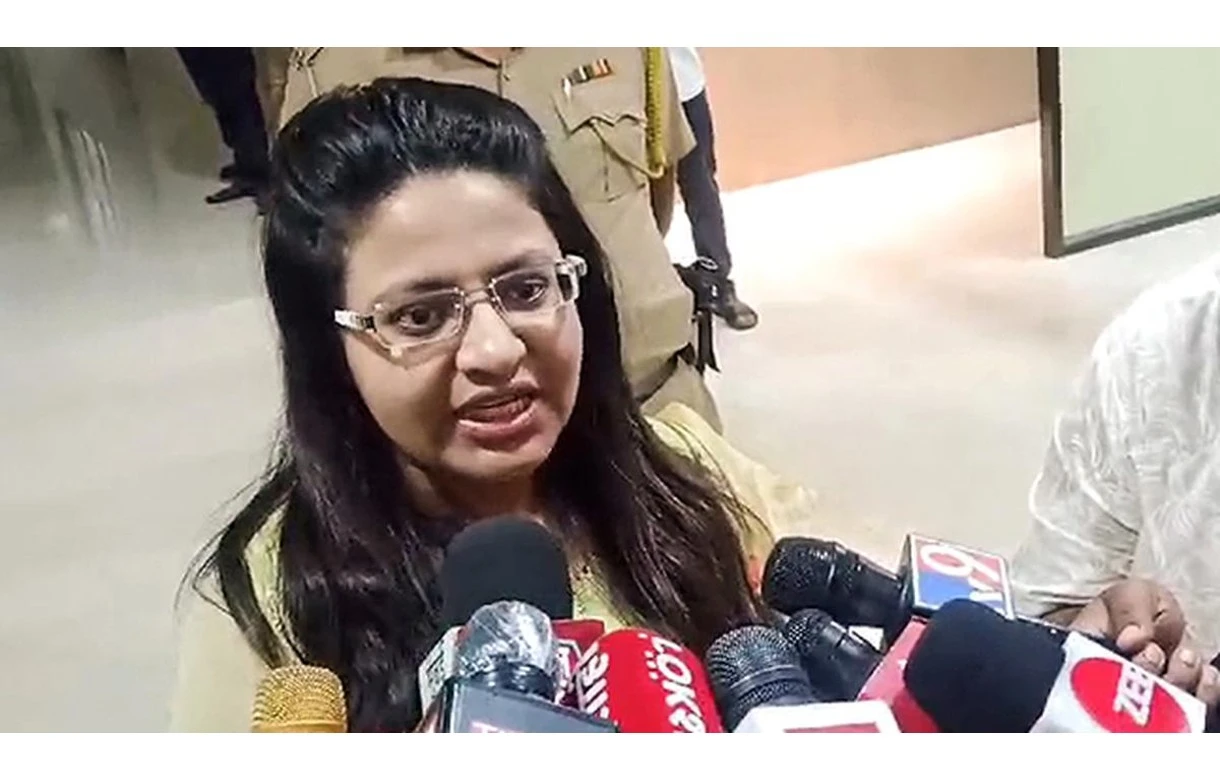
The Supreme Court on Tuesday extended the interim protection from arrest for former Indian Administrative Service (IAS) trainee Puja Khedkar, who is accused of forging documents to gain eligibility for the 2022 Union Public Service Commission (UPSC) exam.

A bench comprising Justices BV Nagarathna and Satish Chandra Sharma directed the Delhi Police to expedite the investigation and set April 15 as the next date for hearing her anticipatory bail plea.

Delhi Police urged to accelerate probe

During the hearing, the bench questioned the delay in completing the investigation, despite Khedkar’s affidavit stating her willingness to cooperate. “You must track up this investigation steadfastly,” Justice Nagarathna told Additional Solicitor General (ASG) SV Raju, who represented Delhi Police.

ASG Raju argued that custodial interrogation was essential to probe a larger scam involving the submission of fake documents by UPSC candidates. He claimed that the investigation aimed to determine whether Khedkar’s case was an isolated incident or part of a broader fraudulent network.

However, the Supreme Court observed that revealing the source of the allegedly forged certificates does not necessarily require Khedkar’s custody.

Khedkar’s defense counters allegations

Khedkar’s counsel refuted the forgery claims, stating that she was diagnosed with a low-vision disability in 2018 and had since attempted the UPSC exam thrice under the disability quota. The bench responded by emphasizing the need for justification regarding her attempts.

Khedkar has challenged a Delhi High Court ruling that rejected her anticipatory bail plea. In January, the Supreme Court had granted her interim protection from arrest and directed her to cooperate with the investigation.

Forgery allegations and High Court’s stance

Khedkar is accused of fraudulently availing reservation benefits meant for Other Backward Classes (OBC) and Persons with Benchmark Disabilities to clear the UPSC exam.

The Delhi High Court had earlier dismissed her anticipatory bail plea, making strong remarks about the case, calling it a “classic example of fraud, not only with a constitutional body but also with society and the nation.” It emphasized that custodial interrogation was necessary to uncover the extent of the conspiracy.

Additionally, the High Court pointed out that Khedkar’s parents held high-ranking positions, raising concerns about possible collusion with influential individuals.

Khedkar faces criminal charges filed by the Delhi Police, including accusations of cheating and unlawfully claiming quota benefits in the civil services examination.

India News

Delhi High Court issues notice to Sonia Gandhi, Rahul Gandhi in National Herald case

Delhi High Court has sought responses from Sonia Gandhi and Rahul Gandhi on the ED’s plea challenging a trial court order in the National Herald case.

Published

on

The Delhi High Court has sought responses from Congress leaders Sonia Gandhi and Rahul Gandhi on a petition filed by the Enforcement Directorate (ED) in connection with the National Herald case. The petition challenges a trial court order that refused to take cognisance of the agency’s prosecution complaint.

Justice Ravinder Dudeja issued notices to the Gandhis and other accused on the main petition, as well as on the ED’s application seeking a stay on the trial court’s December 16 order. The high court has listed the matter for further hearing on March 12, 2026.

The trial court had ruled that taking cognisance of the ED’s complaint was “impermissible in law” because the investigation was not based on a registered First Information Report (FIR). It observed that the prosecution complaint under the Prevention of Money Laundering Act (PMLA) was not maintainable in the absence of an FIR for a scheduled offence.

According to the order, the ED’s probe originated from a private complaint rather than an FIR. The court further noted that since cognisance was declined on a legal question, it was not necessary to examine the merits of the allegations at that stage.

The trial court also referred to the complaint filed by BJP leader Subramanian Swamy and the summoning order issued in 2014, stating that despite these developments, the Central Bureau of Investigation (CBI) did not register an FIR in relation to the alleged scheduled offence.

The ED has accused Sonia Gandhi, Rahul Gandhi, late Congress leaders Motilal Vora and Oscar Fernandes, Suman Dubey, Sam Pitroda, and a private company, Young Indian, of conspiracy and money laundering. The agency has alleged that properties worth around Rs 2,000 crore belonging to Associated Journals Limited (AJL), which publishes the National Herald newspaper, were acquired through Young Indian.

The agency further claimed that Sonia and Rahul Gandhi held a majority 76 per cent shareholding in Young Indian, which allegedly took over AJL’s assets in exchange for a Rs 90 crore loan.

Continue Reading

India News

Yogi Adityanath’s do namoone remark sparks Akhilesh Yadav’s jab on BJP infighting

Yogi Adityanath’s ‘do namoone’ comment in the UP Assembly has been countered by Akhilesh Yadav, who termed it a confession of BJP’s internal power struggle.

Published

on

Yogi Adityanath

Uttar Pradesh Chief Minister Yogi Adityanath’s recent “do namoone” comment in the state Assembly has triggered a sharp political exchange, with Samajwadi Party chief Akhilesh Yadav turning the remark into an attack on the Bharatiya Janata Party’s alleged internal discord.

The comment was made during a heated Assembly discussion on allegations of codeine cough syrup smuggling in Uttar Pradesh. Opposition members had accused the state government of inaction, claiming that timely steps could have saved the lives of several children. Rejecting the allegation outright, Adityanath said that no child in the state had died due to consumption of the cough syrup.

While responding to the opposition benches, the Chief Minister made an indirect jibe, saying there were “two namoone”, one in Delhi and one in Lucknow. Without naming anyone, he added that one of them leaves the country whenever there is a national debate, and suggested that a similar pattern applied to the Samajwadi Party leadership. The remark was widely interpreted as being aimed at Leader of Opposition Rahul Gandhi and Akhilesh Yadav, a former Uttar Pradesh chief minister and current Lok Sabha MP

Akhilesh Yadav calls remark a ‘confession’

Akhilesh Yadav responded swiftly on social media, calling Adityanath’s statement a “confession” that exposed an alleged power struggle within the BJP. He said that those holding constitutional posts should maintain decorum and accused the ruling party of bringing its internal disputes into the public domain. Yadav posted his response shortly after the Chief Minister shared a video clip of the Assembly remarks online.

The Samajwadi Party has, on several occasions, claimed that there is a tussle between the Uttar Pradesh government and the BJP’s central leadership. Party leaders have cited the appointment of deputy chief ministers and certain bureaucratic decisions as evidence of attempts to curtail the Chief Minister’s authority.

Adityanath has consistently dismissed these claims, maintaining that he holds the post because of the party’s trust in him. The latest exchange has once again brought the narrative of BJP infighting into political focus, even as both sides continue to trade barbs ahead of key electoral contests

Continue Reading

India News

Sonia Gandhi calls weakening of MGNREGA a collective moral failure, targets Centre in op-ed

Sonia Gandhi has accused the Centre of weakening MGNREGA, calling it a collective moral failure with serious consequences for crores of working people.

Published

on

Sonia Gandhi

Congress Parliamentary Party chairperson Sonia Gandhi has sharply criticised the Central government over what she described as the steady dismantling of rights-based legislation, with a particular focus on the Mahatma Gandhi National Rural Employment Guarantee Act (MGNREGA).

In a recent opinion article published in a leading English daily, Sonia Gandhi argued that MGNREGA was envisioned as more than a welfare measure. She said the rural employment scheme gave legal backing to the constitutional right to work and was rooted in Mahatma Gandhi’s idea of Sarvodaya, or welfare for all.

Calling its weakening a serious failure, she wrote that the decline of MGNREGA represents a “collective moral failure” that will have lasting financial and human consequences for crores of working people across India. She stressed that safeguarding such rights-based frameworks is crucial at a time when, according to her, multiple protections are under strain.

Concerns raised over education, environment and land laws

Sonia Gandhi also flagged concerns beyond rural employment. Referring to education policy, she claimed that the Right to Education has been undermined following the National Education Policy 2020, alleging that it has led to the closure of around one lakh primary schools across the country.

On environmental and land-related legislation, she stated that the Forest Rights Act, 2006, was weakened through the Forest (Conservation) Rules, 2022. According to her, these changes removed the role of the gram sabha in decisions related to the diversion of forest land.

She further alleged that the Right to Fair Compensation and Transparency in Land Acquisition, Rehabilitation and Resettlement Act has been significantly diluted, while adding that the National Green Tribunal has seen its authority reduced over the years.

Warning on agriculture and food security laws

Touching upon agriculture reforms, Sonia Gandhi referred to the now-repealed three farm laws, claiming they were an attempt to deny farmers the right to a minimum support price. She also cautioned that the National Food Security Act, 2013, could face similar threats in the future.

Reiterating her central argument, she urged unity to protect statutory rights, stating that the erosion of such laws has implications that extend well beyond policy, affecting livelihoods and dignity on the ground.

Continue Reading

Trending

© Copyright 2022 APNLIVE.com