English हिन्दी
Connect with us

India News

Sanju Samson vs Rishabh Pant: The statistics conundrum

Considering that Samson has not been included in the squad for the upcoming series against Australia, things look bleak for the Kerala lad. Selectors might be backing Pant to play the T20 World Cup, but it appears to be a tightrope walk now.

Published

on

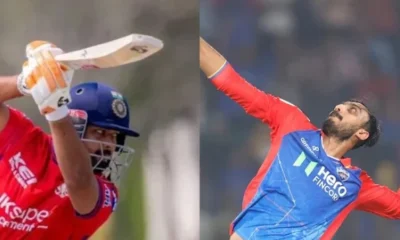
Rishabh Pant vs Sanju Samson

When Rishabh Pant made his first-class debut in October 2015, Sanju Samson had already stepped into the international arena, playing the T20 match against Zimbabwe the same year in July. Four and a half years down the lane, the 22-year-old Pant has played 11 tests, 15 ODIs and 28 T20Is, but not again has Samson managed to break into India’s playing eleven.

While Samson had been fairly consistent with his IPL performances, Pant outclassed him in the last two seasons with his explosive batting. In 2018 IPL, Pant amassed 684 runs at an average of 52.61 and a scarcely believable strike rate of  173.60. His 2019 season with Delhi Capitals was also brilliant for him, as he scored 488 runs at an average of 37.53 and a strike rate over 160.

Samson’s performances on the other hand were not bad at all. He has two IPL centuries under his belt, and an overall average of 27.61 and a strike rate of 130.24 in the Indian Premier League. Mentored by Rahul Dravid, he has played many crucial knocks for Rajasthan Royals in the tournament.

Dhoni’s successor

The rumours before the World Cup 2019 was that MS Dhoni would retire from international cricket after the tournament. The selectors also seemed keen to give more chances to youngsters than to the 38-year-old Dhoni.

Although the ex-Indian captain hasn’t announced his retirement, he hasn’t played a match after India’s World Cup semi-final loss against New Zealand in July 2019. He was also not part of any of the Indian squads announced after the World Cup.

What worked for Pant was the fact that he peaked at the right time. Considering his last two stupendous IPL seasons, the selectors hoped Pant to be the right person to take up India’s wicket-keeper mantle. The left-handed batsman used to instil fear in the opposition minds with his aggressive stroke making, something which Dhoni was also famous for. When Wriddhiman Saha took a break from cricket due to an injury, Pant also got a chance to play the longer format of the game in Indian jersey.

Being good was not enough for Samson.

Pant’s poor run in the recent games

But is Pant capable of carrying Dhoni’s legacy forward? The Delhi lad’s international stats belie his talent. He averages just 20.5 in T20Is from 28 matches. His ODI performances till date also have not been up to the mark – In 15 matches, he was able to cross the fifty run mark only once.  Although Pant averages over 44 in test matches, he was eventually replaced by Saha after a series of poor scores.

It is to be noted that Saha didn’t replace Pant straight away after coming back from injury. He was benched initially, but Pant’s struggles with the bat gave opportunity to the 35-year-old Saha to get back to the only format he plays for India.

And he grabbed it with both hands. Saha’s exceptional wicket keeping was a talking point in India’s recent test series against South Africa and Bangladesh. Although he averages much lower than Pant in tests, Kohli seems to trust his hands behind the stumps more than Pant.

Pant’s rash stroke making, which was earlier his prime weapon, eventually turned out to be a cause of concern. Some irresponsible shots in some matches made critics question his temperament. Adding to that the fact that he was supposed to be the replacement of Dhoni – someone who rarely makes a careless move – pressure kept mounting on Pant.

He was stuck in no man’s land – whether to continue playing his natural game that gave him the repute he has or to get back into his shell and play more meticulous inningses. Low confidence led to his downfall – his clean bat-swing went missing, while wicket keeping became an area for mocking.

The crowd chanting “Dhoni.. Dhoni” whenever he missed a chance behind the stumps was the evidence the public wasn’t happy with the long run given to Pant, despite his poor performances.

Can Samson break in?

Samson hasn’t got many chances in the Indian colours, but he is definitely breathing down the neck of Pant. In the Vijay Hazare trophy last year, the Kerala wicket-keeper batsman smashed an unbeaten 212 against Goa in just 129 deliveries, becoming the sixth Indian to hit a List A double-century.

Samson’s sound technique and ability to pierce gaps and hit big shots had been on display on multiple occasions in the IPL. However, despite his performances, he hasn’t got many opportunities. He was part of the squad against West Indies but didn’t get a game. He is also part of the team for T20Is against Sri Lanka – with one match to go in the series, it seems unlikely that he will be getting a chance.

Pant has the backing of his Captain and the selectors. Many experts have come in support of Pant, asking the public to not put extra pressure on the young dashing batsman. BCCI president Sourav Ganguly recently said that “Pant is a special talent… and selection should be left to the selectors”.

Considering that Samson has not been included in the squad for the upcoming series against Australia, things look bleak for the Kerala lad. Selectors might be backing Pant to play the T20 World Cup, but it appears to be a tightrope walk now. Because if Pant fails to perform in upcoming series as well, Samson should be given adequate time to get used to playing in the high level games before becoming India’s first choice wicket keeper for this year’s World Cup. India shouldn’t be going to the tournament without a clarity on this front.
India News

Amit Shah counters delimitation concerns, says southern states to gain Lok Sabha seats

Amit Shah assures Parliament that southern states will gain Lok Sabha seats after delimitation, countering opposition criticism during the women’s reservation debate.

Published

on

Amit Shah

Union Home Minister Amit Shah on Thursday addressed concerns over the proposed delimitation exercise, asserting in the Lok Sabha that southern states will not lose representation but instead see an increase in their number of seats.

His remarks came during a heated debate linked to the implementation of women’s reservation, where opposition parties have raised fears that population-based delimitation could reduce the political weight of southern states.

Shah rejected these claims, calling them misleading, and said the proposed framework ensures fairness while expanding the overall strength of the Lok Sabha.

Seat count to rise with expansion of Lok Sabha

The government has indicated that the total number of Lok Sabha seats could increase significantly as part of the delimitation process. In this expanded House, the combined representation of southern states is expected to rise from 129 seats at present to around 195 seats.

Shah emphasised that no state will lose seats in absolute terms, and the exercise is designed to reflect population changes while maintaining balance across regions.

State-wise projections shared in Parliament

During his address, Shah also provided indicative figures for individual southern states, suggesting notable increases in representation. According to the projections:

  • Tamil Nadu could see its seats rise substantially
  • Kerala, Telangana, and Andhra Pradesh are also expected to gain additional seats
  • Karnataka’s representation may increase as well

These figures were presented to counter the argument that delimitation would disproportionately favour northern states.

Political debate intensifies over linkage with women’s quota

The delimitation exercise has been closely linked to the rollout of women’s reservation, which proposes one-third seats for women in Parliament and state assemblies.

Opposition leaders have questioned this linkage, arguing that tying reservation to delimitation could delay its implementation and raise federal concerns. Some leaders have also warned that the move could impact national unity if apprehensions among states are not addressed.

The government, however, maintains that the reforms are necessary to ensure equitable representation and to align the electoral system with demographic realities.

Centre dismisses ‘false narrative’ on southern states

Shah reiterated that concerns about southern states losing influence are unfounded. He said the delimitation process will increase representation across regions and described the criticism as a “false narrative” aimed at creating confusion.

The issue is expected to remain a key flashpoint as Parliament continues discussions on the women’s reservation framework and related legislative changes.

Continue Reading

India News

PM Modi assures no discrimination in women’s quota, delimitation debate intensifies in Parliament

PM Narendra Modi has assured that women’s reservation will be implemented without discrimination, amid a heated debate over delimitation in Parliament.

Published

on

PM modi

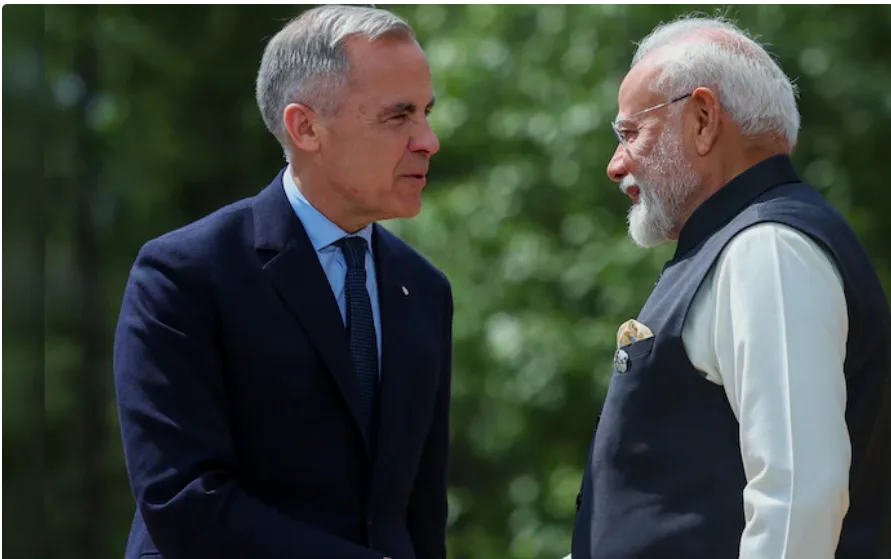
Prime Minister Narendra Modi has assured that there will be no discrimination in the implementation of women’s reservation, as Parliament witnessed a sharp debate over the proposed linkage between the quota and delimitation exercise.

During the ongoing special session, the government reiterated its commitment to ensuring fair representation while addressing concerns raised by opposition parties regarding the timing and structure of the legislation.

The proposed framework aims to reserve 33 percent of seats for women in the Lok Sabha and state assemblies. However, its implementation is tied to a fresh delimitation exercise, which is expected after the next census.

Opposition questions timing and intent

Opposition leaders have raised concerns that linking the women’s quota to delimitation could delay its implementation. They argue that the process of redrawing constituencies may push the actual rollout further into the future.

The issue has triggered a broader political confrontation, with multiple parties questioning whether the move could alter representation across states.

Some critics have also alleged that the delimitation exercise could disproportionately benefit certain regions based on population, a charge the government has rejected.

Government reiterates commitment to fair implementation

Responding to these concerns, the Centre has maintained that the reforms are necessary to ensure accurate and updated representation based on population data.

Leaders from the ruling side have repeatedly emphasized that the process will be carried out transparently and without bias. The assurance that there will be “no discrimination” is aimed at addressing fears among states and opposition parties.

The debate marks a key moment in Parliament, with both sides engaging in intense exchanges over one of the most significant electoral reforms in recent years.

Continue Reading

India News

Give all tickets to Muslim women, Amit Shah says, attacking Akhilesh Yadav on sub-quota demand

A sharp exchange between Amit Shah and Akhilesh Yadav in Parliament over sub-quota for Muslim women highlights key divisions on women’s reservation implementation.

Published

on

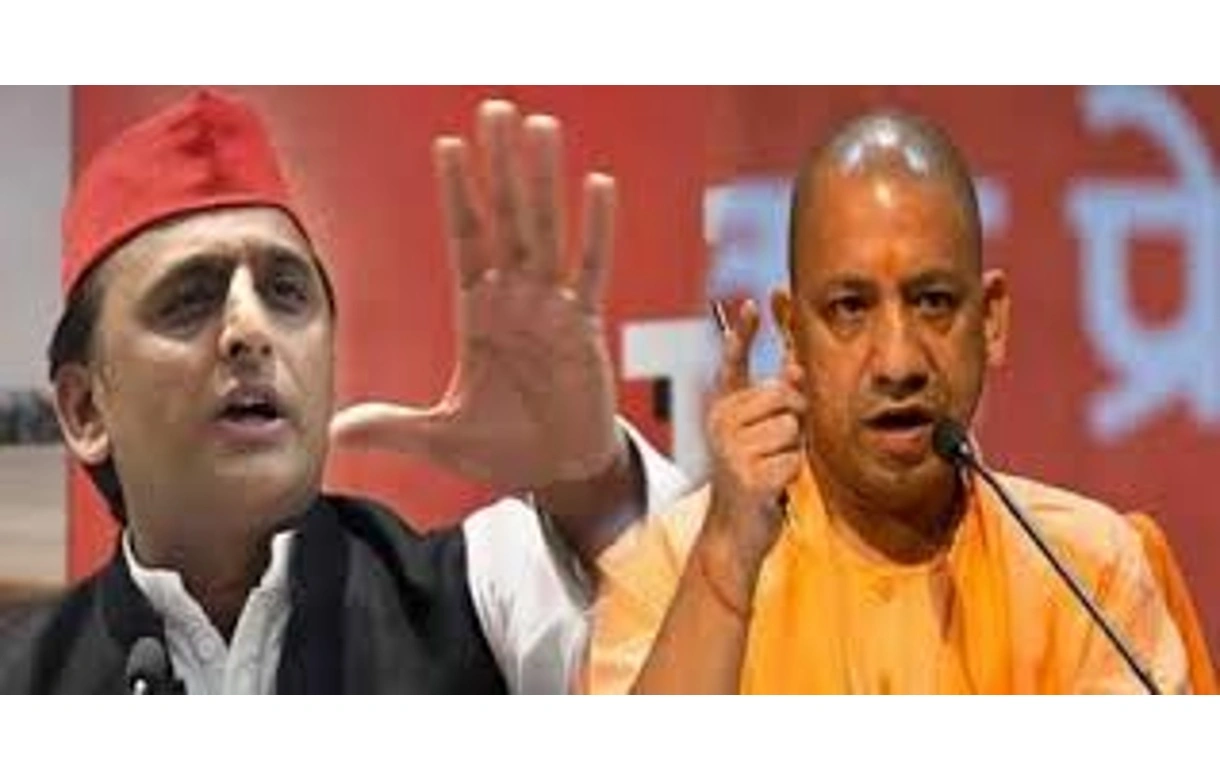
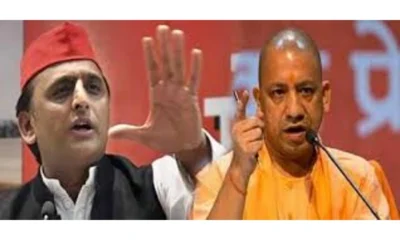
A heated exchange broke out in Parliament during discussions on the women’s reservation framework, with Union Home Minister Amit Shah and Samajwadi Party chief Akhilesh Yadav locking horns over the demand for a sub-quota for Muslim women.

The debate unfolded as the government pushed forward key legislative measures to implement 33% reservation for women in the Lok Sabha and state assemblies.

Akhilesh Yadav argued that the proposed reservation must ensure representation for women from marginalised communities, including Other Backward Classes (OBCs) and Muslim women. He said that without such provisions, large sections could remain excluded from political participation.

He also questioned the timing of the bill, alleging that the Centre was avoiding a caste census. According to him, a census would lead to renewed demands for caste-based reservations, which the government is reluctant to address.

Government rejects religion-based quota

Responding to the demand, Amit Shah made it clear that reservation based on religion is not permitted under the Constitution.

He stated that any proposal to provide quota to Muslims on religious grounds would be unconstitutional, firmly rejecting the idea of a separate sub-quota for Muslim women within the broader reservation framework.

The government has maintained that the existing framework already includes provisions for Scheduled Castes (SC) and Scheduled Tribes (ST) women within the overall reservation structure.

Wider political divide over implementation

The issue of sub-categorisation within the women’s quota has emerged as a major flashpoint, even as most opposition parties broadly support the idea of women’s reservation.

Samajwadi Party leaders reiterated that their support for the bill depends on inclusion of OBC and minority women, while the government continues to defend its constitutional position.

The debate is part of a broader discussion during the special Parliament session, where multiple bills linked to delimitation and implementation of the women’s quota are being taken up.

Continue Reading

Trending

© Copyright 2022 APNLIVE.com