English हिन्दी
Connect with us

India News

Tamil Nadu govt notifies 10 Acts stalled by Governor RN Ravi after Supreme Court verdict

Two bills—one amending the Chennai University Act and another establishing a university for Siddha, Ayurveda, Unani, Yoga, Naturopathy, and Homeopathy—remain pending with the President, leaving their fate uncertain.

Published

on

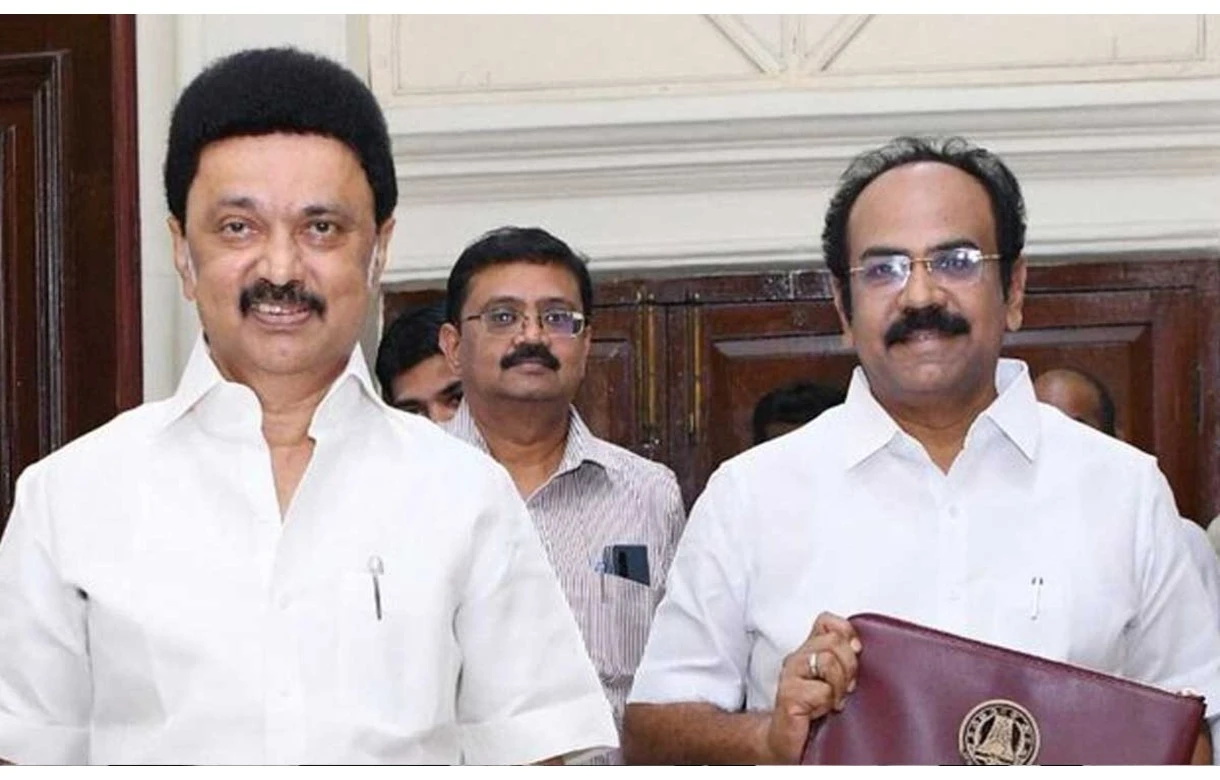
In a landmark development, the Tamil Nadu government on Friday notified ten laws previously stalled by Governor RN Ravi, leveraging a Supreme Court ruling on April 8 that declared the Governor’s decision to reserve re-adopted bills for the President’s assent unconstitutional. This move marks a historic first in India, as these laws take effect without the Governor’s or President’s signature, solely based on judicial authority.

Supreme Court’s verdict

The gazette notifications reference the Supreme Court’s verdict, which ruled that any actions taken by the President after the bills were reserved are legally void (“non est in law”). Consequently, the bills are deemed to have received the Governor’s assent on the day they were presented to him. The court also established clear timelines for Governors to act on bills—ranging from one to three months depending on circumstances—and imposed a three-month deadline for the President to decide on reserved bills. The judgment has been circulated to all High Courts and Principal Secretaries to Governors nationwide, reinforcing its nationwide significance.

The notified laws:

The ten laws, primarily amendments to university-related legislation, are:

  1. The Tamil Nadu Fisheries University (Amendment) Act, 2020
  2. The Tamil Nadu Veterinary and Animal Sciences University (Amendment) Act, 2020
  3. The Tamil Nadu Universities Laws (Amendment) Act, 2022
  4. The Tamil Nadu Dr. Ambedkar Law University (Amendment) Act, 2022
  5. The Tamil Nadu Dr. MGR Medical University, Chennai (Amendment) Act, 2022
  6. The Tamil Nadu Agricultural University (Amendment) Act, 2022
  7. The Tamil University (Second Amendment) Act, 2022
  8. The Tamil Nadu Fisheries University (Amendment) Act, 2023
  9. The Tamil Nadu Veterinary and Animal Sciences University (Amendment) Act, 2023
  10. The Tamil Nadu Universities Laws (Second Amendment) Act, 2022

These laws grant the Tamil Nadu government the authority to appoint Vice-Chancellors for 18 state universities, a power previously held by the Governor as Chancellor. In some cases, the Governor retains influence by nominating a member to the Vice-Chancellor search committee.

Background of the Legal Battle

The issue arose when 12 bills passed by the Tamil Nadu Assembly, including two from 2020, remained pending with Governor Ravi. Following a state government petition, the Supreme Court advised dialogue to resolve the deadlock. The Governor returned 10 bills to the Assembly, withholding assent, and reserved two for the President’s consideration. The Assembly re-enacted all ten on November 18, 2023, and sent them back to the Governor, who again reserved them for the President. The President withheld assent to seven, approved one, and left two undecided, prompting the state to challenge the Governor’s actions in court.

The state argued that the Governor lacked constitutional authority to reserve re-passed bills. The Supreme Court agreed, affirming that such actions violated parliamentary democracy and established conventions.

Political and Legal Significance

DMK Rajya Sabha MP P Wilson, part of the legal team representing Tamil Nadu, celebrated the outcome on social media, stating, “History is made as these are the first Acts in India to take effect without the Governor’s or President’s signature, purely on the strength of the Supreme Court’s judgment.” The ruling not only resolves a prolonged standoff but also sets a precedent for gubernatorial accountability nationwide.

Two bills—one amending the Chennai University Act and another establishing a university for Siddha, Ayurveda, Unani, Yoga, Naturopathy, and Homeopathy—remain pending with the President, leaving their fate uncertain.
India News

Abhishek Banerjee presents alleged dead voters at poll rally, attacks EC over SIR

Abhishek Banerjee displayed 10 people allegedly marked as dead in Bengal’s draft electoral rolls, accusing the Election Commission and BJP of undermining voting rights through the SIR exercise.

Published

on

Abhishek Banerjee

Trinamool Congress MP Abhishek Banerjee on Tuesday intensified his attack on the Election Commission and the BJP-led Centre, presenting 10 people at a public rally who were allegedly marked as dead in the draft electoral rolls during the ongoing Special Intensive Revision (SIR) exercise in West Bengal.

Addressing the gathering in Cooch Behar, the Trinamool national general secretary called the individuals on stage and claimed they had been wrongly declared deceased despite being residents of the district since birth. He alleged that their names were struck off the electoral rolls during the SIR process.

Banerjee accused the Election Commission of acting under political influence and said the ongoing exercise was effectively depriving citizens of their fundamental right to vote.

Allegations over voter list revision

The Diamond Harbour MP claimed that around 3.5 lakh residents of Cooch Behar district alone have received notices citing logical discrepancies during the SIR process. He urged Trinamool workers to ensure that all affected individuals are re-included in the voter list.

Banerjee also alleged that the EC was focusing on removing names from electoral rolls instead of safeguarding democratic participation. He claimed that anxiety related to the SIR exercise had led to the deaths of around 78 people in the state.

Earlier this month, Banerjee had presented three individuals at another rally in South 24 Parganas district, alleging that they too had been marked as dead voters in the draft rolls.

Attack on BJP over unfulfilled promises

Targeting the BJP-led Centre, Banerjee accused the ruling party of failing to fulfil electoral promises made to the people of Cooch Behar since 2014. He cited commitments related to the formation of the Narayani battalion, a training centre named after warrior Chilarai, international status for the Madan Mohan temple, and the upgradation of Cooch Behar airport.

He also claimed that the 9-seater aircraft service between Cooch Behar and Kolkata, introduced in February 2023, is likely to be discontinued by the end of the month, alleging neglect by the Centre.

Assembly polls and political messaging

Calling on voters to back Trinamool candidates in all nine assembly seats in Cooch Behar district, Banerjee said the upcoming assembly elections would be a contest between the people of Bengal and the BJP. In the 2021 assembly elections, the BJP had won six seats in the district, while Trinamool secured three.

He thanked voters for defeating former Union minister Nisith Pramanik in the 2024 Lok Sabha elections and asserted that the Trinamool Congress would return to power in West Bengal for a fourth consecutive term under Chief Minister Mamata Banerjee.

Banerjee also criticised recent central agency actions in the state and accused the BJP leadership of insulting Bengal’s cultural and political legacy. He further alleged excesses by border forces against farmers working near the India-Bangladesh border and objected to NRC notices allegedly being sent to some residents of Cooch Behar.

Continue Reading

India News

Tej Pratap Yadav meets family, invites Lalu and Tejashwi for Dahi-Chura feast

Tej Pratap Yadav’s visit to his family ahead of Makar Sankranti and his Dahi-Chura invitation has sparked renewed talk of reconciliation within the Lalu family.

Published

on

Tej Pratap Yadav

A rare and emotionally charged family moment played out on Tuesday when Rashtriya Janata Dal leader Tej Pratap Yadav visited 10 Circular Road, the residence of former Bihar Chief Minister Rabri Devi, to meet his parents and younger brother Tejashwi Yadav.

The visit marked a notable departure from months of visible distance within the Lalu Prasad Yadav family and was centred around a formal invitation for a Dahi-Chura feast scheduled for January 14 on the occasion of Makar Sankranti.

Tej Pratap personally handed over the invitation letter to Tejashwi Yadav, the Leader of the Opposition in the Bihar Assembly, in a gesture widely interpreted as an attempt at reconciliation and reaffirmation of family unity.

Upon his arrival, Tej Pratap sought blessings by touching the feet of RJD supremo Lalu Prasad Yadav and Rabri Devi, underscoring the personal significance of the meeting.

Rare public warmth between the brothers

The meeting was particularly striking as it was the first time in a long while that Tej Pratap and Tejashwi were seen together with visible warmth in front of the media. For several months, the two brothers had been living separately and maintaining a noticeable distance on public platforms, fuelling speculation of a rift.

A deeply personal moment during the visit drew widespread attention when Tej Pratap lifted Tejashwi’s daughter, Katyayani, in his arms. The images of the interaction quickly circulated on social media, presenting a softer picture of family bonds beyond political equations.

Tej Pratap later described the moment as a memorable experience, reinforcing the impression that familial ties remain intact despite past differences.

Political and symbolic significance

Political observers see the visit as a significant shift after a prolonged phase of strained relations, often described as a “cold war” between the brothers. The timing of the outreach, on the eve of Makar Sankranti, has also blunted opposition narratives of a deep and irreversible divide within the Lalu family.

Attention has now shifted to the Dahi-Chura feast scheduled for Wednesday. Beyond its cultural importance, the event is being viewed as a symbolic display of unity within the family and the party.

The outreach has generated renewed enthusiasm among RJD workers, with many keenly watching how Tejashwi Yadav and other family members participate in the celebration, which could further cement this much-discussed rapprochement.

Continue Reading

India News

Centre asks Blinkit, Zepto and Swiggy to stop 10-minute delivery claims

The Centre has urged Blinkit, Zepto and Swiggy to remove 10-minute delivery claims, citing safety concerns for delivery partners, government sources said.

Published

on

10 minutes delivery

The Centre has asked quick commerce platforms such as Blinkit, Zepto and Swiggy to remove claims related to 10-minute deliveries, citing concerns over the safety of delivery partners, according to government sources.

The issue was discussed during a meeting between Union Labour Minister Mansukh Mandaviya and representatives of major food and grocery delivery aggregators. Executives from platforms including Zomato, Swiggy, Blinkit and Zepto were present at the meeting, sources said.

Safety of delivery partners discussed in meeting

Government sources indicated that the minister raised concerns about strict delivery timelines and their potential impact on the safety and well-being of delivery partners. Platforms were advised to prioritise safe working conditions instead of promoting ultra-fast delivery promises.

The discussion focused on delivery expectations, rider pressure and the broader responsibility of aggregators towards their workforce, sources added.

Blinkit revises tagline after government intervention

Following the meeting, Blinkit has revised its marketing tagline. The platform earlier promoted “10,000 plus products delivered in 10 minutes” but has now changed it to “30,000 plus products delivered at your doorstep,” according to sources.

The revision reflects a shift away from highlighting delivery speed as a key promise, in line with the concerns raised during the discussions.

The government is expected to continue engaging with aggregators on labour welfare and safety-related issues, sources said.

Continue Reading

Trending

© Copyright 2022 APNLIVE.com