
India News
Will simultaneous polls to Lok Sabha and state assemblies become a reality by Feb-March 2019?

By Puneet Nicholas Yadav
Lok Sabha deputy Speaker M Thambidurai writes to CMs seeking views on holding federal and provincial polls together, EC says it’ll be ready by Sept 2018
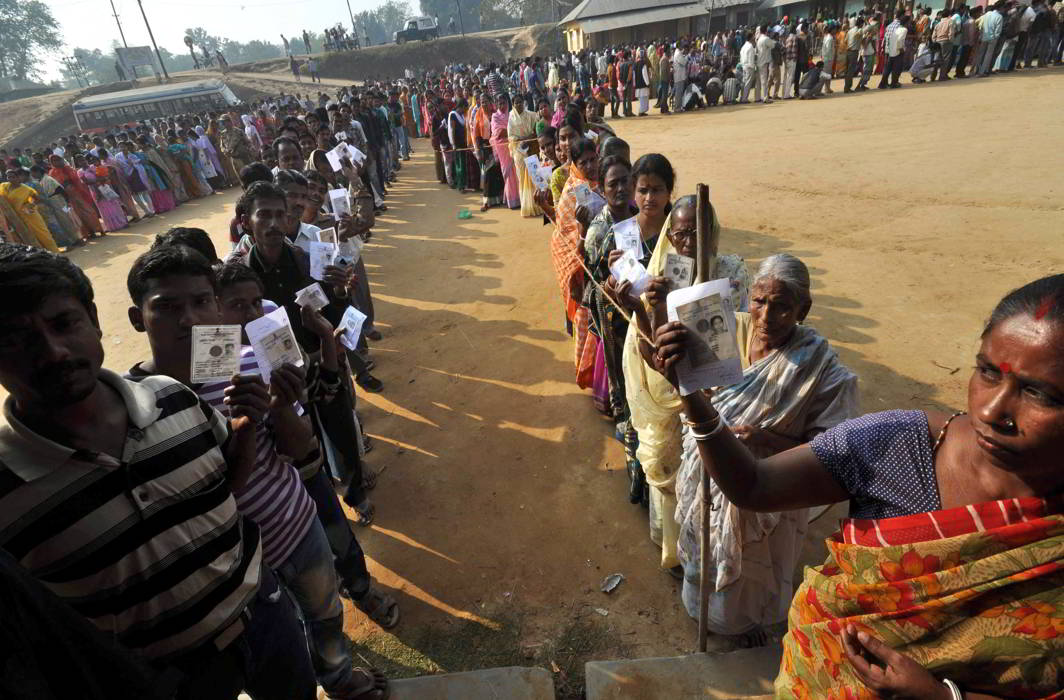
Could Prime Minister Narendra Modi and his BJP soon set the wheels in motion for amendments to the Constitution and other legislations that govern the conduct of federal and provincial elections to ensure that simultaneous polls to the Lok Sabha and state assemblies become a reality by February-March 2019?
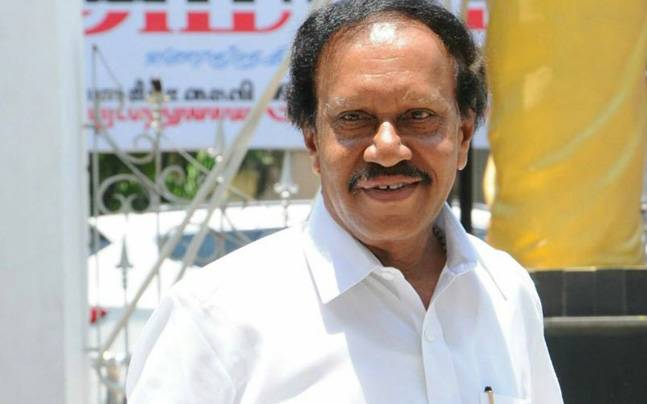
A letter written by Lok Sabha deputy Speaker and senior AIADMK leader M Thambidurai to the Prime Minister in August and to chief ministers of all states a few weeks later not only endorses the proposal but also proposes that simultaneous elections to the Lok Sabha and state assemblies be held by “end-February or early-March 2019”.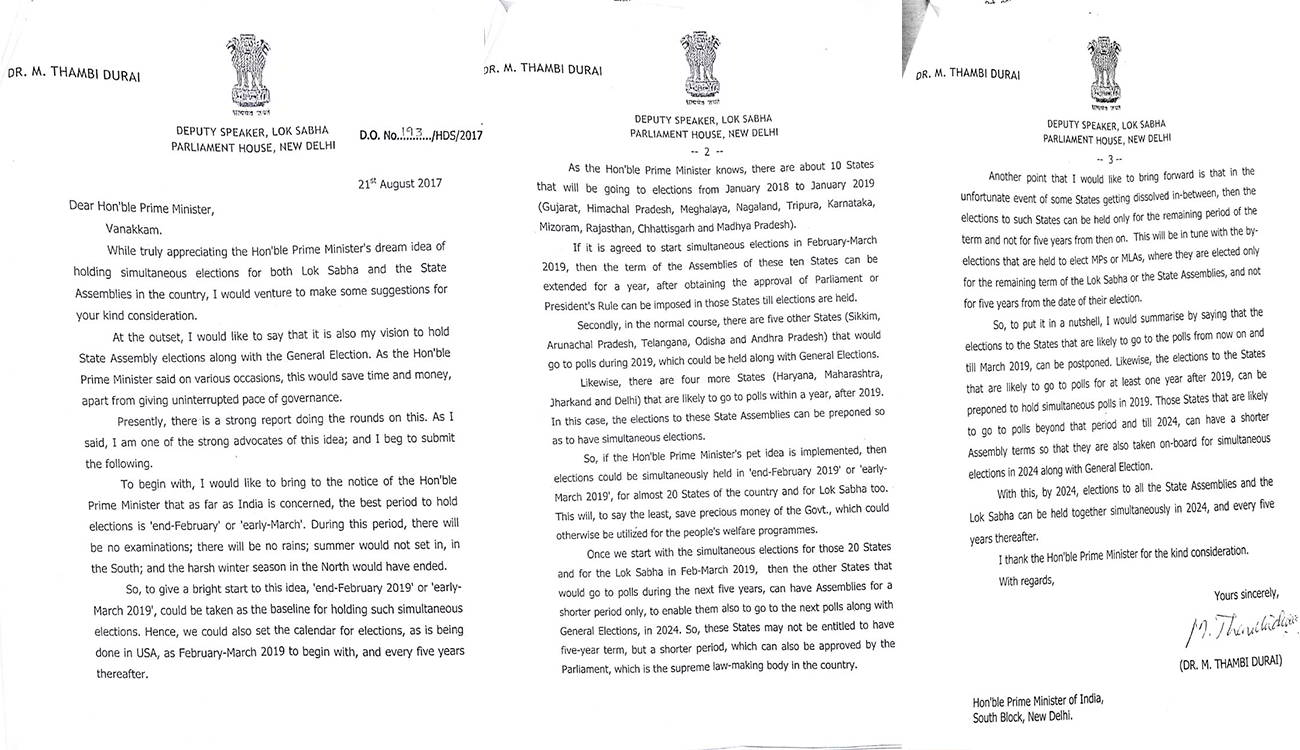 The Election Commission (EC) has already given clear indications that it would be ready to hold simultaneous polls by September 2018.
On Wednesday, while attending a function in Bhopal to launch the ERONet software (to check inaccuracy and duplicity in electoral rolls), Election Commissioner OP Rawat had told mediapersons that the government had sought a response from the EC on conduct of simultaneous state and national polls.
Rawat said that the EC would require around 40 lakh electronic voting machines equipped with voter-verifiable paper audit trail (VVPAT) apparatus for holding the simultaneous polls and confirmed that orders for these had been placed by two government agencies. The Election Commissioner said that the poll panel had been allocated Rs 3400 crore for procuring the additional EVMS and Rs 12000 crore for the VVPAT equipment and added that “We will be logistically ready to hold simultaneous polls by September 2018”
Rawat, however, qualified his comments by insisting that “it is up to the government to take a decision and make necessary legal amendments” for conducting the polls simultaneously.
The Election Commissioner’s comments, when read in reference to the remarks made by Thambidurai in his letter to PM Modi (datedAugust 21) and to chief ministers (dated September 13) – copies of which are in possession of APN – show that there is a clear effort to rollout the big electoral reform soon.
In his letter to the Prime Minister, Thambidurai says: “presently, there is a strong report doing the rounds on this (holding of simultaneous polls)… so, to give a bright start to this idea, end-February or early-March 2019 could be taken as the baseline for holding such simultaneous elections.”
 Thambidurai also addresses a key argument being made against the proposal by the likes of former chief election commissioner SY Quraishi and other election experts – what would the government or EC do if a state government fails to complete its full term in the event of failing a floor test or some other unforeseen situation? Will all state assemblies and the Lok Sabha then be dissolved to have another round of simultaneous polls?
Thambiduari suggests in his letter to Modi: “in the unfortunate event of some State (assembly) getting dissolved in between, then the elections to such states can be held only for the remaining period of the term and not for five years (the usual term of an assembly or Lok Sabha) from then on. This will be in tune with the by-elections that are held to elect MPs or MLAs where they are elected only for the remaining term of Lok Sabha or the State Assemblies and not for the five years from the date of their election.”
The Lok Sabha deputy Speaker goes on to say: “the elections to the States that are likely to go to polls from now on and till March 2019 can be postponed (till Feb-March 2019). Likewise, the elections to the States that are likely to go to polls for at least one year after 2019, can be preponed to hold simultaneous polls in 2019. Those States that are likely to go to polls beyond that period and till 2024 can have shorter Assembly terms so that they can also be taken on-board for simultaneous elections in 2024 along with the general elections”.
Thambidurai has proposed that if the government adopts his formula then “elections to all State Assemblies and the Lok Sabha can be held together simultaneously in 2024 and every five years thereafter”.
It remains to be seen whether or not the Centre and the EC adopt the Lok Sabha deputy Speaker’s formula for simultaneous polls. However, it is certain that the radical electoral reform would face stiff resistance from opposition parties, especially the likes of Congress, Trinamool Congress and CPM who are ruling various states and wouldn’t want the term of their government’s cut short to give an obvious electoral advantage to the BJP, which at least for now seems invincible in its victory march at the hustings.
There are also a host of other technical and operational problems that the poll panel will need to address before venturing out to implement the proposal.
As former CEC SY Quraishi said in an article he wrote for India Legal – APN’s sister-concern – recently: “while the idea (of simultaneous polls) is desirable, it is doubtful whether it is feasible.”
Read full article here: Simultaneous Polls: Desirable But Not Feasible
Quraishi cited multiple hurdles in implementing the reform:
“Let us first consider a practical constraint. Even if elections were to be held simultaneously, every state and every assembly will witness its own political course. What is one to do if a particular state witnesses an upturned majority in case a few of the MLAs decide to shift their “loyalty”? How are simultaneous elections to be continued in such a scenario? Or, as was the case in 1998, what happens if the Lok Sabha is dissolved within 13 days? Do we also dissolve all democratically elected state assemblies for reasons beyond the states’ boundaries?”








India News
Centre sends 3 letters to Punjab government after anti-drug activist’s killing
The Centre has sought reports from the Punjab government on three incidents linked to allegations surrounding drug-related activities, including the killing of anti-drug activist Parvinder Singh Jhota.

India News
Mallikarjun Kharge seeks all-party meeting with PM Modi on delimitation
Congress president Mallikarjun Kharge has written to Prime Minister Narendra Modi for the fourth time, seeking an all-party meeting on delimitation. He also flagged the 64-day delay in proroguing Parliament’s Monsoon Session.
India News
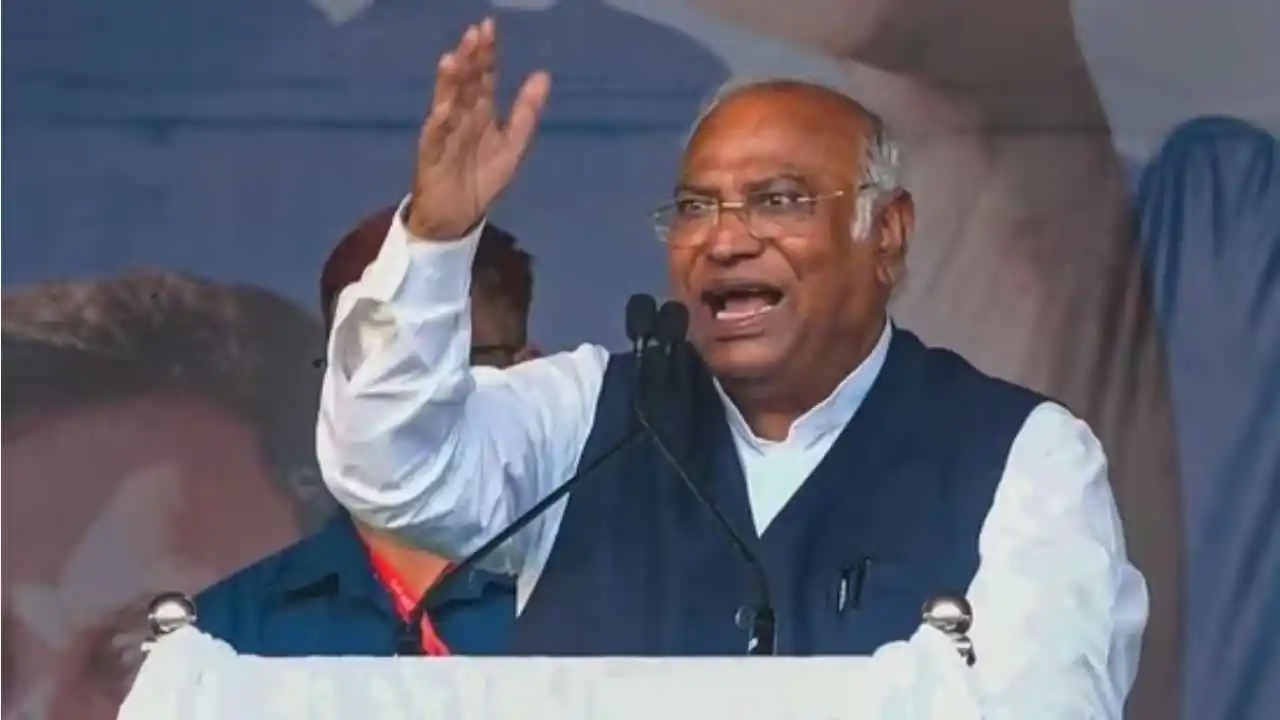
Abhijeet Dipke detained ahead of CJP’s national flag march in Delhi
Cockroach Janta Party founder Abhijeet Dipke was detained by Delhi Police on October 16, 2026, shortly before a planned national flag march. The proposed rally followed the judicial custody of two CJP members who had waved the Tricolour at Jantar Mantar.

Mallikarjun Kharge’s ‘Your Friends’ jab at Rahul Gandhi over congress exits

Magnitude 7 earthquake strikes Russia’s Kamchatka Peninsula

Delhi deploys 25,000 personnel, installs CCTV cameras ahead of CJP march

Abhijeet Dipke detained ahead of CJP’s national flag march in Delhi

Mallikarjun Kharge seeks all-party meeting with PM Modi on delimitation

Centre sends 3 letters to Punjab government after anti-drug activist’s killing
Mallikarjun Kharge seeks all-party meeting with PM Modi on delimitation
Abhijeet Dipke detained ahead of CJP’s national flag march in Delhi
Magnitude 7 earthquake strikes Russia’s Kamchatka Peninsula
Delhi deploys 25,000 personnel, installs CCTV cameras ahead of CJP march

Afghan Men Try To Hang With The Jet Engine Of The Aircraft in Kabul- Afghanistan News – Kabul News
Trending Top 10 News: 10000 Crore Fine on Flipkart, Apple to Launch Unique Feature, Hdfc Bank Job Ad

Trending Top 10 News: Nokia 6310, Apple sales, Bachpan ka Pyar Video Kid, Dainik Bhaskar IT Raid

Trending Top 10 News: Canada bans Indian flights, Rain in Delhi NCR, AIMIM Twitter hacked, Raj Kundra case

Trending Top 10 News: Shein India, Apple New Service, Pocket Oxygen, Oppo Launched New Phone
-
 India News17 hours ago
Mallikarjun Kharge’s ‘Your Friends’ jab at Rahul Gandhi over congress exits
-
 Latest world news17 hours ago
Magnitude 7 earthquake strikes Russia’s Kamchatka Peninsula
-
 India News17 hours ago
Delhi deploys 25,000 personnel, installs CCTV cameras ahead of CJP march
-
 India News8 hours ago
Abhijeet Dipke detained ahead of CJP’s national flag march in Delhi
-
 India News7 hours ago
Mallikarjun Kharge seeks all-party meeting with PM Modi on delimitation
-
 India News6 hours ago
Centre sends 3 letters to Punjab government after anti-drug activist’s killing
