
India News
Yet another economist quits govt: RBI Dy Governor Viral Acahrya resigns 6 months before term


[vc_row][vc_column][vc_column_text]RBI Deputy Governor Viral V Acharya has resigned from his post, six months before the scheduled end of his term citing “unavoidable personal circumstances”, said media reports.
Confirming the resignation, the Reserve Bank of India in a statement said, “Due to unavoidable personal circumstances, Viral Acharya is unable to continue as deputy governor beyond July 23. Consequential action arising from his letter is under consideration of the competent authority.”
Acharya was not expecting his term to be renewed in any case, The Indian Express (IE) reported, citing source-based information.
Since Acharya was appointed by Appointments Committee of the Cabinet headed by Prime Minister Narendra Modi, the resignation would also be accepted by the panel.
Acharya, 45, joined the central bank in January 2017 and was RBI’s youngest deputy governor, post economic liberalisation. He took over at a time when the central bank was facing criticism for repeated changes in the rules related to deposit and withdrawal of money, post-demonetisation.
Also Read: AES deaths in Muzaffarpur: Supreme Court notice to Bihar govt to respond within a week
His term was scheduled to end in February next year, said media reports. Acharya will be returning to New York University as CV Starr Professor of Economics. Acharya was called as the poor man’s Rajan over the many similarities with the former Governor Raghuram Rajan, who also left RBI against his wishes to continue.[/vc_column_text][/vc_column][/vc_row][vc_row css=”.vc_custom_1561367870691{border-top-width: 10px !important;border-right-width: 10px !important;border-bottom-width: 10px !important;border-left-width: 10px !important;padding-top: 10px !important;padding-right: 10px !important;padding-bottom: 10px !important;padding-left: 10px !important;background-color: #dbdbdb !important;border-radius: 10px !important;}”][vc_column][vc_column_text]
Economists/Experts who quit:
June 2019 – RBI Dy Governor Viral Acharya resigns
Jan 2019 – The last two non-official members of National Statistical Commission resign over job data differences
Dec 2018 – RBI Governor Urjit Patel resigns amid tension with government
June 2018 – Chief Economic Advisor Arvind Subramanian resigns, recently claimed GDP growth rate was way below that claimed
Aug 2017 – NITI Aayog vice chairman Arvind Pangaraiya resigns
June 2016 – RBI Governor Raghuram Rajan resigns[/vc_column_text][/vc_column][/vc_row][vc_row][vc_column][vc_column_text]This is the second high profile resignation in the past six months at the Reserve Bank of India (RBI) and the third under Modi government (including the previous term). The first to go was RBI governor Raghuram Rajan. In December 2018, governor Urjit Patel resigned nearly nine months before the end of his schedule term over differences with the government. The RBI is now left with three deputy governors NS Vishwanathan, BP Kanungo and MK Jain.
Acharya, in a speech just a couple of months before Patel’s resignation over differences with Modi government, had warned of “risks of undermining the central bank’s independence” as “potentially catastrophic”.
“Governments that do not respect central bank independence will sooner or later incur the wrath of financial markets, ignite economic fire, and come to rue the day they undermined an important regulatory institution,” Acharya had said.
Acharya had also warned of a talent crisis at a central bank if its independence is seen to be compromised. When the governance of the central bank is undermined, it is unlikely to attract or be able to retain the brightest minds that thrive on the ability to debate freely, think independently, and effect changes, attrition of central bank powers results in attrition of its human capital and deterioration of its efficiency and expertise over time, he had said.
An expert in credit risk, Acharya recently differed with Reserve Bank Governor Shaktikanta Das in the monetary policy announced on April 4, according to minutes released by the bank. Das favoured focussing on economic growth with a repo rate cut. Acharya cautioned on another rate cut in the wake of high inflation excluding food and fuel. The six-member Monetary Policy Committee (MPC) decided to reduce the policy repo rate by 25 basis points to 6 per cent in a 4-2 majority decision.
Also Read: Skeletal remains of 108 children found outside Muzaffarpur Hospital
Acharya’s resignation is the latest in the string of high-profile exits of economic policy makers — Raghuram Rajan, Urjit Patel, Arvind Subramanian and now Viral Acharya and, said Financial Times (FT), calls into question the government’s ability to stomach independent advice. “But that is unlikely to unfaze the government, which no doubt has its own agenda,” FT said.[/vc_column_text][/vc_column][/vc_row]









India News
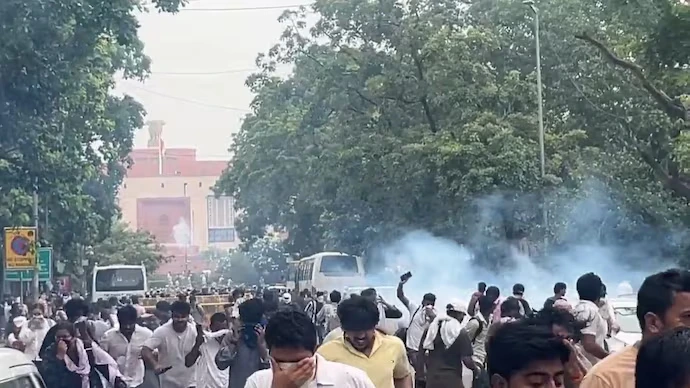
Delhi deploys 25,000 personnel, installs CCTV cameras ahead of CJP march
More than 25,000 police and paramilitary personnel have been deployed in Delhi ahead of the CJP’s planned protest march at Connaught Place. Authorities have also imposed restrictions and stepped up CCTV surveillance.

India News
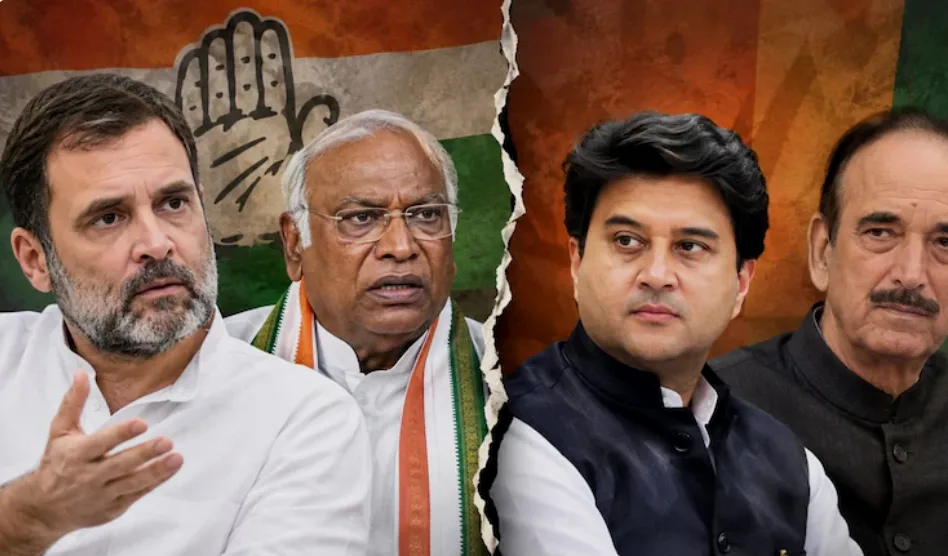
Mallikarjun Kharge’s ‘Your Friends’ jab at Rahul Gandhi over congress exits
Congress president Mallikarjun Kharge took a dig at Rahul Gandhi after the Leader of the Opposition reportedly described former party leaders Jyotiraditya Scindia and Ghulam Nabi Azad as among those who had left the Congress.
India News
Delhi Police offers 11-person limit for CJP’s Connaught Place protest
Delhi Police has offered to facilitate a group of 11 people at Central Park in Connaught Place for the Cockroach Janata Party’s October 16 protest, while warning that violations of prohibitory orders could invite legal action.

India-US trade deal first phase finalised, drafting underway

Election Commission orders voter roll revision in 17 states, UTs

Actor Imran Khan asked to leave India after CJP protest

Delhi Police offers 11-person limit for CJP’s Connaught Place protest

Mallikarjun Kharge’s ‘Your Friends’ jab at Rahul Gandhi over congress exits

Magnitude 7 earthquake strikes Russia’s Kamchatka Peninsula

Delhi deploys 25,000 personnel, installs CCTV cameras ahead of CJP march
Mallikarjun Kharge’s ‘Your Friends’ jab at Rahul Gandhi over congress exits
Delhi Police offers 11-person limit for CJP’s Connaught Place protest
Actor Imran Khan asked to leave India after CJP protest

Afghan Men Try To Hang With The Jet Engine Of The Aircraft in Kabul- Afghanistan News – Kabul News
Trending Top 10 News: 10000 Crore Fine on Flipkart, Apple to Launch Unique Feature, Hdfc Bank Job Ad

Trending Top 10 News: Nokia 6310, Apple sales, Bachpan ka Pyar Video Kid, Dainik Bhaskar IT Raid

Trending Top 10 News: Canada bans Indian flights, Rain in Delhi NCR, AIMIM Twitter hacked, Raj Kundra case

Trending Top 10 News: Shein India, Apple New Service, Pocket Oxygen, Oppo Launched New Phone
-
 India News23 hours ago
India-US trade deal first phase finalised, drafting underway
-
 India News21 hours ago
Election Commission orders voter roll revision in 17 states, UTs
-
 India News20 hours ago
Actor Imran Khan asked to leave India after CJP protest
-
 India News19 hours ago
Delhi Police offers 11-person limit for CJP’s Connaught Place protest
-
 India News7 hours ago
Mallikarjun Kharge’s ‘Your Friends’ jab at Rahul Gandhi over congress exits
-
 India News7 hours ago
Delhi deploys 25,000 personnel, installs CCTV cameras ahead of CJP march
-
 Latest world news7 hours ago
Magnitude 7 earthquake strikes Russia’s Kamchatka Peninsula
