English हिन्दी
Connect with us

Latest Politics News

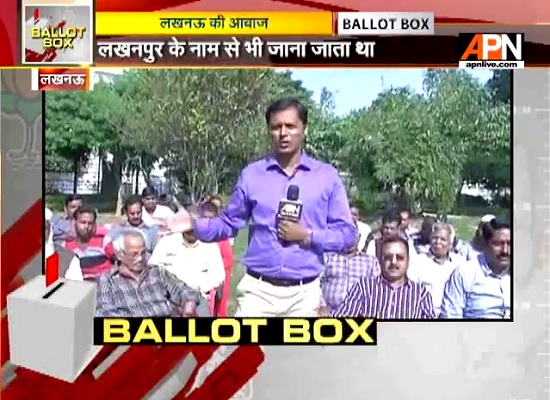
UP Election special:Ballot Box

Published

on

India News

Abhishek Banerjee’s office demolished in Bengal, Trinamool alleges political vendetta

The South 24 Parganas administration demolished Abhishek Banerjee’s office in Amtala over alleged building plan violations. The Trinamool Congress accused the BJP of carrying out politically motivated action.

Published

on

Abhishek Banerjee

Lok Sabha MP and Trinamool Congress National General Secretary Abhishek Banerjee’s office in Amtala, located in West Bengal’s South 24 Parganas district, was demolished by the district administration on Saturday, triggering a fresh political confrontation between the ruling BJP government in the state and the opposition Trinamool Congress.

Administration cites alleged building violations

According to officials, the office was demolished because it was allegedly constructed without an approved building plan. Authorities said notices seeking explanations and relevant documents regarding the construction were issued on June 30 and July 7.

The administration also directed the Diamond Harbour MP to appear before district officials on July 15 and submit his response.

Officials claimed that no reply was received to either notice and that Banerjee did not appear before the administration as instructed. Following this, authorities decided to proceed with demolition.

A bulldozer was brought to the site on Saturday morning, and a heavy police presence was deployed after security arrangements were put in place around the premises before the demolition began.

Trinamool Congress alleges political revenge

Reacting to the action, the Trinamool Congress accused the BJP of targeting its leaders through what it described as “vengeful, violent politics.”

The party said the matter is already pending before a court and alleged that a “bulldozer culture” has emerged in West Bengal since the BJP came to power. It described the demolition as an act of political vengeance and alleged “goonda raj” during the operation.

Political backdrop

The demolition comes months after the 2026 West Bengal Assembly elections, in which the BJP secured 208 seats in the 294-member Assembly, ending the Trinamool Congress’s 15-year rule. The Trinamool was reduced to 80 seats, while former party leader Suvendu Adhikari took oath as the state’s Chief Minister.

Since its electoral defeat, the Mamata Banerjee-led party has witnessed internal turmoil. A faction of MLAs backed Ritabrata Banerjee, who is now the Leader of the Opposition in the West Bengal Assembly. Several Lok Sabha MPs also left the party to join the Nationalist Citizens Party of India, while former Rajya Sabha MPs Sukhendu Sekhar Roy, Sushmita Dev and Prakash Chik Baraik resigned and later joined the BJP.

Continue Reading

India News

Congress invites Mamata Banerjee to July 21 event, asks her to admit leaving party was a mistake

The West Bengal Congress has invited Mamata Banerjee to its July 21 programme, asking her to publicly acknowledge that leaving the Congress was a political mistake while paying tribute to the 1993 martyrs.

Published

on

Mamata Banerjee

The West Bengal Congress has invited Trinamool Congress (TMC) chief Mamata Banerjee to its July 21 programme in Kolkata, saying she should publicly acknowledge that quitting the Congress nearly three decades ago was a political mistake.

The invitation came from West Bengal Congress president Subhankar Sarkar, who addressed reporters after reviewing preparations for the party’s ‘Martyrs’ Day’ programme at Shahid Minar.

Congress asks Mamata to acknowledge 1993 movement

Sarkar said Banerjee should recognise the historical importance of the July 21, 1993 movement instead of trying to alter its legacy.

According to him, the movement was organised under the banner of the Youth Congress, making it an integral part of the Congress’ political history.

He said political leaders who respect their own political journey earn greater public respect and urged Banerjee to pay tribute to the martyrs at the Congress programme.

‘Leaving Congress was a mistake’

Sarkar said Banerjee’s participation in the event would carry greater significance if she publicly admitted that leaving the Congress was the wrong political decision.

He described such a move as an act of political atonement and said the Congress stage remains open for anyone wishing to pay homage to those who died during the July 21, 1993 movement.

July 21 remains politically significant in West Bengal

The July 21, 1993 protest, led by Mamata Banerjee during her time in the Youth Congress, ended in police firing in which 13 people allegedly lost their lives.

After leaving the Congress in December 1997 to form the Trinamool Congress, Banerjee continued observing July 21 every year through large public rallies that gradually became a major display of the party’s organisational strength. The Congress, meanwhile, continued marking the day with comparatively smaller programmes.

Multiple events planned this year

The political landscape has changed following the TMC’s loss of power in the West Bengal Assembly elections, with the party also facing internal rebellion.

A rebel TMC faction led by Ritabrata Banerjee has announced a separate observance near the Mahatma Gandhi statue in Esplanade. Meanwhile, police have denied permission to another group loyal to the former chief minister to hold its programme at its traditional venue in front of Victoria House. The matter is currently pending before the court.

Continue Reading

India News

Omar Abdullah criticises Martyrs’ Day restrictions, calls LG administration temporary guests

Omar Abdullah criticised the LG administration after being prevented from visiting Srinagar’s Martyrs’ Graveyard, alleging the 1931 martyrs’ sacrifices are being overlooked.

Published

on

Omar Abdullah

Jammu and Kashmir Chief Minister Omar Abdullah on Monday criticised the Lieutenant Governor (LG) administration after he was prevented from visiting the Martyrs’ Graveyard in Srinagar to pay tribute to those killed during the 1931 uprising.

The area surrounding the Martyrs’ Graveyard in downtown Srinagar was sealed by the authorities, with police declaring it a no-go zone and restricting entry to the site.

Omar Abdullah questions restrictions

Unable to visit the graveyard, Abdullah, along with his ministers, MLAs and National Conference leaders, held a tribute meeting at the party headquarters in Srinagar.

Addressing party workers after the meeting, the Chief Minister said the administration’s decision to block access would not erase the memory of the 1931 martyrs.

Calling the LG administration “temporary guests”, Abdullah said those responsible for preventing political leaders from paying homage would not remain in office forever, while the martyrs’ cemetery would continue to stand. He added that he and his party would visit the site in the future to offer floral tributes and prayers.

Alleges selective treatment of history

Abdullah alleged that the sacrifices of those who fought against British-era rule in Jammu and Kashmir were being ignored because they were Muslims and had opposed the Dogra Maharaja, who ruled under British paramountcy.

He argued that the 1931 movement was not based on religion but represented a struggle for democratic rights, principles and freedom during the British period.

The Chief Minister also said attempts were being made to portray participation in the freedom movement against British rule in a negative light.

Background of the annual observance

July 13 was earlier observed as a public holiday in the erstwhile state of Jammu and Kashmir. Every year, officials, political leaders and members of the public would gather at the Martyrs’ Graveyard to pay homage to those killed during the 1931 incident, with police also offering a ceremonial gun salute.

Following the abrogation of Article 370 and the reorganisation of Jammu and Kashmir into a Union Territory in 2019, July 13 was removed from the list of official public holidays. Since then, authorities have not permitted official or public commemorative events at the graveyard.

The Lieutenant Governor continues to exercise authority over key subjects in the Union Territory, including law and order and policing.

Why July 13 is significant

July 13 commemorates the deaths of 22 civilians who were killed in police firing outside Srinagar Central Jail in 1931 while protesting against the rule of Dogra Maharaja Hari Singh during the British era.

The protesters had gathered in support of Abdul Qadeer, who had urged Kashmiris to oppose the Maharaja’s administration.

The incident led to widespread protests and prompted the Maharaja and the British administration to appoint commissions to examine the grievances of the Valley’s Muslim population. It also contributed to political reforms, with Jammu and Kashmir holding its first Assembly elections in 1934, marking the beginning of an electoral process in the region.

Changes after 2019

Since 2020, both July 13 and December 5—the birth anniversary of former Jammu and Kashmir Prime Minister and Chief Minister Sheikh Abdullah—have ceased to be official holidays in the Union Territory.

Instead, the birth anniversary of Dogra ruler Maharaja Hari Singh is now observed as a public holiday in Jammu and Kashmir.

Continue Reading

Trending

© Copyright 2022 APNLIVE.com