English हिन्दी
Connect with us

Latest Politics News

Moo-ing on with demonetisation, Priyanka Chopra’s dress and peacock tears

Published

on

Moo-ing on with demonetisation, Priyanka Chopra’s dress and peacock tears - APNLive
[vc_row][vc_column][vc_column_text]Jawaharlal Nehru gets blamed for IT sector job losses

Ranjona Banerji

Which of the following are the biggest issues affecting India today:

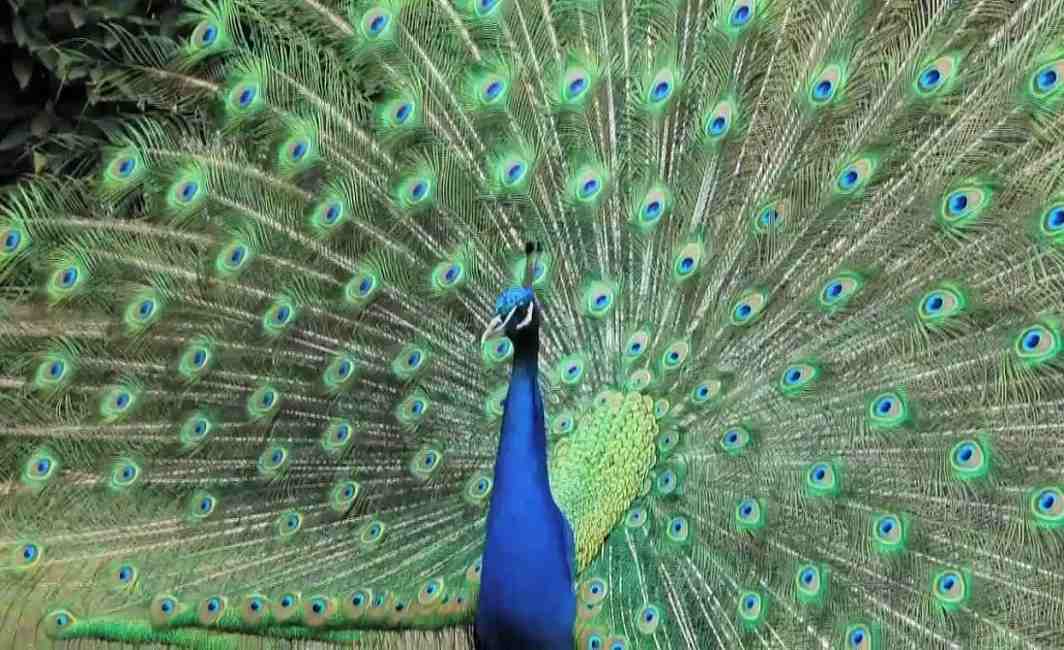
1) A just-retired judge of the Rajasthan High Court informing us that peacocks are celibate and peahens conceive by drinking peacock tears?

2) Actress Priyanka Chopra wearing a knee-revealing dress when she met Prime Minister Narendra Modi?

3) Farmers in Maharashtra on an indefinite strike over loan waivers and their various largely ignored problems?

4) India’s growth rate for the fourth quarter of 2016-2017 falls to 6.1 per cent, because of November 2016’s demonetisation exercise?

Let’s leave the usual bull out of the reckoning for now and move on. Let’s forget those really bad puns also, please.

The Rajasthan judge certainly took Twitter by storm because, well, it’s obvious. Such a breathtaking grasp of biology and ornithology, and even evolution, is most uncommon and must be admired and applauded. These are our judges who keep our judiciary’s standards high; long may we prosper.

Actress Priyanka Chopra, if you go by our most loyal fans of the PM and upholders of the best of Indian culture on social media, has committed a disastrous act of moral repugnance. To show someone, and that too a prime minister, her knees? It is possible that Indian culture may never recover from this.

How about the farmers? Farmers largely exist in India to be ignored and to suffer quietly by themselves. Lip service is paid to their efforts in slogans now and then, usually the same slogan which has been in use for 50 years. The rest of the time, city folk, corporatewallahs and economists discuss how India has to move beyond agriculture (while voting for the cow people, of course. Sorry, I couldn’t resist that dig).

That leaves the Indian economy. The most taboo subject of all. I heard on TV the other day that the Indian economy has never been better and demonetisation has been a success. Of course, this was outright pandering to the ruling party by the news anchor. But still. Despite all evidence to the contrary, fanboys and fangirls of the government have been applauding demonetisation since the results of the Uttar Pradesh elections were announced.

We have all heard the Union finance minister telling us that everything is fine and on track. Various corporate heads, analysts, former corporate honchos and economists have also assured us that India is the fastest growing economy that has never done better. Yes some have admitted perhaps jobs have not increased that much but the fiscal deficit is down, yaay! Others have played down the loss of jobs in information technology because well, these things happen, and Jawaharlal Nehru definitely has to share some of the blame.

Now, despite all these fantastic PR efforts to shore up our confidence in our able political masters, what do we find? That figures released by the government show us that India’s GDP growth has fallen from 7 per cent in the third quarter to 6.1 per cent in the fourth quarter of 2016-2017. Various experts are clear that the demonetisation exercise carried out at the end of 2016 is responsible for this.

I’m not an economist and I don’t even pretend to be one. Nor am I a corporate honcho or a former corporate honcho or a TV expert on just about everything. But like anyone else who lives in India, and is not an economist, I am aware of the effects of demonetisation, of the collapse of various industries, of the loss of jobs, of the panic and despair felt by the economically underprivileged.

Given all this, it is hardly surprising that we have become obsessed with cattle and the fact that peacocks are celibate creatures that excrete sperm as they cry.

Frankly, what else can one do but cry?[/vc_column_text][/vc_column][/vc_row]

India News

BJP hits back at opposition over EC row, says disagreement is democracy

The BJP has defended reported differences among Election Commissioners, saying internal deliberations are part of a healthy democratic process.

Published

on

The BJP has defended the Election Commission amid a political row over reported differences among Election Commissioners concerning decisions linked to the Special Intensive Revision (SIR) of electoral rolls.

BJP MP Sambit Patra said discussions and exchanges of views within the poll panel should be seen as part of the democratic process rather than as evidence of institutional dysfunction.

According to the BJP’s position, disagreement during official deliberations reflects the fact that members of an institution are able to put forward their views before decisions are taken.

BJP defends EC deliberations

Patra said that if the three Election Commissioners discuss and debate issues among themselves, such exchanges should not be characterised as dictatorship. He described such deliberations as a sign of a healthy democracy.

The BJP’s response came amid reports that Election Commissioners Sukhbir Singh Sandhu and Vivek Joshi had raised objections on multiple occasions over decisions and orders associated with the SIR exercise and electoral rolls.

The Election Commission has said that differences in views and observations are a normal part of deliberations within an institution. It has maintained that decisions, including those related to SIR, were taken unanimously.

Row centres on SIR process

The controversy comes against the backdrop of the ongoing political debate over the Special Intensive Revision of electoral rolls.

Opposition parties have raised concerns over the reported differences within the poll panel, while the BJP has sought to counter those arguments by pointing to the role of discussion and deliberation in institutional decision-making.

Patra also said the BJP’s understanding of the matter was based on media reports rather than access to the Election Commission’s internal documents. He said the documents, as reported, indicated that the SIR process was finalised after democratic deliberations and consensus.

What the Election Commission has said

The Election Commission has rejected the suggestion that the reported objections indicate a breakdown in its functioning.

It has maintained that differing opinions during deliberations are part of normal institutional functioning and that the decisions eventually taken by the commission were unanimous.

Continue Reading

India News

Asaduddin Owaisi offers Opposition alliance in UP, sets October 2 deadline

AIMIM chief Asaduddin Owaisi offered an alliance to Opposition parties in Uttar Pradesh ahead of the 2027 Assembly election and set October 2 as a deadline for a response.

Published

on

Asaduddin Owaisi

AIMIM chief Asaduddin Owaisi has offered to join hands with Opposition parties in Uttar Pradesh ahead of the 2027 Assembly election, saying his party is willing to work with those seeking to prevent the BJP from returning to power in the state.

Speaking at a public rally in Kanpur, Owaisi said the AIMIM would wait until October 2 for a response from Opposition parties before announcing any possible political alliance.

At the rally held at the Babupurwa Idgah ground in Kanpur’s cantonment area, Owaisi said the AIMIM did not want the BJP to form the government in Uttar Pradesh for a third time.

He invited parties seeking to prevent the BJP from returning to power to join hands with the AIMIM.

Owaisi targets Samajwadi Party

While making the alliance offer, Owaisi also criticised the Samajwadi Party and its chief Akhilesh Yadav.

Referring to the 2013 Muzaffarnagar riots, Owaisi questioned the record of the Samajwadi Party government during that period. He said around 50,000 people were displaced from their homes and villages during the riots.

Owaisi also alleged that political parties, including the Samajwadi Party, had failed to adequately address the social, economic and educational concerns of Muslims and had not provided sufficient political representation.

He said Muslims in Uttar Pradesh needed a political voice and urged voters to strengthen the AIMIM’s presence in the state Assembly.

AIMIM’s earlier alliance offer in Bihar

Owaisi also referred to the AIMIM’s earlier alliance proposal in Bihar ahead of the Assembly polls.

According to Owaisi, his party had offered to contest six seats as part of an alliance, but the proposal was not accepted. He alleged that “false allegations” were subsequently made against the AIMIM.

Opposition parties have previously accused Owaisi and the AIMIM of benefiting the BJP by dividing Muslim votes. Owaisi has rejected those allegations and has accused Opposition parties of fielding candidates who are unacceptable to minorities.

The latest alliance proposal comes ahead of the 2027 Uttar Pradesh Assembly election, with Owaisi setting October 2 as the date by which he expects a response from Opposition parties.

Continue Reading

India News

AAP takes Punjab report card door-to-door after BJP’s anti-drug yatra

AAP has taken its Punjab government report card door-to-door as the BJP conducts a statewide anti-drug yatra ahead of the 2027 Assembly election.

Published

on

Bhagwant Mann

The Aam Aadmi Party has taken its Punjab government report card directly to households as the BJP steps up its statewide campaign against drugs ahead of the 2027 Punjab Assembly election. Chief Minister Bhagwant Mann began the door-to-door outreach from Dhuri, his Assembly constituency.

The move comes after the BJP launched its “Nasha Mukt Punjab Yatra”, which is focused on the drug menace, law and order and corruption. The BJP’s yatra is planned to cover all 117 Assembly constituencies before concluding in Jalandhar.

AAP is using its “Yudh Nashean Virudh” campaign and the Mann government’s wider governance record as the focus of its grassroots outreach.

AAP’s anti-drug strategy

The Punjab government is highlighting a five-point approach covering police enforcement, prevention in schools, youth engagement, community vigilance and rehabilitation.

According to government figures cited in the report, the Anti-Narcotics Task Force registered 61,824 FIRs and arrested 81,433 people between March 2025 and September 2026.

The government said the seizures during this period included 3,918 kg of heroin, 991 kg of opium, 47 tonnes of poppy husk, 1,416 kg of ganja and 65 lakh tablets and capsules.

In schools, a 14-week anti-drug curriculum is being taught to around 7.5 lakh students across 3,600 schools. The government is also promoting sports, cultural activities, mental-health clubs and other youth programmes.

Village vigilance and rehabilitation

The government said around 1.25 lakh people have joined nearly 15,000 Village and Ward Defence Committees.

It also said more than 51,000 citizen tip-offs received through the Safe Punjab WhatsApp Helpline have contributed to over 25,000 drug-related arrests.

On treatment, Punjab currently has 547 OOAT (Outpatient Opioid Assisted Treatment) centres, 219 de-addiction centres and 91 rehabilitation centres, according to the figures cited by the government.

Admissions to government de-addiction and rehabilitation centres rose from more than 12,200 in 2024 to nearly 34,000 in 2025, the report said.

BJP’s anti-drug campaign

The BJP’s “Nasha Mukt Punjab Yatra” has placed the drug issue at the centre of its political outreach in the state. The campaign is also raising concerns related to law and order and corruption and is planned across all 117 Assembly constituencies.

AAP’s response is to take its own record directly to voters, with the party highlighting action against drugs alongside welfare and development initiatives.

The door-to-door campaign comes as political parties begin intensifying their grassroots mobilisation ahead of the 2027 Punjab Assembly election.

Continue Reading

Trending

© Copyright 2022 APNLIVE.com