English हिन्दी
Connect with us

Latest Politics News

Seems EC has got its powers now, says Supreme Court, dismisses Mayawati’s plea against gag order

Published

on

[vc_row][vc_column][vc_column_text]The Supreme Court today (Tuesday, April 16) expressed satisfaction with Election Commission (EC) taking action against leading political candidates for their communal speeches, soon after being pulled up by the court for describing itself as “toothless” and “powerless” in the face of hate.

“Seems you have got your powers now,” Chief Justice of India (CJI) Ranjan Gogoi remarked to the EC.

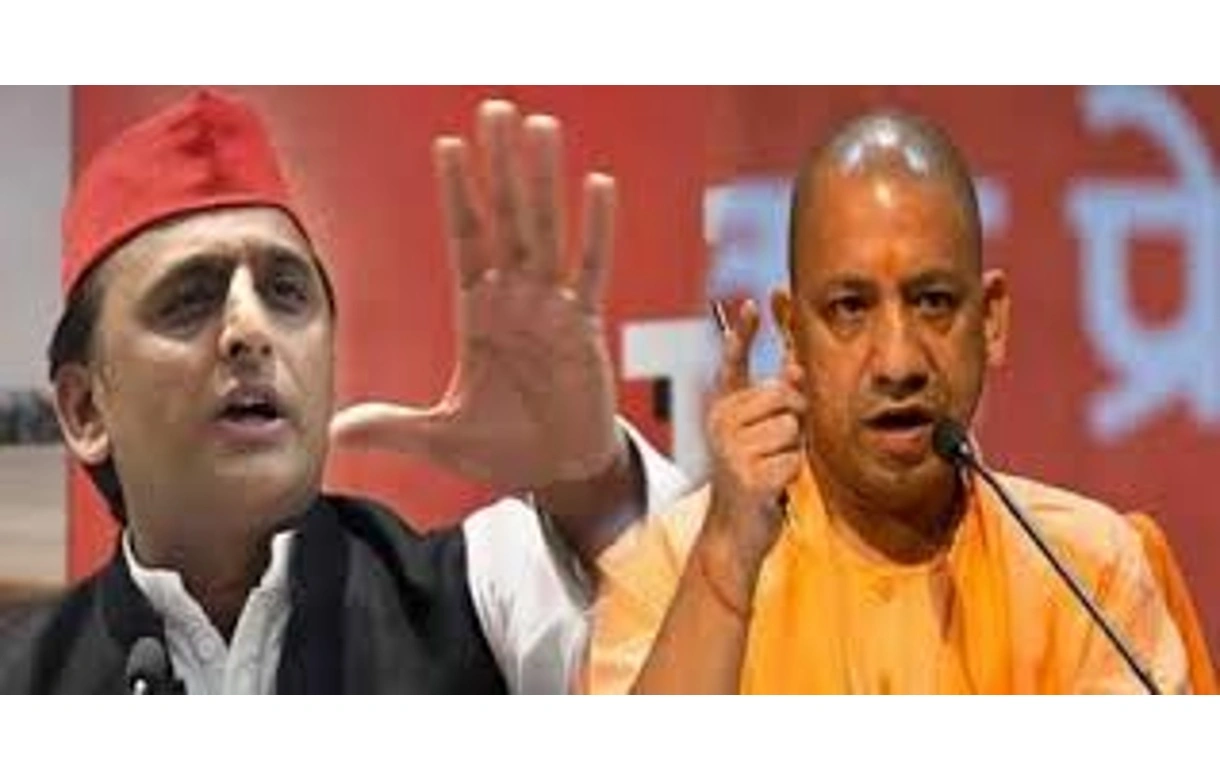
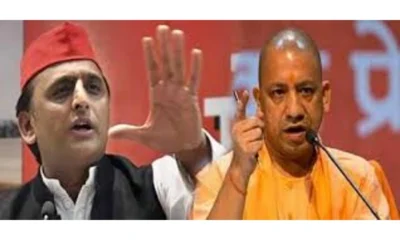
After being pulled up by the Supreme Court, the EC had acted against Uttar Pradesh Chief Minister Yogi Adityanath, Bahujan Samaj Party (BSP) chief Mayawati, Samajwadi Party leader Azam Khan and BJP leader Maneka Gandhi, prohibiting them from election campaign for 48 to 72 hours.

“We found we have several powers…” senior advocate CA Sundaram, who appeared for the ECI in the case, acquiesced.

“So, EC has woken up to its powers,” CJI Gogoi said pointedly, again.

On Monday, the EC had claimed it was mostly helpless if candidates spewed communal vitriol in their campaign speeches for Lok Sabha polls of 2019.

This had riled a Bench led by CJI Ranjan Gogoi, who initially threatened to summon Chief Election Commissioner Sunil Arora to take the court’s questions. The court had then decided to delve deep into the EC’s claims that its powers were “circumscribed”. It had given the Commission exactly 24 hours to be ready with a response.

Shortly after the order was passed on Monday, the EC passed orders against the four politicians, gagging them.[/vc_column_text][/vc_column][/vc_row][vc_row][vc_column][vc_column_text css=”.vc_custom_1555408156293{border-top-width: 10px !important;border-right-width: 10px !important;border-bottom-width: 10px !important;border-left-width: 10px !important;padding-top: 10px !important;padding-right: 10px !important;padding-bottom: 10px !important;padding-left: 10px !important;background-color: #bcbcbc !important;border-radius: 10px !important;}”]The Supreme Court also dismissed BSP chief Mayawati’s objections to the EC’s order that barred her from campaigning for 48 hours. The court asked her to file a separate plea against the poll body’s gag order

Mayawati alleged that the Election Commission passed ex-parte orders. Mayawati’s lawyer and senior advocate Dushyant Dave said the EC’s gag is “extremely drastic”. He sought an urgent hearing at 2 pm on Tuesday.

“This is harsh. Meetings are already scheduled,” Dave urged the court for a hearing.

“File an appeal if you want. Not commenting on anything now,” Chief Justice dismissed the plea.

The EC ban came to effect from 6 am on Tuesday. The ban means Mayawati will not be able to address a rally in Agra on Tuesday – the last day before campaigning for the second phase of elections comes to an end. Eight of the 80 Lok Sabha seats of Uttar Pradesh will vote on April 18.[/vc_column_text][/vc_column][/vc_row][vc_row][vc_column][vc_column_text]“Pursuant to order passed yesterday (April 15), EC has taken action, appropriate details of which have been submitted. No further order called for today. Mention (the case) as and when required,” the Supreme Court recorded in its order on Tuesday.

On Monday, the Chief Justice lashed out at the EC, saying, “You are basically saying you (EC) are toothless and powerless against hate speeches. The highest you can do is send a notice to the offending candidate. If the candidate replies, send him or her an advisory. Despite this, if there is violation of Model Code of Conduct, you may then file a criminal complaint… That is all? That is your powers under the law?”

The Court said the EC was “duty-bound” to act promptly against hate speech given in violation of the Model Code of Conduct under place in the 2019 Lok Sabha polls.

The Court was hearing a petition filed by an NRI, Harpreet Mansukhani, highlighting the increase in hate and divisive speeches in the name of religion and caste in the Lok Sabha elections of 2019.

The petition had urged the court to direct the constitution of a committee headed by a former apex court judge to closely watch the election process and check the fairness of the EC.

The petition said the communalism of Indian politics, and caste-based parties, were a “great threat to the spirit of the Constitution”.

Mansukhani, represented by senior advocate Sanjay Hegde and advocate Arup Banerjee, said, “India is beginning to look like Turkey under Erdogan or Russia under Putin, which are turning towards a populist majoritarian leader and right-wing politics for their salvation.”

“The essential component of a constitutional democracy is its ability to give and secure for its citizenry a representative form of government, elected freely and fairly, and comprising of a polity whose members are men and women of high integrity and morality,” the petition said.

Referring to communal and caste-based election speeches and remarks of political leaders, Mansukhani had said the plea was filed to “maintain secular environment in the forthcoming Lok Sabha Election, 2019.”

Also Read: Case filed against Azam Khan over sexist ‘Khaki underwear remark’, EC takes action

“The ‘undesirable development’ of appeals to religion, race, caste, community or language of politicians would hamper the objective of fundamental rights provided under the Constitution of India, this would affect the public at large,” the plea had said.

The plea had also sought a direction to the poll panel to take strict actions against media houses which hold debates on caste or religious lines.

“Our Constitution ensures a Socialist, Secular State and equality, fraternity among its citizens. Our country has a democratic set-up which is by the people, for the people and of the people.

Also Read: Supreme Court asks EC to watch full Modi biopic, give opinion by Fri in sealed cover

“A new trend of giving tickets to those who spread communal hatred and do caste or religion based politics has grown very rapidly on media and social media platform more than that the situation appears to be more alarming when we find such persons being elected for the State Assembly or Parliament…,” the plea had said.[/vc_column_text][/vc_column][/vc_row]

India News

Omar Abdullah criticises Martyrs’ Day restrictions, calls LG administration temporary guests

Omar Abdullah criticised the LG administration after being prevented from visiting Srinagar’s Martyrs’ Graveyard, alleging the 1931 martyrs’ sacrifices are being overlooked.

Published

on

Omar Abdullah

Jammu and Kashmir Chief Minister Omar Abdullah on Monday criticised the Lieutenant Governor (LG) administration after he was prevented from visiting the Martyrs’ Graveyard in Srinagar to pay tribute to those killed during the 1931 uprising.

The area surrounding the Martyrs’ Graveyard in downtown Srinagar was sealed by the authorities, with police declaring it a no-go zone and restricting entry to the site.

Omar Abdullah questions restrictions

Unable to visit the graveyard, Abdullah, along with his ministers, MLAs and National Conference leaders, held a tribute meeting at the party headquarters in Srinagar.

Addressing party workers after the meeting, the Chief Minister said the administration’s decision to block access would not erase the memory of the 1931 martyrs.

Calling the LG administration “temporary guests”, Abdullah said those responsible for preventing political leaders from paying homage would not remain in office forever, while the martyrs’ cemetery would continue to stand. He added that he and his party would visit the site in the future to offer floral tributes and prayers.

Alleges selective treatment of history

Abdullah alleged that the sacrifices of those who fought against British-era rule in Jammu and Kashmir were being ignored because they were Muslims and had opposed the Dogra Maharaja, who ruled under British paramountcy.

He argued that the 1931 movement was not based on religion but represented a struggle for democratic rights, principles and freedom during the British period.

The Chief Minister also said attempts were being made to portray participation in the freedom movement against British rule in a negative light.

Background of the annual observance

July 13 was earlier observed as a public holiday in the erstwhile state of Jammu and Kashmir. Every year, officials, political leaders and members of the public would gather at the Martyrs’ Graveyard to pay homage to those killed during the 1931 incident, with police also offering a ceremonial gun salute.

Following the abrogation of Article 370 and the reorganisation of Jammu and Kashmir into a Union Territory in 2019, July 13 was removed from the list of official public holidays. Since then, authorities have not permitted official or public commemorative events at the graveyard.

The Lieutenant Governor continues to exercise authority over key subjects in the Union Territory, including law and order and policing.

Why July 13 is significant

July 13 commemorates the deaths of 22 civilians who were killed in police firing outside Srinagar Central Jail in 1931 while protesting against the rule of Dogra Maharaja Hari Singh during the British era.

The protesters had gathered in support of Abdul Qadeer, who had urged Kashmiris to oppose the Maharaja’s administration.

The incident led to widespread protests and prompted the Maharaja and the British administration to appoint commissions to examine the grievances of the Valley’s Muslim population. It also contributed to political reforms, with Jammu and Kashmir holding its first Assembly elections in 1934, marking the beginning of an electoral process in the region.

Changes after 2019

Since 2020, both July 13 and December 5—the birth anniversary of former Jammu and Kashmir Prime Minister and Chief Minister Sheikh Abdullah—have ceased to be official holidays in the Union Territory.

Instead, the birth anniversary of Dogra ruler Maharaja Hari Singh is now observed as a public holiday in Jammu and Kashmir.

Continue Reading

India News

Omar Abdullah hits back at BJP over Rs 100 crore legal notice, says party is hiding behind court

Omar Abdullah has responded to the BJP’s Rs 100 crore legal notice, accusing the party of avoiding political debate and announcing legal action against BJP leaders.

Published

on

Jammu and Kashmir Chief Minister Omar Abdullah on Monday responded sharply after receiving a Rs 100 crore legal notice from the Bharatiya Janata Party (BJP), accusing the party of avoiding a political confrontation by taking the matter to court.

The BJP’s notice demands that Abdullah either apologise or provide evidence to support his allegation that BJP leaders had offered between Rs 20 crore and Rs 30 crore to National Conference (NC) legislators to persuade them to switch sides.

Omar Abdullah calls legal notice a ‘love letter’

Speaking to reporters in Srinagar, Abdullah said he had received an electronic copy of the legal notice and described it as a “love letter” from the BJP.

He said he viewed the notice as a sign that the BJP considered him a significant political opponent.

“I am perhaps the only politician who has been bestowed with a ‘love letter’ like this by the BJP. I consider this a mark of respect that I am obviously a political force they cannot ignore,” Abdullah said.

Says BJP chose court over political response

Abdullah criticised the BJP for pursuing legal action instead of responding politically to his allegations.

He said he deliberately made the remarks at a political event rather than in the Assembly, where statements are protected from legal challenge, because he expected a political rebuttal.

According to Abdullah, the BJP’s decision to approach the court reflected its style of handling political disputes.

National Conference to initiate legal action

The Chief Minister also announced that the National Conference would begin issuing legal notices to BJP leaders in Jammu and Kashmir over what he described as unfounded and defamatory allegations against his party.

He said senior BJP leaders had been making slanderous remarks against the National Conference over the past few months and that the party would now respond through legal channels.

Abdullah added that the National Conference would serve legal notices to those leaders and see how the legal process unfolds.

Continue Reading

India News

Mamata Banerjee slaps party worker amid chaotic Kolkata protest rally

Mamata Banerjee’s Kolkata protest march over the Baruipur rape-murder case turned chaotic after clashes with BJP workers and a viral incident in which she slapped a party worker.

Published

on

Mamta banerjee slaps own party worker

West Bengal Chief Minister Mamata Banerjee’s protest march in Kolkata on Wednesday witnessed dramatic scenes after she slapped a member of her own party while attempting to disperse a crowd gathered outside her residence following the rally.

The protest march was organised against the alleged rape and murder of an 11-year-old girl in Baruipur. The rally was held after the Calcutta High Court allowed it, despite the Kolkata Police initially denying permission.

Rally witnesses repeated clashes

According to reports, the procession faced repeated disruptions as Trinamool Congress and BJP workers allegedly engaged in pushing and shoving along the rally route. Security personnel intervened to control the situation and reportedly carried out a baton charge to disperse the crowd.

BJP supporters also allegedly attempted to stop the march by forming a human chain and raised slogans of “chor, chor” (thief) during the protest. Some Trinamool workers were also reportedly targeted with eggs during the rally.

Slap incident caught attention

The most talked-about moment came after the rally concluded near Mamata Banerjee’s residence.

A large crowd had gathered outside the house, prompting the Chief Minister to step forward to clear the area. During the commotion, she slapped a party worker and pushed away several others while trying to restore order. Videos of the incident quickly circulated on social media.

Mamata Banerjee accuses BJP of planned disruption

Following the rally, Mamata Banerjee accused the BJP of deliberately attempting to disrupt the protest despite the court granting permission for the event.

She alleged that women workers from her party were assaulted and several supporters suffered injuries during the clashes. Banerjee also claimed that BJP supporters organised a motorcycle rally near her residence, played loud music throughout the protest route and snatched microphones that had been permitted for use during the march.

The Chief Minister further alleged that the Kolkata Police remained passive during the disturbances and accused them of behaving like BJP workers.

BJP rejects allegations

The BJP dismissed Mamata Banerjee’s accusations.

State BJP president Samik Bhattacharya said the party had not prevented Banerjee from holding the march. However, he criticised the Trinamool Congress, alleging that it had failed to change West Bengal’s political culture despite being in power for years.

Court had modified rally route

The Kolkata Police had initially refused permission for the protest march. However, the Calcutta High Court later permitted the rally while modifying its proposed route to minimise inconvenience to the public.

The protest was organised in response to the alleged rape and murder of an 11-year-old girl in Baruipur. The main accused, Prabhas Mondal, was later killed in a police encounter, while four people have been arrested in connection with the case.

Continue Reading

Trending

© Copyright 2022 APNLIVE.com