English हिन्दी
Connect with us

Cricket news

PCB awards contracts, Pakistani women cricketers face pay cuts and limited playing opportunities

Despite an increase in domestic contracts, Pakistan’s women cricketers continue to face low wages and limited earning opportunities compared to their male counterparts.

Published

on

Pakistan Cricket, PCB, Women's Cricket, Equal Pay, Cricket News, Gender Pay Gap, Sports Equality, Pay Parity, Cricket Updates, Women in Sports, Cricket Pakistan, Women Athletes, Cricket Contracts, PCB Controversy, Sports Finance, Women Empowerment, Cricket Development, Cricket Governance, Female Cricketers, Wage Disparity in Sports

The Pakistan Cricket Board (PCB) recently announced domestic contracts for 90 women cricketers for the 2024-25 season, increasing the number of contracted players from 79 last season. However, despite the rise in contracts, the financial compensation for players remains alarmingly low.

Low retainers and match fees spark concerns

The newly announced contracts include 10 capped national players, 62 emerging players, and 18 Under-19 players. However, the retainers for these cricketers stand at just PKR 35,000 (approximately USD 125) per month—below Pakistan’s minimum wage for unskilled laborers (PKR 37,000). Additionally, the match fee for domestic games remains at PKR 20,000 (USD 71), with players reportedly not receiving daily allowances this season.

While PCB claims that these contracts aim to “expand the talent pool” and “inspire young players,” financial constraints continue to push players away from the domestic circuit within a short span.

Limited earning potential for domestic cricketers

Despite the increase in contracts, the earning opportunities for Pakistan’s women cricketers remain minimal. The maximum amount a fully active domestic player can earn in a season—including match fees and retainers—is PKR 1,040,000 (USD 3,700). However, players who do not make the playing XI earn only PKR 10,000 (USD 35) per match.

With cricket-related expenses, including personal trainers and diet management, estimated at PKR 600,000 annually, many players struggle to afford essential facilities for their professional development. As one player stated, “Living in Pakistan, not everyone can afford a professional athlete life… I spend PKR 400,000 on my cricket, but I can’t afford a personal trainer.”

PCB’s spending on women’s cricket raises questions

Under the current administration, PCB had announced an increase in investment for women’s cricket from PKR 70 million to PKR 240 million. However, this investment has not translated into significant improvements in earnings or infrastructure for women’s cricket.

Comparisons with other cricket boards highlight the disparity. Cricket Australia, which earns only slightly more from the International Cricket Council (ICC) than PCB, ensures that domestic players earn an average of USD 96,000 annually. Even New Zealand Cricket, which earns less from ICC revenue than PCB, offers better salaries, with the lowest-paid domestic player making USD 11,000—nearly three times more than the highest-earning Pakistani domestic cricketer.

In India, even the lowest-paid player in the Women’s Premier League earns INR 10 lakh (USD 11,500) for a three-week tournament, while top players can earn up to INR 2 crore (USD 230,500).

Gender pay gap in PCB’s structure

While women’s cricket remains underfunded, male domestic cricketers in Pakistan earn significantly higher wages. A player featuring in a Quaid-e-Azam Trophy match receives PKR 200,000 (USD 715) per game. A “Grade A” contracted male domestic cricketer earns PKR 550,000 (USD 2,000) per month, while even the lowest-tier male contract offers PKR 250,000 (USD 890) per month.

Revised figures shared on social media suggest that PCB’s expenditure on match fees for senior and Under-19 men’s cricketers alone stands at USD 390,361—far exceeding the entire budget for women’s cricket (USD 250,060) from the previous season.

Cricket news

Virat Kohli hits record 53rd ODI century as India build big total in Raipur

Virat Kohli’s superb 53rd ODI century and Ruturaj Gaikwad’s 105 powered India past 280 in the second ODI against South Africa after a strong 195-run stand.

Published

on

virat kohli

India put up a commanding batting display in the second ODI against South Africa in Raipur, with Virat Kohli smashing a record-extending 53rd ODI century and Ruturaj Gaikwad delivering a superb hundred to push the hosts near the 300-run mark.

Kohli anchors India’s recovery after early wickets

After being asked to bat first, India stumbled early with Rohit Sharma and Yashasvi Jaiswal departing at a score of 62. The situation changed once Virat Kohli and Ruturaj Gaikwad joined forces for the third wicket.

The pair stitched a formidable 195-run partnership, stabilising the innings and then accelerating with precision. Kohli, who had already hit a century in the previous ODI, continued his rich form by reaching his 53rd ODI ton—also his 84th international century.

Gaikwad strikes his first ODI hundred

Ruturaj Gaikwad took time to settle but shifted gears beautifully, bringing up his maiden ODI century with a boundary. His 105 off 83 balls included strong strokes, including a six and four in a single over off Keshav Maharaj. He eventually fell to Marco Jansen while attempting to clear the boundary.

India surge past 280

Kohli remained firm at the crease, striking timely boundaries and even surviving a close chance off Corbin Bosch. KL Rahul supported him at the other end as India crossed 280 in the 39th over, building momentum for a possible 350-plus total.

Continue Reading

Cricket news

Gautam Gambhir says BCCI will decide his future after 2-0 test series defeat

Gautam Gambhir has left his future as India’s Test coach to the BCCI after a 2-0 series loss to South Africa, saying the blame begins with him and calling for stronger focus on Test cricket.

Published

on

Gautam Gambhir

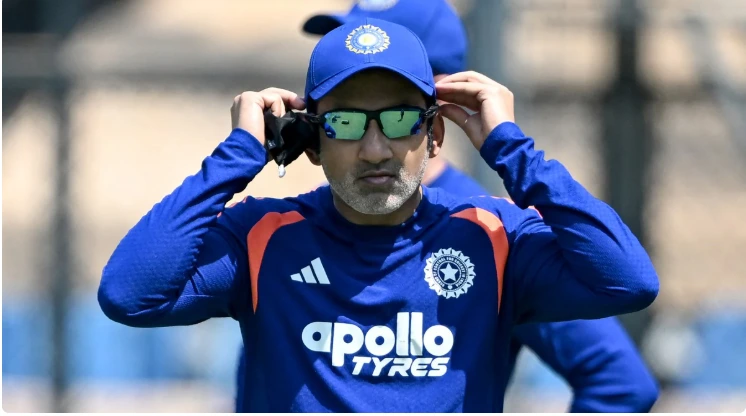
India head coach Gautam Gambhir has put the responsibility of deciding his future on the Board of Control for Cricket in India (BCCI), following the team’s 2-0 Test series loss to South Africa. India’s defeat in Guwahati, their heaviest in terms of runs, has intensified scrutiny over the team’s performance under Gambhir’s leadership.

Gambhir leaves decision to BCCI

After India’s 408-run defeat, Gambhir made it clear during the press conference that he would not ask for more chances.
He said the BCCI would decide whether he should continue as Test coach.

“Indian cricket is important, I am not. It is for the BCCI to decide,” Gambhir stated, adding that he has always maintained this stance. He also reminded that he had previously delivered results in major tournaments like the Champions Trophy and Asia Cup.

“Blame starts with me,” says Gambhir

Gambhir accepted full responsibility for the series loss, acknowledging that every member of the team shares the blame.

He pointed to India’s collapse from 95/1 to 122/7 as a turning point that cannot be justified.

“You don’t blame individuals. Blame lies with everyone, and it starts with me,” he said.

Criticism over team changes and approach

Under Gambhir, India have lost 10 of 18 Tests, with consecutive whitewash defeats—first against New Zealand last year and now South Africa. Despite team overhauls and new faces, results have remained unchanged.

He has faced criticism for frequent experimentation, especially his preference for all-rounders over specialist players in the traditional format.

Responding to queries on what kind of players succeed in Tests, Gambhir said the format demands resilience.

“You don’t need the most flamboyant and talented cricketers. You need tough characters with limited skills,” he said.

“Prioritise Test cricket,” Gambhir urges

Gambhir stressed that reviving India’s Test performance requires a collective effort and a renewed focus on red-ball cricket.

“If you are serious about Test cricket in India, start prioritising it. You cannot blame only players or a certain individual,” he emphasised.

Continue Reading

Cricket news

India vs South Africa 2nd Test: India handed record 408-run defeat as Proteas seal series 2-0

India crashed to their biggest Test defeat as South Africa clinched a 408-run victory in Guwahati, completing a 2-0 series sweep. Jadeja’s 54 was the only major resistance.

Published

on

india vs south africa highlights

South Africa crushed India by 408 runs in the second Test at Guwahati, sealing a 2-0 clean sweep and handing the hosts their heaviest-ever defeat in Test cricket. Chasing an improbable 549, India folded for 140 despite a fighting half-century from Ravindra Jadeja. The visitors dominated every session across both matches to register their first Test series win in India in 25 years.

Jadeja’s lone resistance falls short

Ravindra Jadeja fought a lone battle with a gritty 54 off 87 balls, keeping India afloat for a brief phase on Day 5. His resistance ended when he stepped out to Keshav Maharaj, only to be stumped by wicketkeeper Kyle Verreynne.

Off-spinner Simon Harmer was the star of South Africa’s bowling effort, returning with 6/37 in the second innings and finishing with nine wickets in the match, his best Test performance.

Harmer, Markram, Jansen shine as India crumble

South Africa’s clinical display was highlighted by Harmer’s spin, Marco Jansen’s all-round brilliance, and Aiden Markram’s exceptional fielding.

  • Aiden Markram took nine catches, the most in a single Test match, surpassing Ajinkya Rahane’s previous record.
  • Marco Jansen claimed the Player of the Match award.
  • Simon Harmer was adjudged Player of the Series.

India’s collapse saw them lose wickets in clusters, with Nitish Kumar Reddy, Washington Sundar, and others falling cheaply as the chase spiralled out of control.

Pant accepts shortcomings after series loss

Speaking after the defeat, skipper Rishabh Pant admitted the team fell short in crucial moments.

“It’s disappointing. We need to get better and give credit to the opposition. They played better cricket. We couldn’t capitalise as a team, and that cost us the series,” he said.

A painful entry into India’s record books

This 408-run defeat is now India’s largest Test loss by runs, surpassing previous heavy defeats against Australia and Pakistan. It also marks a rare home clean sweep against India — only the third in history.

Continue Reading

Trending

© Copyright 2022 APNLIVE.com