English हिन्दी
Connect with us

LATEST SPORTS NEWS

Tilak Varma’s mature, smart innings was the difference: England’s Brydon Carse

The victory secured a commanding 2-0 lead for India in the five-match series, leaving England with a significant uphill battle.

Published

on

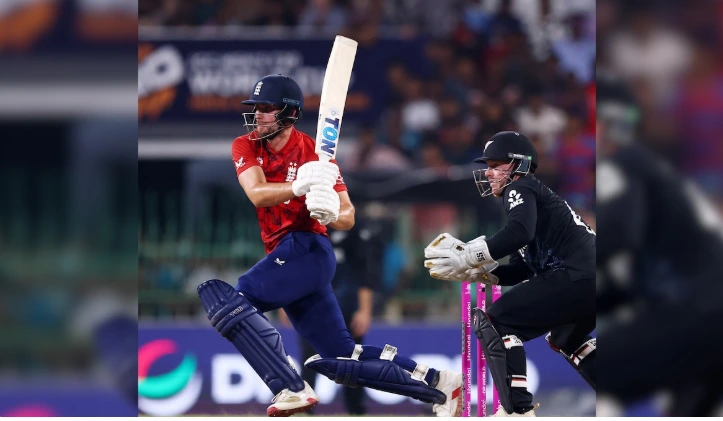
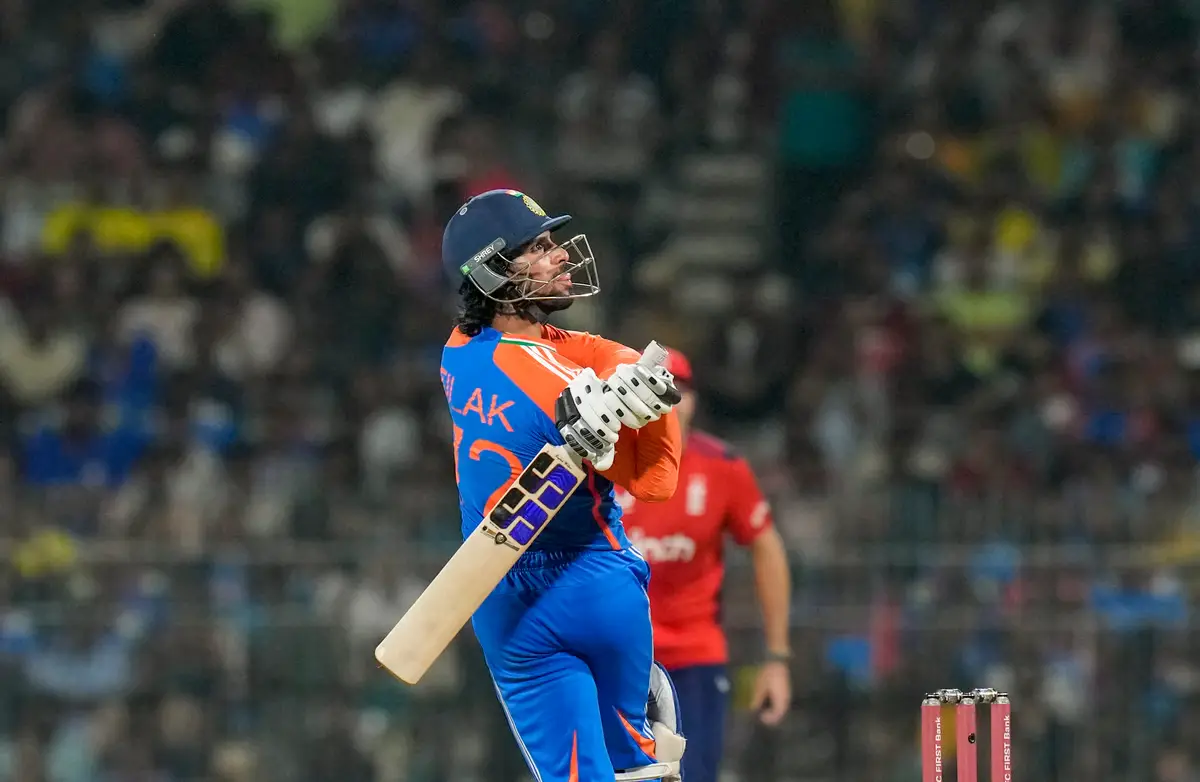
The second T20I between India and England in Chennai witnessed a thrilling contest, ultimately decided by a masterful display of batting from India’s middle-order batsman, Tilak Varma. His unbeaten 72 runs proved to be the difference, a performance that even England’s pace bowling all-rounder, Brydon Carse, readily acknowledged in the post-match press conference.

Carse, reflecting on the match, conceded that despite England setting a challenging 166 runs and maintaining consistent pressure through wickets, Varma’s mature and calculated innings tipped the scales decisively in India’s favour. The victory secured a commanding 2-0 lead for India in the five-match series, leaving England with a significant uphill battle.

The match wasn’t just about Varma’s individual brilliance; it also highlighted the contrasting fortunes of England’s bowlers. While Carse himself contributed significantly with both bat (a quick 31 runs off 17 balls) and ball (three wickets), the spotlight fell heavily on Jofra Archer’s expensive spell. Archer conceded a hefty 60 runs in his four overs, a stark contrast to his impressive performance in the previous match.

Carse, however, offered a measured defence of his teammate, attributing Archer’s costly spell to a combination of factors rather than solely attributing blame. He pointed out that several of the boundaries conceded were well-struck shots over the keeper, highlighting the power and precision of the Indian batsmen. He emphasized that Archer’s overall performance wasn’t wholly negative; the expensive spell was an anomaly rather than representative of his capability. The sheer pace at which Archer bowls, Carse suggested, inherently carries a risk of such high-scoring overs.

Despite the defeat, Carse remained resolute about England’s aggressive strategy. He asserted that their approach, characterized by a commitment to taking risks in both batting and bowling during the power play, would remain unchanged. He acknowledged that room for improvement always exists, but stressed their intention to persist with this inherently high-risk, high-reward strategy. The lack of success so far, he indicated, does not warrant a change in their fundamental approach.

Looking ahead, Carse found some solace in the closely contested nature of the match. He viewed the narrow defeat as a positive learning experience, especially given the significance of close games in preparing for future tournaments, including the upcoming Champions Trophy. While acknowledging the disappointment of the loss, he emphasized the value gained from such high-pressure situations, believing that these experiences will be invaluable in their future performances.

The current predicament, however, is undeniable. With two consecutive defeats and only three matches remaining, England faces a daunting task. Carse recognized the lack of margin for error, stating that every remaining game would be a crucial battle. While acknowledging a degree of team disappointment, he expressed a sense of optimism, highlighting the improved performance compared to the first T20I as a building block for future success. The challenge is clear: win the next three matches to salvage the series.

Cricket news

T20 World Cup 2026 uncertainty: Scotland respond to Bangladesh replacement reports

Scotland has not held any talks with the ICC over potentially replacing Bangladesh in the T20 World Cup 2026, media reports say, amid ongoing participation uncertainty.

Published

on

The International Cricket Council has not approached Scotland regarding a potential replacement for Bangladesh in the ICC Men’s T20 World Cup 2026, according to media reports, even as uncertainty continues over Bangladesh’s participation in the tournament scheduled to be hosted in India.

Speculation intensified after reports claimed that the ICC had asked the Bangladesh Cricket Board to confirm its participation by January 21, warning that refusal to travel to India could lead to replacement by another team. Scotland emerged in reports as the most likely alternative, being the highest-ranked side not currently part of the tournament lineup.

However, media reports stated that Cricket Scotland has not received any communication from the ICC on the matter. Scotland cricket officials are also not planning to initiate contact with the global governing body, citing respect for their counterparts at the Bangladesh Cricket Board amid the ongoing situation.

Background to the controversy

The standoff began after Bangladesh requested that their group-stage matches be shifted out of India to Sri Lanka, citing security concerns. The request was made despite the tournament schedule already being finalised, with India and Sri Lanka set to co-host matches under previously agreed ICC arrangements until 2027.

Tensions further escalated following the removal of Bangladesh pacer Mustafizur Rahman from the Indian Premier League 2026 season on instructions from the Indian board, reportedly due to unspecified developments surrounding bilateral relations.

According to an ICC source quoted in media reports, Bangladesh officials have been told to take a final call on participation by January 21, with the possibility of replacement based on team rankings if they decline to travel.

Bangladesh firm on travel decision

Citing national pride and security concerns, the Bangladesh Cricket Board has announced that its national team will not travel to India for its scheduled group matches in Kolkata and Mumbai. Despite ongoing discussions, the ICC has shown reluctance to relocate Bangladesh’s fixtures, given logistical constraints and the fixed tournament schedule.

Scotland’s name has surfaced due to precedent, as the team replaced Zimbabwe in the 2009 T20 World Cup after Zimbabwe withdrew for political reasons. For now, however, Scotland remains uninvolved, with no formal communication from the ICC as the deadline for Bangladesh’s decision approaches.

Continue Reading

Cricket news

ICC issues ultimatum to Bangladesh over T20 World Cup 2026 in India

ICC has warned Bangladesh Cricket Board to confirm participation in the T20 World Cup 2026 by January 21 or risk being replaced.

Published

on

Bangladesh

Bangladesh’s participation in the ICC Men’s T20 World Cup 2026, scheduled to be hosted in India, remains uncertain after the International Cricket Council issued a firm deadline to the Bangladesh Cricket Board. The ICC has reportedly asked the BCB to confirm whether the national team will take part in the tournament by January 21, warning that failure to do so could result in Bangladesh being replaced by another team.

According to sources familiar with the discussions, the ICC has made it clear that the tournament schedule will not be altered. Bangladesh has been informed that opting out of travelling to India could lead to exclusion from the competition based on team rankings.

ICC rejects venue change request

The controversy stems from the BCB’s request to shift Bangladesh’s group-stage matches away from India, citing security concerns. The issue was discussed during a meeting between ICC officials and BCB representatives on January 13, but no agreement was reached. The ICC leadership reiterated that there would be no change to the existing T20 World Cup 2026 schedule.

In a subsequent move, the BCB proposed swapping its group with Ireland. The idea was aimed at ensuring Bangladesh’s matches were played in Sri Lanka, where Ireland’s group fixtures are scheduled. However, Ireland’s cricket board later confirmed that it had been assured its schedule would remain unchanged.

Internal backlash and political undertones

The issue has also triggered strong reactions within Bangladesh cricket. Former captain Tamim Iqbal publicly advised the BCB to consider the long-term consequences of refusing to play in India. His comments sparked controversy after a senior BCB official accused him on social media of acting as an “Indian agent”, a post that went viral and eventually led to the official’s removal from his position following player unrest.

How the dispute began

The standoff can be traced back to the Indian Premier League 2026 player auction, where Bangladesh pacer Mustafizur Rahman was bought by a Kolkata-based franchise. Amid heightened political tensions between India and Bangladesh, the Indian cricket board later directed the franchise to remove the player from its squad. Soon after, the BCB formally approached the ICC seeking a neutral venue for its World Cup matches.

With the January 21 deadline approaching, Bangladesh now faces a crucial decision that could determine its presence in one of international cricket’s biggest tournaments.

Continue Reading

Cricket news

India coach criticises spin bowling after New Zealand expose team flaws in 2nd ODI

India assistant coach Ryan Ten Doeschate admitted bowling shortcomings after New Zealand outplayed India in the second ODI, with spinners coming under scrutiny.

Published

on

ind vs newzealand

India’s defeat in the second ODI against New Zealand brought several underlying issues to the surface, with the team’s assistant coach Ryan Ten Doeschate openly admitting shortcomings rather than shielding the players. The loss came on a night when senior batters Virat Kohli and Rohit Sharma failed to deliver, leaving India unable to mount a serious challenge.

Speaking after the match, Ten Doeschate pointed to the bowling unit, especially the spinners, as an area that needs immediate improvement in the 50-over format.

“We probably want to bowl a little bit better than we did tonight,” he said, clearly indicating dissatisfaction with the execution, particularly in terms of bowling lengths.

Spinners under scrutiny after lacklustre performance

India managed to take only three wickets while defending their total, with pacers Harshit Rana and Prasidh Krishna accounting for two of them. Kuldeep Yadav picked up one wicket, dismissing Will Young, but by that stage New Zealand had already stitched together a crucial 162-run partnership for the third wicket.

Ten Doeschate acknowledged that while spin bowling was a major concern, the defeat could not be pinned on a single factor.

“Particularly spinners, like you say, about lengths. But we’ll go back and look at those lengths in more detail. But it’s never just one reason for losing a game,” he said, stressing that India’s failure was collective.

New Zealand planned early assault on Kuldeep Yadav

New Zealand batter Daryl Mitchell, who was named Player of the Match, later revealed that the visitors had a clear strategy to counter Kuldeep Yadav early in his spell.

“Kuldeep is one of the best bowlers in the world, he can turn it both ways,” Mitchell said, explaining the respect India’s left-arm spinner commands.

He added that the focus was on adapting quickly and exploring different options to prevent Kuldeep from settling into a rhythm, a plan that worked effectively for New Zealand.

Continue Reading

Trending

© Copyright 2022 APNLIVE.com