English हिन्दी
Connect with us

Top Stories

Viral Video: Jharkhand teacher reaches school drunk, lies on floor in inebriated state, students flee from school | WATCH

The teacher was seen lying unconscious on the school premises for hours.

Published

on

jharkhand drunk teacher

A video of a teacher reaching the school in an inebriated state has surfaced online. The incident was reported from a government school in Manganasar, which is located in Jharkhand’s Deoghar district. The teacher was seen lying unconscious on the school premises for hours.

According to the reports, the teacher, identified as Manoj Yadav, reaches school drunk every day. In the video, it can be seen that the drunk teacher is lying on the ground outside the classroom. Reportedly, the teacher even urinated in his pants. After this act by the teacher, all the children left the school and ran away.

Read Also: Viral: UP man comes down from electric tower after wife agrees to return home, internet amused | Watch

Villagers said the teacher reached the school at around 11 am and lay on the verandah of the school. Then other teachers from the school lifted him and helped him reach the other side of the school.

Unexpectedly, when Manoj Yadav, the teacher who is being accused in the viral video, was contacted to explain his side of the story, he revealed he had been abruptly experiencing stomach pain and that’s why he lay on the ground on the verandah.

The Block Education Extension Officer has asked the teacher to explain the incident. A warning has been issued to the accused. The officer has asked to take strict action against the teacher if the statements are found to be false.

A similar incident happened in Chhattisgarh’s Raipur where teachers were found drunk while some were seen dozing in the classrooms. A surprise inspection was conducted by an education officer in a school where a female teacher was found lying on the classroom floor, drunk and senseless while students played around her.

School girl gangraped near Sealdah station in Kolkata

Uttar Pradesh rain: Car parking turns into ocean in Firozabad | WATCH

Latest world news

PM Modi speaks to Qatar, France, Jordan, Oman and Malaysia leaders on Middle East tensions

PM Modi held talks with leaders of five nations, stressing dialogue, condemning attacks on energy infrastructure and urging stability in the Middle East.

Published

on

PM Narendra Modi

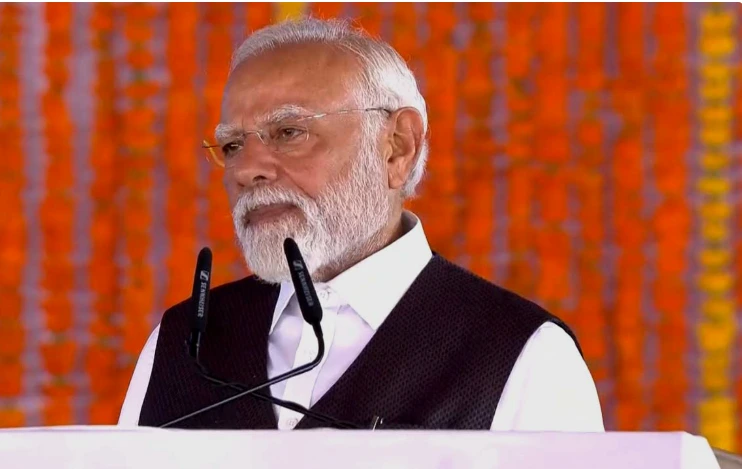
Prime Minister Narendra Modi held a series of high-level conversations with leaders from multiple countries, including Emmanuel Macron, as concerns grow over the escalating situation in the Middle East.

During separate telephonic discussions with leaders of Qatar, Jordan, Oman and Malaysia, the prime minister stressed the urgent need for de-escalation through dialogue and diplomacy. He also strongly condemned recent attacks targeting energy infrastructure in the region, warning that such actions could worsen tensions.

In his interaction with Qatar’s Amir, Sheikh Tamim bin Hamad Al Thani, PM Modi conveyed Eid greetings and reaffirmed India’s solidarity with the Gulf nation. He appreciated the support extended to the Indian community and reiterated the importance of ensuring safe and free navigation through the Strait of Hormuz.

Speaking with King Abdullah II, the prime minister again underlined the need for restoring peace and stability. Both leaders expressed concern over the evolving situation and agreed that attacks on energy infrastructure could trigger avoidable escalation. PM Modi also acknowledged Jordan’s assistance in facilitating the safe return of stranded Indian nationals.

In a separate exchange with French President Emmanuel Macron, the leaders discussed the urgent need to reduce tensions and maintain diplomatic efforts. Both sides agreed to continue close coordination to support peace initiatives in the region.

PM Modi also spoke with Haitham bin Tariq, where the two leaders emphasised prioritising dialogue for restoring stability. The prime minister condemned violations of Oman’s sovereignty and appreciated its role in helping evacuate people, including Indian citizens.

During his conversation with Malaysian Prime Minister Anwar Ibrahim, PM Modi exchanged festive greetings and discussed the broader regional situation. Both leaders reaffirmed their commitment to resolving the crisis through peaceful means.

These diplomatic engagements come amid heightened tensions following military actions involving the United States, Israel and Iran. India has consistently advocated for stability in the region, given its strategic and economic interests, particularly in energy security and maritime trade routes.

Continue Reading

India News

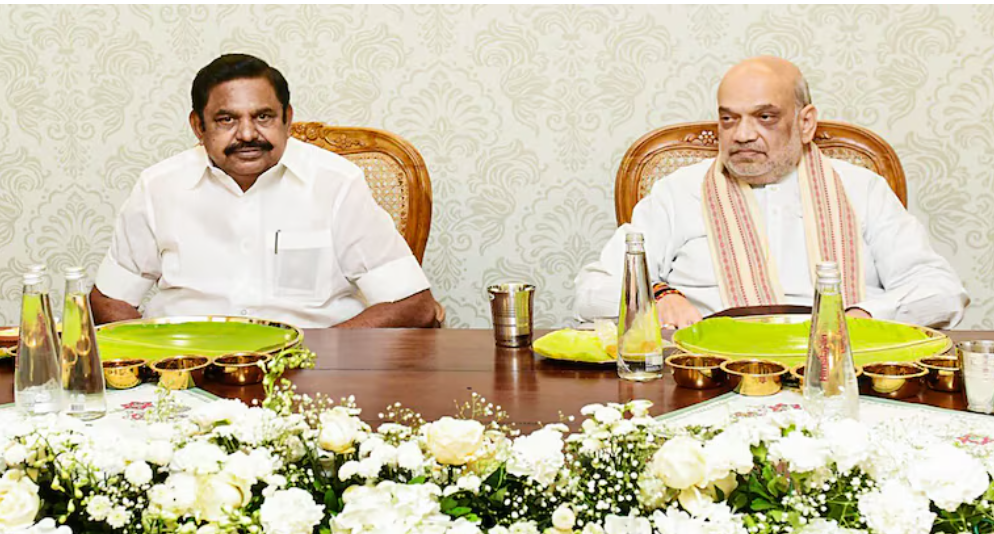
AIADMK-BJP seat-sharing talks to be finalised soon, says Edappadi K Palaniswami after Amit Shah meet

AIADMK chief Edappadi K Palaniswami says seat-sharing talks with BJP are in final stages and will conclude within days ahead of Tamil Nadu 2026 elections.
Published

on

Amit shah

Signalling momentum ahead of the 2026 Tamil Nadu Assembly elections, Edappadi K Palaniswami on Friday said seat-sharing talks with the Bharatiya Janata Party would be finalised within four days following his meeting with Union Home Minister Amit Shah in Delhi.

Palaniswami, who serves as the general secretary of the All India Anna Dravida Munnetra Kazhagam, expressed confidence that negotiations would be concluded smoothly based on a “give-and-take” formula focused on winnability. He also took a swipe at the ruling Dravida Munnetra Kazhagam, suggesting delays in its own alliance discussions.

Union Minister Piyush Goyal is expected to visit Chennai soon, further accelerating alliance-building efforts. The AIADMK is also preparing to release its election manifesto within a week.

Likely seat-sharing formula emerges

While Palaniswami did not reveal specific numbers, sources indicate the AIADMK is aiming to contest around 165 seats. The remaining seats could be distributed among allies, including the BJP, Pattali Makkal Katchi, Amma Makkal Munnetra Kazhagam led by T T V Dhinakaran, and the Tamil Maanila Congress.

In the 2021 Assembly elections, the BJP and PMK had contested 20 and 23 seats respectively, securing four and five wins. The revised formula suggests a recalibration of alliance strengths ahead of the high-stakes 2026 polls.

‘Delhi visits necessary for coordination’

Responding to criticism over his frequent visits to the national capital, Palaniswami defended his outreach to BJP leadership. He said such meetings were necessary given the busy schedules of senior leaders like Amit Shah, who are handling elections across multiple states.

“I have come to meet Amit Shah twice, as he is busy with elections in five states,” he said, underlining the need for coordination at the national level.

No alliance with Vijay’s TVK

Dismissing speculation about new alliances, Palaniswami ruled out any talks with actor-turned-politician Vijay and his party, Tamilaga Vettri Kazhagam.

“Neither we nor TVK held talks,” he stated, indicating that the electoral contest would largely remain between the AIADMK-led and DMK-led fronts.

Criticism of DMK and internal damage control

Targeting the DMK government, Palaniswami alleged a deterioration in law and order, pointing to rising crimes against women and corruption. He also accused the government of failing to implement key welfare schemes.

At the same time, he sought to contain recent controversies involving AIADMK leaders, stating that former ministers who made objectionable remarks had acknowledged their mistakes and apologised.

High stakes for AIADMK and Palaniswami

The 2026 Assembly election is being seen as a crucial test for both the AIADMK and Palaniswami. Since the death of former Chief Minister J Jayalalithaa, the party has faced a series of electoral setbacks, including the 2019 and 2024 Lok Sabha elections and the 2021 Assembly polls.

The AIADMK had previously allied with the BJP in 2019 and 2021, a partnership often viewed as challenging in Tamil Nadu’s political landscape. In the 2024 Lok Sabha elections, both parties contested separately but failed to secure victories.

For Palaniswami, the upcoming election represents a critical opportunity to establish his leadership and revive the party’s political standing.

Continue Reading

Latest world news

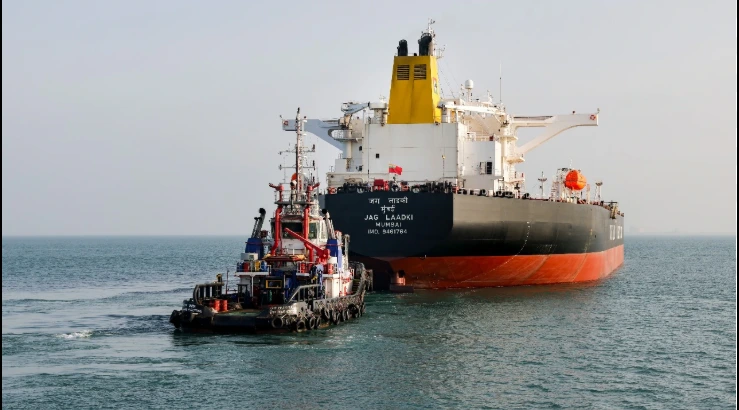
Russian oil tanker rerouted to India amid Middle East crisis, to reach Mangaluru on March 21

A Russian oil tanker bound for China has been diverted to India as Middle East tensions disrupt global energy supply chains.
Published

on

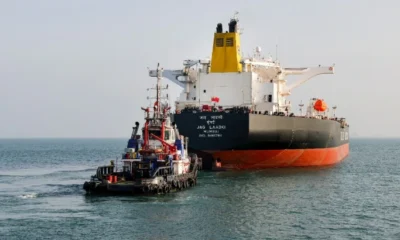
A Russian oil tanker carrying around 7.7 lakh barrels of crude oil is set to arrive at India’s New Mangalore port on March 21 after changing its original route to China, a senior government official said on Thursday.

The vessel, Aqua Titan, which sails under the Cameroon flag, departed from a Russian port on January 18. It altered its course while in the South China Sea and is now heading towards India, reflecting shifting global oil trade patterns amid ongoing geopolitical tensions.

Middle East conflict disrupts global supply

The diversion comes against the backdrop of escalating conflict in the Middle East. The ongoing war involving Iran, along with its retaliatory strikes on Gulf nations, has significantly disrupted oil and natural gas exports from the region. These disruptions have also led to temporary production halts in key energy facilities.

Since the conflict began on February 28, at least four Indian-flagged vessels carrying oil and gas cargo have already reached Indian ports safely.

Indian vessels stranded near Strait of Hormuz

According to the Ministry of Ports, Shipping and Waterways, a large number of Indian vessels remain stuck near the Strait of Hormuz, a critical global oil transit route.

Currently, 22 Indian-flagged cargo ships, along with 611 seafarers, are stranded in the western part of the Persian Gulf. Additionally, two loaded Indian vessels are positioned in the eastern section of the Strait.

Officials confirmed that authorities, including the Directorate General of Shipping, are closely monitoring the situation in coordination with shipowners, recruitment agencies, and Indian embassies. All Indian crew members in the region are reported to be safe, with no incidents recorded in the past 24 hours.

Global shipping crisis deepens

The disruption is not limited to Indian vessels. Around 700 ships from various countries have reportedly been stranded near the Strait of Hormuz for nearly 20 days. This has impacted global oil flows, with nearly 20 percent of crude supplies from the Middle East failing to reach international markets.

India, which imports about 85 percent of its crude oil needs from over 40 countries, is among the nations most affected by the crisis.

Oil prices surge amid attacks on energy infrastructure

Amid rising tensions, global crude prices have surged sharply, with Brent crude crossing $115 per barrel. Iran has threatened further strikes on regional energy installations following attacks linked to Israeli actions.

Recent incidents include missile strikes on Qatar’s Ras Laffan LNG facility, drone attacks on a Saudi refinery along the Red Sea, and fires reported at oil installations in Kuwait.

Government steps up monitoring and response

Authorities have stepped up efforts to manage the situation. The Directorate General of Shipping has facilitated the return of over 472 Indian seafarers so far, including 25 repatriated in the last 24 hours.

Despite the global disruption, India’s ports continue to operate without congestion. Officials confirmed that ports have sufficient storage capacity and are maintaining strict monitoring of vessel movement and cargo handling operations.

Continue Reading

Trending

© Copyright 2022 APNLIVE.com