Gyanvapi Mosque case: Delhi University professor Ratan Lal arrested for tweet gets bail
Delhi University professor Ratan Lal, who was arrested over a social media post on Gyanvapi Mosque, has been granted bail by a Delhi court on Saturday. As per reports, the professor can walk out on bail after furnishing a bond of Rs 50,000.
A complaint was filed against DU professor Ratan Lal by Supreme Court lawyer Vineet Jindal in Delhi Police for hurting religious sentiments. According to the police, the professor had made derogatory tweets about the Shivling found inside Varanasi’s Gyanvapi mosque complex.
Lal was produced before Chief Metropolitan Magistrate Siddhartha Malik at Tis Hazari court on Saturday, May 21. He was arrested by north Delhi’s Cyber Police Station and was accused of promoting enmity between two communities on grounds of religion and committing acts prejudicial to the maintenance of harmony.
The professor’s lawyer said that the offences are bailable and the police did not serve any notice to him or give him a chance to reply to the complaint. Therefore, he is not a criminal and will not run away.
The counsel for the Delhi Police said that the tweet was not expected from an educated person like him. Defending Lal, his counsel argued that his arrest is an abuse of law and demanded a departmental enquiry against the police for arresting him without any notice.
Professor Ratan Lala was booked under Sections 153A (promoting enmity between different groups on grounds of religion, race, place of birth, residence, language, etc, and doing acts prejudicial to maintenance of harmony) and 295A (deliberate act to outrage religious feelings of any class by insulting its religion) under the Indian Penal Code.
Meanwhile, Delhi Police has filed an application seeking 14-day judicial custody of Ratan Lal to probe the case.
The Shivling-like structure was discovered during the video survey inside the Gyanvapi Mosque complex. The Hindu side claimed that a 12 feet 8-inch Shivling was found after the water inside a pond facing Nandi was pumped out.
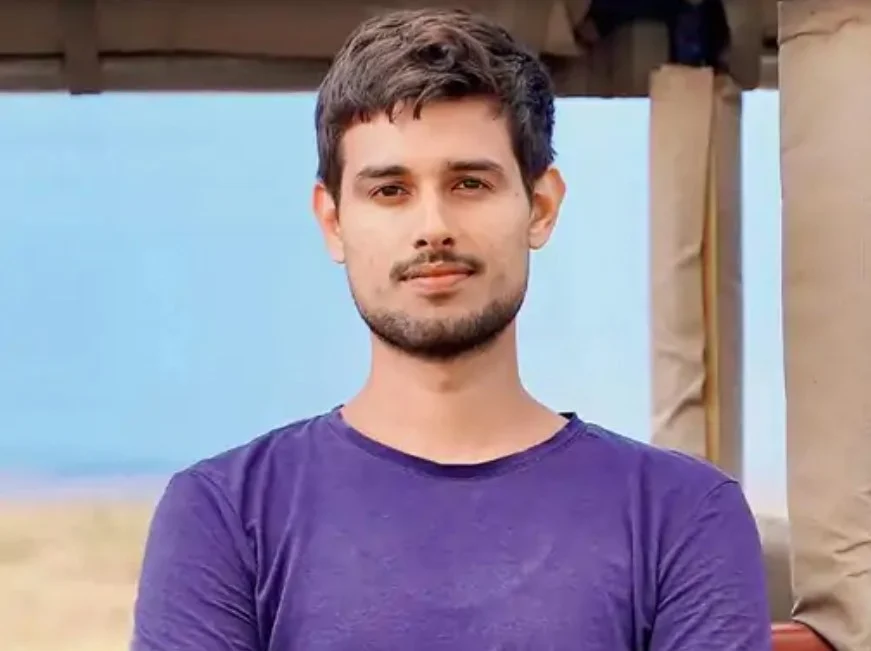
Dhruv Rathee gets fresh summons in 2018 BJP IT cell video case
YouTuber Dhruv Rathee has received fresh summons from a Delhi court in a 2018 criminal defamation case filed by Vikas Pandey over a video concerning the BJP IT Cell. The matter will next be heard on October 17.
YouTuber Dhruv Rathee has received fresh summons from a Delhi court in a criminal defamation case linked to his 2018 video titled “BJP IT Cell Part 2”. The complaint was filed by Vikas Pandey, who alleged that the video contained defamatory claims about him.
The latest court action follows renewed efforts to serve Rathee with the summons while he is in India. The matter is scheduled to be heard next on October 17.
Judicial Magistrate Rahul Jain of the Saket District Court passed the order on October 12. The fresh summons were issued after the complainant’s lawyer informed the court that Rathee, who usually resides abroad, was in India in connection with the ongoing Cockroach Janta Party (CJP) protests in Delhi.
What is the case against Dhruv Rathee?
The criminal defamation complaint concerns Rathee’s video, “BJP IT Cell Part 2”, which was published in 2018.
Pandey, who founded the social media page “I Support Narendra Modi”, alleged that Rathee’s video accused him of being associated with the BJP IT Cell and offering Rs 50 lakh through an intermediary to Mahavir Prasad. According to the complaint, the money was allegedly offered to persuade Prasad to withdraw allegations that the BJP IT Cell spreads fake news.
These claims form part of the complainant’s allegations. The court’s issuance of summons does not establish that the allegations against Rathee are true or amount to a finding of guilt.
Why has the court issued fresh summons?
According to the court proceedings, the complainant’s side had been attempting to serve Rathee with summons for several years. The court had initially summoned him through an order dated July 23, 2019, but the process of serving the summons had faced delays.
The complainant’s lawyer sought an earlier hearing after learning that Rathee was in India. The application argued that his presence in the country offered an opportunity to complete the service of summons without further delay.
The court subsequently directed that fresh summons be issued. The latest report states that the summons were served at Rathee’s Gurugram residence during his visit to India.
How is Arvind Kejriwal linked to the case?
The case also involved Aam Aadmi Party (AAP) leader Arvind Kejriwal, who had re-shared Rathee’s video on X, then known as Twitter, in 2018.
Pandey filed a separate complaint against Kejriwal over the re-sharing of the video. The Delhi High Court later declined to quash the summons issued to Kejriwal.
In February 2024, the Supreme Court stayed the trial court proceedings against Kejriwal in the matter. During the proceedings, his lawyer told the court that Kejriwal acknowledged making a mistake by re-tweeting the video.
The proceedings against Rathee continued, leading to the fresh summons issued by the Saket court.
What happens next?
The case is scheduled for its next hearing on October 17. The proceedings concern the pending criminal defamation complaint and the steps taken to serve Rathee with the court’s summons.
The allegations in the complaint remain allegations unless established through the legal process.
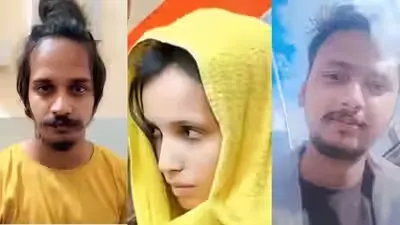
Meerut murder: Muskaan Rastogi and Sahil Shukla get death sentence
A Meerut court has sentenced Muskaan Rastogi and Sahil Shukla to death in the blue drum murder case involving the killing of merchant navy officer Saurabh Rajput in March 2025.
A court in Meerut has sentenced Muskaan Rastogi and Sahil Shukla to death for the murder of Saurabh Rajput, Muskaan’s husband and a former Merchant Navy officer. The sentencing was pronounced on Wednesday, October 14, 2026, after the court convicted the two in the case widely known as the Meerut blue drum murder.
The case involved the killing of Rajput in March 2025 and the concealment of his dismembered remains inside a blue plastic drum sealed with cement and sand.
The two were convicted on September 30. The prosecution had sought the death penalty, arguing for the maximum punishment in the case.
Court verdict follows 126 hearings
The trial involved 126 hearings and statements from 22 prosecution witnesses. District Judge Arvind Kumar Mishra delivered the sentence after the court considered the evidence presented during the proceedings.
The investigation and prosecution relied on a combination of circumstantial, technical and physical evidence. This included forensic findings, witness testimony and material recovered during the investigation.
The case drew attention after police discovered Rajput’s remains inside the cement-filled drum at the couple’s residence in Meerut.
How Saurabh Rajput was killed
According to the prosecution’s account of the case, Rajput was killed in March 2025 after he returned to Meerut from London. Investigators alleged that Muskaan and Sahil had planned the murder.
The prosecution said Rajput was given food laced with sleeping medication before he was attacked. His body was subsequently dismembered, and the remains were placed inside a blue plastic drum.
The drum was filled with a mixture containing cement and sand and sealed. Investigators later recovered the remains from inside it.
Evidence presented during the investigation
Investigators built the case using several strands of evidence. Shopkeepers provided testimony about the purchase of materials, including a blue drum, cement, sand and cutting implements, before the murder.
Call detail records and mobile tower information were also cited to establish Sahil’s presence at the residence around the time of the crime. The prosecution further relied on post-mortem findings that confirmed Rajput had died from stab injuries.
The investigation also traced the movements of Muskaan and Sahil during their trip to Himachal Pradesh following the killing. Investigators said photographs and activity linked to Rajput’s phone were used to create the impression that he was still alive.
The case came to light in March 2025
The murder came to light after questions arose over Rajput’s whereabouts. According to the investigation, the couple’s attempt to move the heavy drum eventually raised suspicion.
Rajput’s family approached the police, leading to an investigation that uncovered the remains. Muskaan and Sahil were arrested in March 2025.
The sentencing on October 14 marks a major development in the case, which had proceeded from the discovery of Rajput’s remains to a trial involving dozens of witness statements and more than a hundred hearings.
PM Modi speaks to Mark Carney as India and Canada push to strengthen ties
Prime Minister Narendra Modi held a telephone conversation with Canadian Prime Minister Mark Carney on October 13, with both leaders agreeing to strengthen India-Canada ties and pursue concrete outcomes across key areas of their strategic partnership.
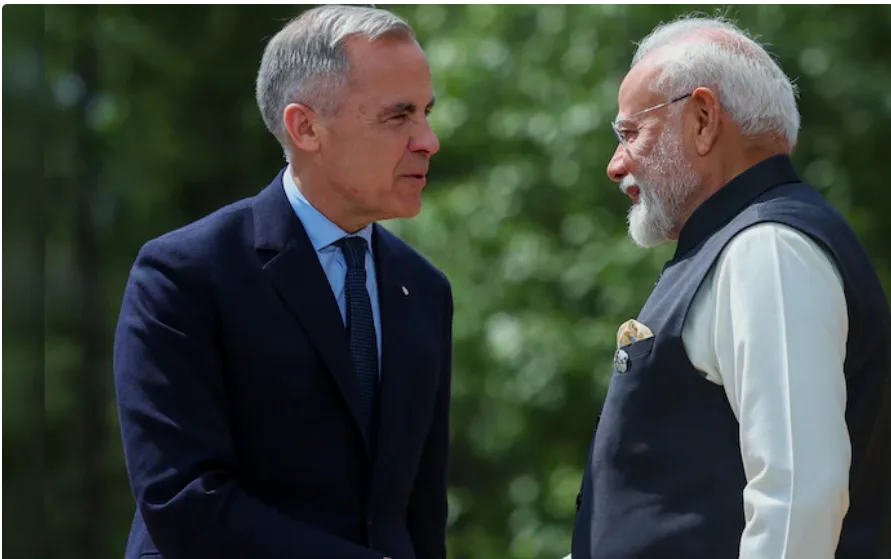
Prime Minister Narendra Modi held a telephone conversation with Canadian Prime Minister Mark Carney on Tuesday, October 13, as the two countries seek to strengthen bilateral relations and translate renewed diplomatic engagement into concrete outcomes.
Following the conversation, Modi said both leaders had agreed to build on the positive momentum in India-Canada ties and work towards progress across key areas of their strategic partnership.
In a post on X, the prime minister described the conversation as “warm and productive”. He identified trade, energy, technology, security and people-to-people ties as important areas for further cooperation.
Had a warm and productive conversation with Prime Minister Mark Carney.
We agreed to build on the positive momentum in India-Canada ties and work towards concrete outcomes across key areas of our Strategic Partnership, including trade, energy, technology, security and…
Modi also said India and Canada were contributing towards a more stable and prosperous world.
India and Canada focus on trade and strategic cooperation
The latest conversation comes amid increased engagement between New Delhi and Ottawa across economic, security and diplomatic matters.
According to the Canadian Prime Minister’s Office, the two leaders welcomed the expansion of engagement over the past year, including cooperation in finance, defence and security, people-to-people ties and artificial intelligence.
The two leaders reaffirmed their commitment to concluding negotiations on a Comprehensive Economic Partnership Agreement (CEPA) at the earliest opportunity. The proposed agreement is intended to support efforts to double two-way trade between India and Canada by 2030.
The leaders welcomed the ongoing Team Canada Trade Mission in India, led by Canadian International Trade Minister Maninder Sidhu, along with the visit of Canadian Foreign Minister Anita Anand to New Delhi.
The engagements are aimed at advancing shared priorities, including trade, energy and people-to-people ties.
Security cooperation remains on the agenda
The conversation followed a bilateral security dialogue held in India the previous week as part of ongoing engagement between the two countries on security and law enforcement.
The Canadian Prime Minister’s Office said the two leaders welcomed the bilateral security dialogue held in India the previous week as part of ongoing security and law enforcement engagement at the National Security Advisor level. They also agreed to remain in close contact ahead of Modi’s planned visit to Canada in December.
The Canadian readout also said the two prime ministers discussed the effects of geopolitical instability on the Indo-Pacific region and the need for trusted partners in energy and agriculture.
Carney thanked Modi for his leadership in seeking a peaceful resolution to Russia’s war against Ukraine.
India-Canada relations seek to move beyond diplomatic tensions
Relations between India and Canada deteriorated sharply in 2023 after then Canadian Prime Minister Justin Trudeau alleged a potential Indian link to the killing of Khalistan separatist Hardeep Singh Nijjar in Canada.
India rejected the accusation as absurd. In October 2024, India recalled its high commissioner and five other diplomats after Ottawa attempted to link them to the Nijjar case. New Delhi also expelled an equal number of Canadian diplomats.
Relations have since shown signs of improvement through renewed diplomatic engagement and cooperation in several areas. Both countries now have high commissioners posted in each other’s capitals.
Canadian Prime Minister Carney’s visit to India in March 2026 also contributed to renewed efforts to strengthen bilateral ties.
The latest conversation between Modi and Carney reflects the two governments’ stated intention to build on this progress, with trade negotiations, security cooperation and other shared priorities remaining central to their engagement.
Modi’s planned visit to Canada in December is expected to provide another opportunity for the two sides to advance their bilateral agenda.
APN News is today the most watched and the most credible and respected news channel in India. APN has been at the forefront of every single news revolution. The channel is being recognized for its in-depth, analytical reportage and hard hitting discussions on burning issues; without any bias or vested interests.