English हिन्दी
Connect with us

Top Stories

Will Trump destroy Iran as he said he would?

Trump’s stark warning on Iran sparks global concern as Tehran responds sharply and ceasefire efforts struggle.

Published

on

Donald Trump statement

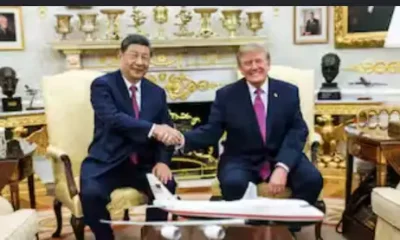
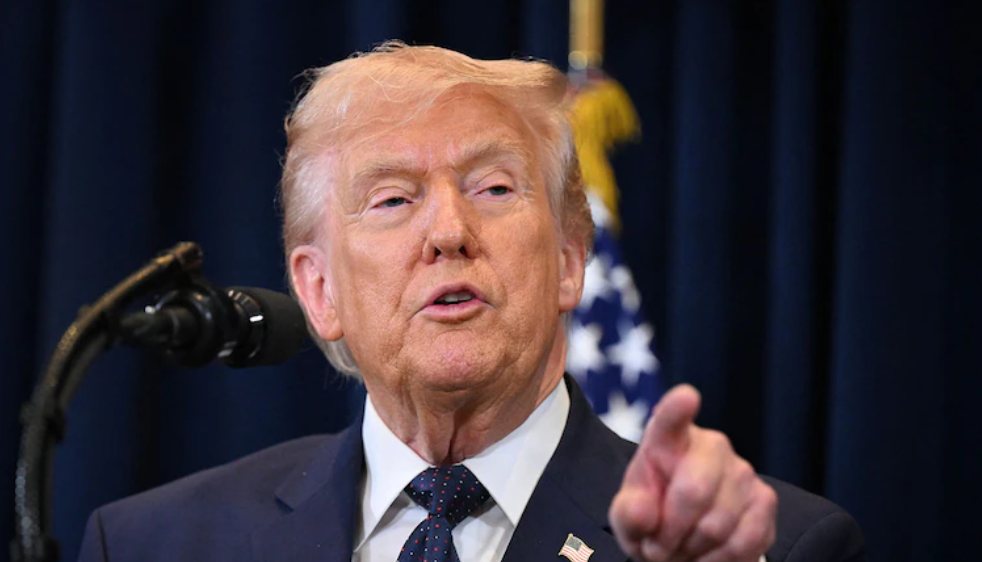
US President Donald Trump has sparked global concern after issuing a dramatic warning about Iran, claiming that “a whole civilisation will die tonight” in a post on Truth Social.

In his statement, Trump said he did not want such an outcome but suggested it was increasingly likely. He described the moment as potentially one of the most significant in world history, referring to decades of conflict and tensions involving Iran.
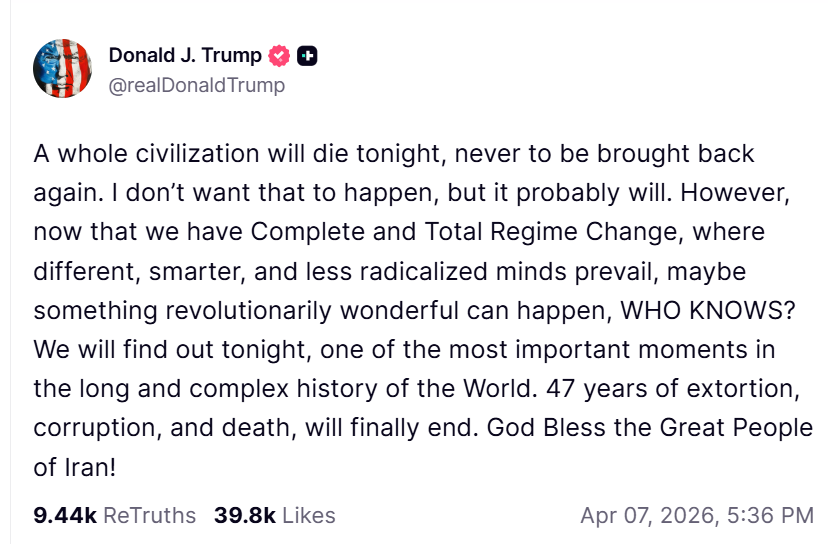
Despite the stark tone, Trump also hinted at a possible diplomatic breakthrough, saying that “maybe something revolutionarily wonderful can happen,” leaving the door open for de-escalation.

Ceasefire efforts show little progress

Amid the escalating rhetoric, diplomatic efforts appear to be struggling. Reports indicate that US and regional mediators have been attempting to broker a 45-day ceasefire that could pave the way for a more permanent resolution. However, officials have acknowledged that meaningful progress remains limited.

US Vice President JD Vance has stated that Washington has already achieved its key objectives in the conflict, suggesting that the next move now lies with Tehran.

Iran responds with strong words

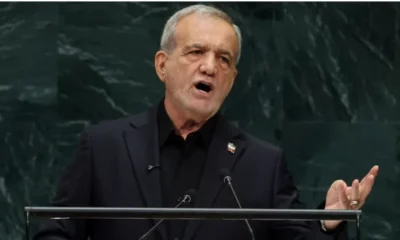
Iran responded sharply to Trump’s remarks, warning of severe consequences. The Iranian Embassy in Turkiye issued a statement on social media, dismissing the warning as the words of a “psychopath” and asserting the resilience of Iran’s civilisation.

The statement referenced historical invasions, including those by Alexander the Great and the Mongols, to emphasise Iran’s endurance over centuries.

Concerns over escalation and international law

Trump has also indicated that he is unconcerned about potential accusations of war crimes, reiterating threats to target Iranian infrastructure if demands are not met. This has drawn criticism from global leaders.

UN Secretary-General António Guterres warned that attacks on civilian infrastructure would violate international law, urging restraint.

Iran, meanwhile, has rejected calls for a temporary ceasefire, insisting instead on a complete end to the conflict.

Reports of strikes and rising tensions

Explosions have been reported on Kharg Island, a key Iranian oil export hub near the Strait of Hormuz, further intensifying concerns about a broader conflict. Reports suggest that US forces may have conducted strikes on military targets in the area.

Trump has warned that failure to comply with US demands could lead to large-scale military action targeting critical infrastructure, including power plants and bridges

India News

Jammu Kashmir terrorist mastermind shot dead in Muzaffarabad

Highly wanted Al-Badr operational commander Arjamand Gulzar alias Burhan Hamza was shot dead by unidentified gunmen in Muzaffarabad, marking another massive setback for cross-border terror structures.

Published

on

In an ongoing series of mysterious hits targeting high-profile terrorists, a prominent operational chief of the banned terror outfit Al-Badr has been eliminated in Pakistan-Occupied Jammu and Kashmir (PoJK). Arjamand Gulzar, who went by the alias Burhan Hamza, was shot dead by unidentified assailants in Muzaffarabad. He was heavily sought after by Indian security agencies for running an extensive terror network across Jammu and Kashmir.

According to security confirmations, Hamza played an active role in driving anti-India activities and was heavily involved in radicalising local youths, primarily across South Kashmir. His death marks another critical disruption for outfits attempting to reactivate cross-border terror channels into the Valley.

From Pulwama to the operational ranks of Al-Badr

A native of Ratnipora village located in Jammu and Kashmir’s Pulwama district, Gulzar crossed over to Pakistan around seven years ago, where he subsequently aligned himself with the Al-Badr group. Over the years, he quickly scaled the ranks to become its core operational commander, steering logistics that included recruitment, financial streams, and smuggling weapon consignments into Kashmir.

Recognising the severe security threat he posed, the Ministry of Home Affairs had officially designated him as a terrorist in 2022. He was placed prominently on the most-wanted lists due to his sustained orchestrations of violence in Pulwama and neighbouring south Kashmir areas.

Orchestrator of digital radicalisation

Security officials highlighted that Gulzar operated much like previous neutralised figures such as Burhan Wani, heavily leaning on digital radicalisation. He exploited social media ecosystems and localized networks to pull impressionable youth into terror folds.

His operations spanned strategically sensitive zones including Pulwama, Awantipora, and Shopian. Operating securely from bases across the border, he synchronized actions with ground-level overground workers (OGWs) to distribute finances, transfer operational commands, and channel arms. Investigators had previously tied his name to multiple security offenses involving grenade offensives, terror recruitment drives, and explosive cache recoveries.

Ongoing wave of targeted hits on terror leaders

Media reports state that this assassination adds to a broader pattern observed since 2023, where more than 50 elite commanders affiliated with prominent terror factions like Lashkar-e-Taiba (LeT), Jaish-e-Mohammed (JeM), and Hizbul Mujahideen have been systematically gunned down by unknown attackers across Pakistan and PoJK.

Just last month, a notable Lashkar-e-Taiba commander identified as Sheikh Yousuf Afridi—who shared close operational ties with Hafiz Saeed—was shot dead by mystery gunmen who fired multiple rounds at him in the Khyber Pakhtunkhwa province. Prior to that incident in March, another key LeT founding figure, Amir Hamza, survived an assassination attempt when an unidentified gunman fired at him outside a television station in Lahore.

Continue Reading

Latest world news

Tech layoffs leave Indian H-1B workers battling strict 60-day US visa deadline

Fresh layoffs at major tech companies like Meta and Amazon have sparked an immigration crisis for Indian H-1B visa holders, who now face a strict 60-day deadline to find new sponsorship or leave the US.

Published

on

H1-B visa jobs downturn

Fresh rounds of job cuts across global technology firms, including Meta, Amazon, and Oracle, have triggered a severe crisis for thousands of Indian IT professionals residing in the United States. Operating under the strict frameworks of the US immigration system, these laid-off foreign nationals are bound by a rigid 60-day grace period to secure a new employer willing to sponsor their visa, successfully change their legal immigration status, or exit the country entirely.

The scale of the downturn has been stark. Data from global tracking platforms indicates that over 110,000 employees have been laid off across 144 tech companies in 2026 alone. Because Indian citizens consistently secure the vast majority of H-1B visas—accounting for 283,772 of the 406,348 approved petitions in the fiscal year 2025—they are bearing the heaviest burden of this sudden industry instability.

Alternate visa routes face stricter scrutiny

To purchase additional time to look for employment, an increasing number of redundant professionals are filing applications to transition temporarily to B-2 visitor visas, which can theoretically allow them to remain in the US for up to six months. However, legal and immigration experts warn that this pathway is becoming considerably more challenging.

According to reports from media sources, US immigration authorities are exercising intense scrutiny on these status modifications. Legal professionals handling these cases have noted a sharp rise in Requests for Evidence (RFEs) and Notices of Intent to Deny from authorities. While the transition method remains fully legal, securing an approval requires substantial paperwork and has become far more difficult to clear under the current administrative environment.

Personal and emotional toll of the AI shift

The ongoing job cuts are tied heavily to corporate restructuring as technology corporations pivot aggressively toward artificial intelligence. Meta, for instance, is projected to deploy over $100 billion in AI-related infrastructure and investments this year, redirecting thousands of roles into specialized AI divisions and heavily affecting traditional engineering and product teams.

For the affected Indian tech workers, the consequences extend far beyond a loss of monthly salary. Many have lived in the United States for close to a decade, managing ongoing home mortgages and raising American-born children while waiting out historically backlogged Green Card lines. Due to the mounting systemic barriers and the persistent anxiety of sudden displacement, a growing number of skilled professionals are actively contemplating alternative immigration options, turning their focus away from the US to explore talent attraction pathways in Canada or European nations.

Continue Reading

India News

Government ropes in Meta, Google, and Telegram to prevent leaks ahead of NEET-UG re-exam

In a bid to ensure a fair and secure NEET-UG re-examination, the central government has partnered with tech giants like Meta, Google, and Telegram to actively eliminate fake online channels and misinformation networks before the June 21 test.

Published

on

The central government has initiated a collaborative effort with major social media giants, including Meta, Google, and Telegram, to counter the spread of misinformation and secure the upcoming NEET-UG re-examination. Union Education Minister Dharmendra Pradhan chaired a high-level review meeting alongside central security and intelligence agencies to establish a foolproof security framework for the medical entrance test.

During the discussions, authorities raised serious concerns over the proliferation of fake paper-leak claims, clickbait content, and unverified information circulated via anonymous online groups and automated bots. Inputs from intelligence agencies revealed that multiple suspicious channels operate through a restricted set of phone numbers, pointing toward a coordinated effort to create panic among students and parents.

Focused crackdown on fraudulent networks

To address these vulnerabilities early, the Union Education Minister directed law enforcement and tech platforms to proactively identify, block, and take down channels spreading propaganda before the examination commences. The minister emphasized that social media platforms must work in sync with the Ministry of Education, the National Testing Agency (NTA), and security agencies to safeguard candidates from misleading narratives.

The high-level meeting, which included the director general of the NTA and senior ministry officials, aimed to map out potential security risks in advance to deploy preventive and corrective measures. Maintaining public trust in the examination process remains a top government priority.

The development follows the recent cancellation of the NEET-UG 2026 exam originally held on May 3, which is currently being investigated by the CBI over paper-leak allegations. The re-test is officially scheduled to take place on June 21.

Continue Reading

Trending

© Copyright 2022 APNLIVE.com