English हिन्दी
Connect with us

Trending

Mumbai-bound Air India flight triggers hijack alert mid-air prompting security protocol

The urgency stemmed from the potential for a pilot being forced to report a false sense of security. A former ATC official, speaking anonymously, emphasized the inability of ATC to confirm the pilot’s claims under duress.


Published

on

Fire at London substation causes Heathrow airport shutdown

On Monday night, an Air India flight from Delhi to Mumbai triggered a major security alert after sending a hijack signal shortly after takeoff. At 8:40 PM, flight AI 2957 transmitted a “squawk 7500” emergency code, the aviation equivalent of a distress call indicating unlawful interference, immediately activating established protocols.

Delhi Air Traffic Control (ATC) sprang into action, notifying Mumbai airport, and security agencies including the Indian Air Force, and convening a crisis committee. This committee comprised representatives from Delhi Police, the Central Industrial Security Force (CISF) responsible for airport security, the Airports Authority of India (AAI), the Bureau of Civil Aviation Security (BCAS), and the Air Force.

The urgency stemmed from the potential for a pilot being forced to report a false sense of security. A former ATC official, speaking anonymously, emphasized the inability of ATC to confirm the pilot’s claims under duress.

Despite the pilot’s radio transmission clarifying the situation as a false alarm, the comprehensive security response continued. By 9:30 PM, Mumbai airport was on full emergency alert, deploying local police and the National Security Guard (NSG). The flight landed at 9:47 PM.

The aircraft was immediately directed to an isolation bay, and passengers were held for approximately one hour while security personnel confirmed the absence of any threat. A Mumbai airport official, requesting anonymity, detailed the extensive emergency measures undertaken. Investigations revealed that the aircraft’s transponder had transmitted the erroneous signal for three minutes immediately after takeoff.

The Directorate General of Civil Aviation (DGCA), along with BCAS and CISF, launched an investigation into the incident, aiming to determine the cause of the false alarm. The probe will focus on the possibility of pilot error, ATC misinterpretation of the signal, or a technical malfunction.

Both Air India and aviation ministry officials, while acknowledging the seriousness of the situation and the need for stringent protocols, indicated a likely technical fault and ruled out crew involvement. The pilot’s repeated assurances of the flight’s safety after landing, however, underscore the critical need for comprehensive and immediate emergency response procedures, even in the face of seemingly contradictory information.

LATEST SPORTS NEWS

Ranji Trophy final highlights: Jammu and Kashmir clinch maiden title after draw with Karnataka

Published

on

Ranaji Trophy

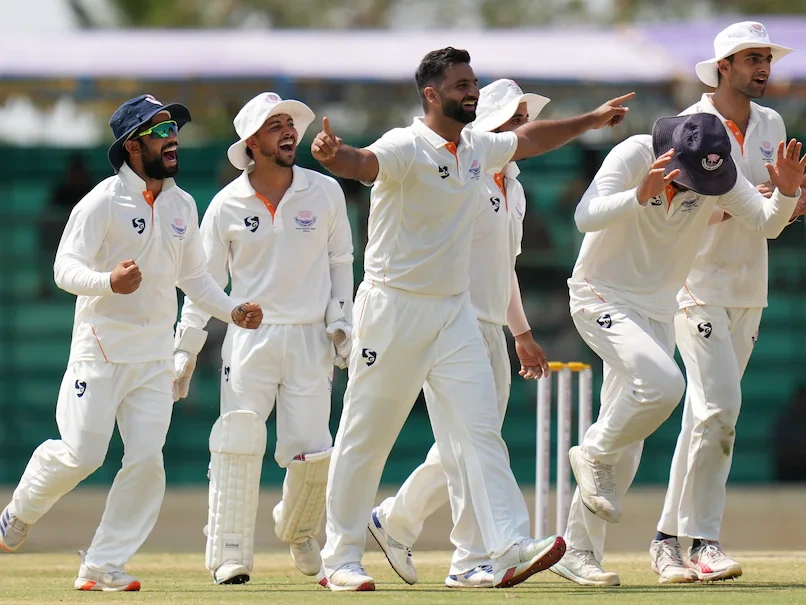
Jammu and Kashmir scripted history on Saturday by winning their first-ever Ranji Trophy title, edging past eight-time champions Karnataka on the basis of a massive first innings lead in the 2025-26 final at the KSCA Hubli Cricket Ground.

The summit clash ended in a draw on Day 5, but J&K’s dominance with the bat in the first innings proved decisive as they lifted the trophy for the first time since making their Ranji debut in the 1959-60 season.

Karnataka were bowled out for 293 in their first innings in response to J&K’s imposing 584. In their second innings, J&K declared at 342/4, effectively shutting the door on any slim hopes for Karnataka and sealing the title via the first innings advantage.

Batting depth powers J&K to commanding position

Shubham Pundir set the tone with a crucial 121 in the first innings, guiding J&K to a formidable total of 584. His effort earned him the Player of the Match award.

Sahil Lotra delivered an all-round performance with the bat, scoring 72 in the first innings and following it up with an unbeaten century in the second innings — his maiden first-class hundred. Qamran Iqbal also played a standout knock, smashing 160 in the second innings to stretch the lead beyond Karnataka’s reach.

Captain Paras Dogra, Abdul Samad, Yawer Hassan and Kanhaiya Wadhawan contributed valuable half-centuries, underlining the team’s collective batting strength.

By Lunch on Day 5, J&K had extended their lead to 576 runs, and eventually crossed the 600-run mark before Dogra declared the innings at 342/4 in 113 overs.

Bowlers back up batting brilliance

With the ball, pace spearhead Auqib Nabi once again led from the front, claiming a five-wicket haul in the final. He finished the season with 60 wickets in 10 matches at an impressive average of 12.56, including seven five-wicket hauls, and was named Player of the Series.

Sunil Kumar and Yudhvir Singh picked up two wickets each in the final, while Abid Mushtaq maintained tight lines to support the attack.

A landmark moment for Jammu and Kashmir cricket

This triumph marks the end of a 67-year wait for Jammu and Kashmir, who had long struggled in India’s premier domestic competition. Their maiden Ranji Trophy title represents a significant milestone and signals their emergence as a competitive force in domestic cricket.

As celebrations unfolded in Hubli, J&K players lifted the trophy to cap off a season that will be remembered as a breakthrough campaign in the state’s cricketing history.

Continue Reading

Cricket news

T20 World Cup 2026 Super 8 points table after England beat New Zealand by four wickets

Published

on

england wins

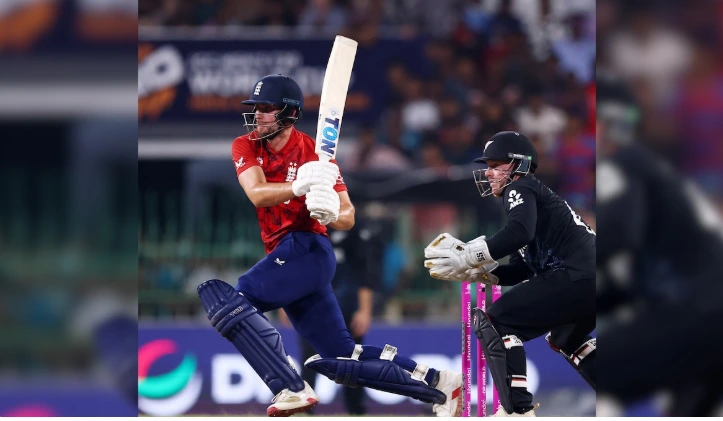
Already through to the semi-finals, England cricket team continued their dominant run in the Super 8 stage of the T20 World Cup 2026 with a four-wicket win over New Zealand national cricket team in Colombo on Friday.

The victory ensured England completed the Super 8 phase with three wins in three matches, finishing on six points and a net run rate of +1.096 in Group 2.

Super 8 Group 2 points table scenario

With this result, England remain at the top of Group 2 with a flawless record. New Zealand are placed second with three points. Pakistan are third with one point and must secure a convincing win against already-eliminated Sri Lanka national cricket team on Saturday to overtake New Zealand and book a place in the semi-finals.

New Zealand’s qualification now depends on Sri Lanka defeating Pakistan in the final Group 2 fixture. A Pakistan win would see them move ahead of New Zealand on points and claim the second semi-final spot from the group.

How the match unfolded

After opting to bat, New Zealand found several batters getting starts but failing to convert them into substantial scores. Glenn Phillips top-scored with 39, while Tim Seifert made 35. Finn Allen contributed 29 and Mark Chapman added 15, but none managed to anchor the innings as New Zealand finished at 159 for 7 in their 20 overs.

For England, Will Jacks (2/23), Adil Rashid (2/28) and Rehan Ahmed (2/28) shared the bulk of the wickets, with Liam Dawson chipping in with one scalp.

In response, England’s chase was not entirely smooth, but steady contributions across the batting order helped them reach the target in 19.3 overs. Tom Banton scored 33, while Will Jacks remained unbeaten on 32. Captain Harry Brook added 26, Sam Curran made 24, and Rehan Ahmed finished unbeaten on 19 to seal the win.

Rachin Ravindra was the standout bowler for New Zealand with figures of 3/19, but his effort was not enough to prevent England from maintaining their unbeaten run in the Super 8 stage.Brief scores
New Zealand: 159/7 in 20 overs (Glenn Phillips 39, Tim Seifert 35; Will Jacks 2/23)
England: 161/6 in 19.3 overs (Will Jacks 32*; Rachin Ravindra 3/19)

Continue Reading

LATEST SPORTS NEWS

ICC Men’s T20 World Cup 2026: South Africa outclass India with smart slower-ball strategy in Super 8

South Africa registered a commanding 76-run win over India in the T20 World Cup 2026 Super 8 match, using disciplined slower deliveries and a key Miller-Brevis partnership.
Published

on

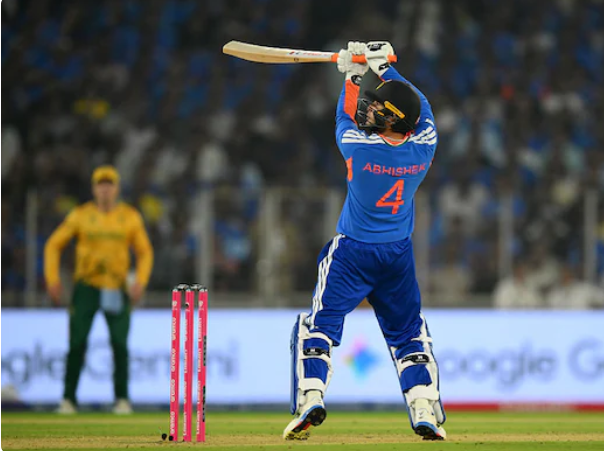
South Africa delivered a clinical performance to defeat India by 76 runs in the Super 8 stage of the T20 World Cup 2026, exposing tactical gaps in Suryakumar Yadav’s side. At the Narendra Modi Stadium, the much-anticipated clash turned into a lesson in adaptability as the Proteas executed their plans to near perfection.

Despite the home support, India struggled to counter South Africa’s disciplined bowling attack, particularly the consistent use of slower deliveries on a pitch that offered grip and uneven bounce.

The slower-ball ploy that stalled India

If one bowler embodied South Africa’s methodical approach, it was Lungi Ngidi. Though his figures of 4-0-15-0 did not include wickets, his spell applied relentless pressure. Recognising that the black-soil surface was holding up, Ngidi shifted away from outright pace and relied heavily on off-cutters and slower bouncers without altering his arm speed.

Indian batters found it difficult to time the ball, and boundaries dried up. Forced to manufacture shots, they took risks that failed to pay off, leading to a collapse against a disciplined attack.

Complementing Ngidi’s control was Marco Jansen, who used his height to extract uneven bounce. Jansen’s 4/22 came from a heavy length that proved hard to negotiate, particularly with slower balls dropping sharply from a higher release point. South Africa’s sharp fielding further tightened the screws, with minimal errors in the field.

Former India spinner Ravichandran Ashwin said the team appeared underprepared for South Africa’s strategy. He noted that Suryakumar Yadav faced a majority of slower deliveries and highlighted the absence of back-of-a-length balls, crediting South Africa’s execution with both bat and ball.

Miller and Brevis rebuild after early setback

South Africa’s innings had begun shakily at 20/3, but David Miller and Dewald Brevis steadied the ship with a calculated partnership. The duo focused on rotating strike and exploiting gaps before accelerating.

They targeted spinners Washington Sundar and Varun Chakaravarthy during the middle overs, with Chakaravarthy conceding 47 runs in his four overs.

Proteas captain Aiden Markram later said the pair put aside individual ambition to focus on partnerships and running between the wickets. Miller, who struck 63 off 35 balls, explained that they had planned to attack Chakaravarthy if he erred, adding that the surface did not offer excessive turn, allowing them to trust the line and play with intent.

The 97-run stand shifted momentum decisively in South Africa’s favour, setting up a commanding total that India ultimately failed to chase.

The emphatic win not only strengthened South Africa’s campaign but also underlined the importance of preparation and tactical flexibility at the highest level of T20 cricket.

Continue Reading

Trending

© Copyright 2022 APNLIVE.com