Latest world news
8 hours apart two IS terror attacks rock Spain, at least 13 dead in Barcelona

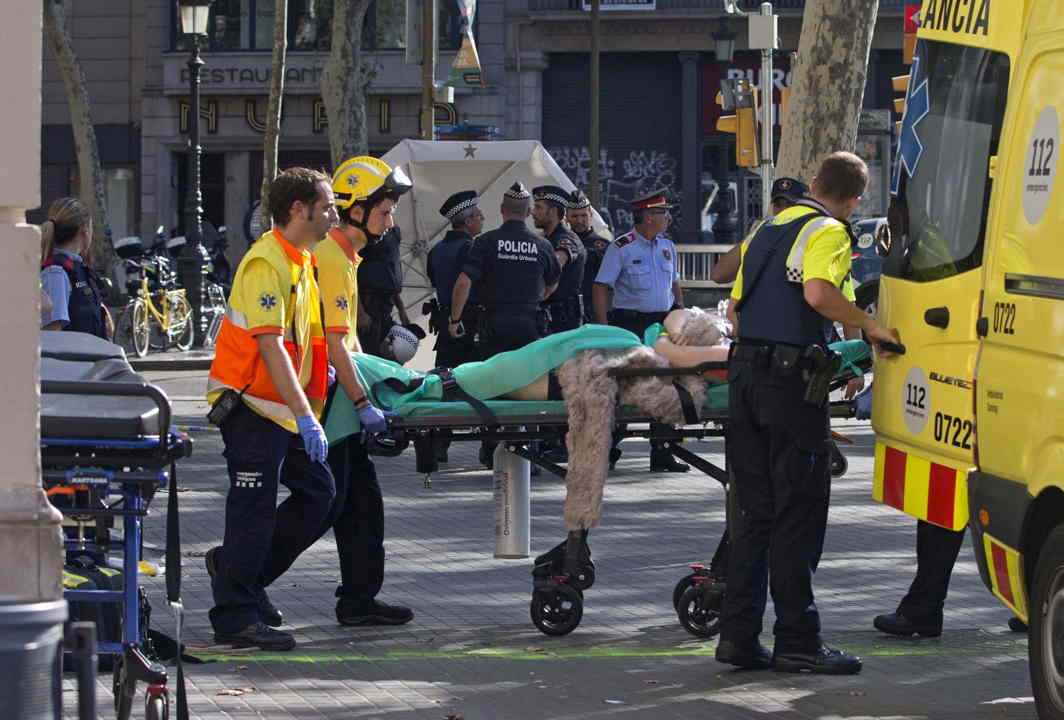
[vc_row][vc_column][vc_column_text]Spanish police launch massive manhunt to nab Barcelona attacker, 5 terrorists gunned down in coastal town of Cambrils. One civilian injured in the Cambrils attack has also succumbed to her injuries
Two terror attacks – spread eight hours apart – kept Spain on the tenterhooks through Thursday and Friday. While the Islamic State has taken responsibility of the strike in Barcelona, the Spanish police believe that the second attack – in the coastal town of Cambrils – is also linked to the first incident.
In the first attack that rocked Las Ramblas, the busiest street in Barcelona, a white van drove into pedestrians and cyclists killing at least 13 civilians – mostly tourists from various European countries –and injuring 100 others while the vehicle’s driver managed to escape on foot.
The Spanish police have launched a manhunt to nab the driver – who has been identified as an 18-year-old Moroccan national, Moussa Oukabir. Three others have been arrested on suspicion of their role in the attack, including Moussa’s elder brother Driss Oukabir.
Some eight hours after the terrifying Barcelona attack, the scenes of chaos, horror and turmoil were repeated in the wee hours of Friday on the streets of the Spanish coastal town of Cambrils as an Audi A3 car rammed into pedestrians, injuring six civilians and a police officer. In the gunfire that ensued, the Spanish police managed to kill five attackers, some of whom were reportedly wearing explosive belts. The police are “working on the hypothesis that the terrorists shot dead in Cambrils are linked to what happened in Barcelona”. Cambrils is situated 120 kms south of Barcelona.
By Friday evening, one of the civilians – a woman – injured critically in the Cambrils attack had been declared dead, taking the death toll in the twin-strikes up to 14.
The Spanish police are also probing the possibility of an explosion – possibly accidental – that reduced a house in Alcanar to rubble killing one person few hours before the strike in Barcelona as also being part of the same sequence of attacks. Alcanar is around 200 km from Barcelona and 90 km from Cambrils. Police say they believe explosives were being prepared at the property where the explosion happened in Alcanar.
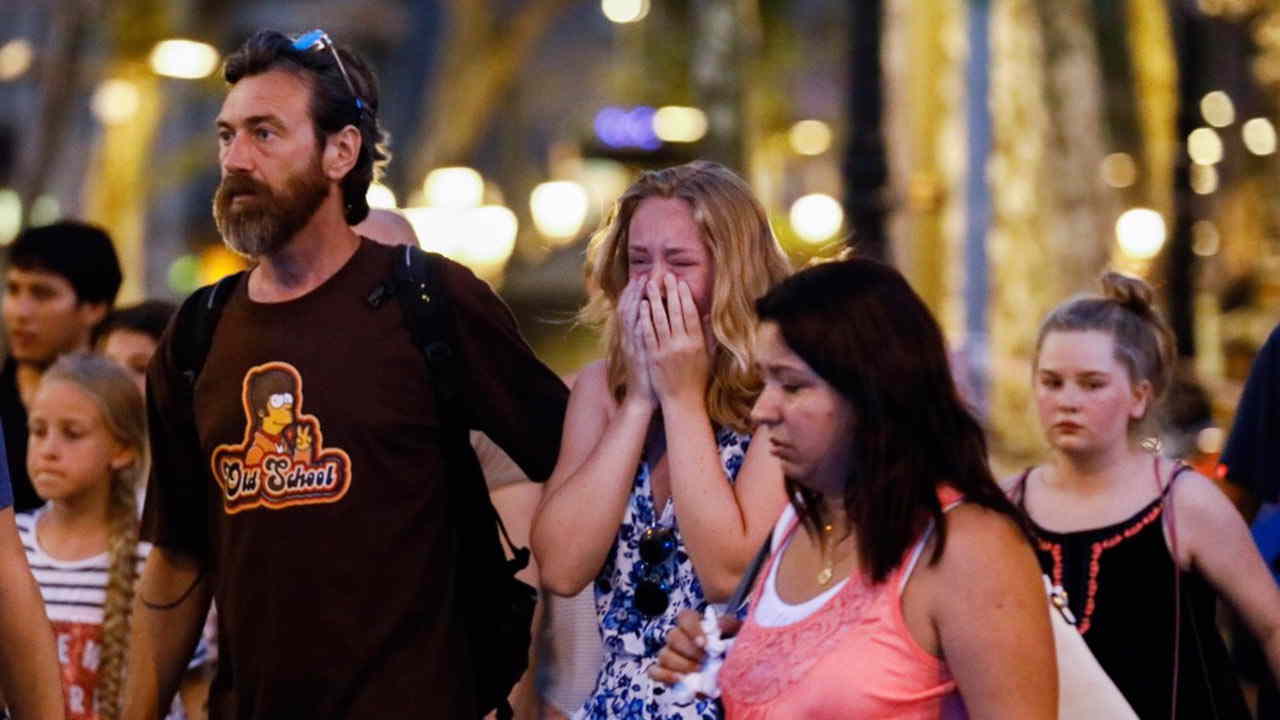
Those injured in the Barcelona attack belong to at least 18 nationalities – tourists who came from countries as varied as France, Venezuela, Australia, Ireland, Peru, Algeria and China – according to Spain’s civil protection agency. Belgium said one of its citizens had died in the Las Ramblas assault, while The Hague said three Dutch were injured and a Greek diplomat reported three nationals had been wounded — a woman and her two children.
Spanish Prime Minister Mariano Rajoy has announced three days of official mourning across the country that unlike France, Britain, Belgium and Germany had been able to keep itself isolated from the IS terror strikes that have struck Europe with disturbing frequency over the past couple of years.
“We’re united in grief,” Rajoy said in a televised address after rushing to Barcelona, the biggest city in Catalonia, a region in Spain’s northeast whose separatist government is defying Madrid with a drive for independence. “Above all we’re united in the firm intention to defeat those who want to take our values and way of life from us”, Rajoy said.
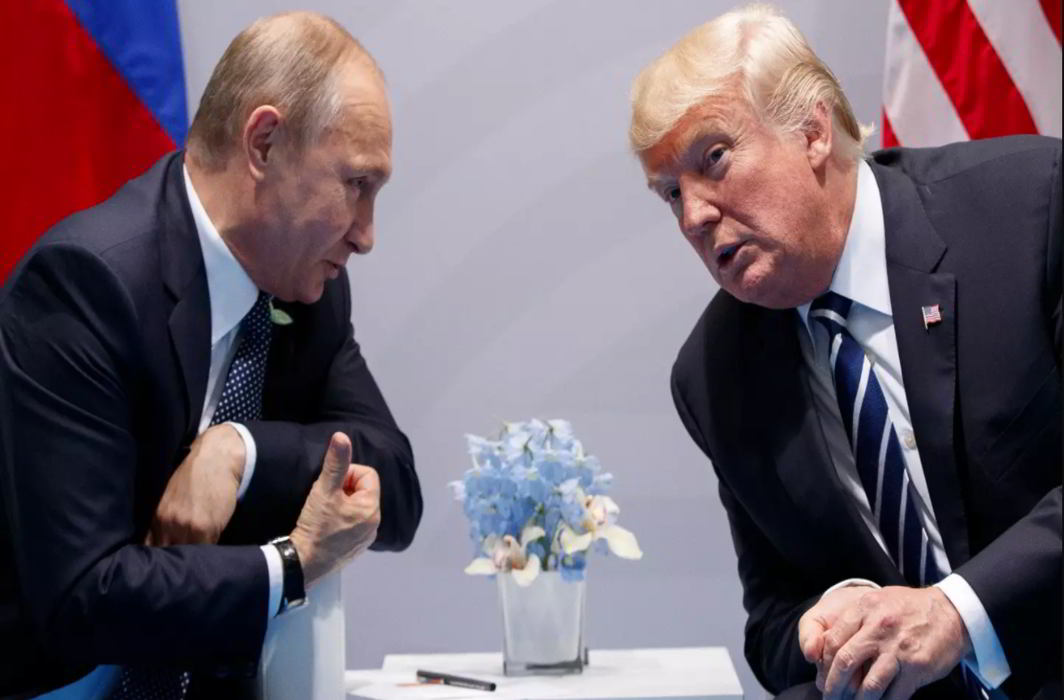
US President Donald Trump too reacted to the attack saying that “The United States condemns the terror attack in Barcelona and will do whatever is necessary to help.”[/vc_column_text][/vc_column][/vc_row]







Latest world news
Trump waives Russia-related sanctions, tariffs in relief for India
Donald Trump has waived several Russia-related sanctions, restrictions and duties under a new US law, potentially easing tariff pressure on India and China, two major buyers of Russian energy.

Latest world news
Magnitude 7 earthquake strikes Russia’s Kamchatka Peninsula
A magnitude 7 earthquake struck Russia’s Kamchatka Peninsula region on Friday. The initial report placed the earthquake at a depth of 140 kilometres.

Latest world news
S Jaishankar says India is a natural option for Russia amid Europe tensions
External Affairs Minister S Jaishankar said India remained a natural option for Russia as Moscow increasingly turned towards Asia amid strained relations with Europe. He highlighted the continuity of India-Russia ties and their significance for the balance of power in Asia.


Anirudh Ravichander to marry Kavya Maran in November, reception on November 21

Delhi court orders release of CJP founder Abhijeet Dipke

Journalist files police complaint against Rahul Gandhi over push allegation
Journalist files police complaint against Rahul Gandhi over push allegation
Delhi court orders release of CJP founder Abhijeet Dipke
Anirudh Ravichander to marry Kavya Maran in November, reception on November 21

ED summons Pinarayi Vijayan in money laundering case

LK Advani, 98, hospitalised in Delhi with chest infection

Afghan Men Try To Hang With The Jet Engine Of The Aircraft in Kabul- Afghanistan News – Kabul News
Trending Top 10 News: 10000 Crore Fine on Flipkart, Apple to Launch Unique Feature, Hdfc Bank Job Ad

Trending Top 10 News: Nokia 6310, Apple sales, Bachpan ka Pyar Video Kid, Dainik Bhaskar IT Raid

Trending Top 10 News: Canada bans Indian flights, Rain in Delhi NCR, AIMIM Twitter hacked, Raj Kundra case