English हिन्दी
Connect with us

Latest world news

BBC Investigation Exposes US, UK, Saudis Protecting IS in Syria

Published

on

BBC Investigation Exposes US, UK, Saudis Protecting IS in Syria

By Saeed Naqvi

The BBC expose, with graphic visuals, is quite emphatic: the US and British led coalition forces enabled hundreds of IS jihadists escape from Raqqa after the headquarters of their self declared Caliphate had been bombarded out of recognition. This will set the cat among the pigeons.

The matter will surely come up in the British Parliament and Congressional hearings in Washington. More such mischief is surfacing.

The Defence Ministry in Moscow is already in overdrive. “The US refused to bomb a military convoy retreating from Abu Kamal (in Raqqa). The coalition’s aircraft also attempted to prevent Russian Aerospace Forces from carrying out air strikes against militants.” There is considerable evidence of “direct cooperation and support for ISIS terrorists by the US led International Coalition”, the Defence Ministry said.

In a separate incident “Americans peremptorily refused to conduct airstrikes on ISIS terrorists.” The reason given was that the militants were agreeing to surrender as prisoners of war and were “therefore subject to the provisions of the Geneva convention.” US aircraft obstructed “Russian aerospace from taking action.”

Stratfor, an establishment think tank, offers almost an apology for terrorism perpetrated by returning jihadists. “Looking at recent cases involving fighters returning from Iraq and Syria, they have tended to conduct attacks against soft targets instead of making more complex attacks against harder, more significant targets. Some examples include a Jewish museum and the soft side of the airport in Brussels; a concert in Manchester in the UK; and a café, concert venue and sports stadium in Paris.” Is it not too sanguine a tone on the theme of returning jihadists who destabilize Western societies?

Youth, fired by jihad, who have left their homes in the West for destinations like Syria, are unlikely to be less than hostile towards their respective societies when they return home. This hostility will erupt into acts of terrorism listed in the stratfor brief.

The cat-and-mouse that goes on between terrorists and counter terrorism units confronting them provides room for others to advance their rogue agendas. It is a witches brew.

This was lethal enough. What has evolved since the 9/11 wars in West Asia is a system of regularizing terrorists in Company and Platoon strengths, backed by trainers, finance and weapons, as a military asset to be relocated wherever required. Sophisticated propaganda is integral to the project.

If readers have not seen Amaq, the propaganda organ of the IS, they must instantly obtain a copy online. It is a glossy publication which would put to shame some of the better magazines in the business. If IS is an underground, guerrilla outfit, living in bunkers and trenches, how does it have time, skill, printing presses to regularly churn out this professional product?

Non GCC Arab diplomats, with access to their respective agencies, have been informing South Block that US terrorists, air lifted from various theatres in Syria and Iraq, may have been relocated to war zones like Afghanistan and Rakhine state in Myanmar. India cannot consider itself exempt from this global menace.

Almost on cue, appears a piece by Sara Flounders of the International Action Centre, Washington, focusing on how the Rohingyas plight worsened in Myanmar. Hostility between the Buddhist clergy, the Myanmar military and the Rohingya Muslim in Rakhine has continued for years. What then was the need for the Arakan Rohingya Salvation Army, an armed resistance group, to carry on attacks on 30 Myanmar military posts on august 30? It was only then that the Myanmar military responded with a wave of brutal attacks on the Muslims driving them in thousands over the border.

There is an intriguing twist to the tail: ARSA is headquartered in Mecca, under Ataullah abu Ammar Jununi, a Pakistani national resident in Saudi Arabia.

Why have the US and Saudi Arabia, who have supervised a three year long war in Yemen, rendering millions homeless and killing thousands, turned with so much sympathy to the one million Muslim Rohingyas in Rakhine? It is their callousness elsewhere that invites this cynicism at their concern for Rakhine? Are they driven by a desire to control a group in a poor, mineral rich country bordering China?

Former President, Hamid Karzai has, in an interview to Tehran Times expressed similar fears.

According to him IS “is the brainchild of the US and its allies which introduced this terrorist group to the world under the pretext of fighting extremism and terrorism.” He warns regional powers not to allow the IS to grow in Afghanistan. He said the “number of this terrorist group is increasing by the day in Afghanistan.”

The Moscow Initiative on Afghanistan enunciated by Putin last April sought regional co-operation to isolate IS and Al Qaeda in Afghanistan. Towards this end the Taleban, an Afghan national entity, should be accommodated in Kabul’s power apparatus. As soon as Trump saw Moscow developing a constructive theme in Kabul, he reversed his decision to withdraw from Afghanistan,. He will stay come wind, come weather.

Latest world news

Trump approves nearly $9 billion weapons sales to Israel, UAE and other allies amid Iran tensions

The US has fast-tracked nearly $9 billion in weapons sales to Israel, UAE and other allies as tensions linked to the Iran conflict continue despite a fragile ceasefire.

Published

on

Donald Trump statement

The United States has approved nearly $9 billion worth of weapons sales to key Middle Eastern allies, including Israel and the United Arab Emirates, amid ongoing tensions linked to the Iran conflict.

The decision, cleared by the administration of Donald Trump, includes expedited military transfers to Israel, the UAE, Qatar, and Kuwait. The approvals were granted under an emergency provision, allowing authorities to bypass the usual congressional review process.

Emergency clearance amid ongoing conflict

Officials said the move was necessary due to the evolving security situation in the region, particularly as the conflict involving Iran continues despite a fragile ceasefire. The war, which began earlier in 2026, has heightened instability across West Asia.

US Secretary of State Marco Rubio invoked emergency powers to fast-track the deals, citing urgent defence requirements for allied nations.

What the arms package includes

The approved package includes a mix of advanced defence systems and precision weapons:

  • Patriot missile defence replenishments worth over $4 billion for Qatar
  • Precision-guided weapon systems for multiple countries
  • Integrated battle command systems for Kuwait
  • Additional advanced weapons support for Israel and the UAE

The total value of these deals is estimated at over $8.6 billion, often rounded to nearly $9 billion.

Timing linked to iran war

The approval comes nearly nine weeks into the conflict involving the US, Israel, and Iran, with tensions still high despite a ceasefire that has been in place for several weeks.

Analysts note that the move signals continued US military backing for its regional allies, particularly in strengthening air defence and precision strike capabilities during uncertain conditions.

Criticism and concerns

The decision to bypass congressional oversight has drawn criticism from some quarters, particularly over transparency and the broader implications of increasing arms supplies in a conflict-prone region.

Continue Reading

Latest world news

Trump and Putin hold over 90-minute call, discuss Iran war and Ukraine conflict

Trump and Putin held a 90-minute call focusing on Iran tensions and the Ukraine conflict, with warnings over escalation and talks of ceasefire.

Published

on

Vladimir Putin and Donald Trump

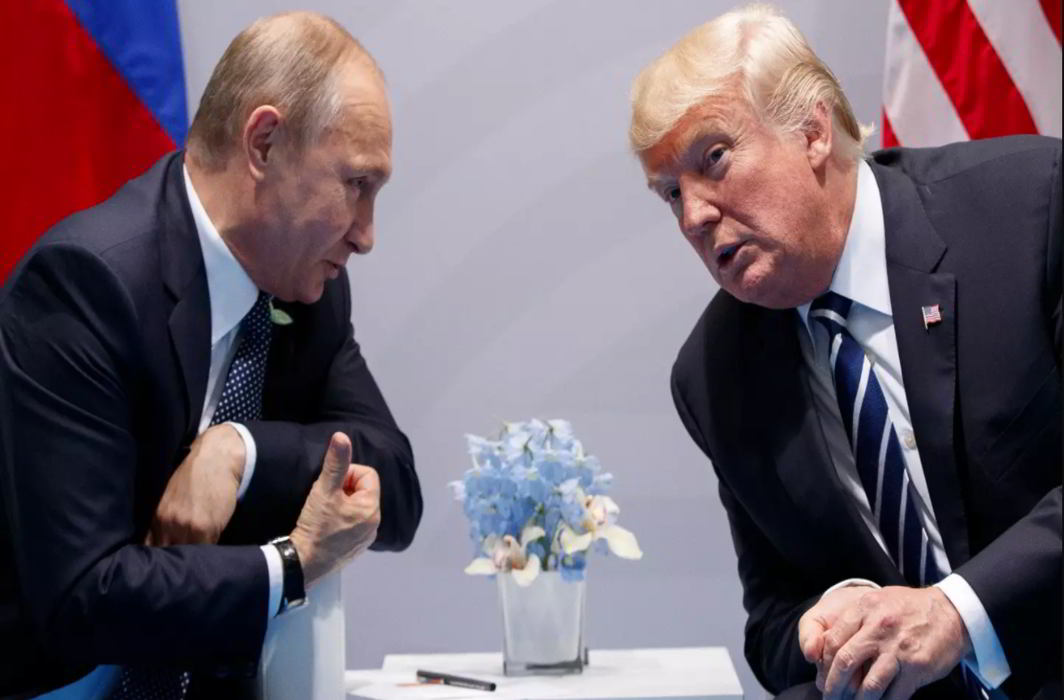
US President Donald Trump and Russian President Vladimir Putin held a phone conversation lasting more than 90 minutes, focusing on escalating tensions in the Middle East and the ongoing war in Ukraine.

According to official statements, the discussion was described as “frank and businesslike,” with both leaders addressing key global security concerns. A major part of the conversation centred on the situation involving Iran and developments in the Persian Gulf.

Putin supported Trump’s decision to extend the ceasefire related to Iran, suggesting that continued restraint could create space for negotiations and help stabilise the region. However, he also issued a strong warning, stating that renewed military action by the United States or Israel could lead to “extremely damaging consequences” not only for Iran but for the wider international community.

Ukraine conflict also discussed

The leaders also discussed the ongoing war in Ukraine, which has continued for several years since Russia’s invasion in 2022. During the call, there were indications of potential efforts toward a temporary ceasefire, although no final agreement has been confirmed.

Reports suggest that the idea of a short-term pause in hostilities was explored, possibly linked to upcoming symbolic dates, but significant differences between the parties remain unresolved.

Focus on diplomacy amid global tensions

The call highlights ongoing diplomatic engagement between Washington and Moscow at a time of heightened geopolitical tensions involving both the Middle East and Eastern Europe.

While both sides acknowledged the importance of dialogue, the situation on the ground in both conflict zones remains complex, with no immediate resolution in sight.

Continue Reading

Latest world news

Trump rejects Iran peace plan as tensions rise, Tehran signals military readiness

Trump rejects Iran’s peace plan, keeping focus on nuclear concerns as Tehran signals readiness and tensions continue to rise.

Published

on

Donald Trump statement

U.S. President Donald Trump has rejected a proposal from Iran aimed at easing ongoing tensions, signaling a continued deadlock between the two countries.

The proposal reportedly included steps linked to easing restrictions around the Strait of Hormuz, a key global oil route. However, the United States declined the offer, maintaining that any agreement must address concerns related to Iran’s nuclear programme.

Washington has made it clear that resolving nuclear issues remains a priority and that partial measures without broader commitments will not be accepted.

Nuclear issue remains central

The U.S. position continues to focus on preventing Iran from advancing its nuclear capabilities. Officials believe that without a comprehensive agreement, temporary arrangements could delay a long-term resolution.

The rejection of the proposal indicates that negotiations remain stalled, with both sides holding firm on key demands.

Iran issues warning

Following the rejection, Iranian officials have issued strong statements, indicating readiness to respond if pressure from the U.S. continues.

Reports suggest that Iran has asserted its military preparedness, warning that any escalation could lead to serious consequences. The remarks reflect growing tensions as diplomatic efforts struggle to produce results.

Rising geopolitical tension

The situation remains volatile, with both countries engaged in a prolonged standoff. Measures such as restrictions on trade routes and strategic pressure points continue to impact the broader region.

The Strait of Hormuz remains a critical factor in the conflict, given its importance for global energy supplies.

Outlook uncertain

With no immediate breakthrough in sight, tensions between the United States and Iran are expected to persist. The lack of agreement on key issues, particularly the nuclear programme, continues to hinder progress toward de-escalation.

Continue Reading

Trending

© Copyright 2022 APNLIVE.com