
Latest world news
Confusion on Mahathir bin Mohamad swearing continues


92 year old would be the oldest elected prime minister in the world history
The swearing-in ceremony for Mahathir bin Mohamad, 92, as the seventh Prime Minister has been delayed for unknown reason. It was supposed to be held at 5 pm (2.30 pm India Time). There is lot of suspense and confusion in Kuala Lumpur about the course of transition of power.
The victory of Malaysia’s opposition parties known as Barisan Nasional (BN) led by Mahathir bin Mohamad, 92, is an unprecedented development in the history of the country. BN coalition has ruled for 61 uninterrupted years since independence.
According to official Bernama news agency, BN chairman Datuk Seri Najib Tun Razak, has called on the people on Thursday afternoon to remain calm and place their trust on the Yang di-Pertuan Agong Sultan Mohammad V to appoint the prime minister. This indicated some confusion and power struggle with BN coalition.
Earlier in the day, Mahathir bin Mohamad addressed a press conference in Kuala Lumpur along with his counterparts from Pakatan Harapan, saying that there was an urgency for the country to form a government “as soon as possible” as the interim government’s tenure had ended last night.
As stated in Article 43 (2) (a) the Federal Constitution, the Yang di-Pertuan Agong is obliged to appoint a member of Parliament (MP) whom he believes has the majority support from other MPs as the prime minister.

“So the people in Pakatan Harapan (The Alliance of Hope)all the members of Parliament belonging to Pakatan Harapan have signed and declared that they support the candidate chosen by the coalition to be the prime minister. That candidate you have heard his name, its Dr Mahathir Mohamad”, he said.
“And we hope that by 5 o’clock today that there will be a swearing in ceremony. Because without prime minister, there will be no government, without government there will be no law and constitution,” he said in a press conference here earlier today on the delay in the swearing in ceremony.
He said that at first, the coalition expected the swearing-in ceremony to held this morning but that there had been some confusion regarding their numbers in Parliament and this delayed the event.
He said the confusion, however, was cleared as Pakatan Harapan now had enough MPs and all of them had signed the declaration, supporting him as the prime minister, which would be delivered to the Yang di-Pertuan Agong.
Mahathir said that as soon as the swearing-in had been completed, the new government would call for a sitting of parliament to make the decisions considered very necessary for the government.
Mahathir bin Mohamad served as country’s prime minister from 1981 to 2003, making his the longest serving Prime Minister. His political career has spanned more than 70 years since he first joined a newly formed United Malays National Organisation (UMNO) in 1956, before forming his own party, Malaysian United Indigenous Party.
Malaysian outgoing Prime Minister Najib Razak, delivered an address on Thursday, after his ruling coalition lost its firm grip on power in an election. The 92-year old Mahathir bin Mohamad, who ruled Malaysia for 22 years, led the unexpected victory over Najib. His return as Prime Minister ends the previously unbroken rule of Barisan Nasional (BN) coalition that had governed since 1957.
Though Mahathir bin Mohamad swearing has not taken place till 8.30 pm (local Kuala Lumpur time), but Wikipedia and Google had updated his name as the country’s Prime Minister.











Latest world news
S Jaishankar says India is a natural option for Russia amid Europe tensions
External Affairs Minister S Jaishankar said India remained a natural option for Russia as Moscow increasingly turned towards Asia amid strained relations with Europe. He highlighted the continuity of India-Russia ties and their significance for the balance of power in Asia.


Latest world news
Putin praises PM Modi, says he has very good ideas on Ukraine war
Russian President Vladimir Putin has praised Prime Minister Narendra Modi for repeatedly raising the need to end the Ukraine war, describing his ideas for a settlement as “very good”.

Latest world news
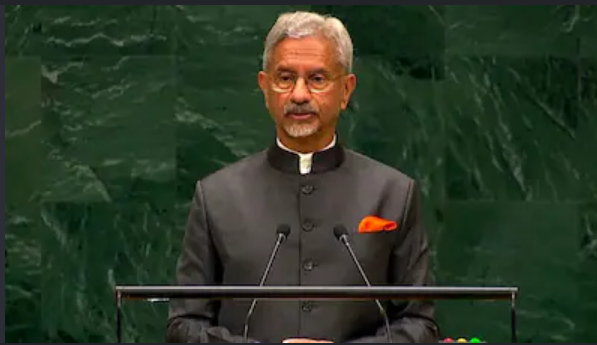
S Jaishankar calls Pakistan a “serial practitioner of terrorism” at UN
S Jaishankar criticised Pakistan at the UN General Assembly, referring to a “serial practitioner of terrorism” and warning against attempts to normalise terrorism.

Supreme Court stays defamation case against Rahul Gandhi over PM Modi remarks

Rahul Gandhi hosts high tea for INDIA bloc after Gyanesh Kumar protests

L Murugan quits Union ministry to strengthen BJP in Tamil Nadu

Amit Shah attacks Rahul Gandhi over Congress poll losses, questions SIR row

BJP focuses on religion as opposition pushes BDM strategy in UP

PM Modi speaks to Mark Carney as India and Canada push to strengthen ties

S Jaishankar says India is a natural option for Russia amid Europe tensions

CJP leaders Saurav Das, Ashutosh Ranka, Ajinkya Shinde sent to 5-day judicial custody
BJP focuses on religion as opposition pushes BDM strategy in UP
L Murugan quits Union ministry to strengthen BJP in Tamil Nadu

Afghan Men Try To Hang With The Jet Engine Of The Aircraft in Kabul- Afghanistan News – Kabul News
Trending Top 10 News: 10000 Crore Fine on Flipkart, Apple to Launch Unique Feature, Hdfc Bank Job Ad

Trending Top 10 News: Nokia 6310, Apple sales, Bachpan ka Pyar Video Kid, Dainik Bhaskar IT Raid

Trending Top 10 News: Canada bans Indian flights, Rain in Delhi NCR, AIMIM Twitter hacked, Raj Kundra case

Trending Top 10 News: Shein India, Apple New Service, Pocket Oxygen, Oppo Launched New Phone
-
 India News22 hours ago
Supreme Court stays defamation case against Rahul Gandhi over PM Modi remarks
-
 India News14 hours ago
Rahul Gandhi hosts high tea for INDIA bloc after Gyanesh Kumar protests
-
 India News13 hours ago
L Murugan quits Union ministry to strengthen BJP in Tamil Nadu
-
 India News14 hours ago
Amit Shah attacks Rahul Gandhi over Congress poll losses, questions SIR row
-
 India News12 hours ago
BJP focuses on religion as opposition pushes BDM strategy in UP
-
 India News2 hours ago
CJP leaders Saurav Das, Ashutosh Ranka, Ajinkya Shinde sent to 5-day judicial custody
-
 Latest world news1 hour ago
S Jaishankar says India is a natural option for Russia amid Europe tensions
-
 India News1 hour ago
PM Modi speaks to Mark Carney as India and Canada push to strengthen ties
