
Latest world news
Germany, France declare new lockdowns to fight Covid-19 resurgence
France and Germany announced new lockdowns on Wednesday. There is a sharp rise in infections across Europe, including the UK, which announced 24,701 new corona cases, and 310 new deaths.

France and Germany announced new lockdowns on Wednesday. There is a sharp rise in infections across Europe, including the UK, which announced 24,701 new corona cases, and 310 new deaths.
Addressing national TV, French President Emmanuel Macron declared tough restrictions. The national lockdown will start from Friday at least for one month requiring people to remain in their homes. People would only be allowed to leave home for essential work or medical emergencies. Non-essential businesses such as restaurants, bars and shops deemed nonessential will close, but schools and factories will remain open, he said.
Daily death rates of COVID deaths in France are at the highest level since April. On Tuesday, 33,000 new cases were confirmed. Macron stated the country risked being “overwhelmed by a second wave that will undoubtedly be harder than the first.”
“Coronavirus is spreading faster than even the most pessimistic forecasts.”
French President Emmanuel Macron
Meanwhile, Germany will also impose a less severe but an emergency lockdown that includes closure of gyms, theatres and restaurants.
Sharp rise in COVID Deaths in Europe figured out shortly
There is a sharp rise in infections across Europe, including the UK which announced 24, 701 new corona cases, and 310 new deaths.
As per a new study revealed in England, almost 100,000 people are actually catching the virus daily. The study also warns researchers that something has to change to lessen the future hazards.
Several countries including France have imposed night curfews. After the introduction of the new restrictions, Europe’s biggest economies figured out sharp falls in the financial markets on Wednesday.
European Commission President Ursula Von den Leyen said, “We are deep in the second wave, and I think this year’s Christmas will be a different Christmas.”
Why is France Acting Now?
French President Macron said in a televised address on Wednesday that France must “brutally apply the brakes to avoid being submerged by the acceleration of the pandemic”.
Coronavirus is spreading faster than even the most pessimistic forecasts, he said.
As per new rules, people would need to fill in a form to justify leaving their homes, as was required in the initial lockdown in March. Social gatherings are also banned. He said that public services and factories will remain open as the economy must not collapse or stop.

New restrictions in Germany
A partial lockdown will start in Germany on November 2 under terms agreed by Chancellor Angela Merkel and the 16 state premiers.
- Schools will remain open.
- Limited social contacts between two households with a maximum of 10 people.
- Tourism will be banned.
- Restaurants will open only for takeaways and bars will be closed.
- Tattoos and massage parlours will shut.
- Also Read: Mayawati says BSP MLAs will vote for BJP to defeat SP in MLC poll
These measures were necessary to avoid a national emergency, said the German Chancellor.







Latest world news
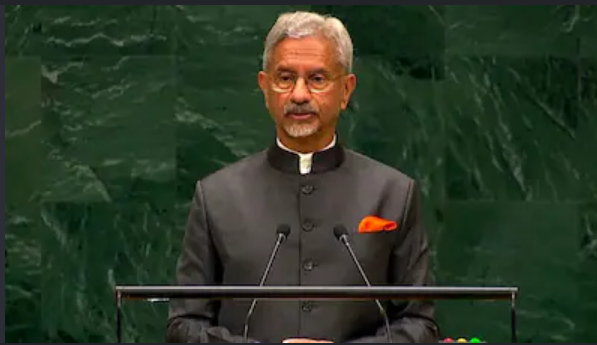
S Jaishankar says India is a natural option for Russia amid Europe tensions
External Affairs Minister S Jaishankar said India remained a natural option for Russia as Moscow increasingly turned towards Asia amid strained relations with Europe. He highlighted the continuity of India-Russia ties and their significance for the balance of power in Asia.


Latest world news
Putin praises PM Modi, says he has very good ideas on Ukraine war
Russian President Vladimir Putin has praised Prime Minister Narendra Modi for repeatedly raising the need to end the Ukraine war, describing his ideas for a settlement as “very good”.

Latest world news
S Jaishankar calls Pakistan a “serial practitioner of terrorism” at UN
S Jaishankar criticised Pakistan at the UN General Assembly, referring to a “serial practitioner of terrorism” and warning against attempts to normalise terrorism.

Rahul Gandhi hosts high tea for INDIA bloc after Gyanesh Kumar protests

L Murugan quits Union ministry to strengthen BJP in Tamil Nadu

Amit Shah attacks Rahul Gandhi over Congress poll losses, questions SIR row

BJP focuses on religion as opposition pushes BDM strategy in UP

CJP leaders Saurav Das, Ashutosh Ranka, Ajinkya Shinde sent to 5-day judicial custody

PM Modi speaks to Mark Carney as India and Canada push to strengthen ties

S Jaishankar says India is a natural option for Russia amid Europe tensions
CJP leaders Saurav Das, Ashutosh Ranka, Ajinkya Shinde sent to 5-day judicial custody
BJP focuses on religion as opposition pushes BDM strategy in UP
L Murugan quits Union ministry to strengthen BJP in Tamil Nadu

Afghan Men Try To Hang With The Jet Engine Of The Aircraft in Kabul- Afghanistan News – Kabul News
Trending Top 10 News: 10000 Crore Fine on Flipkart, Apple to Launch Unique Feature, Hdfc Bank Job Ad

Trending Top 10 News: Nokia 6310, Apple sales, Bachpan ka Pyar Video Kid, Dainik Bhaskar IT Raid

Trending Top 10 News: Canada bans Indian flights, Rain in Delhi NCR, AIMIM Twitter hacked, Raj Kundra case

Trending Top 10 News: Shein India, Apple New Service, Pocket Oxygen, Oppo Launched New Phone
-
 India News16 hours ago
Rahul Gandhi hosts high tea for INDIA bloc after Gyanesh Kumar protests
-
 India News15 hours ago
L Murugan quits Union ministry to strengthen BJP in Tamil Nadu
-
 India News16 hours ago
Amit Shah attacks Rahul Gandhi over Congress poll losses, questions SIR row
-
 India News14 hours ago
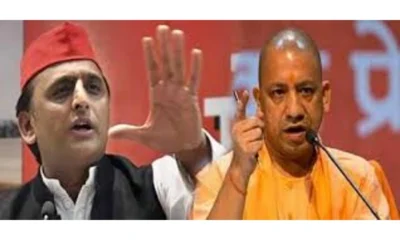
BJP focuses on religion as opposition pushes BDM strategy in UP
-
 Latest world news3 hours ago
S Jaishankar says India is a natural option for Russia amid Europe tensions
-
 India News4 hours ago
CJP leaders Saurav Das, Ashutosh Ranka, Ajinkya Shinde sent to 5-day judicial custody
-
 India News3 hours ago
PM Modi speaks to Mark Carney as India and Canada push to strengthen ties
