
India News
India-US BECA pact: Now, India can see movements of elephants and ants in real time, says retired diplomat Deepak Vohra


India and the United States of America signed several pacts during the recent visit of US Secretary of State Mike Pompeo and Defence Secretary Mark Esper. The two senior American officials met Defence Minister Rajnath Singh and External Affairs Minister S Jaishankar. The key aspect of the discussions is the signing of the Basic Exchange and Cooperation Agreement (BECA). This agreement will give India access to data available with the US military.
BECA assumes strategic importance due to the simmering tensions with China. US President Donald Trump has stayed the course of his run for re-election on the Chinese virus. Given the Democrats have Indian-American Kamala Harris on the bill, Trump has a winner on his hand by tying up with India against China. US politics aside, India has quite a bit to gain.
New equation
Brigadier (Rtd) Vinod Dutta told APN that in the new geopolitical equation, this initiative is going to give good dividends when both countries are looking for peace and stability in the Indian Ocean region. Moreover, it is a clear-cut signal to China’s abusive behaviour and its expansionist designs.

“Two big democracies, 2 real powers and 2 good friends are coming together. Barring Turkey and some odd countries, the entire world has moved towards India, which is seen as a reasonable, formidable regional power,” Dutta said.
Moreover, in the backdrop of the Covid-19 pandemic, the US polls are focused, as noted above, on the Chinese virus with most Chinese products rotting at the ports, he said.
In a similar vein, Japan has already given a $2.2 billion economic stimulus to help manufacturers uproot production from China and relocate else, Dutta noted.
Equal partners, not master-slave
Ambassador (Rtd) Deepak Vohra, the special adviser to Prime Minister Narendra Modi, countered the criticism of India’s American friendship from several quarters. “It is being said that through BECA, India has fallen into the lap of the US. This is not true. This is a partnership between equals and both have fallen into the lap of each other,” he said.
The Indian Army is more than a match to any military in the world, the US has the world’s most awesome technology and when these two powers combine, no one can dare India, Vohra added. Through geospatial intelligence, India will be in a position to see movements of elephants and ants in real time, he said.
The 9/11 effect
Listing the long Indo-US diplomatic journey, Vohra said 9/11 was a watershed moment after which America’s view of India changed. “This got polished with India’s spectacular progress in information technology and military resilience demonstrated in 1999,” Vohra said.
Perhaps, India is being seen by the US as a factor for stability in the arc of Islamic instability stretching from Nigeria to Indonesia. So what we are seeing in Indo-US defence relations in the last two decades is the convergence of security perception and world vision, he added.

Defence ties between India and USA
The world’s oldest and largest democracies have been evolving a defence deal with each other in the recent past. In 2016, the US gave India major defence partner status putting it at par with other major allies. In 2017, the US Congress passed the National Defence Authorisation Act cementing India’s major defence partner status, Vohra said.
Since then the two countries have inked two major agreements, the Logistics Exchange Memorandum of Agreement (LEMOA) and the Communications Compatibility and Security Agreement (COMCASA), and now the BECA, he said.
This indicates the level of trust and comfort in the relations of two countries and a strong message to the world. With the US-India coming together, there is fear and frustration in Beijing and Islamabad, Vohra said.
Amid uncertainties on who will win the US polls, the signing of the BECA deal indicates growing bipartisan support for New Delhi as a bulwark against Beijing despite what occurred in Ladakh.





India News
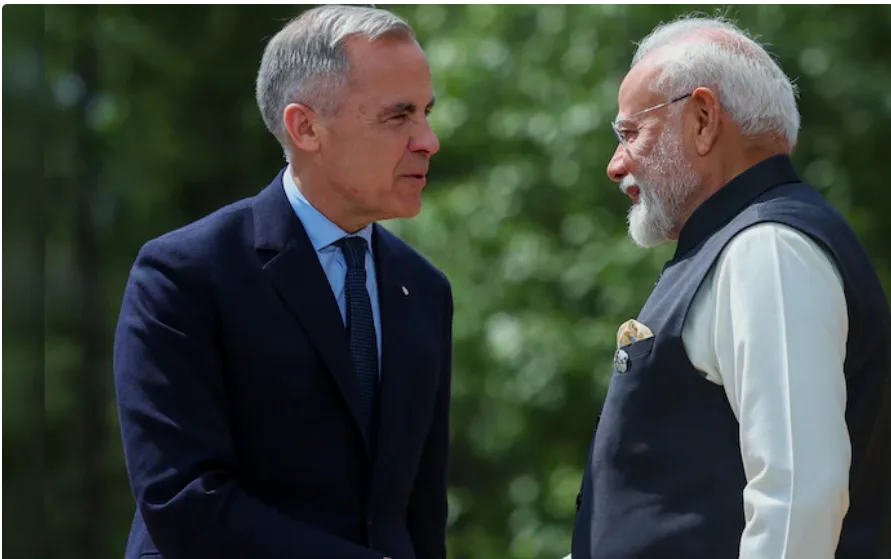
PM Modi speaks to Mark Carney as India and Canada push to strengthen ties
Prime Minister Narendra Modi held a telephone conversation with Canadian Prime Minister Mark Carney on October 13, with both leaders agreeing to strengthen India-Canada ties and pursue concrete outcomes across key areas of their strategic partnership.

India News
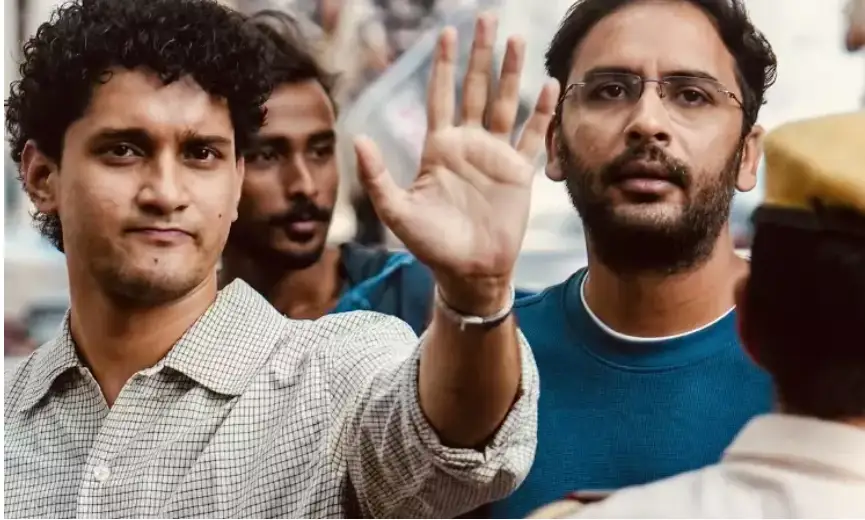
CJP leaders Saurav Das, Ashutosh Ranka, Ajinkya Shinde sent to 5-day judicial custody
Three CJP leaders, Saurav Das, Ashutosh Ranka and Ajinkya Shinde, were placed under preventive arrest following a protest at Delhi’s Jantar Mantar over Chief Election Commissioner Gyanesh Kumar.
India News
BJP focuses on religion as opposition pushes BDM strategy in UP
The BJP is emphasising religious issues ahead of the Uttar Pradesh Assembly elections, while opposition parties are seeking to consolidate Backward, Dalit and Minority voters. Recent exchanges involving Yogi Adityanath, Akhilesh Yadav and Asaduddin Owaisi have added to the political contest over the state’s electoral narrative.


Rahul Gandhi hosts high tea for INDIA bloc after Gyanesh Kumar protests

L Murugan quits Union ministry to strengthen BJP in Tamil Nadu

Amit Shah attacks Rahul Gandhi over Congress poll losses, questions SIR row

BJP focuses on religion as opposition pushes BDM strategy in UP

CJP leaders Saurav Das, Ashutosh Ranka, Ajinkya Shinde sent to 5-day judicial custody

PM Modi speaks to Mark Carney as India and Canada push to strengthen ties

S Jaishankar says India is a natural option for Russia amid Europe tensions
CJP leaders Saurav Das, Ashutosh Ranka, Ajinkya Shinde sent to 5-day judicial custody
BJP focuses on religion as opposition pushes BDM strategy in UP
L Murugan quits Union ministry to strengthen BJP in Tamil Nadu

Afghan Men Try To Hang With The Jet Engine Of The Aircraft in Kabul- Afghanistan News – Kabul News
Trending Top 10 News: 10000 Crore Fine on Flipkart, Apple to Launch Unique Feature, Hdfc Bank Job Ad

Trending Top 10 News: Nokia 6310, Apple sales, Bachpan ka Pyar Video Kid, Dainik Bhaskar IT Raid

Trending Top 10 News: Canada bans Indian flights, Rain in Delhi NCR, AIMIM Twitter hacked, Raj Kundra case

Trending Top 10 News: Shein India, Apple New Service, Pocket Oxygen, Oppo Launched New Phone
-
 India News17 hours ago
Rahul Gandhi hosts high tea for INDIA bloc after Gyanesh Kumar protests
-
 India News16 hours ago
L Murugan quits Union ministry to strengthen BJP in Tamil Nadu
-
 India News17 hours ago
Amit Shah attacks Rahul Gandhi over Congress poll losses, questions SIR row
-
 India News15 hours ago
BJP focuses on religion as opposition pushes BDM strategy in UP
-
 India News5 hours ago
CJP leaders Saurav Das, Ashutosh Ranka, Ajinkya Shinde sent to 5-day judicial custody
-
 Latest world news4 hours ago
S Jaishankar says India is a natural option for Russia amid Europe tensions
-
 India News4 hours ago
PM Modi speaks to Mark Carney as India and Canada push to strengthen ties
