
Latest world news
Saudi-led coalition launch fresh offensive in Yemen


Western powers sharing intelligence on targets in Hudaidah
Despite UN warnings for a major catastrophe, the forces backed by the Saudi-led coalition have launched a fresh offensive against Yemen’s Red Sea port city of Hudaydahearly Wednesday morning.
Saudi-owned Al Arabiya TV network announced the beginning of the operation, which the UN has warned could cause up to 250,000 deaths. It said, “The Yemeni army and resistance forces, aided by the Arab coalition, officially launched the battle to liberate the city and port of Hudeidah… on Wednesday at dawn, after the Houthis rejected peaceful solutions.”
The report quoting military source said a large-scale ground operation supported by the Arab coalition’s aerial and naval cover began to march towardsHudeidah in more than one axis.
Quoting local sources, Al-Arabia said “violent explosions were heard in the city’s suburbs. Later in the morning, the army announced it had gained control of the suburb of Nikhailah in southern Hudeidah”.
On the other hand Houthi controlled Al-Masirah TV network reported that “the Naval Force of the Yemeni Army and Popular Committees targeted a naval battleship of the US-Saudi Aggression in the West Coast Wednesday morning, during an attempt to advance towards Hudaidah coast.” Quoting sources in Naval Forces, Am-Masirah said that “the two missiles targeted hostile battleship of Hudaidah coast. Smoke rose from the targeted battleship after being hit directly, which other battleships of aggression retreat away from the coast of Hudaidah.” The battleship was loaded with forces and military equipment planned a landing operation on the coast of Hudaidah.
The source confirmed that the missiles accurately hit the hostile battleship. There are ongoing attempts to save the forces aboard the vessel by warship and helicopters, Almasirah reported.
Read More: Saudi Arabia hits MSF Cholera center in Yemen
It also said that since the beginning of the US-Saudi aggression, the Naval forces have targeted more than 12 warships and naval units of aggression, including the frigate of the Saudi city and the military Swift ship belonging to the invading UAE forces.”
Meanwhile, Arabic-language al-Masdar News, a trans-Arabic network focused in the conflict zones of the region, has reported heavy Saudi-led airstrikes on Hudaydah as the UAE-backed troops stormed the Houthi positions just south of the city’s airport.
The United Arab Emirates (UAE), a key member of the Saudi-led coalition, had set a Tuesday deadline for the Yemeni HouthiAnsarullah movement to pull out of Hudaydah, which serves as a lifeline for aid delivery to the war-stricken country.
The Saudi-led coalition claims that the HouthiAnsarullah movement is using Hudaydah for weapons delivery, an allegation rejected by the fighters.
Anwar Gargash, Minister of Foreign Affairs of UAE told on Tuesday, “These are the last and final hours to get unconditional guarantees that the Houthis will leave the port.”
Read More: Israeli jets flying over Yemen, alleges Houthi leader
The Houthi movement has pledged strong resistance in the face of the assault, the largest of its kind since March 2015. The Houthi media activists have also reported fierce clashes south of the Hudaydah airport and intense air raids over the entire province.
Shortly after the operation was launched, the Yemeni National Salvation Government’s (Houthi controlled) spokesman, AbdulsalamJaber, said Yemeni armed forces had targeted a UAE warship off the country’s western coast.
Yemen’s Supreme Revolutionary Committee has also said the warship was destroyed in the counter-attack, adding that Saudi-led helicopters rushed to save the forces aboard the vessel, which is now burning near Yemen’s coastline.
Meanwhile, the pro Saudi Arabia Hadi led government has slammed the Houthis saying “(We) have exhausted all peaceful and political solutions to get the Houthi militias out from the Port of Hodeidah. Liberating the port represents the beginning of the Houthis’ collapse. It will secure navigation in Bab-el-Mandeb Strait and it will cut off Iran’s hands that have drowned Yemen with weapons that are used to shed the Yemenis’ blood,” it added.
Read More: Yemen’s Houthi condemn Saudi Arabia for hitting Presidential Office
The ousted government reiterated that it will carry out its national duty towards the people of Hodeidah, with the coalition’s support, after the port is completely liberated and will work to mitigate their suffering and restore life to normal in all districts in the governorate after it’s purged from the Houthis.It also promised the Yemeni people that it will carry the good news “of liberating Hodeidah soon.”
Meanwhile, according to The Wall Street Journal,there are signs that the US military is deepening its role in the assault on Hudaydah, in spite of UN warnings of massive human casualties. Washington, the paper says, is providing its Gulf allies with intelligence on airstrike targets in the port.
It cited American military officials as saying that the US is helping the UAE develop a list of targets meant to be off limits for airstrikes on Hudaydah, with an apparent aim to minimize civilian casualties.
Read More: Yemen: Cracks in anti-Houthi Coalition, fears rise of Iran influence
On Tuesday, the UN, International Red Cross and other aid groups have withdrawn their staff members from the port city in the wake of UAE threats.The UNICEF has also raised alarm over the impact of the attack on children in Hudaydah and beyond.
“There are 11 million children in need of humanitarian aid in this war-torn country. Choking off this lifeline will have devastating consequences for every one of them,” UNICEF Executive Director Henrietta H. Fore said in a statement on Tuesday.
Read More: Saudi Arabia attacks Yemeni capital airport, target drones
On Wednesday, the UN and the International Committee of the Red Cross (ICRC) called on all sides to the Yemen conflict to protect civilians, voicing concerns about the humanitarian situation in Hudaydah.







Latest world news
S Jaishankar says India is a natural option for Russia amid Europe tensions
External Affairs Minister S Jaishankar said India remained a natural option for Russia as Moscow increasingly turned towards Asia amid strained relations with Europe. He highlighted the continuity of India-Russia ties and their significance for the balance of power in Asia.


Latest world news
Putin praises PM Modi, says he has very good ideas on Ukraine war
Russian President Vladimir Putin has praised Prime Minister Narendra Modi for repeatedly raising the need to end the Ukraine war, describing his ideas for a settlement as “very good”.

Latest world news
S Jaishankar calls Pakistan a “serial practitioner of terrorism” at UN
S Jaishankar criticised Pakistan at the UN General Assembly, referring to a “serial practitioner of terrorism” and warning against attempts to normalise terrorism.
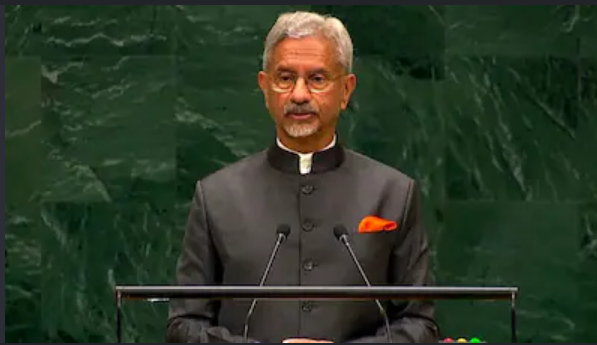

S Jaishankar says India is a natural option for Russia amid Europe tensions

PM Modi speaks to Mark Carney as India and Canada push to strengthen ties

Rahul Gandhi joins India Gate protest by Ankita Bhandari’s parents

Meerut murder: Muskaan Rastogi and Sahil Shukla get death sentence

Supreme Court questions EC over missing records in Sringeri election dispute
Supreme Court questions EC over missing records in Sringeri election dispute
Rahul Gandhi joins India Gate protest by Ankita Bhandari’s parents
Meerut murder: Muskaan Rastogi and Sahil Shukla get death sentence
PM Modi speaks to Mark Carney as India and Canada push to strengthen ties
S Jaishankar says India is a natural option for Russia amid Europe tensions

Afghan Men Try To Hang With The Jet Engine Of The Aircraft in Kabul- Afghanistan News – Kabul News
Trending Top 10 News: 10000 Crore Fine on Flipkart, Apple to Launch Unique Feature, Hdfc Bank Job Ad

Trending Top 10 News: Nokia 6310, Apple sales, Bachpan ka Pyar Video Kid, Dainik Bhaskar IT Raid

Trending Top 10 News: Canada bans Indian flights, Rain in Delhi NCR, AIMIM Twitter hacked, Raj Kundra case

Trending Top 10 News: Shein India, Apple New Service, Pocket Oxygen, Oppo Launched New Phone
-
 Latest world news24 hours ago
S Jaishankar says India is a natural option for Russia amid Europe tensions
-
 India News24 hours ago
PM Modi speaks to Mark Carney as India and Canada push to strengthen ties
-
 India News12 hours ago
Rahul Gandhi joins India Gate protest by Ankita Bhandari’s parents
-
 India News13 hours ago
Meerut murder: Muskaan Rastogi and Sahil Shukla get death sentence
-
 India News12 hours ago
Supreme Court questions EC over missing records in Sringeri election dispute
