
Latest world news
Iraqi jets hit Daesh targets in Syrian territory


In an indication of stabilizing situation inside Iraq after defeating terrorists, Iraqi air force has carried out deadly airstrikes against Daesh (IS) locations in Syria from the Iraqi border side on Friday.
According to Iraqi News, a statement issued by the media office of Prime Minister on Thursday said that the strikes were carried out “depending on orders from (PM) Haidar al-Abadi, who is the commander-in-chief of the armed forces.”
The statement further said that the strikes “would help expedite the elimination of the IS in the region after it was conquered in Iraq.” Al-Sumaria News has reported that the strikes “were carried out by the F16 jets that Iraq owns.”
Read More: More than 100 killed in conflict with Daesh (IS) in Syria, Iraq
On Wednesday last, Iraqi Prime Minister Haidar al-Abadi said security troops will follow IS militants in the whole region, not only in Iraq. The Iraqi-Syrian borders are under the joint control of the troops of military and border guards by both the countries.
However, the Iraqi news agency reports that Daesh (IS) continues to launch sporadic attacks across Iraq against troops. In last December Prime Minister Abadi announced full liberation of Iraqi lands, declaring end of war against (Daesh) IS members. The war against IS has so far displaced at least five million people, the Iraqi media said.
Meanwhile, quoting military sources, the Iraqi news agency reported on Friday that 18 terrorists belonging to Daesh (IS) were killed as Iraqi troops repulsed an attack by the militant group on the Iraqi-Syrian borders, west of Nineveh province.
Read More: Syria-Iraq coordinated offensive cause major defeat to IS terrorists
Lt. Gen. Ali al-Aaraji of Iraqi Army’s 15th Division has reportedly said, “Iraqi troops foiled a fierce attack by IS on the Iraqi-Syrian borders, near Rabei’a town, northwest of Mosul. All the attackers were killed immediately, while their weapons were confiscated.
The statement said that the forces “repelled the attack and were deployed along the borders between Iraq and Syria in al-Yaarabiya region, fearing infiltration by more militants.”

In another related development, Iraqi security forces have killed the right-hand man of Abu Bakr al-Baghdadi, the self-styled Caliph of the Islamic State (IS) in Diyala, the security committee announced on Friday.
While talking to Al-Sumaria News, Sadeq al-Husseini, head of the security committee of Diyala provincial council, said. “The airstrike targeted a rest house of IS members in al-Zor basin, northeast of Baquba, which left two Islamic State members, one of whom was a leader. Preliminary information showed that the leader was the right-hand man of Abu Bakr al-Baghdadi in the so-called Diyala State.”
The security troops shot dead Abu Walid al-Shishany, one of Baghdadi’s closest aides, while he was in a desert area on the outskirts of Kirkuk, earlier in April, the report said.
Thousands of IS militants as well as Iraqi civilians were killed since the government campaign, backed by paramilitary troops and the coalition, was launched in October 2016 to fight against Daesh (IS) and other terror groups.
Meanwhile, Syrian official news agency SANA reports that government forces have been continuing its operations against terrorists in Southern Damascus. Moreover, terrorists have agreed with the government to leave from al-Rheibeh, Jairoud and al-Nasseriyeh in the Eastern Qalamoun region in Damascus countryside.
For last several months, Syrian government forces have been transferring Daesh (IS) and other terrorists from different areas to certain northern areas, which are under the rebels’ control. However, it seems that Damascus has been gathering all the dreaded terrorists either to kill them amass or will allow them to leave after behind the scene deal with the countries who have been allegedly supporting terrorists in the country.





Latest world news
S Jaishankar says India is a natural option for Russia amid Europe tensions
External Affairs Minister S Jaishankar said India remained a natural option for Russia as Moscow increasingly turned towards Asia amid strained relations with Europe. He highlighted the continuity of India-Russia ties and their significance for the balance of power in Asia.


Latest world news
Putin praises PM Modi, says he has very good ideas on Ukraine war
Russian President Vladimir Putin has praised Prime Minister Narendra Modi for repeatedly raising the need to end the Ukraine war, describing his ideas for a settlement as “very good”.

Latest world news
S Jaishankar calls Pakistan a “serial practitioner of terrorism” at UN
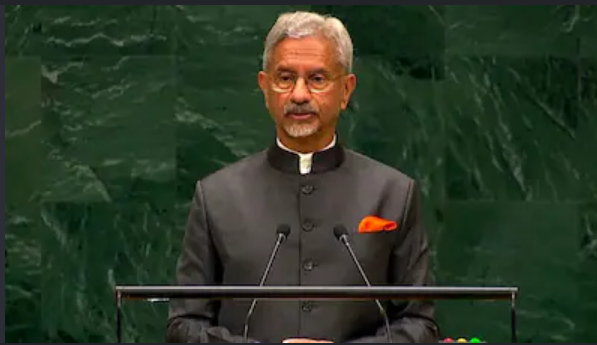
S Jaishankar criticised Pakistan at the UN General Assembly, referring to a “serial practitioner of terrorism” and warning against attempts to normalise terrorism.

Dhruv Rathee gets fresh summons in 2018 BJP IT cell video case

Nobody can browbeat judiciary, Chief Justice warns over Rahul Gandhi’s march

India-US trade deal first phase finalised, drafting underway

Election Commission orders voter roll revision in 17 states, UTs

Actor Imran Khan asked to leave India after CJP protest

Delhi Police offers 11-person limit for CJP’s Connaught Place protest
Actor Imran Khan asked to leave India after CJP protest
Election Commission orders voter roll revision in 17 states, UTs
India-US trade deal first phase finalised, drafting underway
Nobody can browbeat judiciary, Chief Justice warns over Rahul Gandhi’s march

Afghan Men Try To Hang With The Jet Engine Of The Aircraft in Kabul- Afghanistan News – Kabul News
Trending Top 10 News: 10000 Crore Fine on Flipkart, Apple to Launch Unique Feature, Hdfc Bank Job Ad

Trending Top 10 News: Nokia 6310, Apple sales, Bachpan ka Pyar Video Kid, Dainik Bhaskar IT Raid

Trending Top 10 News: Canada bans Indian flights, Rain in Delhi NCR, AIMIM Twitter hacked, Raj Kundra case

Trending Top 10 News: Shein India, Apple New Service, Pocket Oxygen, Oppo Launched New Phone
-
 India News15 hours ago
Dhruv Rathee gets fresh summons in 2018 BJP IT cell video case
-
 India News12 hours ago
Nobody can browbeat judiciary, Chief Justice warns over Rahul Gandhi’s march
-
 India News7 hours ago
India-US trade deal first phase finalised, drafting underway
-
 India News5 hours ago
Election Commission orders voter roll revision in 17 states, UTs
-
 India News5 hours ago
Actor Imran Khan asked to leave India after CJP protest
-
 India News4 hours ago
Delhi Police offers 11-person limit for CJP’s Connaught Place protest
