English हिन्दी
Connect with us

Latest world news

Iraqi Kurds pledge to abide by Supreme Court order banning separate homeland

Published

on

prime-minster-abadi

[vc_row][vc_column][vc_column_text]KRG eager for direct dialogue with Baghdad

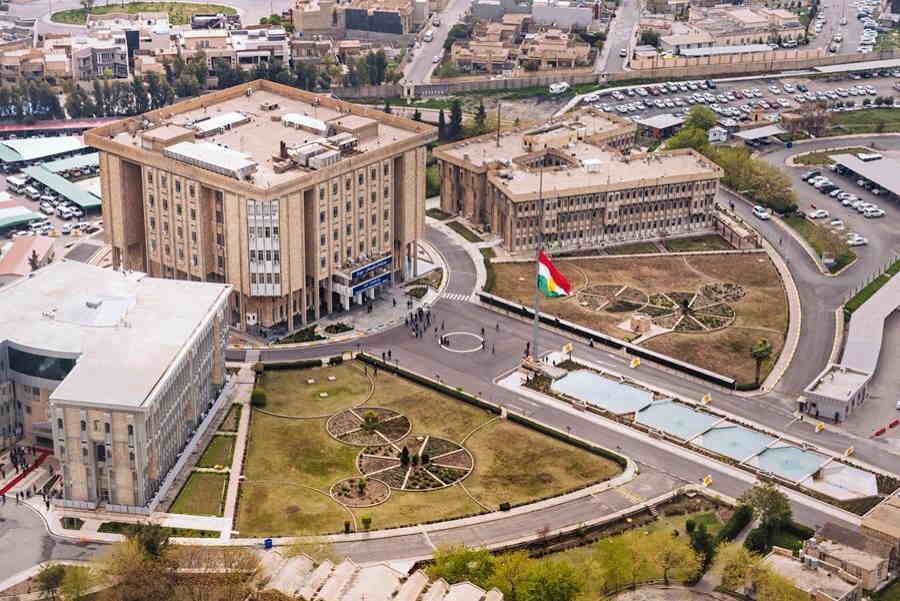
In a major development which may resolve the issue of a separate homeland for Kurds in Iraq, Kurdistan Regional Government (KRG) has on Tuesday pledged to abide by a recent Supreme Court ruling which bans any secession from the country. It has also expressed hope that apex court’s decision will pave the way for a dialogue between central government in Baghdad and KRG headquarter in Erbil.

This is a major development after the controversial independence referendum held on September 25 by Kurdistan Regional Government. KRG chief Masoud Barzani did not heed Baghdad’s appeal not to conduct the referendum. Iran, Turkey and Syria also opposed referendum in Iraqi Kurdistan.

The statement released on Tuesday says that KRG conceded that it would respect the November 6 Supreme Federal Court order banning secession of any region or province from Iraq.

“We believe that this decision must become a basis for starting an inclusive national dialogue between Erbil and Baghdad to resolve all disputes through implementation of all constitutional articles and in a way that guarantees all rights, authorities and status mentioned in the constitution,” the statement said.

The Supreme Court’s ruling came after central government requested the highest judicial body to end any “wrong misinterpretation” of the Iraqi constitution and assert the country’s unity.
kurdistan

Immediately after the September 25 independence referendum, Baghdad asked all countries to stop flight operation to the two international airports in  the region:Erbil and Sulaymaniah. Iraqi army conducted joint exercise with Turkish army along the Iraqi Kurdistan border.

Iran had stopped flight operations and closed its airspace for the flights originating from or destined to the region. Tehran had also threatened to stop supplies through its land routes into Iraqi Kurdistan.

Moreover, the referendum was also followed by smooth taking over oil rich Kirkuk province from the KRG control. Earlier KRG used to claim Kirkuk to be Kurdish area which could be the backbone of the proposed Kurdistan. It is believed that the two major Kurdish groups had differed on their demand for secession from mainland Iraq.

After the debacle, Masoud Barzani resigned from Presidency of KRG and handed over his powers to parliament and executive of the semi-autonomous region.

The referendum was conducted at a time when Iraqi army was engaged in a military campaign to retake the  territories  rune over by Kurdish Peshmarga  militants in the course of the fight against Daesh (IS).

Iraqi Prime Minister Haider al-Abadi had previously called on the Kurdish region to honour the court ruling.

Israel was the only country supporting the independence referendum in Iraqi Kurdistan. Reuters, in one of its analysis had also disclosed that US was also supportive of a separate Kurdistan in the region. However, Washington did not announce its intent around the referendum. [/vc_column_text][/vc_column][/vc_row]
Latest world news

Bangladesh student leader killing sparks allegation against Yunus-led interim government over February polls

The killing of Bangladesh student leader Sharif Osman Hadi has led to protests and serious allegations against the Yunus-led interim government over the February national election.

Published

on

The killing of Bangladesh student leader Sharif Osman Hadi has triggered sharp political allegations, with his family accusing elements within the Muhammad Yunus-led interim government of attempting to derail the country’s upcoming national election scheduled for February.

Sharif Osman Hadi, spokesperson of Inquilab Moncho — a cultural platform that emerged from the July 2024 uprising — was shot at close range in Dhaka on December 12. He was later airlifted to Singapore for advanced treatment, where he succumbed to his injuries on December 18. His death led to violent protests in parts of the capital, including attacks on offices of newspapers and cultural organisations.

Brother alleges political motive behind killing

At a protest gathering in Shahbagh, Sharif Osman Hadi’s brother, Sharif Omar Hadi, accused a section of the interim government of orchestrating the killing to disrupt the election process.

“You had Osman Hadi killed, and now you are trying to foil the election by using this as an issue,” Omar said while addressing protesters. He claimed that his brother was firm on holding the national election by February and did not align himself with any agency or “foreign masters”.

Omar demanded a swift and transparent trial, warning that delays would damage the election environment. He alleged that the authorities have failed to show any visible progress in the investigation so far.

“If justice for Osman Hadi is not delivered, you too will be compelled to flee Bangladesh one day,” Omar said, drawing an apparent reference to former Prime Minister Sheikh Hasina, who left the country following last year’s nationwide protests that resulted in a change of regime.

Claims of wider conspiracy surface

Leaders of Inquilab Moncho also alleged that the killing was part of a broader conspiracy to undermine the gains of the July uprising and weaken Bangladesh’s sovereignty. They claimed that international intelligence agencies and their local collaborators were involved in the murder.

The group demanded that the government identify and present the accused through an investigation meeting international standards within a fixed timeframe. They warned that protests would intensify if their demands were not met.

Protesters said demonstrations would continue until justice is delivered for Sharif Osman Hadi.

Protest plans and political developments

Leaders of Inquilab Moncho announced that they would not hold any programmes on December 25, the day when Bangladesh Nationalist Party’s acting chairman Tarique Rahman is scheduled to return to the country. They expressed hope that Rahman would extend solidarity to their movement demanding justice.

The allegations and ongoing protests have added to political tensions in Bangladesh as the interim government faces growing scrutiny ahead of the proposed February election.

Continue Reading

Latest world news

H-1B visa renewal delays leave hundreds of Indian workers stranded amid US social media checks

Hundreds of Indian H-1B visa holders remain stranded after US consular interviews were delayed due to enhanced social media screening.

Published

on

visa apply

Hundreds of Indian professionals holding H-1B visas are facing unexpected uncertainty after travelling to India for routine visa renewals, only to find their US consular interviews postponed to next year due to a new social media vetting policy introduced by the US administration

Many of these workers had scheduled appointments between December 15 and 26, a window that coincided with the US holiday season. However, interviews planned for mid to late December have now reportedly been pushed to as late as March, leaving employees unable to return to their jobs in the United States.

Appointments postponed without clarity

Immigration law firms say they are dealing with a large number of affected clients. Some attorneys have described the situation as unprecedented, highlighting the lack of clarity around how long the delays may last. Workers who travelled for personal reasons, including family events, now face the risk of prolonged stays in India while their employment continues overseas.

In one reported case, a US-based professional who returned to India this month had two consular appointments scheduled in December, both of which have since expired. Experts have raised concerns over how long US employers may be willing to wait for employees whose return timelines remain uncertain.

US embassy advisory and vetting policy

Earlier this month, the US Embassy in India issued an advisory stating that applicants who arrive at a consulate on a previously scheduled interview date, after being informed of a reschedule, will not be allowed entry. Applicants have been asked to wait for their new appointment dates.

According to official communication, the delays are linked to enhanced social media screening. The policy requires visa applicants to keep their social media profiles public so authorities can assess whether any applicant poses a risk to national security or public safety. While such scrutiny earlier applied to students and exchange visitors, it has now been extended to H-1B and dependent H-4 visa applicants.

Impact on Indian professionals and tech firms

India accounts for nearly three-fourths of all H-1B visa holders, according to data released earlier this year by US immigration authorities. The current delays therefore have a disproportionate impact on Indian professionals working in the US technology and services sectors.

Some US-based technology companies have reportedly cautioned employees against international travel after learning that visa re-entry processing delays at American embassies and consulates could stretch for several months. Legal advisers have warned that overseas travel at this stage could result in extended stays outside the US.

Growing scrutiny of the H-1B programme

The social media vetting requirement is part of a broader tightening of the H-1B programme under the Donald Trump administration. The skilled worker visa pathway has faced increased scrutiny in recent months, including the imposition of a one-time fee on new H-1B visas. The US has also paused certain immigration applications from select countries following security-related concerns.

For now, affected workers and their employers are left waiting, as uncertainty continues over when regular visa processing timelines will resume.

Continue Reading

Latest world news

Hindu man lynched and set on fire in Bangladesh during anti-India protests

A Hindu man was lynched and set on fire in Bangladesh’s Mymensingh district amid rising anti-India protests after the death of a radical student leader.

Published

on

Hindu man set to fire in Bangladesh

A disturbing incident of mob violence against a minority community has been reported from Bangladesh, where a Hindu man was lynched and his body set on fire amid escalating anti-India protests following the death of a radical student leader.

Mob lynching reported from Mymensingh district

A 30-year-old Hindu man, Dipu Chandra Das, was lynched by a mob in Bhaluka Upazila of Mymensingh district after allegations surfaced that he had insulted Islam. According to media reports, the incident took place on Thursday night at an industrial area where Das was employed.

Das was accused of making derogatory remarks about Islam and Prophet Muhammad during an event organised at his workplace to mark World Arabic Language Day. The allegations spread rapidly within the factory premises and nearby areas, leading to heightened tension.

Eyewitness accounts cited in media reports said Das was assaulted by an angry crowd and died on the spot. After his death, the mob allegedly tied his body to a tree, beat it while raising slogans, and later set it on fire.

Body burnt at multiple locations, traffic disrupted

The violence did not stop there. Reports suggest the mob later moved Das’s body to a nearby bus stand area and again set it ablaze. Subsequently, the body was taken to the Dhaka–Mymensingh highway, where it was burned once more, leading to panic among locals and a temporary disruption of traffic on the busy stretch.

Confirming the incident, the local administration said a person was killed following allegations of insulting the Prophet. Officials added that the body has been taken into police custody and the situation is being monitored.

Interim government condemns violence

The lynching took place against the backdrop of widespread protests across Bangladesh following the death of Sharif Osman Hadi, a prominent leader linked to the July Uprising. The Muhammad Yunus-led interim government strongly condemned the killing, stating that there is no place for such violence in the country.

In an official statement, the government appealed to citizens to reject hatred and violence, stressing that those responsible for the crime would not be spared.

Anti-India sentiment intensifies after Hadi’s death

Tensions have been high in Bangladesh since Hadi’s death, with protests, vandalism and arson reported in several cities. Demonstrators targeted prominent media offices and symbolic locations linked to the country’s political history.

Hadi was known for his sharp criticism of India and the former prime minister, whose government was ousted during last year’s uprising. Groups formed after the political upheaval have been actively mobilising street protests and campaigns that fuel anti-India sentiment, particularly after the former premier went into exile in India.

The lynching of Dipu Chandra Das has further raised concerns over the safety of minority communities amid the ongoing unrest in the country.

Continue Reading

Trending

© Copyright 2022 APNLIVE.com