English हिन्दी
Connect with us

Latest world news

Israeli operation targets Iran’s nuclear sites, killing top IRGC general and scientists

In a dramatic escalation, Israel’s Operation Rising Lion hit Iran’s Natanz nuclear site and killed IRGC chief Hossein Salami, marking a severe blow to Tehran’s military and nuclear infrastructure.

Published

on

israel operation rising

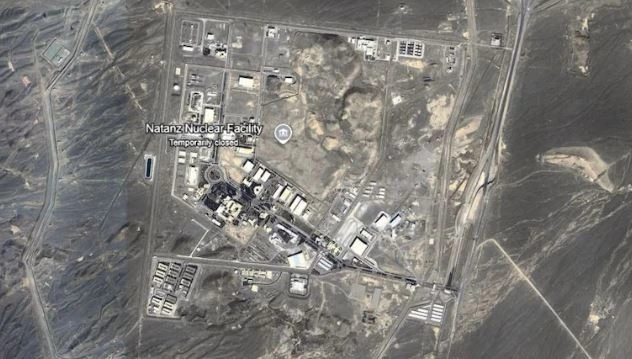
In a dramatic escalation of hostilities, Israel launched a large-scale aerial operation—termed Operation Rising Lion—early Friday morning, targeting Iran’s key nuclear and military infrastructure. The Israeli Air Force reportedly deployed dozens of jets in a sweeping attack that struck multiple high-value locations, most notably Iran’s uranium enrichment site at Natanz, where billowing black smoke was seen in the aftermath.

Iran later confirmed through state television that Major General Hossein Salami, the head of the Islamic Revolutionary Guard Corps (IRGC), was killed in what it described as a “direct assassination” by Israeli forces. Salami was considered the chief architect of Iran’s proxy military engagements across the region. His death, alongside a senior IRGC commander and two nuclear scientists, prompted Tehran to announce a state of national mourning.

Direct hit on Iran’s nuclear heartland: Natanz

The Natanz enrichment complex, spanning over 100,000 square metres in Isfahan province, was the primary target of the Israeli assault. The site, partially buried beneath desert terrain, houses thousands of centrifuges central to Iran’s uranium enrichment programme. Early visuals released briefly by Iranian state media showed fires near the Pilot Fuel Enrichment Plant (PFEP), with potential structural damage even to the more protected Fuel Enrichment Plant (FEP) located underground.

Security analysts suggest that even surface-level damage at Natanz could significantly disrupt Iran’s most fortified nuclear activities. The strike marks Israel’s most direct physical action against Iran’s nuclear assets since the historic Stuxnet cyberattack.

Iran’s nuclear network: Fordow, Isfahan, Khondab and more

Aside from Natanz, several other nuclear installations were reportedly impacted:

  • Fordow, south of Tehran, is Iran’s most fortified site, hidden deep inside a mountain. The site houses advanced IR-6 centrifuges, enriching uranium up to 60% purity. U.S. intelligence noted that Iran had doubled its centrifuge count here in 2024.
  • Isfahan, home to the Uranium Conversion Facility (UCF), processes raw yellowcake uranium into gaseous uranium hexafluoride for enrichment.
  • Khondab, formerly the Arak Heavy Water Reactor, holds potential for plutonium production. Although halted under the JCPOA, its strategic relevance remains.
  • The Tehran Research Reactor and the Bushehr civilian power plant were not directly reported as targets, but their strategic roles in training and energy highlight the broader nuclear landscape under scrutiny.

Tehran reels under shock, prepares for retaliation

In the capital, Tehran residents awoke to explosions and sirens, with smoke seen rising from the western Chitgar district. Iran soon closed its airspace, while Israel imposed a full airspace lockdown, anticipating retaliatory missile or drone attacks.

Israeli Defence Minister Israel Katz acknowledged the strikes, calling them preemptive and warning of imminent retaliation from Iran.

This development comes amid increasing concerns over Iran’s “breakout time”—the period needed to enrich uranium to weapons-grade. Recent estimates suggest that this duration has dropped to mere weeks, down from over a year under the 2015 Joint Comprehensive Plan of Action (JCPOA).

The International Atomic Energy Agency (IAEA) has assessed that Iran now possesses enough 60% enriched uranium that, if processed further to 90%, could yield materials for up to four nuclear warheads—a charge Tehran disputes, insisting its nuclear pursuits remain peaceful.

Continue Reading

Latest world news

US, Nigerian forces kill ISIS global deputy chief Abu Bilal al-Minuki, says Trump

Donald Trump announced that US and Nigerian forces had eliminated Abu Bilal al-Minuki, described as ISIS’s global second-in-command, in a joint Africa operation.

Published

on

trump

US President Donald Trump on Friday announced that American and Nigerian forces had killed Abu Bilal al-Minuki, whom he described as the global second-in-command of the Islamic State group (ISIS), during a joint military operation in Africa.

According to Trump, the operation was conducted under his direction and involved US forces working alongside the Armed Forces of Nigeria in what he called a “meticulously planned” and “very complex” mission.

In a statement posted on Truth Social, Trump said Abu Bilal al-Minuki believed he could remain hidden in Africa, but intelligence sources had tracked his movements. He also claimed the ISIS leader had been among the “most active terrorists in the world.”

Trump thanked the Nigerian government for cooperating in the operation and said the killing would weaken ISIS’s global activities. However, officials did not immediately release details about the exact location or timing of the mission.

There has been no independent confirmation yet from Nigerian authorities regarding the operation or al-Minuki’s role within the terror organisation.

Continue Reading

Latest world news

PM Modi arrives in Netherlands to strengthen bilateral cooperation

PM Modi has reached the Netherlands for high-level talks aimed at expanding India’s cooperation with the European nation in trade, technology, defence and renewable energy sectors.

Published

on

PM Narendra Modi

Prime Minister Narendra Modi arrived in the Netherlands on Friday as part of his ongoing five-nation diplomatic visit aimed at strengthening India’s partnerships across Europe and West Asia.

The Prime Minister is expected to hold bilateral discussions with Dutch Leadership in The Hague, with talks likely to focus on trade, investment, technology, defence cooperation and renewable energy.

During the visit, PM Modi will also meet King Willem-Alexander and Queen Máxima of the Netherlands. He is additionally scheduled to interact with members of the Indian community and Dutch business leaders.

The Netherlands visit follows PM Modi’s brief stop in the United Arab Emirates, where discussions were held on energy and strategic cooperation.

According to officials, India and the Netherlands have expanded cooperation in recent years beyond traditional sectors such as agriculture, water management and healthcare. Collaboration has increasingly grown in areas including semiconductors, innovation, maritime security, renewable energy and advanced technologies.

The Netherlands remains one of India’s major trade partners in Europe. Bilateral trade between the two countries was valued at around USD 27.8 billion in 2024-25, while the Netherlands is also among the top foreign investors in India.

PM Modi’s Europe tour also includes visits to Sweden, Norway and Italy as India seeks to strengthen economic and strategic engagement with European nations.

Continue Reading

Latest world news

Trump returns from China as report claims US preparing major new Iran strikes

Donald Trump’s return from China has intensified speculation over possible new US military action against Iran as diplomatic efforts remain uncertain.

Published

on

donald-trump

Donald Trump, Iran strikes, US Iran tensions, Epic Fury 2.0, Trump China visit, Strait of Hormuz, Iran nuclear issue, US foreign policy, Xi Jinping, Middle East tensions

US President Donald Trump has returned from his China visit amid reports claiming his administration could be preparing a new phase of military action against Iran, described in some reports as “Epic Fury 2.0”.

The development comes as tensions between Washington and Tehran continue over Iran’s nuclear programme and the security situation around the Strait of Hormuz, a key global oil shipping route. During his Beijing visit, Trump said both the United States and China agreed that Iran should not possess nuclear weapons and that the Strait of Hormuz must remain open.

According to reports, the Trump administration has shown increasing frustration with stalled negotiations involving Iran. Trump recently said he was “losing patience” with Tehran while also hinting at possible further military action if a deal is not reached.

The phrase “Epic Fury 2.0” appears linked to the earlier “Operation Epic Fury”, a large-scale US military campaign launched earlier this year targeting Iranian military infrastructure. US officials previously claimed the operation significantly weakened Iran’s defence capabilities.

Trump’s China visit itself was dominated by discussions around the Iran conflict, trade issues and regional stability. Reports said the US President sought support from Chinese President Xi Jinping on preventing escalation in the Middle East and ensuring free movement through the Strait of Hormuz.

However, no official announcement has yet been made by the White House regarding any fresh military operation against Iran. The reports have emerged amid continuing uncertainty over diplomacy and ceasefire efforts in the region.

Continue Reading

Trending

© Copyright 2022 APNLIVE.com