
Latest world news
K-pop Sounding in North Korea, Series of Unusual Moves


K-pop stars landed on North Korea. The 120-member group including popular girlband Red Velvet arrived in Pyongyang for cross-border cultural performances, under the theme title “Spring is Coming”.
This is not the first time that K-pop is ever heard in North Korea.
In 2015 when the tension between two Koreas was increasing, South Korea adopted a strategy against North Korea by playing famous K-pop songs through loudspeakers along the border of South and North Korea.
However on 1 April, 2018, the purpose for the sound of K-pop was different from 3 years back. Not for psychological warfare but for peace, the performance is reply from South Korea only after two weeks that North Korea’s arts group finished their last performance at Pyeongchang Winter Olympics in South Korea.
 The world is paying attention to the change of atmosphere between South and North Korea after Pyeongchang Winter Olympics. North Korean leader, Kim Jong Un, has sent high ranking officials of his government body to South Korea during the Olympics.
Among the special envoys, he included his younger sister, Kim Yo-jong, who is director of the Propaganda and Agitation Department of the Workers’ Party of Korea. Kim Yong-nam, President of the Presidium of the Supreme People’s Assembly of North Korea, went along with her.
During Ms. Kim’s visit in South Korea, she delivered a personally handwritten letter from Kim Jong Un to South Korean President, Moon Jae-in and invited President Moon to North Korea. Answering this exceptional willingness of North Korea for mutual exchange, South Korea rapidly carried out the procedure not to miss this opportunity to have Kim present in the place of conversation.
On 5th of March, President Moon sent his delegation of 5 people to North Korea including Chung Eui-yong, the Director of the National Security Office, and Chun Hae-sung, vice unification minister.
After two days of stay in North Korea, they returned with more than hoped-for message from Mr. Kim which is the willingness of denuclearization of the Korean Peninsula. The 3rd inter-Korean summit, planned to be held on 27 April, is another achievement from this meeting.
Soon after, President Moon sent special envoy led by Kang Kyung-wha, Minister of Foreign Affairs of South Korea, to the US. Kim’s invitation was delivered to the US President, Mr. Donald Trump. As President Trump accepted Kim’s offer to meet, the two leaders’ landmark talk is likely to take place at the end of May.
India welcomed the first historical meeting between US and North Korea. At the same time, India emphasised that the proliferation linkages of North Korea’s nuclear and missile programme needs to be dealt with care.
On 9 March, Indian foreign ministry spokesman, Raveesh Kumar said: “We welcome these developments. India supports all the efforts to bring about peace and stability in the Korean Peninsula through dialogue and diplomacy. We hope that such engagement will help in reducing tensions and pave the way for lasting peace and reconciliation in the Korean peninsula.”
“As we have said before, we also believe that any solution to the issues in Korean Peninsula must also take into account and address concerns about the proliferation linkages of DPRK’s (North Korea’s) nuclear and missile programme,” Kumar said.
Even though not directly mentioned, Kumar’s word are seen as India’s suspicions and concerns over possible conjunction between North Korea and Pakistan for nuclear and missile program. Since February 2013, India has insisted that North Korea has imported highly enriched uranium from Pakistan for its nuclear and missile programme.
The international society is welcoming the sudden change of North Korea but remains in the standpoint of sanctions against the provocation from North Korea with its nuclear missile.
Reuters reported on 30 March that the UN Security Council has added a great number of shipping and trading companies which seems to have violated sanctions against North Korea to their blacklist. The numbers are highest ever totalling 47 including 27 ships related with North Korea, 21 shipping and trading companies, and 1 personal vessel.
These are on the list of those who helped North Korea with oil and coal smuggling through the sea. While North Korea is actively engaging in diplomacy regarding denuclearization, it is noted that the United Nations has raised its bar for sanctions against North Korea.
The place for the summit meeting between North and South Korea and between the US and North Korea is becoming an issue. The North and South Korea summit will occur at the House of Peace located towards south of the Panmunjum(the Joint Security Area of Panmunjeom).
The two summits that are held previously between North and South Korea was different from the one that was held in Pyeongyang. South Korea will suggest North Korea representatives to come into the meeting room by their feet.
The meeting place for The US and North Korea is undecided. As far as need for a neutral place is concerned, Beijng, Vladivostok, and Ulaanbaatar are strong candidates.







Latest world news
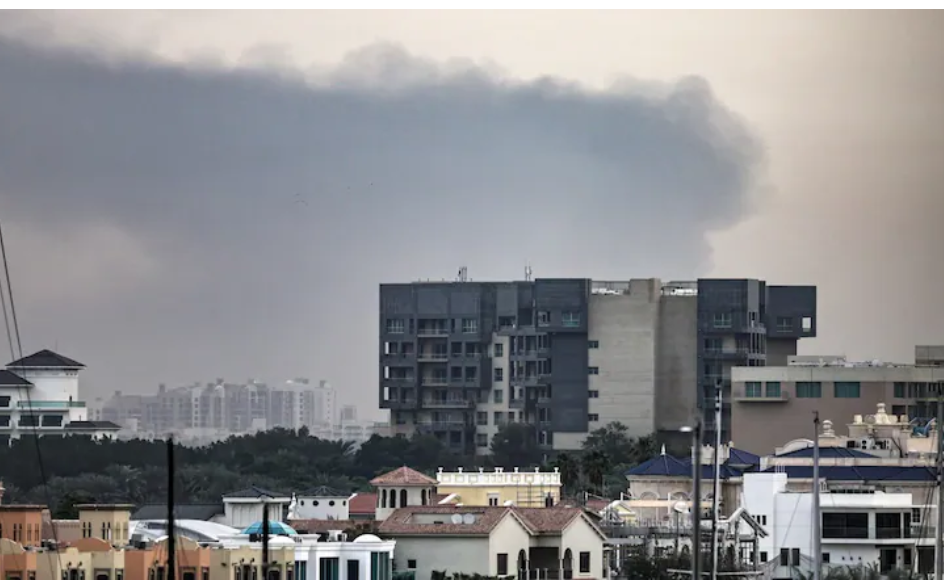
Fire near Dubai International Airport after drone incident, flights temporarily suspended
Flights at Dubai International Airport were temporarily suspended after a drone-related incident caused a fuel tank fire near the facility. Authorities confirmed the blaze was contained and no injuries were reported.


Latest world news
Dubai hit again within 24 hours as debris strikes building, drone targets US embassy in Baghdad
A building in Dubai’s financial hub was struck by debris from an intercepted attack while a drone targeted the US embassy in Baghdad, officials said.
Latest world news
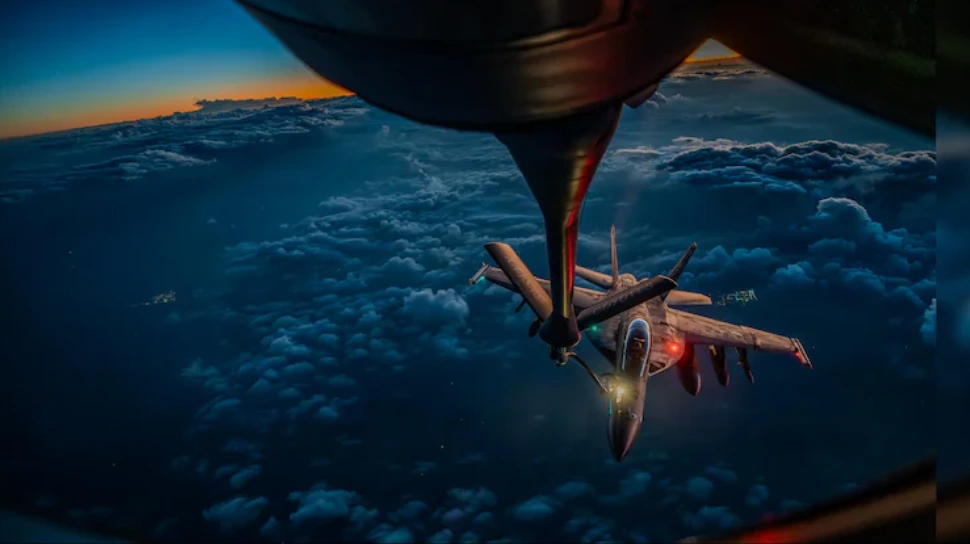
US KC-135 refuelling aircraft crashes in Iraq amid ongoing Iran war
A US KC-135 refuelling aircraft crashed in western Iraq during the ongoing Iran war, marking the fourth American aircraft lost in the conflict, according to the US military.

Fire near Dubai International Airport after drone incident, flights temporarily suspended

Arvind Kejriwal moves Supreme Court against Delhi High Court order in excise policy case

Fire in ICU at SCB medical college hospital in Cuttack kills 10 patients

Rajya Sabha elections Voting begins for 37 seats across 10 states

BJP releases first list of 47 candidates for Kerala assembly polls
BJP releases first list of 47 candidates for Kerala assembly polls
Fire in ICU at SCB medical college hospital in Cuttack kills 10 patients
Arvind Kejriwal moves Supreme Court against Delhi High Court order in excise policy case
Rajya Sabha elections Voting begins for 37 seats across 10 states
Fire near Dubai International Airport after drone incident, flights temporarily suspended

Afghan Men Try To Hang With The Jet Engine Of The Aircraft in Kabul- Afghanistan News – Kabul News
Trending Top 10 News: 10000 Crore Fine on Flipkart, Apple to Launch Unique Feature, Hdfc Bank Job Ad

Trending Top 10 News: Nokia 6310, Apple sales, Bachpan ka Pyar Video Kid, Dainik Bhaskar IT Raid

Trending Top 10 News: Canada bans Indian flights, Rain in Delhi NCR, AIMIM Twitter hacked, Raj Kundra case

Trending Top 10 News: Shein India, Apple New Service, Pocket Oxygen, Oppo Launched New Phone
-
 Latest world news21 hours ago
Fire near Dubai International Airport after drone incident, flights temporarily suspended
-
 India News21 hours ago
Arvind Kejriwal moves Supreme Court against Delhi High Court order in excise policy case
-
 India News21 hours ago
Fire in ICU at SCB medical college hospital in Cuttack kills 10 patients
-
 India News21 hours ago
Rajya Sabha elections Voting begins for 37 seats across 10 states
-
 India News11 hours ago
BJP releases first list of 47 candidates for Kerala assembly polls
