English हिन्दी
Connect with us

Latest world news

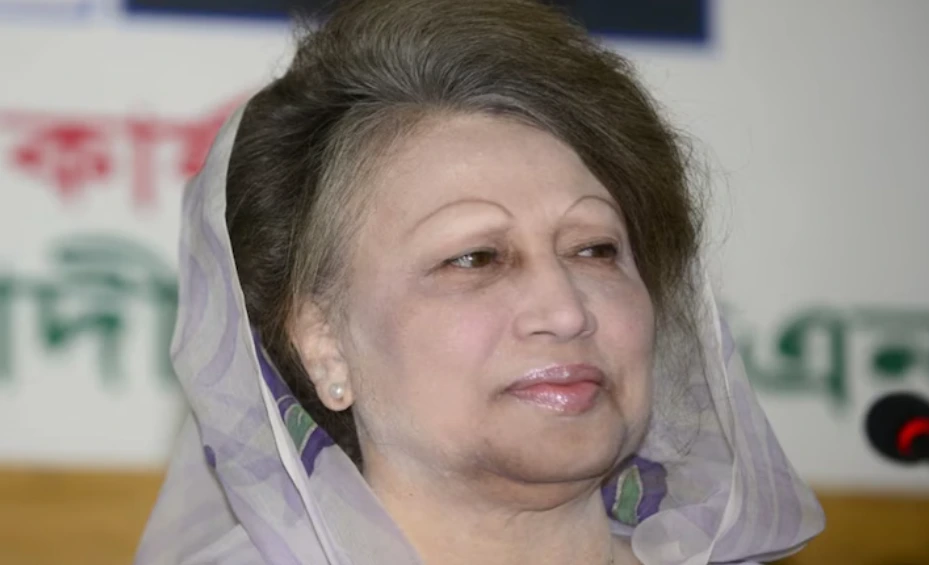
Khaleda Zia, former Bangladesh prime minister and BNP chief, dies at 80

Former Bangladesh prime minister and BNP chief Khaleda Zia died at 80 after a prolonged illness, marking the end of an era in Bangladeshi politics.

Published

on

Khalida zia

Bangladesh’s former Prime Minister and Bangladesh Nationalist Party (BNP) chairperson Begum Khaleda Zia passed away on Tuesday morning at the age of 80 after a prolonged illness. She died at around 6 am while undergoing treatment at a private hospital in Dhaka, the BNP said in an official statement.

Khaleda Zia had been hospitalised for over a month after being admitted with serious infections affecting her heart and lungs. She was also suffering from pneumonia and multiple long-term health complications, including liver cirrhosis, diabetes, arthritis, and chronic ailments related to her kidneys, heart, lungs, and eyesight. A team of specialists from several countries was overseeing her treatment, according to media reports.

The BNP, confirming her death, said prayers were being offered for the forgiveness of her soul and urged supporters and citizens to remember her in their prayers.

Prime Minister Modi expresses grief

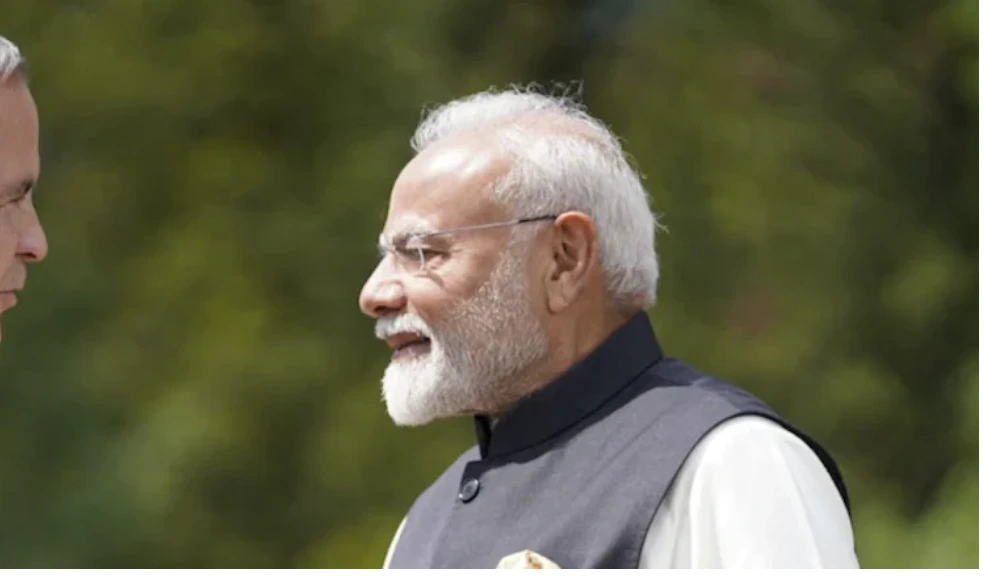
Prime Minister Narendra Modi condoled Khaleda Zia’s demise, describing her as a towering political figure and Bangladesh’s first woman prime minister. In a post on X, Modi extended condolences to her family and the people of Bangladesh, noting that her contributions to the country’s development and India-Bangladesh relations would be remembered.

He also recalled a meeting with Khaleda Zia in Dhaka in 2015 and said her vision and legacy would continue to guide bilateral ties between the two nations.

A political journey shaped by upheaval

Khaleda Zia formally entered politics after the assassination of her husband, former President Ziaur Rahman, in 1981. Ziaur Rahman had founded the BNP, and following his death, Khaleda Zia joined the party to hold it together during a period of uncertainty. She went on to become BNP vice-president in 1984 and its chairperson later that year.

Her rise coincided with a broader pro-democracy movement in Bangladesh. Along with Sheikh Hasina of the Awami League, Khaleda Zia played a key role in the popular uprising that ended military rule under Hossain Mohammad Ershad in 1990. Their cooperation later turned into a bitter rivalry that dominated Bangladesh’s political landscape for decades.

Three-time prime minister and key reforms

Khaleda Zia became Bangladesh’s first female prime minister after the BNP emerged victorious in the 1991 parliamentary elections. During her tenure, she introduced the parliamentary system of government, replacing the presidential model, and ensured that executive power rested with the prime minister.

She also played a role in introducing the caretaker government system to oversee free and fair elections, lifted restrictions on foreign investment, and made primary education compulsory and free.

After a brief and contested second term in 1996, Khaleda Zia returned to power in 2001 with a decisive mandate, beginning her third term as prime minister. However, this phase was marked by allegations of corruption, rising militancy, and political violence, including a deadly grenade attack at an opposition rally in 2004.

Legal battles and declining health

Following political instability, an army-backed interim government took charge in 2006, and Khaleda Zia was later jailed on corruption charges. Although she was released ahead of the 2008 elections, she never returned to power.

In subsequent years, she faced multiple convictions, which she and her party described as politically motivated. Due to worsening health, she was shifted to house arrest on humanitarian grounds in 2020 and later freed in 2024 following a change in political circumstances. Earlier this year, Bangladesh’s Supreme Court acquitted her and her son Tarique Rahman in key corruption cases.

Early life and family

Born in 1945 in Jalpaiguri, then part of British India, Khaleda Zia moved to East Bengal with her family after Partition. She completed her schooling in Dinajpur and married Ziaur Rahman in 1960. She is survived by her elder son Tarique Rahman, his wife Zubaida Rahman, and their daughter. Her younger son, Arafat Rahman Koko, passed away earlier.

With her death, Bangladesh has lost one of its most influential and polarising political leaders, whose legacy shaped the country’s politics for over three decades.

Latest world news

India withdraws diplomats’ families from Bangladesh amid rising security concerns

India has recalled the families of its diplomats posted in Bangladesh as a precautionary measure amid growing security concerns linked to extremist activity and political unrest.

Published

on

India has decided to withdraw the families and dependents of its diplomats posted in Bangladesh in view of growing security concerns linked to increased extremist activity in the country.

According to official sources, the decision applies to the Indian High Commission in Dhaka as well as other diplomatic posts across Bangladesh. The move comes weeks before the country is scheduled to hold parliamentary elections.

“Given the security situation, as a precautionary measure, we have advised the dependents of our officials in the high commission and other posts to return to India,” sources said, adding that all Indian missions in Bangladesh will continue to remain open and fully operational.

Non-family postings signal heightened alert

The advisory effectively places Indian diplomatic postings in Bangladesh under a “non-family” status, a step generally adopted in locations considered unstable or facing elevated security risks. However, there is no official clarity yet on the timeline for the withdrawal of families or when they may be allowed to return.

India currently maintains its high commission in Dhaka along with consulates in Chattogram, Khulna, Rajshahi, and Sylhet.

Strain in bilateral ties amid internal unrest

India-Bangladesh relations have faced strain since the interim government led by Muhammad Yunus assumed power in 2024 following the collapse of the Sheikh Hasina administration. Both countries have heightened security at their respective diplomatic missions in recent weeks amid protests and political unrest.

Concerns have also been raised over a spike in incidents of violence against minorities, particularly Hindus, following the death of student leader Sharif Osman Hadi on December 12.

India has repeatedly flagged these incidents with Bangladeshi authorities, urging firm action against communal violence.

“We continue to witness a disturbing pattern of recurring attacks on minorities as well as their homes and businesses by extremists,” the External Affairs Ministry spokesperson said, expressing concern over attempts to attribute such incidents to personal or political disputes.

New Delhi has maintained that such explanations risk emboldening perpetrators and deepening fear among minority communities.

Continue Reading

India News

PM Modi calls Nitin Nabin his boss as BJP gets new millennial national president

PM Modi praised newly elected BJP national president Nitin Nabin, calling him his boss in party matters and highlighting the generational shift in the party’s leadership.

Published

on

Nitin Nabin AND PM Modi

Prime Minister Narendra Modi on Tuesday congratulated Nitin Nabin on his election as the Bharatiya Janata Party’s new national president, describing the 45-year-old leader as a representative of a generation that has seen India transform across decades.

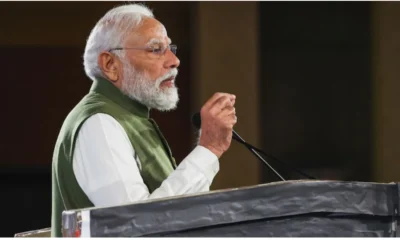
Addressing party workers at the BJP headquarters after the formal announcement, PM Modi underlined the organisational culture of the party by saying that in matters related to the organisation, the newly elected president would be his superior.

“When it comes to party matters, Mananiya Nitin Nabin ji is my boss. I am a worker,” the prime minister said, drawing applause from the gathering.

BJP leadership transition after Sanghatan Parv

Nitin Nabin was elected as BJP national president at the conclusion of the Sanghatan Parv, a wide-ranging organisational exercise that involved elections from the booth level up to the national leadership.

PM Modi said that as party president, Nabin’s role would go beyond managing the BJP’s internal affairs and would include ensuring coordination among National Democratic Alliance partners.

PM Modi highlights generational shift

Describing Nabin as a “millennial,” PM Modi said the new party chief belongs to a generation that grew up listening to news on the radio and is now comfortable using artificial intelligence.

According to the prime minister, this combination of adaptability, youthful energy and experience would be an asset for the party’s future.

“Nitin ji has youthful energy along with rich organisational experience,” PM Modi said.

Tracing BJP’s organisational journey

The prime minister also reflected on the BJP’s growth over the years, recalling its journey under different leaders.

He said the party rose from modest beginnings under leaders such as Atal Bihari Vajpayee, Lal Krishna Advani and Murali Manohar Joshi. In later years, leaders including M Venkaiah Naidu and Nitin Gadkari expanded the organisation further.

PM Modi noted that under Rajnath Singh’s leadership, the BJP secured a full majority at the Centre for the first time, while under Amit Shah, the party expanded its footprint across states and returned to power nationally for a second consecutive term.

He added that during JP Nadda’s tenure as president, the BJP strengthened its presence from panchayat-level bodies to Parliament.

Continue Reading

Latest world news

India flags selective targeting over Ukraine war, cautions Poland against backing Pakistan

India has flagged selective targeting over its Russia trade ties during Ukraine war discussions with Poland and cautioned against any support to Pakistan-linked terrorism.

Published

on

India has conveyed strong concerns to Poland over what it described as “selective and unfair targeting” related to its trade ties with Russia amid the Ukraine war, while firmly cautioning Warsaw against extending any form of support to Pakistan on issues linked to cross-border terrorism.

The concerns were raised by external affairs minister S Jaishankar during talks with Polish deputy prime minister and foreign minister Radoslaw Sikorski in New Delhi, where both sides reviewed the growing India-Poland strategic partnership and discussed key global and regional developments.

India-Poland strategic partnership review

Welcoming the Polish delegation, Jaishankar said the discussions were taking place at a time of major global uncertainty, making dialogue between countries from different regions essential. He noted that India and Poland had elevated their relationship to a strategic partnership during Prime Minister Narendra Modi’s visit to Warsaw in August 2024.

The two sides reviewed the Action Plan 2024–28 and explored ways to expand cooperation in areas including trade, investment, defence, security, clean technologies and digital innovation.

India’s stand on Ukraine conflict

The Ukraine war figured prominently in the talks, with Jaishankar reiterating India’s position on the issue. He said he had candidly shared New Delhi’s views with Sikorski on several occasions and again underlined India’s objections during the New Delhi meeting.

Jaishankar stated that the selective targeting of India through tariffs and other pressure measures over its Moscow trade ties was unfair and unjustified. India has consistently maintained that it supports dialogue and diplomacy to resolve the conflict and opposes attempts to influence its independent foreign policy choices through selective pressure.

Warning on terrorism and Pakistan

Jaishankar also raised India’s long-standing concern over cross-border terrorism, stressing that Poland should adopt a zero-tolerance approach. He said Warsaw should not, directly or indirectly, contribute to the terrorist infrastructure in India’s neighbourhood, a remark widely seen as a reference to Pakistan.

India has intensified diplomatic outreach in Europe to ensure that partners remain mindful of Pakistan’s record on terrorism financing and safe havens for extremist groups. Jaishankar’s message underscored that New Delhi expects consistency and principle from its strategic partners on the issue.

The remarks were also viewed in the context of Poland’s statement on Kashmir during a bilateral visit to Islamabad in October 2025.

Poland echoes concern over selective pressure

Responding to India’s concerns, Sikorski said Poland agreed that selective targeting through tariffs was unfair and could disrupt global trade stability. Referring to incidents in his own country, he said Poland had faced acts of arson and attempted state terrorism, including attacks on railway infrastructure, and underlined the need to counter trans-border terrorism.

Growing economic ties

The meeting took place against the backdrop of expanding economic engagement between the two countries. Poland is among India’s key trading partners in Central Europe, with bilateral trade at around USD 7 billion and Indian investments exceeding USD 3 billion.

Both sides expressed confidence that the strategic partnership would continue to deepen, even as India used the dialogue to clearly articulate its red lines on geopolitical pressure and terrorism.

Continue Reading

Trending

© Copyright 2022 APNLIVE.com