English हिन्दी
Connect with us

Latest world news

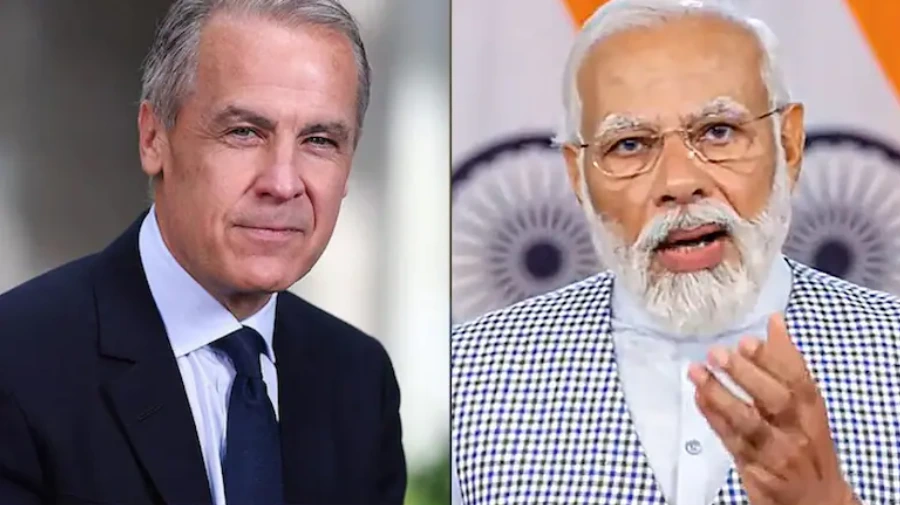
Mark Carney’s win sparks hope for India-Canada relations reset

Mark Carney’s rise as Canada’s Prime Minister brings a renewed focus on repairing ties with India, as both countries seek cooperation in trade, education, and diplomacy.

Published

on

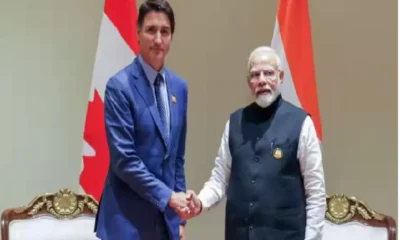
Mark Carney’s ascension to the role of Canada’s Prime Minister has brought renewed optimism for a diplomatic thaw between New Delhi and Ottawa, a relationship that faced serious setbacks under former Prime Minister Justin Trudeau. Carney, a former central banker and political novice, made it clear during his campaign that rebuilding bilateral ties with India would be among his foreign policy priorities.

Carney signals intent to revive ties

In his pre-election statements, Carney emphasised Canada’s need to diversify trade partnerships with nations that share democratic values—explicitly naming India. He said, “There are opportunities to rebuild the relationship with India. If I am Prime Minister, I look forward to the opportunity to build that.”

This approach marks a significant departure from the Trudeau administration’s strained relations with India, especially following the high-profile controversy in 2023 involving the killing of Khalistani separatist Hardeep Singh Nijjar. The diplomatic crisis escalated with the expulsion of six Indian diplomats and reciprocal steps from India, effectively freezing high-level exchanges and trade talks.

The road to reconciliation

Under Trudeau, India frequently accused Canada of harbouring extremist elements within its Sikh diaspora. The Indian government viewed this as a threat to its sovereignty, particularly amid rising incidents of pro-Khalistan demonstrations abroad.

Mark Carney, however, has taken a more pragmatic view, underlining the importance of restoring diplomatic balance and mutual respect. His vision of Canadian sovereignty also extends to redefining international alliances, with a push toward reducing dependency on its largest neighbour—the United States—and strengthening partnerships like the one with India.

Economic and educational prospects

The Comprehensive Economic Partnership Agreement (CEPA) between the two nations, stalled due to the diplomatic fallout, may see a revival under Carney’s leadership. In 2023, services trade between India and Canada was valued at CAD 13.49 billion. Both countries had been exploring collaboration in emerging sectors like AI, green energy, and education.

India continues to be one of the largest contributors to Canada’s immigrant population, with nearly 2.8 million people of Indian origin living in the country. Carney is likely to continue the liberal immigration policies, particularly benefiting Indian students and professionals. Over 427,000 Indian students currently study in Canada, playing a crucial role in its economy and labour force.

A cautious but hopeful turn

Carney’s victory offers both countries a diplomatic opportunity to reset a troubled chapter. With mutual interests in economic growth, technological advancement, and geopolitical balance, the groundwork is being laid for a more collaborative future.

Latest world news

Iran’s 4,000 km strike attempt raises concerns over undeclared missile range

Iran’s reported 4,000 km missile attempt toward Diego Garcia has raised concerns about its undeclared long-range missile capabilities.

Published

on

Missiles

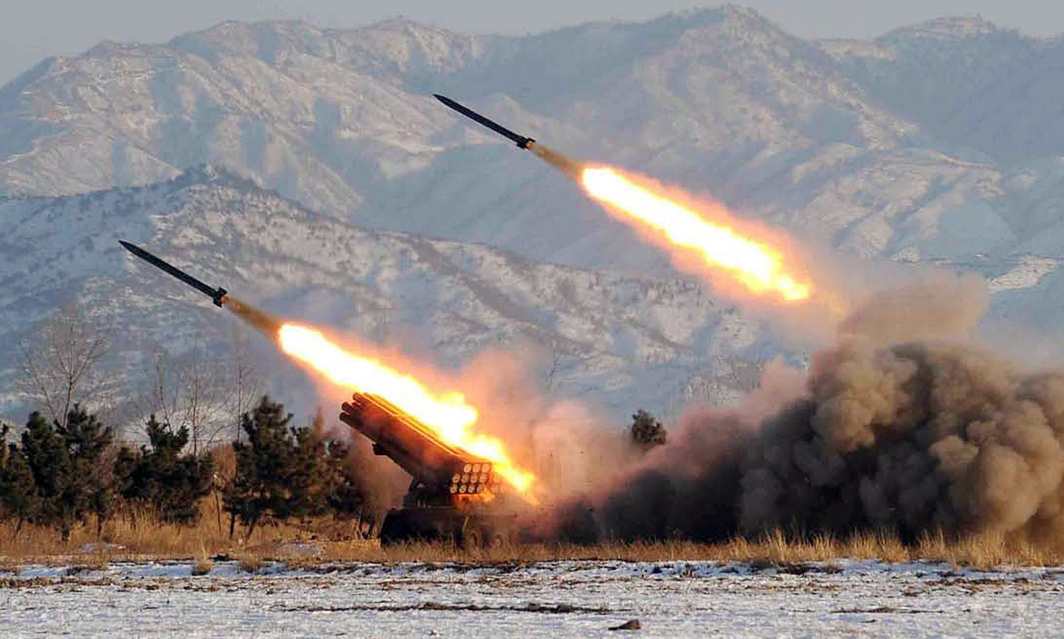
A reported attempt by Iran to target the US-UK military base at Diego Garcia, located roughly 4,000 km away, has raised fresh questions about Tehran’s actual missile capabilities. Iran has publicly maintained that its ballistic missile range is limited to around 2,000 km, but the attempted strike at double that distance suggests the possibility of undeclared long-range systems.

According to reports, two intermediate-range ballistic missiles were launched toward the base in the Indian Ocean. One missile reportedly failed, while the other may have been intercepted. However, analysts say the attempt itself is strategically significant regardless of the technical outcome.

Strategic implications for US and allies

Diego Garcia is considered a high-value military facility used by the United States and the United Kingdom for long-range bomber operations, logistics, and surveillance missions. Any attempt to target the base indicates a potential expansion of the conflict theatre beyond the Middle East into the Indian Ocean region.

If Iran is indeed testing missiles closer to true intermediate-range ballistic missile capability, it could potentially reach deeper into the Indian Ocean and parts of southern Europe. Such uncertainty over actual missile range creates strategic ambiguity, complicating defence planning for the US and its allies, including Israel and Gulf countries.

Political signalling more significant than outcome

Experts suggest the political and strategic messaging behind the attempt may matter more than whether the strike succeeded. By attempting to target a distant base like Diego Garcia, Iran may be signalling that no US military facility is beyond its reach.

Reports also indicated that the US may have used an SM-3 interceptor in response, though the outcome remains unclear. Even the use of high-end missile defence systems can be seen as a strategic win for Iran in signalling its extended reach and forcing the deployment of advanced interception resources.

Overall, the attempted strike has shifted attention toward Iran’s potential undeclared missile capabilities and added a new dimension to regional and global security calculations.

Continue Reading

Latest world news

Trump signals possible wind-down of Iran war as oil tensions rattle global markets

Trump indicates the US may scale down military operations against Iran as oil market concerns intensify.
Published

on

Donald Trump

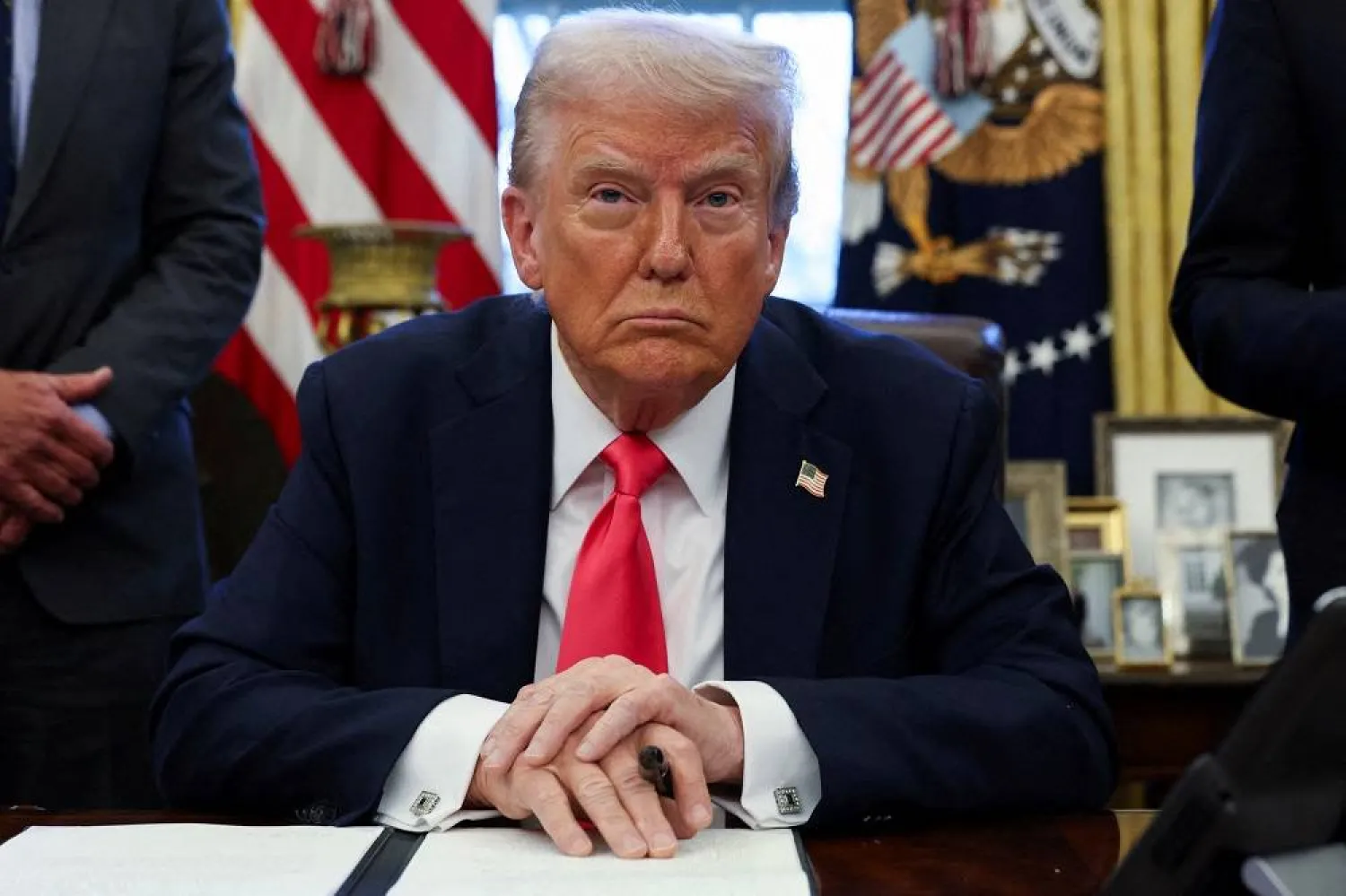
Donald Trump has indicated that the United States may consider scaling down its military operations against Iran, saying the country is “getting very close” to achieving its objectives in the ongoing conflict in West Asia.

In a post on Truth Social, Trump highlighted the progress made by US forces and suggested that a potential wind-down of operations could be under consideration. His remarks are among the clearest signals so far that Washington may be looking at reducing its military engagement.

The statement comes at a time when the US has temporarily eased restrictions on Iranian oil shipments. The move is aimed at addressing concerns over global supply disruptions and stabilising rising oil prices amid continued tensions in the region.

White House Press Secretary Karoline Leavitt said the administration had anticipated a timeline of around four to six weeks for the operation. With the conflict now entering its third week, she noted that developments were being closely monitored.

Oil markets in focus

Global oil markets have come under pressure due to the ongoing tensions. The temporary relaxation allows certain Iranian oil shipments that were already in transit to reach markets, helping ease supply concerns.

The situation has contributed to volatility in oil prices, with investors closely watching developments in the Middle East for further signals on supply stability.

Rising regional tensions

The conflict continues to see exchanges of attacks in parts of the region. Iran has carried out drone and missile strikes targeting Israel and Saudi Arabia, contributing to the escalation.

At the same time, concerns remain high over the security of key energy routes.

Strait of Hormuz concerns

The Strait of Hormuz, a crucial global oil transit route, remains a focal point of concern. A significant portion of the world’s oil supply passes through the strait, making it highly sensitive to any disruption.

Trump suggested that countries dependent on the route should also take responsibility for its security, while indicating that the US could assist if required.

No ceasefire signal

Despite hinting at a possible wind-down of operations, Trump said he is not currently seeking a ceasefire, indicating that the US position remains firm as the situation evolves.

The developments highlight the close link between geopolitical tensions, global energy markets, and the broader economic outlook.

Continue Reading

Latest world news

PM Modi discusses West Asia tensions with Bahrain King, condemns attacks on infrastructure

PM Modi and Bahrain King discuss West Asia tensions, condemn attacks on infrastructure, and stress need for secure shipping and diplomacy.
Published

on

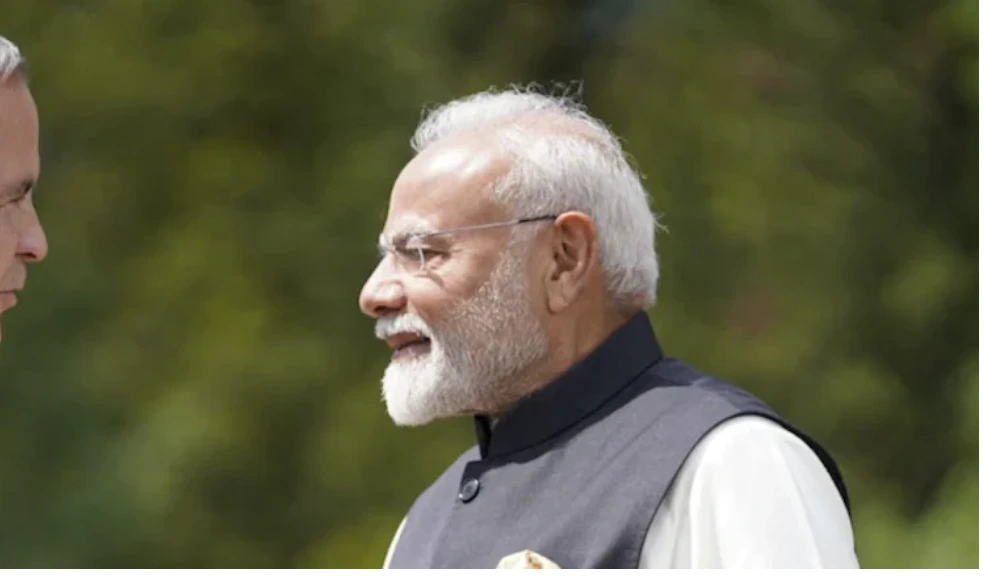
Prime Minister Narendra Modi on Friday held a telephonic conversation with Bahrain’s King Hamad bin Isa Al Khalifa, focusing on the evolving situation in West Asia and condemning recent attacks on energy and civilian infrastructure in the region.

During the call, PM Modi extended Eid al-Fitr greetings to the King and the people of Bahrain. He also expressed appreciation for Bahrain’s continued support towards the welfare of the Indian community residing in the Gulf nation.

Sharing details of the conversation, the Prime Minister said both leaders discussed regional developments and raised concerns over the impact of attacks on critical infrastructure. He noted that such incidents could adversely affect global food, fuel, and fertiliser security.

PM Modi also underlined the importance of ensuring freedom of navigation and keeping key shipping routes open and secure, amid rising tensions in the region.

The conversation comes against the backdrop of ongoing conflict in West Asia following reported US-Israeli strikes on Iran on February 28, which allegedly resulted in the death of Iran’s Supreme Leader Ali Khamenei and senior military officials. Iran subsequently launched drone and missile attacks targeting US and Israeli-linked assets across the region.

India has been actively engaging with multiple global and regional leaders in recent days. PM Modi has held discussions with leaders from several countries, including Malaysia, Oman, France, Kuwait, the UAE, Israel, Iran, Saudi Arabia, and Qatar, as part of ongoing diplomatic efforts.

Earlier, the Prime Minister also spoke with Jordan’s King Abdullah II, where both leaders expressed concern over the situation and emphasised the need for dialogue and diplomacy to restore peace and stability.

In another conversation, PM Modi spoke with French President Emmanuel Macron, reiterating the urgent need for de-escalation. He also held talks with Oman’s Sultan Haitham bin Tariq, condemning the violation of Oman’s sovereignty and stressing peaceful resolution through diplomatic channels.

The Prime Minister further highlighted the importance of secure maritime routes, particularly through the Strait of Hormuz, a critical global energy corridor.

Continue Reading

Trending

© Copyright 2022 APNLIVE.com